
Michelin Plate
Our verdict
A Michelin Plate-recognised street food shop on Banthat Thong Road, Tang Sui Heng has fed Bangkok's locals for more than 50 years. The second generation now runs the claypot-centred kitchen, keeping the founder's recipes intact.

Pearl is the En Primeur Club membership app, where members save venues, book tables and use the concierge.
The menu
What to order
- Claypot stewed duck
- Braised duck noodles
Where Bangkok Celebrates Without a Reservation
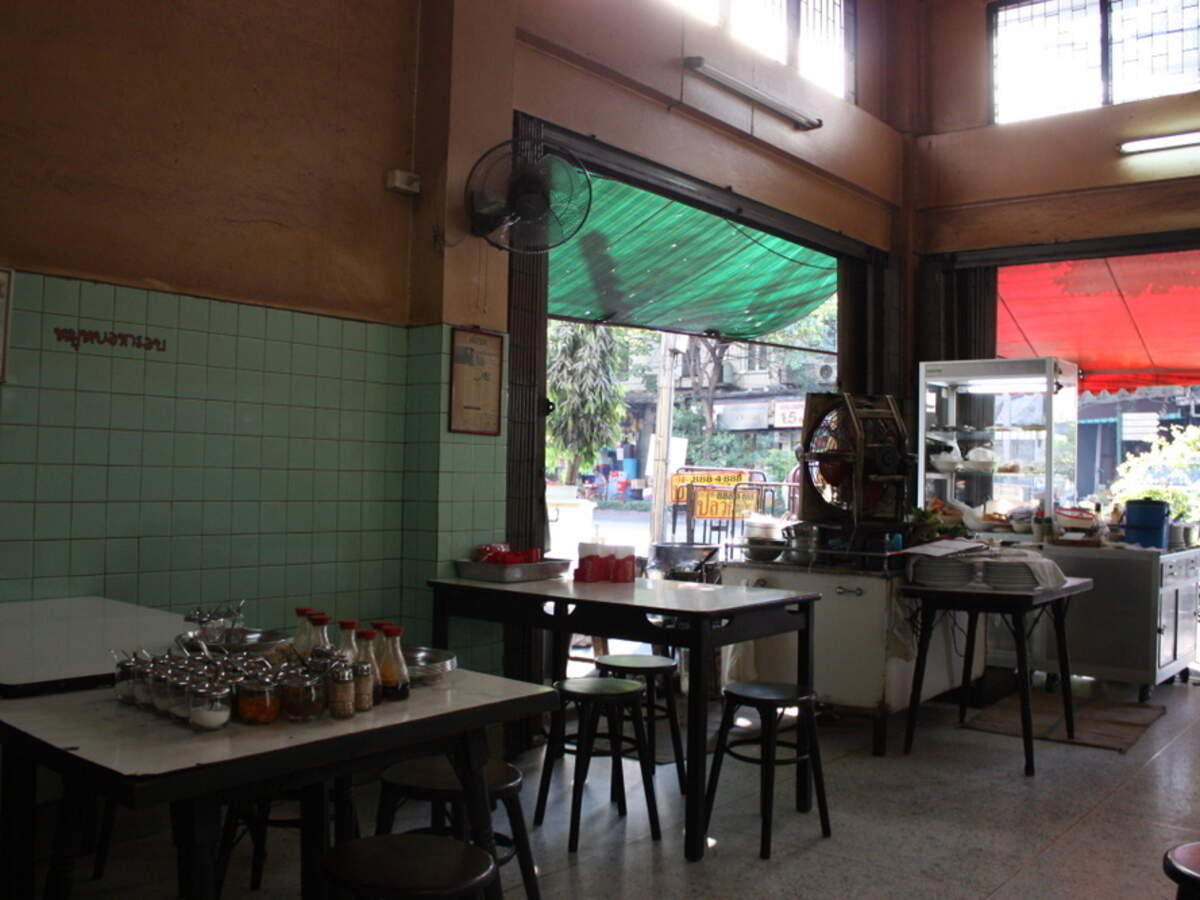
Banthat Thong Road sits in the Pathum Wan district at a point where the city's commercial centre gives way to older shophouse Bangkok. The street is not a tourist corridor. On weekday afternoons and weekend lunchtimes, it draws working households, students from nearby universities, and the kind of regulars who have been coming since their parents brought them as children. Tang Sui Heng, at number 649, has been part of that rhythm for over half a century. It is the sort of place where milestone meals happen informally: birthdays announced with little ceremony, family reunions anchored by a shared clay pot, the end of a difficult week marked by something slow-cooked and deeply familiar.
That informality is not accidental. In Bangkok's street food tradition, occasion dining does not always mean white tablecloths. It often means a dish that takes hours to prepare, served at a table that fills up fast, in a room where you eat alongside people who all know what they ordered before they sat down. Tang Sui Heng occupies exactly that register.
Five Decades on the Same Block
The shop has been operating for more than 50 years, which places it among a small cohort of Bangkok street food institutions that have outlasted economic cycles, urban redevelopment, and generational turnover. The founder built a reputation around claypot cookery, and the second generation now runs the kitchen, carrying those recipes forward with enough fidelity that the Michelin Guide awarded it a Plate recognition in 2025. A Michelin Plate signals cooking that meets the guide's quality threshold without the full star apparatus, and in the street food category it is a meaningful credential: it places Tang Sui Heng alongside a selective group of Bangkok hawker and shophouse operations that hold their own against the city's more formal dining tier.
Bangkok's street food scene sits in a curious position relative to the rest of Thailand's dining infrastructure. At the high end, tasting-menu restaurants like Sorn (Southern Thai, ฿฿฿฿) and Baan Tepa (Thai contemporary, ฿฿฿฿) have brought international attention to the country's culinary traditions, while European-led rooms like Sühring (German, ฿฿฿฿) and Côte by Mauro Colagreco (Mediterranean, ฿฿฿฿) have expanded the market upward. Tang Sui Heng operates at the structural opposite end of that spectrum, priced at a single baht symbol and drawing legitimacy from consistency and local trust rather than tasting menus or imported technique. The Michelin Plate bridges those worlds in a useful way: it is a signal visible to international visitors that the cooking here is serious, while the shop itself has never needed that signal to fill its tables.
The Claypot as the Point
The dish that defines Tang Sui Heng is the claypot stewed duck, prepared with intestines, blood jelly, and feet. This is not a menu item designed for novelty. It is a preparation rooted in the Teochew Chinese heritage that shaped much of Bangkok's street food culture, where slow braising in aromatic stock and the inclusion of offal cuts reflects both practical economy and a real preference for textural complexity. Blood jelly absorbs the braising liquid and carries it into each bite; intestines, cleaned and properly cooked, offer a tender resistance that complements the duck meat; feet contribute collagen and body to the broth. The claypot format keeps the heat even through service and deepens the flavours as the table progresses through the dish.
For those considering occasion dining in Bangkok, this is the kind of preparation that rewards a group. A shared claypot at a table of four or five registers differently from a solo bowl, and the communal dimension is part of what makes it suited to the kind of low-key celebration that Banthat Thong Road locals have been arranging here for generations. There is no tasting menu, no orchestrated sequence of courses; the occasion is built around the dish itself.
Bangkok's longer-established street food institutions share this structural logic. Bunloet (Pom Prap Sattru Phai) and Charoen Saeng Silom both anchor their neighbourhoods in comparable ways, as does K. Panich, which has built a similar multi-decade reputation around a different culinary tradition. Lim Lao Ngow (Samphanthawong) and Somsak Pu Ob (Charoen Rat) extend the same pattern into their respective districts. What these shops share is longevity underwritten by a single strong dish and a customer base that treats the address as a fixed point in its calendar.
A sustained 4.4 under those conditions reflects something reliable: the kitchen is consistent, the dish meets expectations across different visits and different reviewers, and the experience, however informal, leaves people satisfied enough to log it. For a shop open for over five decades, the volume is not surprising; for that volume to sustain a 4.4, the cooking has to be holding a clear standard.
Visitors who want to compare this style of Teochew-influenced braised duck within a wider Southeast Asian context might look at Hill Street Tai Hwa Pork Noodle or 545 Whampoa Prawn Noodles in Singapore, both of which operate in the same Michelin-recognised street food tier. Elsewhere in Thailand, the Michelin-starred PRU in Phuket and Aeeen in Chiang Mai represent the formal end of the country's recognised dining spectrum, while AKKEE in Pak Kret and Angeum in Phra Nakhon Si Ayutthaya offer regional counterpoints. Agave in Ubon Ratchathani and The Spa in Lamai Beach broaden the picture further for those moving through Thailand's other provinces.
Planning Your Visit
Address: 649 Banthat Thong Rd, Wang Mai, Pathum Wan, Bangkok 10330. Cuisine: Thai street food, Teochew-influenced claypot. Price: ฿ (single-symbol, among Bangkok's most affordable Michelin-recognised addresses). Reservations: Arrive early or be prepared to queue, particularly at peak lunch and dinner hours. Awards: Michelin Plate 2025. Leading for: Informal group occasions, multi-generational family meals, and first visits to Bangkok's Teochew braised-duck tradition. (our full Bangkok experiences guide).
Frequently asked questions
What do people recommend at Tang Sui Heng (Banthat Thong Road)?
The signature preparation is the claypot stewed duck with intestines, blood jelly, and feet, a Teochew-rooted dish that has anchored the shop's reputation for over 50 years. The Michelin Guide's 2025 Plate recognition specifically references this dish and the founder's approach, carried forward by the second generation now running the kitchen. At a price point of ฿, it represents one of the most cost-efficient ways to access Michelin-recognised cooking in Bangkok.
What It’s Closest To
A quick peer list to put this venue’s basics in context.
| Venue | Cuisine | Price | Awards | Notes |
|---|---|---|---|---|
| Tang Sui Heng (Banthat Thong Road)This venue (the venue you are viewing) | Thai-Chinese Teochew Claypot Duck | $1–10 | Michelin Plate | Not listed |
| Sorn | Fine Southern Thai | $200–300 | 3 Michelin Stars · World's 50 Best #12 | Southern Thai, ฿฿฿฿ |
| Côte by Mauro Colagreco | Riviera Mediterranean Fine Dining | $200–300 | 2 Michelin Stars · World's 50 Best #91 | Mediterranean, Modern Cuisine, ฿฿฿฿ |
| Baan Tepa | Creative Thai Fine Dining | $150–200 | 2 Michelin Stars · World's 50 Best #53 | Thai contemporary, ฿฿฿฿ |
| Gaa | Modern Indian Fine Dining with Thai Influences | $150–200 | 2 Michelin Stars · World's 50 Best #95 | Modern Indian, Indian, ฿฿฿฿ |
| Sühring | Modern German Fine Dining | $200–300 | 3 Michelin Stars · World's 50 Best #18 | German, ฿฿฿฿ |
Recognition history
Dated appearances from independent guides and award organizations, with the underlying list record or original source where available.
Michelin Plate
Michelin
Full recognition history (2 entries)
Michelin Plate
Michelin
Continue exploring
More in Bangkok
Restaurants in Bangkok
All restaurants in Bangkok →
Bars in Bangkok
All bars in Bangkok →
Details
- Classic
- Well Known
- Cozy
- Casual Hangout
- Standalone
- Open Kitchen
- A La Carte
- Passion Fruit Juice
Current opening hours
- Monday
- 10:30 AM–7:30 PM
- Tuesday
- 10:30 AM–7:30 PM
- Wednesday
- 10:30 AM–7:30 PM
- Thursday
- 10:30 AM–7:30 PM
- Friday
- 10:30 AM–7:30 PM
- Saturday
- 10:30 AM–7:30 PM
- Sunday
- 10:30 AM–7:30 PM
Hours can change for holidays and private events. Hours as of .
Welcoming atmosphere with friendly staff in a humble street food setting.