





1 Michelin Star · World's 50 Best #36 · La Liste Top Restaurants
Our verdict
Le Du has ranked as high as #15 on the World's 50 Best Restaurants list and holds a Michelin star, placing it at the front of Bangkok's modern Thai fine-dining tier. Chef Thitid Tassanakajohn builds a rotating four- or six-course menu around Thai seasonal produce, with the restaurant's name drawn from the Thai word for 'season'. The 20,000 test-tube ceiling and attentive service team complete a dining room that rewards a slow evening.

Pearl is the En Primeur Club membership app, where members save venues, book tables and use the concierge.
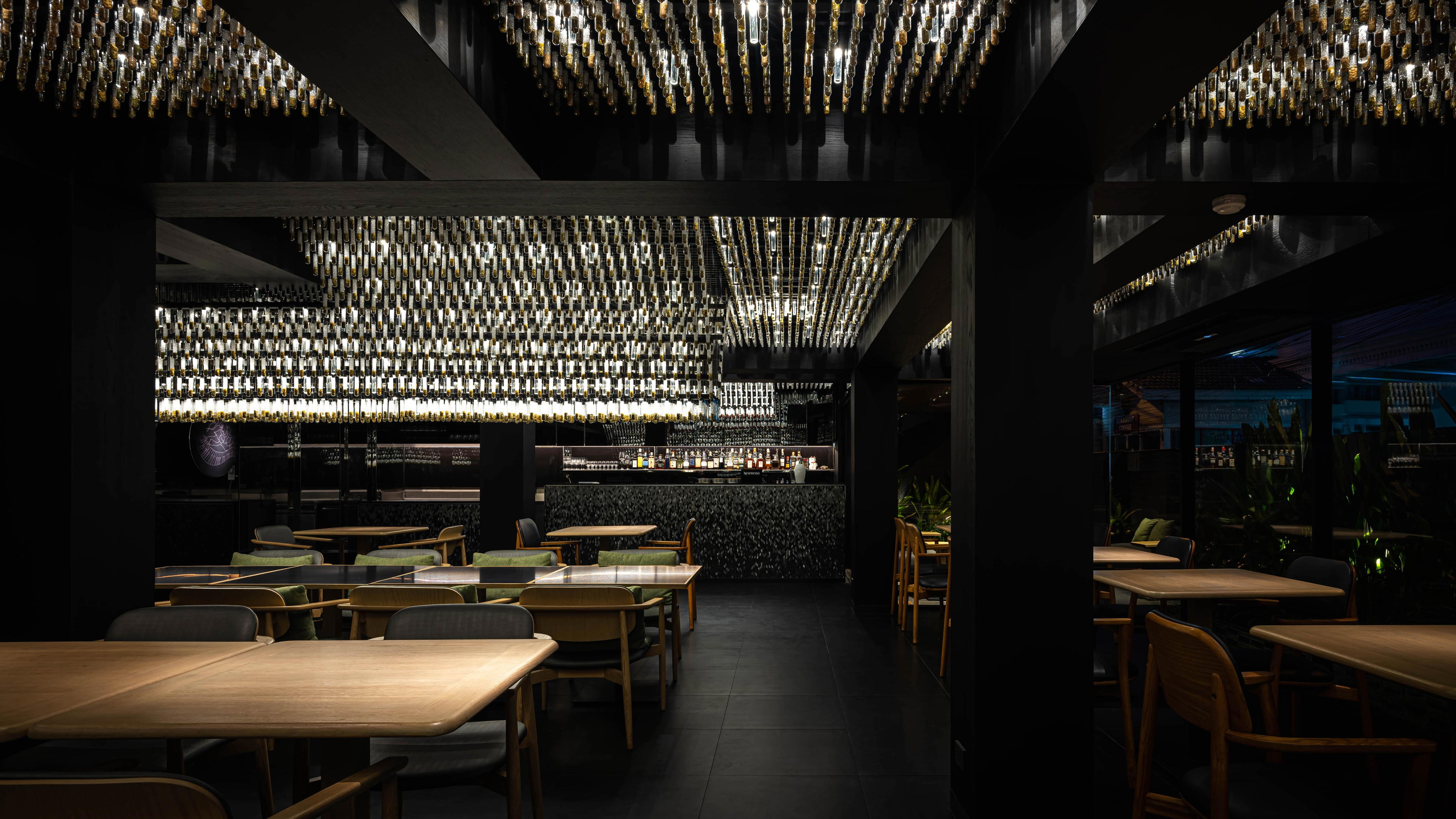
Where the Ceiling Tells You Something About the Kitchen
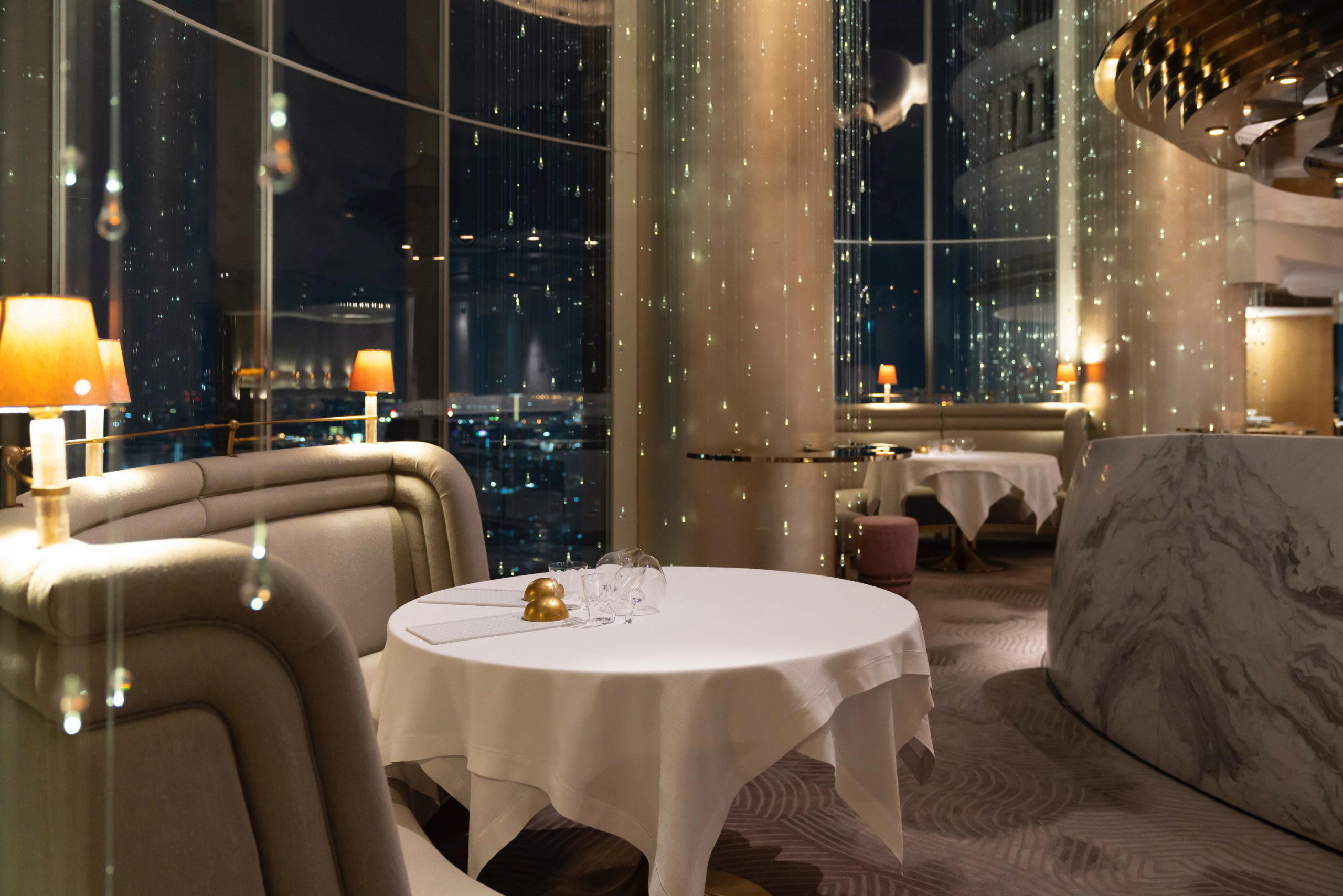
Walk into Le Du's dining room on Silom 7 Alley and the first thing that registers is the ceiling: 20,000 test tubes arranged overhead, a visual declaration that what happens below is deliberate and systematic. It sets the tone accurately. This is not a room where Thai cuisine is deployed as nostalgia or folklore. The kitchen operates with the discipline of a European fine-dining laboratory applied to ingredients sourced almost entirely from Thai farms and waters, and the results have placed the restaurant among the most-tracked reservations in Southeast Asia.
Bangkok's premium Thai fine-dining tier has expanded considerably over the past decade, but the venues that anchor the category share a consistent set of commitments: seasonal sourcing with documented provenance, a tasting format that privileges the kitchen's editorial control over à la carte choice, and a service register that reads as warm rather than formal. Le Du sits at that tier's upper end, confirmed by a trajectory on the World's 50 Best list that moved from #40 in 2024 to #20 in 2025, alongside a Michelin star held since 2024, a Black Pearl 1 Diamond rating, and a La Liste score of 89 points in 2026.
Seasonality as Architecture, Not Garnish
The restaurant's name comes from the Thai word for 'season', and that etymology is structural rather than decorative. The menu rotates with the agricultural calendar, meaning the four- or six-course format guests choose from at any given visit reflects what Thai farmers and fishermen are producing at that moment. In summer, that has historically translated to khao chae, a cooling ceremonial rice dish soaked in jasmine-scented water, and khao khluk kapi, organic rice cooked with shrimp paste and pork jam, served alongside river prawns. These are not reinventions for novelty's sake; they are interpretations that stay close enough to the source that the dish communicates its origin, while applying enough modern technique that the kitchen's own perspective remains legible.
This approach sits inside a broader movement in Bangkok's fine-dining circuit toward sourcing transparency and ingredient traceability. Across the city's ฿฿฿฿ tier, the restaurants generating the most sustained critical attention, including Nusara, Sorn (Southern Thai), and Baan Tepa (Thai contemporary), are those that treat their supply chains as editorial content rather than operational background. The sourcing narrative is part of what guests pay for, and more importantly, part of what the food communicates on the plate.
The Sustainability Logic Behind Seasonal Fine Dining
Fine dining's relationship with environmental responsibility often defaults to surface gestures: a composting program, house-filtered water, or a paragraph in the menu about a single farm partnership. The more structurally sound approach, and the one that Le Du's format embodies, is to build the menu around seasonal availability in a way that removes the incentive to import out-of-season produce or hold standardized dishes year-round regardless of supply conditions. When the menu changes with the seasons, the kitchen is de facto working with what is abundant rather than forcing what is scarce.
In Thailand's agricultural context, that has real consequence. The country's farming regions produce extraordinary variation across the year, from river prawns in summer to cooler-season vegetables and different rice varieties, and a kitchen structured around that calendar can draw on genuine peak-condition ingredients rather than relying on cold-chain logistics to simulate freshness. Chef Thitid Tassanakajohn's training and sourcing orientation reflects an understanding that the most defensible environmental position in fine dining is not a sustainability certification but a kitchen calendar built around local abundance. The rotating tasting format, then, is simultaneously an ethical framework and a culinary one.
Across Asia's most-awarded restaurants, the correlation between seasonal tasting formats and proximity to leading rankings on lists like Asia's 50 Best is consistent. PRU in Phuket operates a similar farm-to-table discipline in southern Thailand. Internationally, the logic connects to the approach at venues like Atomix in New York City, where Korean seasonal tradition structures a tasting menu built around ingredient integrity rather than menu permanence.
Where Le Du Sits in Bangkok's Fine-Dining Map
Bangkok's ฿฿฿฿ restaurant tier covers a wide range of culinary orientations. The city's international fine-dining scene includes European-rooted formats such as Côte by Mauro Colagreco (Mediterranean, Modern Cuisine), and globally inflected contemporary kitchens like Gaa (Modern Indian, Indian). Le Du operates in a different register: its competitive identity is built around Thai ingredients and Thai culinary logic, modernized through technique rather than fusion. The kitchen does not borrow from other traditions to make Thai food legible to international diners. It assumes the cuisine's legitimacy and works from there.
That positioning has proved commercially and critically durable. The World's 50 Best ranking of #15 in 2023 represented one of the highest placements a Thai restaurant had achieved on that list. The 2025 ranking of #20 in Asia and the 2024 global ranking of #40 confirm that the kitchen's output has maintained a standard across multiple years and multiple menu rotations, not a single standout year. Opinionated About Dining, which aggregates critic and professional assessments, placed Le Du at #99 in Asia in 2025, following rankings of #73 in 2024 and #102 in 2023, a consistent upward trend across its two main tracking systems.
For context on what this award concentration signals: among Bangkok's Thai-cuisine fine-dining venues, this multi-list recognition across different methodologies (popular vote, critic aggregation, independent rating systems) is rare. Sorn occupies a distinct tier focused on Southern Thai cuisine with its own strong regional identity. Nusara draws from central Thai tradition with its own aesthetic. Le Du's angle, contemporary interpretation of Thai seasonal produce with a chef who has international training, occupies its own position rather than competing directly with either.
Across the rest of Thailand's fine-dining circuit, similar seasonal sourcing commitments appear at AKKEE in Pak Kret, Aeeen in Chiang Mai, and Angeum in Phra Nakhon Si Ayutthaya, each working with local produce in their respective regions. The consistency of this approach across Thailand's awarded restaurant tier reflects a national culinary moment, not individual venue decisions.
Service and Atmosphere
The dining room operates with a service philosophy that prioritizes explanation without ceremony. Each dish arrives with context about its ingredients and origins delivered by a team described consistently across review sources as attentive and warm rather than performative. In a city where the hospitality register can swing between casual street-food efficiency and stiff hotel formality, the middle register that Le Du occupies, knowledgeable but unhurried, is harder to calibrate and more valuable when executed well. The 20,000 test-tube ceiling provides visual drama without requiring the room to work around it. The ambience supports a slow, multi-course meal rather than a high-turnover operation.
The restaurant opens for dinner Sunday through Wednesday, adding lunch service Thursday through Saturday. It is closed on Sundays. The dinner-focused format, running 6 PM to 11 PM on most evenings, signals that the kitchen is pacing for the tasting format rather than accommodating quick covers.
Know Before You Go
- Address: 399/3 Silom 7 Alley, Si Lom, Bang Rak, Bangkok 10500, Thailand
- Hours: Monday–Wednesday 6 PM–11 PM; Thursday–Saturday 12 PM–2 PM and 6 PM–11 PM; Sunday closed
- Price range: ฿฿฿฿ (premium tasting menu tier)
- Format: Four or six-course seasonal tasting menu
- Awards: Michelin 1 Star (2024); World's 50 Best #20 Asia / #40 Global (2024–2025); La Liste 89pts (2026); Black Pearl 1 Diamond (2025)
- Booking: Advance reservations required; check the restaurant's website for current availability
Planning Your Bangkok Visit
Le Du anchors the Silom fine-dining corridor, which makes it a practical starting point for building a Bangkok itinerary around serious eating. The area's proximity to the BTS network means the restaurant is accessible without a long taxi ride from most central Bangkok accommodations. For a fuller picture of where Le Du sits within Bangkok's restaurant scene, see our full Bangkok restaurants guide. For accommodation options, our full Bangkok hotels guide covers the city's main property tiers. The bar and drinks scene in Bangkok is covered in our full Bangkok bars guide, while our full Bangkok experiences guide and our full Bangkok wineries guide round out the city's premium options.
For comparison points outside Bangkok, the seasonal sourcing ethos that defines Le Du connects to approaches at PRU in Phuket and Agave in Ubon Ratchathani. For those traveling internationally, the tasting menu discipline at Le Bernardin in New York City offers a useful reference point for what consistent multi-year critical recognition looks like in a different market context.
at Le Du?
The menu rotates seasonally, so the specific lineup at any given visit will differ from what a review from six months ago describes. What remains consistent across documented accounts is the presence of khao chae in summer, a cooling jasmine-scented rice preparation with deep ceremonial roots in Thai cuisine, and khao khluk kapi, organic rice cooked with shrimp paste and pork jam, served with river prawns. Both dishes appear repeatedly in critic and guest accounts as reference points for the kitchen's approach: traditional Thai flavors rendered with modern precision rather than altered beyond recognition. The six-course format gives the kitchen more room to sequence the meal and is the more complete way to experience the seasonal sourcing philosophy. Given that the menu changes with the seasons, the most defensible position is to trust the tasting format and let the kitchen's current selection drive the experience rather than arriving with a fixed list of expectations.
Frequently asked questions
What are the operating hours at Le Du?
Hours at Le Du: Monday 6 PM-11 PM Tuesday 6 PM-11 PM Wednesday 6 PM-11 PM Thursday 12 PM-2 PM 6 PM-11 PM Friday 12 PM-2 PM 6 PM-11 PM Saturday 12 PM-2 PM 6 PM-11 PM Sunday closed.
What kind of recognition has Le Du received?
Le Du has received recognition including: Modern Thai fine-dining, using some of the best Thai produce in season and personal service are some of the hallmarks of Le Du. Known for its impressive achievements on the Asia’s 50 Best lists, Le Du...; La Liste Top Restaurants (2026): 89….
What's the best thing to order at Le Du?
The menu rotates with the seasons, so no single dish is guaranteed on every visit. That said, khao chae and khao khluk kapi with river prawns are recurring signatures that appear in multiple award citations, including Asia's 50 Best coverage. Le Du's four- or six-course tasting format is the intended way to eat here, and ordering the longer menu gives the kitchen more room to show how seasonal Thai produce shifts across courses.
Credentials Lens
| Venue | Cuisine | Price | Awards | Notes |
|---|---|---|---|---|
| Le DuThis venue (the venue you are viewing) | Modern Thai Fine Dining | $100–150 | 1 Michelin Star · World's 50 Best #36 | Not listed |
| Sorn | Fine Southern Thai | $200–300 | 3 Michelin Stars · World's 50 Best #12 | Southern Thai, ฿฿฿฿ |
| Côte by Mauro Colagreco | Riviera Mediterranean Fine Dining | $200–300 | 2 Michelin Stars · World's 50 Best #91 | Mediterranean, Modern Cuisine, ฿฿฿฿ |
| Baan Tepa | Creative Thai Fine Dining | $150–200 | 2 Michelin Stars · World's 50 Best #53 | Thai contemporary, ฿฿฿฿ |
| Gaa | Modern Indian Fine Dining with Thai Influences | $150–200 | 2 Michelin Stars · World's 50 Best #95 | Modern Indian, Indian, ฿฿฿฿ |
| Sühring | Modern German Fine Dining | $200–300 | 3 Michelin Stars · World's 50 Best #18 | German, ฿฿฿฿ |
Recognition history
Dated appearances from independent guides and award organizations, with the underlying list record or original source where available.
Michelin 1 Star
Michelin
World's 50 Best Asia's Best Restaurants #36
World's 50 Best
La Liste Top Restaurants
La Liste
Star Wine List
Star Wine List
Black Pearl 1 Diamond
Black Pearl
Full recognition history (16 entries)
Opinionated About Dining Top Restaurants in Asia Ranked #111
Opinionated About Dining
Black Pearl 1 Diamond
Black Pearl
La Liste Top Restaurants
La Liste
Michelin 1 Star
Michelin
Opinionated About Dining Top Restaurants in Asia Ranked #99
Opinionated About Dining
World's 50 Best Asia's Best Restaurants #20
World's 50 Best
Michelin 1 Star
Michelin
Opinionated About Dining Top Restaurants in Asia Ranked #73
Opinionated About Dining
World's 50 Best Restaurants #40
World's 50 Best
Opinionated About Dining Top Restaurants in Asia Ranked #102
Opinionated About Dining
World's 50 Best Restaurants #15
World's 50 Best

Continue exploring
More in Bangkok
Restaurants in Bangkok
All restaurants in Bangkok →
Bars in Bangkok
All bars in Bangkok →
Details
- Modern
- Elegant
- Intimate
- Sophisticated
- Date Night
- Special Occasion
- Open Kitchen
- Extensive Wine List
- Local Sourcing
- Tasting Menu
Current opening hours
- Monday
- 6–11 PM
- Tuesday
- 6–11 PM
- Wednesday
- 6–11 PM
- Thursday
- 12–2 PM, 6–11 PM
- Friday
- 12–2 PM, 6–11 PM
- Saturday
- 12–2 PM, 6–11 PM
- Sunday
- Closed
Hours can change for holidays and private events. Hours as of .
Cozy modern design featuring a striking ceiling of 20,000 test tubes with Thai seasonings, warm lighting evoking seasonal rice fields, and an open kitchen view.