Tanaka of Tokyo West
Tanaka of Tokyo West occupies a well-traveled address inside Ala Moana Center, where teppanyaki dining has held its footing in Honolulu for decades. The format places guests around flat-iron grills in a theatrical cooking arrangement that predates the city's current wave of chef-driven omakase rooms. For visitors and residents working through Honolulu's dining options, it represents the longer-established end of the Japanese restaurant spectrum on the island.
Pearl is the En Primeur Club membership app — saves, bookings, and concierge access live there. Same editors, same standards.
- Address
- 1450 Ala Moana Blvd, Honolulu, HI 96814
- Phone
- +18089453443
- Website
- tanakaoftokyo.com
- Directions
- Get directions
 Saves & bookings on Pearl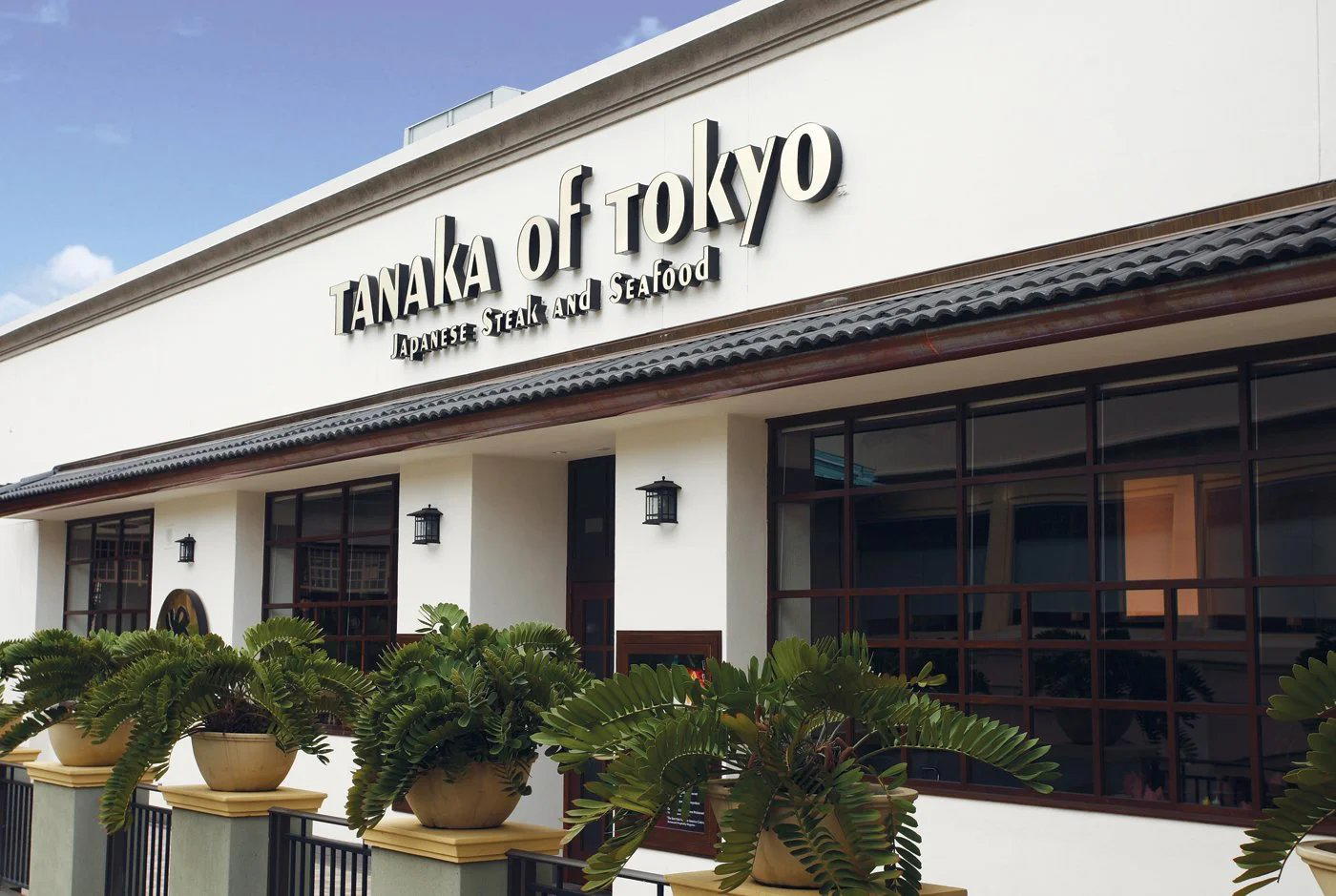
The Teppanyaki Format in Honolulu Context
In most American cities, teppanyaki dining occupies a specific cultural position: it is Japanese in origin but shaped heavily by its postwar American adaptation, where the flat-iron grill became a stage and the cook became a performer. Honolulu carries that tradition with particular weight. The city's proximity to Japan, its large Japanese-American community, and its history as a bridge point between Pacific cultures mean that Japanese restaurant formats here have had longer to settle and differentiate than on the mainland. Tanaka of Tokyo West, at 1450 Ala Moana Blvd inside Ala Moana Center, is a Teppanyaki Japanese Steakhouse in Honolulu.
The teppanyaki model predates the current Honolulu moment of intimate omakase counters and chef-forward Japanese dining rooms. Where newer entrants like Fête (New American) and 3660 On the Rise represent the city's more recent evolution toward personal, technique-driven menus, teppanyaki at this scale belongs to an earlier and more durable institution: communal seating around a shared grill, multi-course structure, and tableside cooking as the primary event. It is a format with its own discipline, and the Ala Moana address is its most accessible Honolulu expression.
Arriving at the Ala Moana Address
Ala Moana Center is the reference point for this branch. As one of the largest open-air shopping complexes in the country, it organizes a substantial portion of Honolulu's mid-island commercial life and draws a mixed population of residents and visitors. Restaurants inside or adjacent to it tend to absorb that foot traffic, which shapes the atmosphere in ways that are distinct from waterfront venues like 53 By The Sea or experience-format operations like Ahaaina Luau.
Approaching a teppanyaki dining room, the sensory sequence is consistent regardless of city: the sound of metal implements on a flat grill surface, the visible heat shimmer above the iron, and the arrangement of guests in a U or rectangle around the cooking surface. These elements are the architecture of the format. The grill is not merely equipment; it is the room's organizing principle, and the spatial relationship between cook and diner is what differentiates teppanyaki from both conventional table service and counter-style omakase. At the West branch, this spatial logic applies to guests who may be celebrating milestones, hosting out-of-town visitors, or simply working through Honolulu's Japanese restaurant range in a format that requires no specialized menu literacy.
The Design Logic of the Teppanyaki Room
Teppanyaki restaurants are built around a specific seating geometry that most fine-dining formats deliberately avoid: strangers seated together, facing inward toward a cook rather than across from each other, with the grill as the shared focal point. This arrangement originated in mid-century Japanese steakhouse culture and was refined in American markets where theatrical presentation became as important as the food itself. The design is inherently communal and, in the hands of a capable cook, inherently entertaining.
What this means practically is that the room rewards a particular kind of dining occasion. Groups fare better than couples seeking quiet conversation. The layout makes interaction natural and the cooking sequence provides a shared timeline for the table, which is why the format has remained durable for celebrations and business entertainment across several decades. Venues in this format compete less on interior minimalism or architectural drama and more on grill technique, the rhythm of service, and how well the cook reads a mixed table. That is a different skill set than what drives the current generation of high-precision Japanese restaurants, and it produces a different experience.
For context across the American fine-dining spectrum, formats like the communal teppanyaki room sit at a different register than the strictly controlled environments of Alinea in Chicago, the produce-driven intimacy of Blue Hill at Stone Barns in Tarrytown, or the seafood precision of Le Bernardin in New York City. Teppanyaki's value proposition has never been about restraint or quiet intensity; it operates on spectacle, shared timing, and the pleasure of watching food prepared at close range.
Where Tanaka of Tokyo West Fits Honolulu's Japanese Scene
Honolulu's Japanese restaurant range now spans entry-level casual through to serious omakase operations. Tanaka of Tokyo West occupies a middle-to-upper tier in terms of format expectations and price positioning, though the restaurant is priced around $60 per person. Its comparable set in the city includes establishments like Ginza Bairin and Fujiyama Texas, which also serve Japanese food at the more accessible and group-friendly end of the spectrum, while the more controlled counter formats and chef-tasting experiences represent a separate tier with different booking demands and a different guest profile.
For visitors already working through the city's options, the Tanaka name carries brand recognition that extends across the Honolulu market. The West branch at Ala Moana is particularly centrally located for visitors based along the primary hotel corridor. Those interested in the full range of what Honolulu's Japanese and Pacific-influenced dining can deliver would do well to consult our full Honolulu restaurants guide, which places venues like 855-ALOHA and others in their proper context alongside the teppanyaki tradition.
Across the broader US market, teppanyaki brands with multi-location presence tend to operate with standardized training protocols and consistent grill sequences, which means the experience is more predictable than what you would encounter at, say, Lazy Bear in San Francisco or Single Thread Farm in Healdsburg, where the chef's individual decisions shape every service. Predictability is not a weakness in this context; it is part of the format's reliability, especially for guests who are unfamiliar with Japanese dining conventions and want an accessible entry point.
Restaurants built around theatrical cooking formats have maintained their position in American dining not because they chase critical recognition but because they serve occasions that more austere formats do not accommodate easily. Emeril's in New Orleans, Providence in Los Angeles, Addison in San Diego, and The Inn at Little Washington in Washington each occupy distinct tiers in their markets while serving different guest intentions. Tanaka of Tokyo West serves its own intention clearly: a structured, group-compatible Japanese meal in a central Honolulu location, delivered in a format that has been operating in this city longer than most of its current competition. That is a specific and durable value, even if it occupies different territory than the precision-driven work at Atomix in New York City or the European technique of 8 1/2 Otto e Mezzo Bombana (Hong Kong) in Hong Kong. For the right occasion and the right guest profile, the distinction matters less than the execution, and the Ala Moana address delivers that promise.
Know Before You Go
- Address: 1450 Ala Moana Blvd, Honolulu, HI 96814
- Location: Ala Moana Center, central Honolulu
- Format: Teppanyaki (tableside flat-iron grill cooking)
- Leading for: Groups, celebrations, visitors seeking an accessible Japanese dining format
Reputation Context
Comparable venues nearby, for context on price, style, and recognition.
| Venue | Cuisine | Price | Notes |
|---|---|---|---|
| Tanaka of Tokyo WestThis venue — the venue you are viewing | Teppanyaki Japanese Steakhouse | $$$ | Not listed |
| Ichifuji | Japanese Shabu-Shabu | $$$ | Mōʻiliʻili |
| Tanaka of Tokyo East | Teppanyaki Japanese Steakhouse | $$$ | Kapahulu |
| Kaimuki Shokudo | Japanese Soba & Izakaya | $$ | Kaimuki |
| Sushi Gyoshin | Omakase Sushi | $$$$ | Ala Moana |
| Hihimanu Sushi | Omakase Sushi | $$$$ | St. Louis Heights |
At a Glance
- Lively
- Energetic
- Family
- Celebration
- Group Dining
- Special Occasion
- Open Kitchen
- Sake Program
Current opening hours
- Monday
- 5–9 PM
- Tuesday
- 5–9 PM
- Wednesday
- 5–9 PM
- Thursday
- 5–9 PM
- Friday
- 5–9 PM
- Saturday
- 5–9 PM
- Sunday
- 5–9 PM
Hours can change for holidays and private events. Last verified .
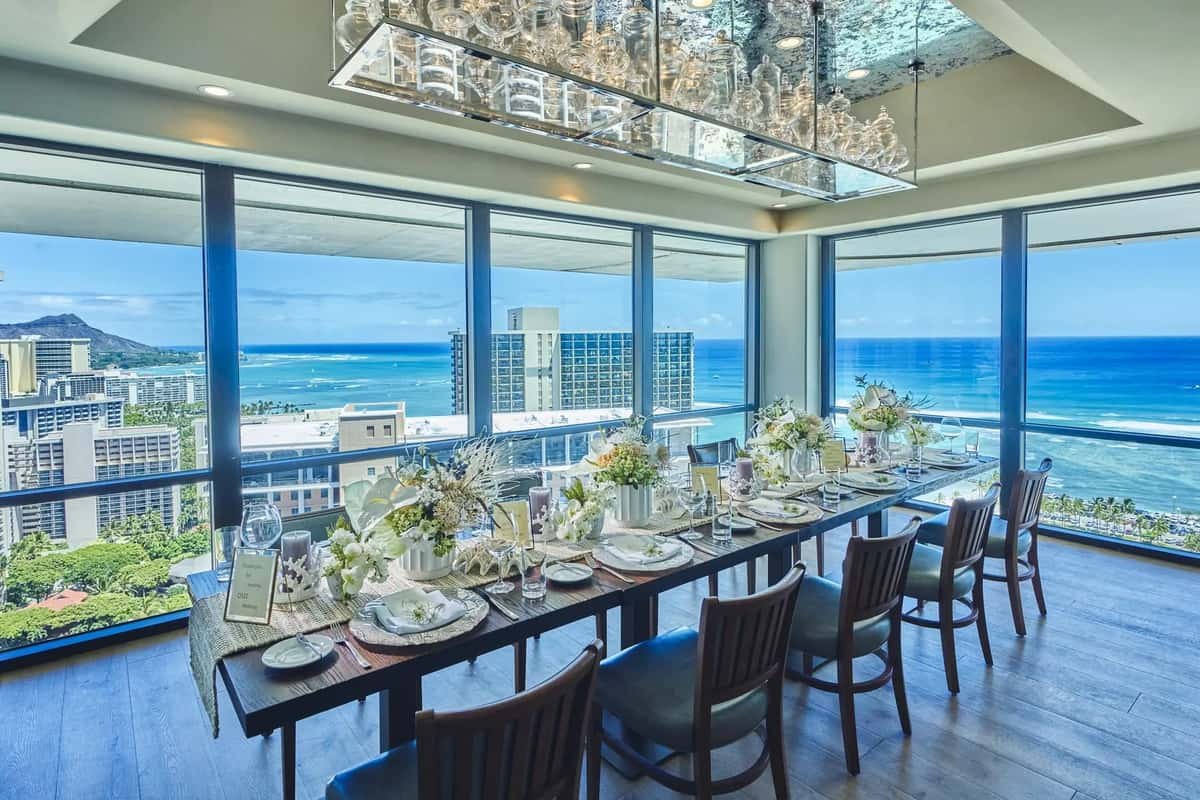
Exotic and elegant atmosphere filled with laughter, warmth, and lively conversation around interactive grill tables.