Taki Sushi
On East Bayaud Avenue in Denver's Washington Park corridor, Taki Sushi occupies a quiet residential stretch that has quietly become one of the city's more considered dining addresses. In a market where sushi ranges from conveyor-belt casual to omakase-only counters, Taki positions itself in the mid-to-upper tier where craft and neighborhood intimacy coexist. A reservation-worthy stop for anyone mapping Denver's Japanese dining scene seriously.
Pearl is the En Primeur Club membership app — saves, bookings, and concierge access live there. Same editors, same standards.
- Address
- 420 E Bayaud Ave, Denver, CO 80209
- Phone
- (303) 282-0111
- Website
- takisushi.com
- Directions
- Get directions
 Saves & bookings on Pearl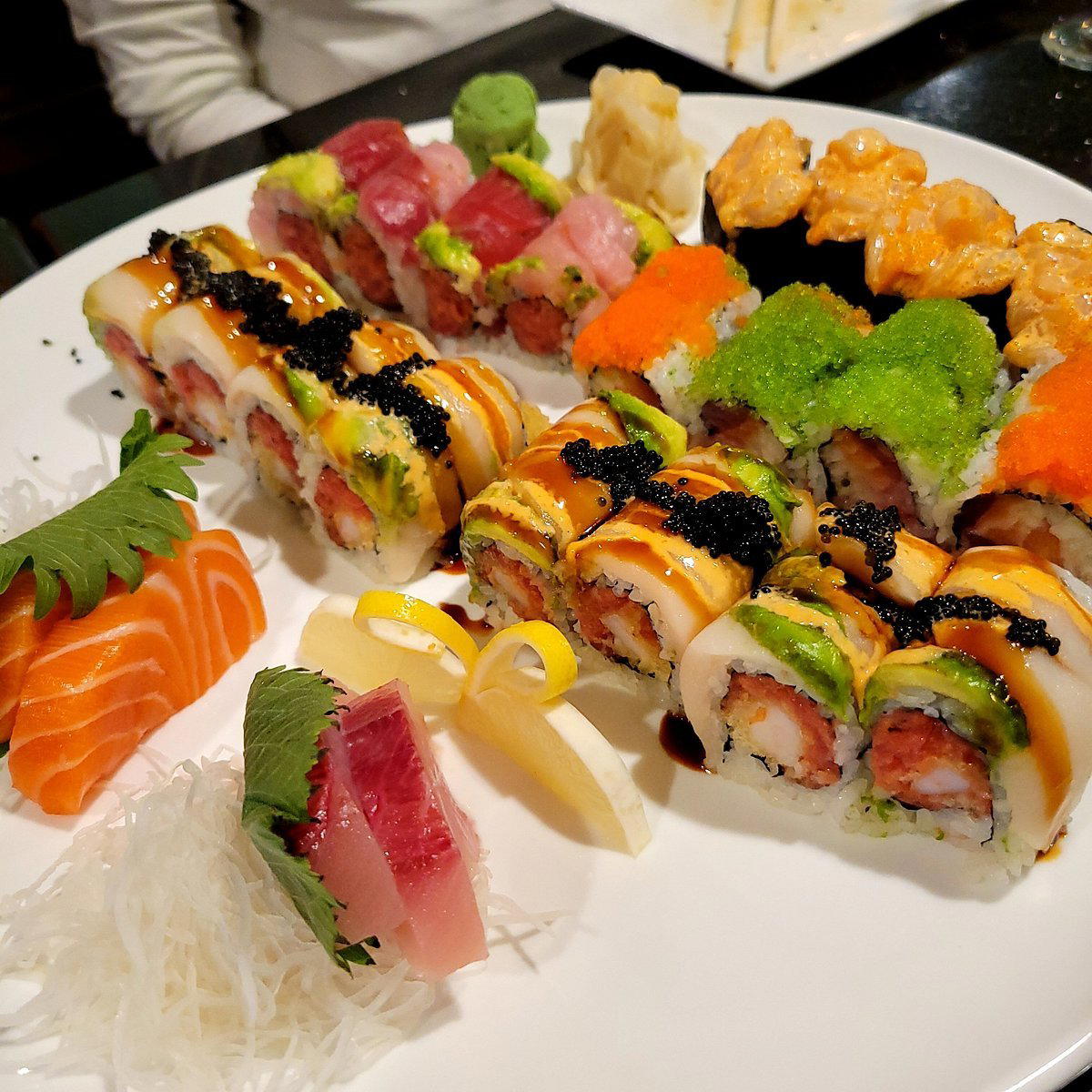
The Room Before the Fish
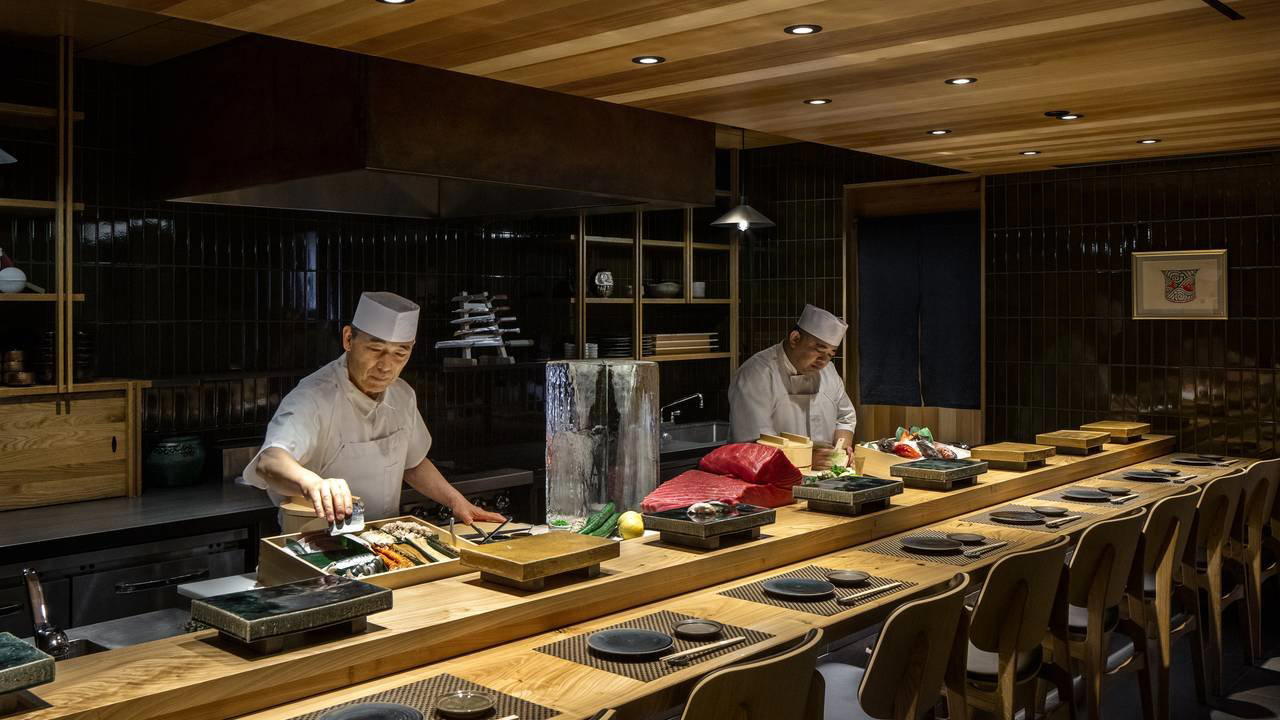
Taki Sushi is a Japanese sushi and fusion restaurant at 420 E Bayaud Ave in Denver. The Washington Park corridor in south Denver runs quieter than the RiNo warehouse strip or the Larimer Street corridor downtown, and Taki Sushi sits within that residential cadence rather than against it. Approaching from the street, the scale is immediately domestic: no marquee signage, no valet queue, no ambient noise spilling onto the sidewalk. The sensory register shifts only once you are inside, where the controlled environment of a focused sushi operation takes over. Light is kept low enough to concentrate attention on the counter and the plates rather than the room itself. The smell arriving first is clean rice vinegar, the precise calibration that separates a working sushi kitchen from the generic catch-all Japanese restaurant.
That calibration matters because Denver's sushi scene, while growing, still operates in a fundamentally different tier than the West Coast corridors where omakase culture has normalized. In cities like Los Angeles, where Providence has set a precedent for ingredient-led sourcing, or in New York, where Atomix has helped define what a focused Korean-inflected tasting format looks like at the highest level, the reference points are dense and competitive. Denver does not have that density yet, which makes mid-tier sushi operations like Taki more consequential to the local scene than their square footage might suggest.
Where Taki Sits in Denver's Dining Tier
Denver's restaurant landscape has sharpened considerably over the past decade. The city now holds a credible tier of serious kitchens: Brutø and Beckon operate in the tasting-menu space at the summit of the price range, The Wolf's Tailor has built a reputation for ingredient-driven New American cooking, and Alma Fonda Fina anchors the accessible end with serious Mexican technique. Japanese cuisine occupies a different position in this ecosystem. Unlike the nationally recognized formats at places like The French Laundry in Napa or Alinea in Chicago, Denver's Japanese dining conversation is still being written, which gives neighborhood-focused operations room to build genuine local followings before the critical apparatus catches up.
Taki on East Bayaud reads as precisely this kind of operation: not positioning itself against coastal omakase counters, but working within a neighborhood-first model where consistency and intimacy function as the primary offer. That is not a criticism. In markets where the high-end tier is thin, the reliable mid-range operation often delivers a better ratio of quality to experience than a stretched attempt at destination dining.
For comparative context outside the Japanese category, Annette in Aurora has demonstrated how a focused, neighborhood-scaled operation can outperform its price tier through precision rather than spectacle. The principle applies across cuisines.
The Sensory Logic of a Sushi Counter
Sushi, more than most cuisines, rewards attention to physical sequencing. The leading counters in the format, from the spare rooms behind the Tsukiji outer market to the polished cedar of Ginza's top tier, share a common sensory grammar: temperature control, silence used strategically, and the deliberate pacing of courses to create accumulation rather than saturation. How closely any given operation adheres to that grammar tells you something about its ambitions and its training lineage.
At the formats that have set international reference points, Le Bernardin in New York City for seafood precision, Single Thread Farm in Healdsburg for Japanese-influenced hospitality, the physical environment is engineered to remove friction from the sensory experience. Sound is managed. Plating surfaces are chosen for temperature retention and contrast. Every element orients the guest toward the food. A sushi counter operating in a residential neighborhood in Denver is not competing at that tier, but the underlying sensory logic still applies and is still worth evaluating on its own terms.
What distinguishes the better neighborhood sushi operations from the generic is usually rice temperature and fish sourcing cadence, two variables that are invisible on a menu but immediately legible on the palate. Operations that receive fish once or twice weekly and serve it across too wide a window sacrifice one consequential quality signal the format offers.
Planning Your Visit
The Washington Park address is accessible by car with street parking on East Bayaud and the surrounding residential streets. The neighborhood draws a local clientele rather than a tourist flow, which affects the rhythm of service and the general noise level inside. Dining here feels like eating where Denver residents actually eat, rather than in the hospitality corridor built for out-of-towners.
For those building a broader Denver itinerary, the south-central corridor that includes Washington Park and the surrounding streets represents a quieter counterpoint to the more heavily trafficked dining zones. Internationally, those curious about how focused Japanese-inflected formats scale up might look at Blue Hill at Stone Barns in Tarrytown for seasonal sourcing discipline, Addison in San Diego for refined tasting-menu craft on the West Coast, or 8 1/2 Otto e Mezzo Bombana in Hong Kong for what technical precision looks like at the Michelin three-star level in Asia.
Closer to home, Emeril's in New Orleans and Lazy Bear in San Francisco illustrate how regional American cities have built recognizable fine-dining identities over time. Denver is at an earlier stage in that arc, and The Inn at Little Washington remains a useful benchmark for what a destination operation outside a primary market can achieve with sustained commitment. Taki does not operate at any of those scales, but it exists within the ecosystem of a city trying to build its own serious dining identity from the neighborhood level up.
Know Before You Go
- Address: 420 E Bayaud Ave, Denver, CO 80209
- Neighborhood: Washington Park corridor, south Denver
- Parking: Street parking on East Bayaud and surrounding residential streets
- Phone: Check current contact details before you go
- Reservations: Recommended, particularly for weekends; walk-in availability varies
- Price range: About $25 per person
- Nearby: Washington Park, accessible to south Denver dining cluster
In Context: Similar Options
Comparable venues nearby, for context on price, style, and recognition.
| Venue | Cuisine | Price | Notes |
|---|---|---|---|
| Taki SushiThis venue — the venue you are viewing | Japanese Sushi & Fusion | $$ | Not listed |
| Fontana Sushi | Japanese Sushi | $$ | Speer |
| Mizu Izakaya | Modern Japanese Izakaya | $$ | Highland |
| Sushi Den | Premier Japanese Sushi | $$$ | Platt Park |
| Kobe An LoHi | Traditional Japanese Shabu Shabu and Sushi | $$$ | Highland |
| Fortune Nong Jia Le | Authentic Shanghainese | $$ | Speer |
Continue exploring
More in Denver
Restaurants in Denver
Browse all →
Bars in Denver
Browse all →
Hotels in Denver
Browse all →


At a Glance
- Cozy
- Family
- Casual Hangout
- Open Kitchen
- Sake Program
Current opening hours
- Monday
- 4–10:30 PM
- Tuesday
- 4–10:30 PM
- Wednesday
- 4–10:30 PM
- Thursday
- 4–10:30 PM
- Friday
- 4–11 PM
- Saturday
- 4–11 PM
- Sunday
- 4–10 PM
Hours can change for holidays and private events. Last verified .
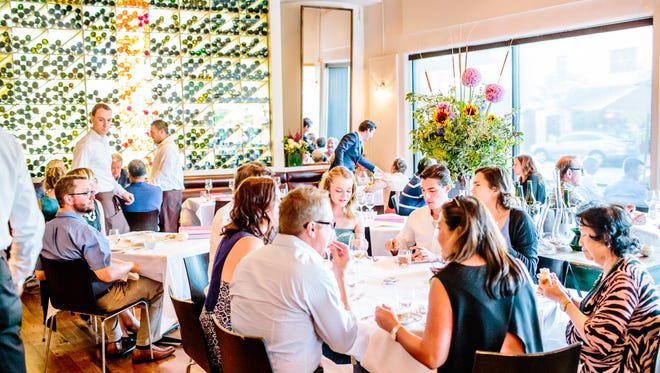
Bright lighting with a casual, laid-back, and cozy atmosphere.