
Takatsuji Kasui belongs to Kyoto’s compact, counter-led izakaya tier, where the room matters as much as the cooking rhythm. The draw is not spectacle but scale: 14 seats, a fish-focused kitchen, serious sake and shochu, and selection for Tabelog 100 Izakaya WEST 2025.
Pearl is the En Primeur Club membership app — saves, bookings, and concierge access live there. Same editors, same standards.
- Address
- 京都府京都市下京区高辻通り御幸町西入ル茶磨屋町233 アネックス2番館 1F
- Website
- tabelog.com
 Saves & bookings on Pearl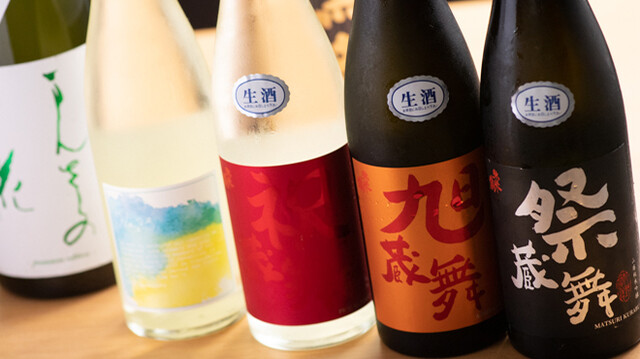
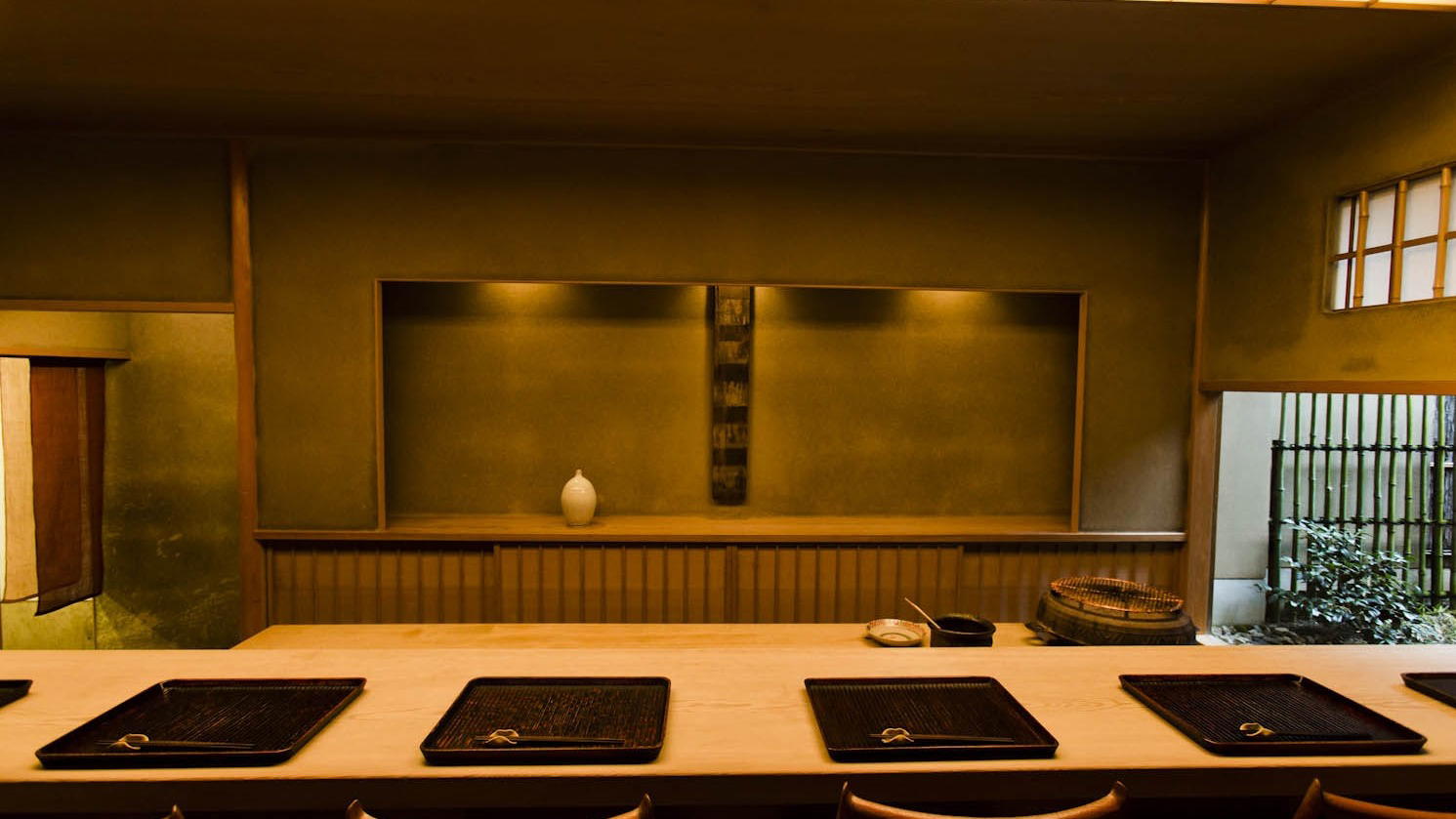
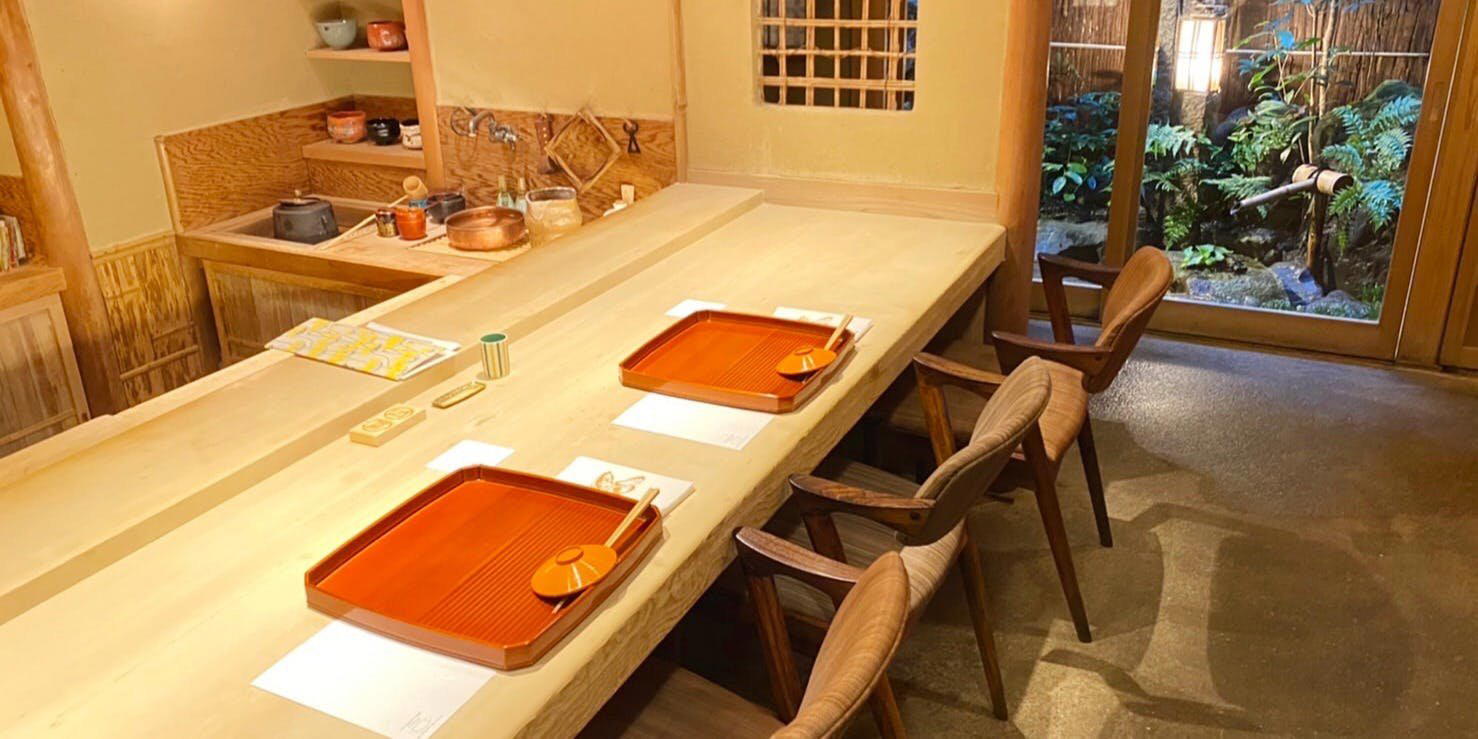
On the lower floor of an annex building off Takatsuji-dori, the Kyoto izakaya form compresses into a small room: counter seats, one table, and the intimacy that changes dinner’s rhythm. Visitors often misread the category as casual drinking food. At the sharper end, it is a negotiated sequence of fish, seasonal cooking, sake, shochu, and pacing, with the counter as both dining room and stage.
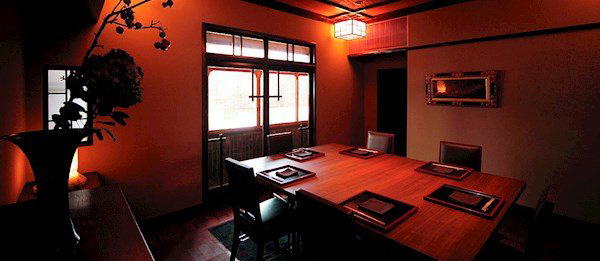
Takatsuji Kasui sits in that narrower bracket. The restaurant has 14 seats: 10 at the counter and one table for four. The physical container becomes part of the experience, not background decoration. Kyoto has many small restaurants, but not all create the same pressure. Here, the low seat count directs attention to timing, glassware, and the kitchen’s handling of fish, rather than the large-table energy of a general-purpose tavern.
A compact izakaya room built around fish, sake, and counter discipline
Kyoto’s serious izakaya culture differs from the city’s kaiseki image. Kaiseki often carries ceremony, fixed progression, and architectural calm; izakaya cooking, at this level, has more elasticity. It can move between sashimi, grilled items, simmered dishes, rice, and drinking snacks without becoming a tasting-menu performance. That flexibility is the appeal, and where weak rooms lose focus.
The evidence here is clear. The restaurant is categorized as an izakaya, with food emphasis on fish and a drinks program spanning sake, shochu, and wine. That combination moves it beyond tourist-facing “Japanese pub” shorthand and toward the Kyoto counter format where seafood, alcohol, and conversation form the structure. Selection for Tabelog 100 Izakaya WEST 2025 gives the room a public quality signal within western Japan’s izakaya field, while its Tabelog score of 3.70 places it in a competitive local band, not the broad casual market.
The design matters because izakaya dining is physical before it is descriptive. A counter seat changes tempo: plates land closer to the kitchen, drinks are read from the table’s pace, and a small room makes late arrivals and long gaps more consequential. A single four-seat table prevents the format from becoming exclusively counter-only, but the room’s center of gravity remains the counter. For travelers comparing Kyoto dining styles, this is the opposite of the grand dining room: a controlled, adult, low-capacity setting where izakaya excellence is cumulative rather than theatrical.
How it fits Kyoto's dining map
Shimogyo and the Kawaramachi-Shijo corridor are useful for travelers who want serious meals without committing every night to temple-district formality or hotel dining. The area can absorb multiple Kyoto moods in one evening: department-store food halls, small bars, late dinners, and tightly run counters. Takatsuji Kasui belongs to the quieter side of that map, south of the busiest shopping flow but close enough for a central Kyoto itinerary.
Price clarifies the decision. At JPY 5,000 to JPY 5,999, it occupies a different lane from Kyoto’s high-ticket kappo and kaiseki rooms, while sharing some concern for season, handling, and drink pairing. In the supplied Kyoto comparison set, KANEGURA sits in the same JPY 5,000 to JPY 5,999 dinner band, while Bar Rocking chair and SPICE GATE operate at lower stated ranges. Takatsuji Kasui is not the bargain end of the evening economy, but its format keeps it below Kyoto’s formal fine-dining threshold.
The adult orientation is part of the positioning. The restaurant does not allow minors except in reserved circumstances, and the small room suits pairs or compact groups better than broad family dining. Private use is available for up to 20 people, showing how the space can be taken over, but the regular experience is more precise: a small number of diners, a fish-led kitchen, and a drinks list built around Japanese spirits with wine as an additional option.
For a wider Kyoto plan, read this address alongside nearby and category-adjacent options. EP Club’s Kyoto restaurant coverage includes 3TOKU6MI Shijo karasuma ten, 551蓬莱, [ki:], Abbesses, and Aburi Mochi Honke Nemoto Kazariya. For broader trip-building, use Our full Kyoto restaurants guide, Our full Kyoto hotels guide, Our full Kyoto bars guide, Our full Kyoto wineries guide, and Our full Kyoto experiences guide.
The decision: choose it for scale, not spectacle
The case for Takatsuji Kasui is strongest for diners who value the architecture of a meal as much as the category. Fourteen seats is not just capacity; it defines the room’s social contract. The counter reduces distance between kitchen and guest, and the fish-and-sake orientation roots the experience in Kyoto izakaya grammar rather than a generic small-plates format.
Its public recognition matters because izakaya lists can be noisy, especially in a city where visitor demand distorts reputation. Tabelog 100 Izakaya WEST 2025 is a meaningful category marker, and the 2023 opening date makes it a relatively recent entrant already in the regional conversation. That is the editorial point: Kyoto’s dining scene is not only old houses and inherited prestige. Newer, tightly scaled rooms can gain traction when the format is disciplined and the offering legible.
Reservations require planning, especially for inbound diners, and the small room leaves little margin for casual arrival timing. Once understood, the appeal is specific: a central Kyoto izakaya with fish focus, a serious drinks frame, no-smoking policy, and a room small enough that seating arrangement shapes the evening. It belongs on an itinerary when the desired contrast is not another formal course menu, but a sharper, adult counter dinner in the city center.
Further Japanese dining reading: -Grilled beef Sukiyaki- KAMAKURA TANUKIAN 鎌倉 たぬき庵 in Kamakura,. 鮪と炭火焼き うお炭 秋葉原店 in Tokyo,.cafe in Osaka,.know in Kumamoto, (Shoku) Vietnam in Kawasaki, and [Curry Senmon Ten] Maruyama Kyoju. in Sapporo. For sake-led dining outside Japan, see Jōdo Saké Bar in Los Angeles and Onigiri Time in Pasadena.
Peers Worth Knowing
Comparable options at the same price tier.
| Venue | Cuisine | Price | Notes |
|---|---|---|---|
| Takatsuji KasuiThis venue — the venue you are viewing | Seasonal Kyoto Izakaya | $$ | |
| le sel | Organic Ramen Course | $$ | Gion-Shijo |
| Rakushaan | Traditional Japanese Warabi Mochi Specialty | $$ | Shichiku |
| Daigokuden Honpo Honten | Traditional Japanese Wagashi & Sweets Café | $$ | Nakagyō |
| 3TOKU6MI Shijo karasuma ten | Japanese Izakaya & Oden Standing Bar | $$ | Shimogyō |
| Ichijoji Nakatani | Kyoto wagashi & cafe with Japanese–Western fusion sweets | $$ | Sakyō |
Continue exploring
More in Kyoto
Restaurants in Kyoto
Browse all →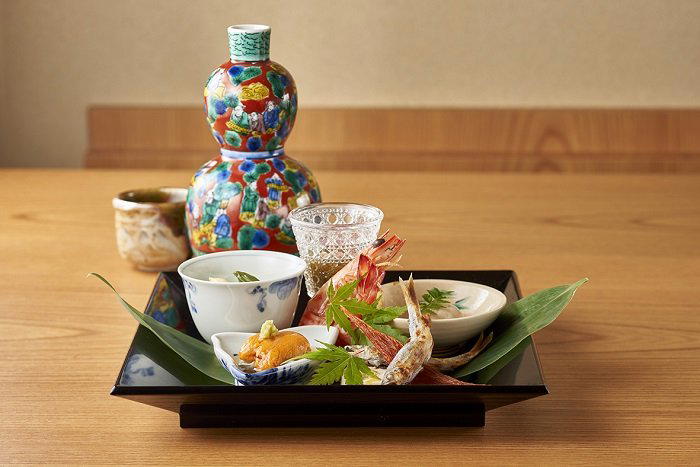
Bars in Kyoto
Browse all →
Hotels in Kyoto
Browse all →
Wineries in Kyoto
Browse all →
At a Glance
- Cozy
- Hidden Gem
- Intimate
- Sophisticated
- Classic
- Date Night
- After Work
- Solo
- Special Occasion
- Group Dining
- Chefs Counter
- Standalone
- Design Destination
- Sake Program
- Beer Program
- Byob
- Local Sourcing
A small, non-smoking ‘adult’ izakaya with a simple and serene Japanese interior, mainly counter seating and one table, creating a calm, cozy hideout feel suitable for special occasions and solo counter dining rather than a rowdy drinking spot.