
Taiyo Shokudo is a seven-seat counter ramen shop in Nagoya’s Nakamura Koen area, selected for Tabelog 100 - Ramen - AICHI - 2025. Its appeal sits in the compact, specialist end of the city’s ramen culture: counter seating, no reservations, cash-only prepayment, and a format built for diners who understand that pace can slow when a single owner is running the room.
Pearl is the En Primeur Club membership app — saves, bookings, and concierge access live there. Same editors, same standards.
- Address
- 愛知県名古屋市中村区中村町7‐40‐5
- Phone
- +81524133700
- Website
- tabelog.com
 Saves & bookings on Pearl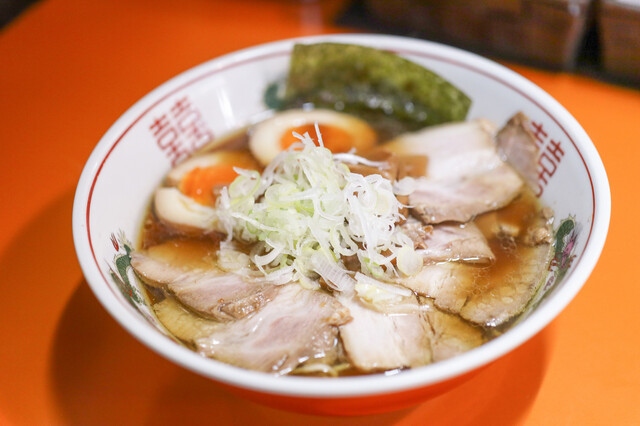
Approaching a small ramen counter in Nagoya is different from entering the city’s hotel dining rooms or reservation-led kappo restaurants. The cues are practical rather than theatrical: a short shopfront, a line that functions as part of the meal, and the sound of a compact kitchen working through bowls one by one. Taiyo Shokudo belongs to that stripped-back category, a seven-seat counter in Nakamura Koen where the meal is measured less by ceremony than by sequence.
Nagoya’s ramen scene rewards patience because many of its serious addresses operate at a scale closer to a workshop than a restaurant. That matters here. A counter-only room changes the rhythm of eating: ordering, waiting, watching the kitchen reset, then moving through the bowl before it cools. The experience has a beginning, middle, and finish even without a formal tasting menu, and that arc is what separates a focused ramen counter from a casual noodle stop.
A seven-seat counter turns ramen into a controlled progression
Ramen is often treated as fast food outside Japan, but the better counters make speed feel secondary to timing. Broth, noodles, toppings, and temperature have to land together, and a small counter gives the kitchen tighter control over that moment. In a room with seven seats, service is not elastic. It moves in narrow waves, and the diner becomes part of that pace rather than a detached spectator.
Taiyo Shokudo’s selection for Tabelog 100 - Ramen - AICHI - 2025 places it inside a local group judged on ramen rather than general dining polish. That distinction is useful. A Tabelog ramen selection in Aichi does not mean white-tablecloth luxury; it signals that a low-cost, high-turnover format can carry enough technical confidence to sit beside more expensive city dining. The reported Tabelog score of 3.59 also puts the address in the competitive middle of serious local ramen, where small differences in broth structure, noodle handling, and repeat traffic matter.
The meal’s progression is compact but demanding. The first decision is logistical, because reservations are unavailable and the room’s capacity limits how quickly the queue can move. The second is financial, because payment is handled in advance and in cash. The third is culinary, because ramen gives the diner little room for delay: once the bowl arrives, conversation yields to temperature, texture, and pace. In that sense, the format is closer to counter sushi than many visitors expect, not in price or prestige, but in its insistence that timing shapes the experience.
Nakamura Koen's ramen culture is closer to daily ritual than destination dining
Nakamura Koen sits away from the restaurant density around Nagoya Station and Sakae, which helps explain the character of the meal. This is not the city’s expense-account dining circuit. It is neighborhood ramen with enough recognition to draw people beyond the immediate area, but the framework remains local: lunch hours, counter seating, no private rooms, and a direct relationship between kitchen capacity and waiting time.
That local scale also clarifies the price tier. Within Nagoya, comparison restaurants such as Busan sit in a higher everyday-dinner bracket, while Yasui operates at a far more expensive range for dinner. Taiyo Shokudo occupies a different decision category altogether: the serious, low-cost ramen stop where the spend is modest but the commitment is time and patience. That trade-off is a defining feature of Japanese ramen culture, especially at small owner-run shops where scarcity comes from capacity rather than luxury positioning.
For travelers building a Nagoya itinerary, this kind of address works better as a focused ramen stop than as the anchor of a long evening. The smart comparison is not with fine dining tasting menus, but with other compact Japanese formats where the whole experience depends on respecting house rules. School-age children are welcome, yet each person needs an order, and parties are expected to line up together. Those details are not etiquette footnotes; they keep a seven-seat room functioning.
The broader Nagoya map helps frame the choice. For a restaurant-led trip, Our full Nagoya restaurants guide gives the city context beyond ramen, while Our full Nagoya hotels guide, Our full Nagoya bars guide, Our full Nagoya wineries guide, and Our full Nagoya experiences guide help separate neighborhood eating from the rest of the itinerary.
How to read the recognition without mistaking the format
Tabelog’s Hyakumeiten lists are especially useful for categories like ramen because they capture depth below the level of international awards. Michelin-style recognition often favors formal service structures, while ramen acclaim in Japan is built through repeat local use, specialist comparison, and category-specific judgment. A place can be small, inexpensive, and operationally strict, yet still matter within the city’s food culture.
That is the case here. The recognition should be read as a signal to take the bowl seriously, not as permission to expect a polished restaurant experience. The shop is non-smoking, counter-based, and solo-dining friendly, which makes it well suited to diners comfortable with direct, compact service. Parking arrangements exist nearby through a paid lot with a partial refund process, but the more natural approach is the subway, since Nakamura Koen station is close enough for a simple walk.
The practical verdict is blunt: go for the ramen-counter discipline, not for comfort padding. The value sits in a recognized Aichi ramen address operating at a small scale, where the sequence of queue, order, bowl, and exit is part of the form. Diners who want lingering service, cards, or a reservation cushion will find the format restrictive. Diners who understand Japan’s specialist counters will recognize the logic immediately.
For further restaurant cross-checking within and beyond Japan, see 1022, 451, Aaron, Alan., All Day Dining Montmartre, -Grilled beef Sukiyaki- KAMAKURA TANUKIAN 鎌倉 たぬき庵 in Kamakura. 鮪と炭火焼き うお炭 秋葉原店 in Tokyo.cafe in Osaka.know in Kumamoto, (Shoku) Vietnam in Kawasaki, [Curry Senmon Ten] Maruyama Kyoju. in Sapporo, Jōdo Saké Bar in Los Angeles, and Onigiri Time in Pasadena.
Comparable Spots, Quickly
Comparable venues at a glance for context.
| Venue | Cuisine | Price | Notes |
|---|---|---|---|
| Taiyo ShokudoThis venue — the venue you are viewing | Ramen & fried rice counter | $ | Not listed |
| Tori Soba Nagonoki | Local chicken ramen (Tori Soba) in Nagoya | $ | Nishi |
| Fujimi Tei Honten | Kourai-style tonkotsu ramen | $ | Naka |
| Mensou Nanaya | Creative Ramen & Tsukemen | $ | Not listed |
| Tsubame Sanjo | Niigata-style Tsubame-Sanjo ramen | $ | Naka |
| China Soba Kitagawa | Ramen & wonton shop | $ | Minami |
Recognition history
Dated appearances from independent guides and award organizations, with the underlying list record or original source where available.
Tabelog 100 #22 · No. 22
Tabelog · Tabelog 100 - Ramen - AICHI - 2025
Continue exploring
More in Nagoya
Restaurants in Nagoya
Browse all →


At a Glance
- Cozy
- Lively
- Solo
- Family
- Casual Hangout
- After Work
- Chefs Counter
- Standalone
A compact, no-frills counter-only ramen shop run solo by the owner, with a casual, bustling atmosphere and likely some waiting at peak times due to the small space and steady queue.