Michelin Bib Gourmand
Our verdict
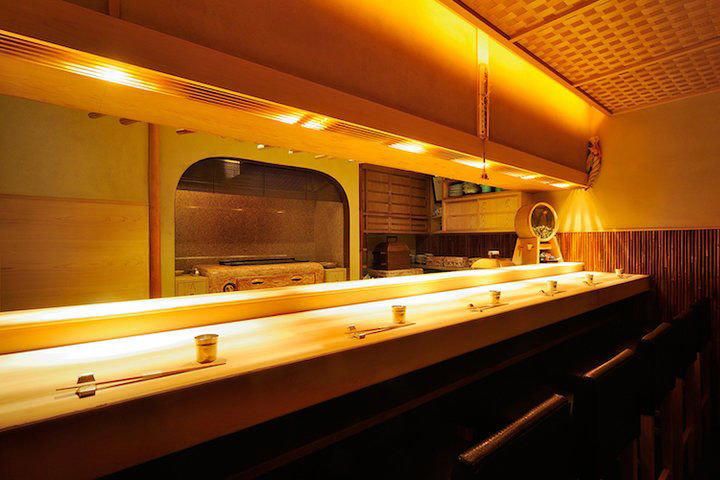
Tachigui Sushi Tonari occupies the second floor of a building in Azabu-Juban, operating as the standing-sushi sibling to its flagship next door. The Michelin Bib Gourmand (2024) recognises its rice-forward approach, where vinegar seasoning is calibrated to the fat content of each fish. Ordering piece by piece keeps the format relaxed and the pacing entirely in your hands.

Pearl is the En Primeur Club membership app, where members save venues, book tables and use the concierge.
Edo Street Culture, Updated for Azabu-Juban
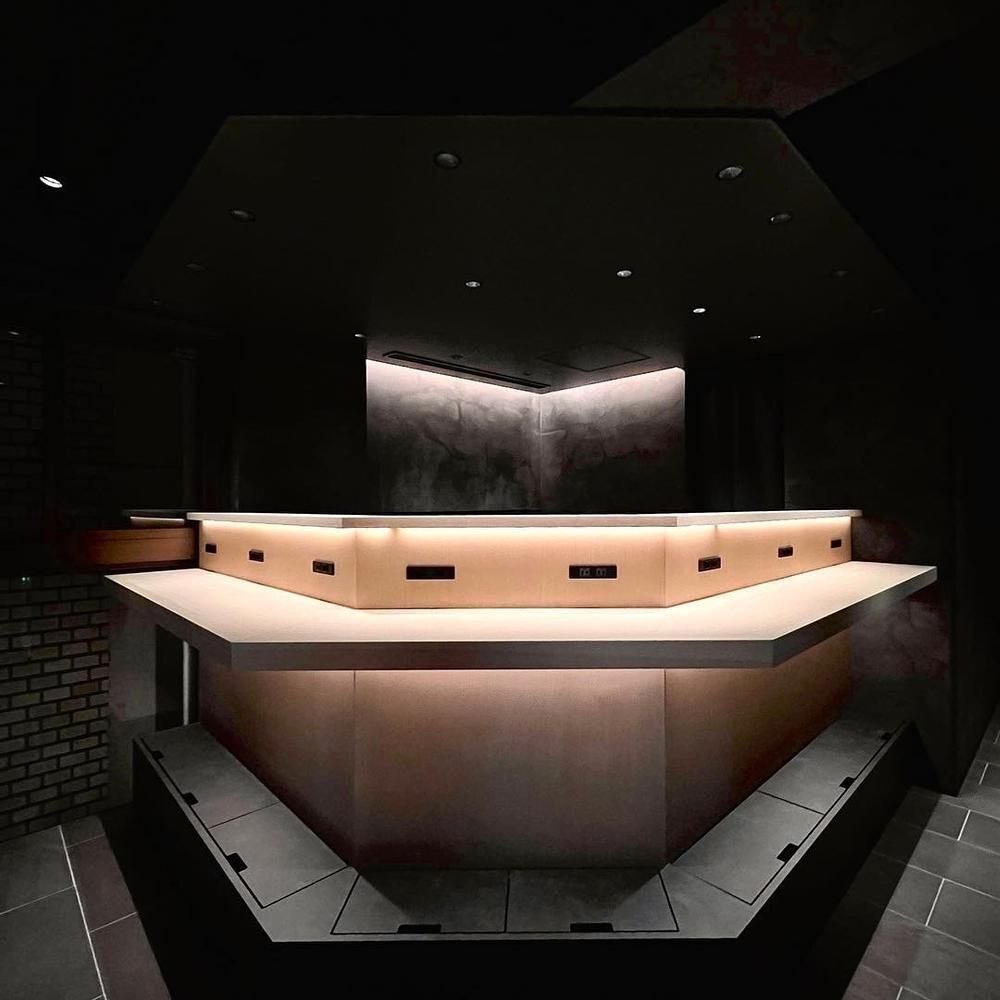
Tokyo's relationship with standing sushi stretches back to the early nineteenth century, when yatai stalls around Edo's fish markets served nigiri at street level, one piece at a time, to customers who ate and moved on. That format largely disappeared as the city's sushi culture migrated toward seated counters, omakase progression, and the kind of multi-course ritual associated with counters like Harutaka, Sushi Kanesaka, and Sukiyabashi Jiro Roppongiten. Tachigui Sushi Tonari in Azabu-Juban positions itself as a deliberate return to that older, more democratic model: standing, ordering at will, settling the bill digitally, and leaving when you are done.
The name makes the relationship explicit. Tonari means "next door," and the restaurant operates directly alongside its flagship, sharing lineage with Chef Hatano Yoshiki's main operation while functioning as a more accessible, higher-turnover extension of it. The Michelin Bib Gourmand awarded in 2024 confirms what the format already suggests: serious craft at a price point well below the premium omakase tier, which in Tokyo currently runs from roughly ¥30,000 to well above ¥60,000 per head at celebrated counters.
The Rice Argument
Within Tokyo's sushi conversation, the dominant debate tends to center on fish sourcing, aging technique, and knife work. Tachigui Sushi Tonari takes a different entry point, foregrounding the relationship between vinegared rice and the oil content of each fish. This is not a minor technical distinction. Shari, the seasoned rice that forms the base of nigiri, varies considerably across houses: some lean toward red vinegar for depth and colour, others use rice vinegar for brightness and acidity. The approach here sits squarely in the rice-vinegar tradition, with seasoning calibrated to harmonise with the natural fat of the fish rather than compete with it.
That emphasis on acidity balance is consistent with a strand of Edomae thinking that also surfaces at counters like Edomae Sushi Hanabusa and Hiroo Ishizaka, where the rice is treated as a subject in its own right rather than a neutral vehicle. At a standing counter running a fast turnover, executing that balance consistently across a high volume of covers represents a genuine operational challenge, which helps explain why the Bib Gourmand recognition carries weight here beyond simple price-to-quality arithmetic.
What the Format Requires of You
The tachigui (standing-and-eating) model places the pacing decisions with the diner, not the kitchen. There is no set sequence, no progression handed down by a chef reading the room, no implicit obligation to order what is placed in front of you. You request pieces individually, you eat them standing, and you leave when you have had enough. For diners accustomed to the seated omakase format, this inversion of control is either liberating or slightly disorienting depending on prior experience.
The digital system that handles reservations, orders, and billing removes most of the friction that standing sushi historically involved. Language barriers and the traditional reliance on a shouted order across a busy counter are substantially reduced. This matters in practice because Azabu-Juban draws a more internationally mobile crowd than many Tokyo neighbourhoods, and a streamlined digital interface lowers the threshold considerably for visitors who might hesitate at a more opaque ordering process.
Staff skew young, and the tone is deliberately informal. This is not a room that asks you to compose yourself before you sit down or observe unstated dress conventions. That informality is part of the design, consistent with the tachigui tradition's original egalitarianism, and distinct from the atmosphere you would encounter at the city's higher-tier counters.
Planning Your Visit: The Booking and Logistics Picture
Under the EA-GN-10 editorial lens, the logistics of a visit to Tachigui Sushi Tonari deserve specific attention, because the booking experience here differs materially from the multi-month waitlist model that governs much of Tokyo's premium sushi tier. The digital reservation system is the primary access point, and the tachigui format's faster turnover means availability is less constrained than at a fixed-seat counter with a single nightly seating.
The address is 2 Chome-8-7, M2K Holding Building, 2nd floor, Azabu-Juban, Minato City. Azabu-Juban is a well-connected neighbourhood in Minato ward, accessible from Azabu-Juban Station on the Namboku and Oedo lines. The area has a strong density of restaurants across price tiers, which makes it easy to pair a visit here with broader exploration, or to treat Tachigui Sushi Tonari as a low-commitment entry point into a longer evening in the neighbourhood.
Confirm current opening hours and reservation availability through the digital booking system before visiting. Given the 2024 Bib Gourmand recognition, demand has likely increased since the award was published, and walk-in availability may be less predictable than it was before the guide listing.
The price tier sits at ¥¥, placing it clearly below the ¥¥¥¥ bracket occupied by most of Tokyo's recognised omakase counters. For context on what sits at the upper end of that range, see our coverage of Harutaka and Sukiyabashi Jiro Roppongiten. Tachigui Sushi Tonari's competitive peers are not those counters: they are other Bib Gourmand-level sushi operations where the value proposition is defined by technique-to-price ratio rather than ceremony.
Tokyo in Context
Tachigui Sushi Tonari fits a broader pattern visible across Japan's food cities: the rise of technically serious, format-casual operations that sit below the flagship tier without compromising on ingredient or craft standards. Similar dynamics appear in Osaka at HAJIME, in Kyoto at Gion Sasaki, and further afield at Goh in Fukuoka and akordu in Nara, though the specific format and price tier vary considerably across those examples.
For Tokyo visitors building an itinerary around sushi specifically, the city now offers a genuine spectrum from standing counters at this price level through to multi-hour seated experiences at the top of the Michelin table. Our full Tokyo restaurants guide maps that spectrum across neighbourhoods and booking windows. For sushi outside Japan, comparable Michelin-recognised Japanese operations at the high end include Sushi Shikon in Hong Kong and Shoukouwa in Singapore, both of which operate at a very different price point and format. Yokohama's 1000 and 6 in Okinawa round out the regional picture for travellers moving beyond central Tokyo. For the full picture of what the city offers beyond restaurants, see our Tokyo hotels guide, Tokyo bars guide, Tokyo wineries guide, and Tokyo experiences guide.
Quick reference: Tachigui Sushi Tonari, 2F M2K Holding Building, 2 Chome-8-7, Azabu-Juban, Minato City, Tokyo. Price tier ¥¥. Michelin Bib Gourmand 2024. Digital reservations, orders, and billing. Standing format, piece-by-piece ordering.
Frequently asked questions
Has Tachigui Sushi Tonari won any awards?
Tachigui Sushi Tonari has received recognition including: Sushi Tonari means ‘sushi next door’, and indeed Tachigui Sushi Tonari is tucked away next to its flagship restaurant. The intimate space, quick turnover and experience of the youthful staff achieve a comfortable informality. Ordering is re….
What's Tachigui Sushi Tonari's location?
Tachigui Sushi Tonari is located at Japan, 〒106-0045 Tokyo, Minato City, Azabujuban, 2 Chome−8−7 M2K HoldingBLD 2階, Tokyo.
What's the must-try dish at Tachigui Sushi Tonari?
EP Club's verified data doesn't include named signature pieces from the current menu, so specific dish calls would be speculation. What the venue data does confirm is that the kitchen's defining philosophy centres on rice seasoned with rice vinegar and its relationship to the fat content of the fish, so pieces that showcase that vinegar-oil balance are the structural point of the meal. The format helps: ordering one piece at a time lets you follow that thread at your own pace rather than committing to a set sequence upfront.
Is Tachigui Sushi Tonari focused on a specific cuisine style?
How much does it cost to eat at Tachigui Sushi Tonari?
Pricing at Tachigui Sushi Tonari is listed as ¥¥.
Budget Reality Check
| Venue | Cuisine | Price | Awards | Notes |
|---|---|---|---|---|
| Tachigui Sushi TonariThis venue (the venue you are viewing) | Modern Edo-Style Standing Sushi | $50–100 | Michelin Bib Gourmand | Not listed |
| Harutaka | Edo-Style Omakase Sushi | $200–300 | 3 Michelin Stars · World's 50 Best #76 | Sushi |
| RyuGin | Modern Kaiseki | $500+ | 3 Michelin Stars · World's 50 Best #41 | Kaiseki, Japanese |
| L'Effervescence | Modern French with Japanese Influences | $200–300 | 3 Michelin Stars · World's 50 Best #69 | French |
| HOMMAGE | Modern French with Japanese Influences | $150–200 | 2 Michelin Stars · World's 50 Best #78 | Innovtive French, French |
| MAZ | Innovative Peruvian-Japanese Fusion | $150–200 | 2 Michelin Stars · World's 50 Best #28 | Innovative |
Recognition history
Dated appearances from independent guides and award organizations, with the underlying list record or original source where available.
Michelin Bib Gourmand
Michelin
Opinionated About Dining Top Restaurants in Japan Recommended
Opinionated About Dining
Full recognition history (3 entries)
Michelin Bib Gourmand
Michelin