
Sushi Yuu belongs to Ginza’s compact, reservation-only sushi tier, where counter discipline matters as much as sourcing. Its Tabelog Sushi TOKYO 100 selection for 2025, omakase-only structure, and small split-counter setup place it in a serious local bracket rather than the casual sushi circuit.
Pearl is the En Primeur Club membership app — saves, bookings, and concierge access live there. Same editors, same standards.
- Address
- Japan, 〒104-0061 Tokyo, Chuo City, Ginza, 1 Chome−14−6 8F
- Phone
- +81 3-5524-1134
- Website
- jlp3.shin-gen.jp
 Saves & bookings on Pearl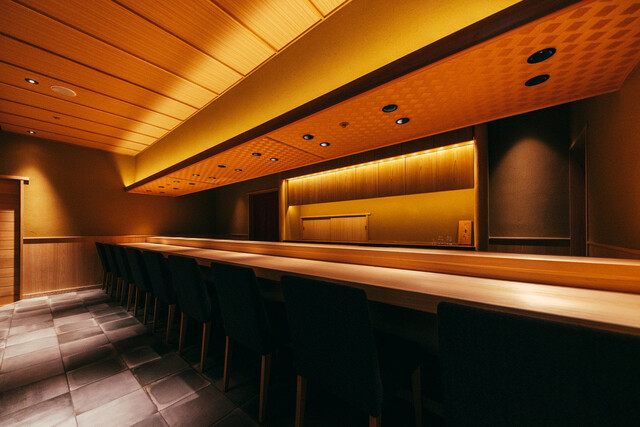
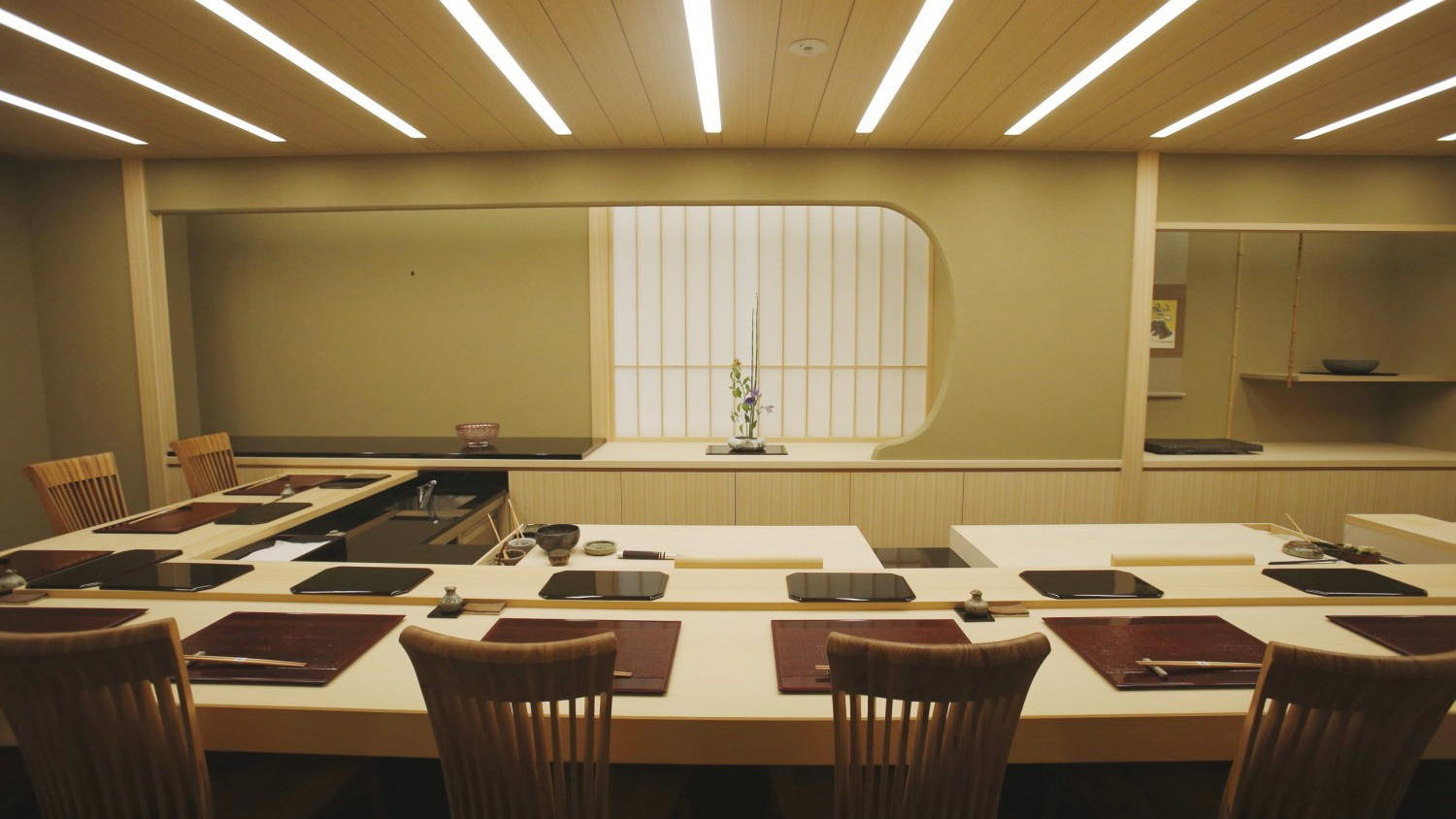
Ginza’s newer sushi rooms often hide in plain sight: upper-floor addresses, quiet elevator arrivals, and counters built for concentration rather than theatre. Sushi Yuu fits that grammar. The setting is not the old Ginza grand-room model, but the contemporary small-counter format that has become familiar across Tokyo’s higher-end sushi scene: few seats, simultaneous pacing, and a meal designed around the chef’s sequence rather than diner choice.
That format matters because Tokyo sushi has narrowed at the serious end. The city’s competitive counters increasingly ask diners to accept a fixed rhythm, a defined course, and a compact room where timing is part of the craft. Sushi Yuu’s selection for Tabelog Sushi TOKYO 100 in 2025 places it within that local recognition system, a useful signal in a city where domestic dining platforms often carry more weight with Japanese diners than international guidebook shorthand.
Ginza sushi, read through sourcing and technique
The restaurant’s stated emphasis on fish places it in the central Edo-mae conversation: local and regional seafood handled through technique rather than decoration. In Tokyo, that tradition is less about raw luxury than calibration, with rice temperature, seasoning, aging, curing, and cut doing the interpretive work. Imported luxury cues can distract from that point. At counters in this category, the global element is not fusion; it is the way Tokyo sushi has absorbed broader fine-dining expectations around pacing, pairing, and reservation discipline while keeping the product logic anchored in Japanese seafood.
Sake, shochu, and wine are all part of the drinks framework, with pairings available by request. That tells a larger story about the current Ginza sushi economy. A generation ago, the default pairing language leaned heavily toward beer, sake, or tea. Now, wine has become a regular part of the premium counter vocabulary, not as a replacement for nihonshu but as another lens on fat, acidity, temperature, and salinity. Sushi Yuu sits in that newer mode: Japanese ingredients, Japanese counter etiquette, and a beverage program that acknowledges international dining habits without turning the meal into a Western tasting-menu imitation.
The omakase-only structure also limits the kind of improvisation some travellers expect from sushi. This is not the place for à la carte grazing or celebratory customisation. The format points toward trust in sequence, which is central to Tokyo’s higher-end sushi culture. A diner choosing this style is choosing a controlled arc: seafood, rice, temperature, and pacing handled as one argument.
A small counter format in Ginza's serious middle lane
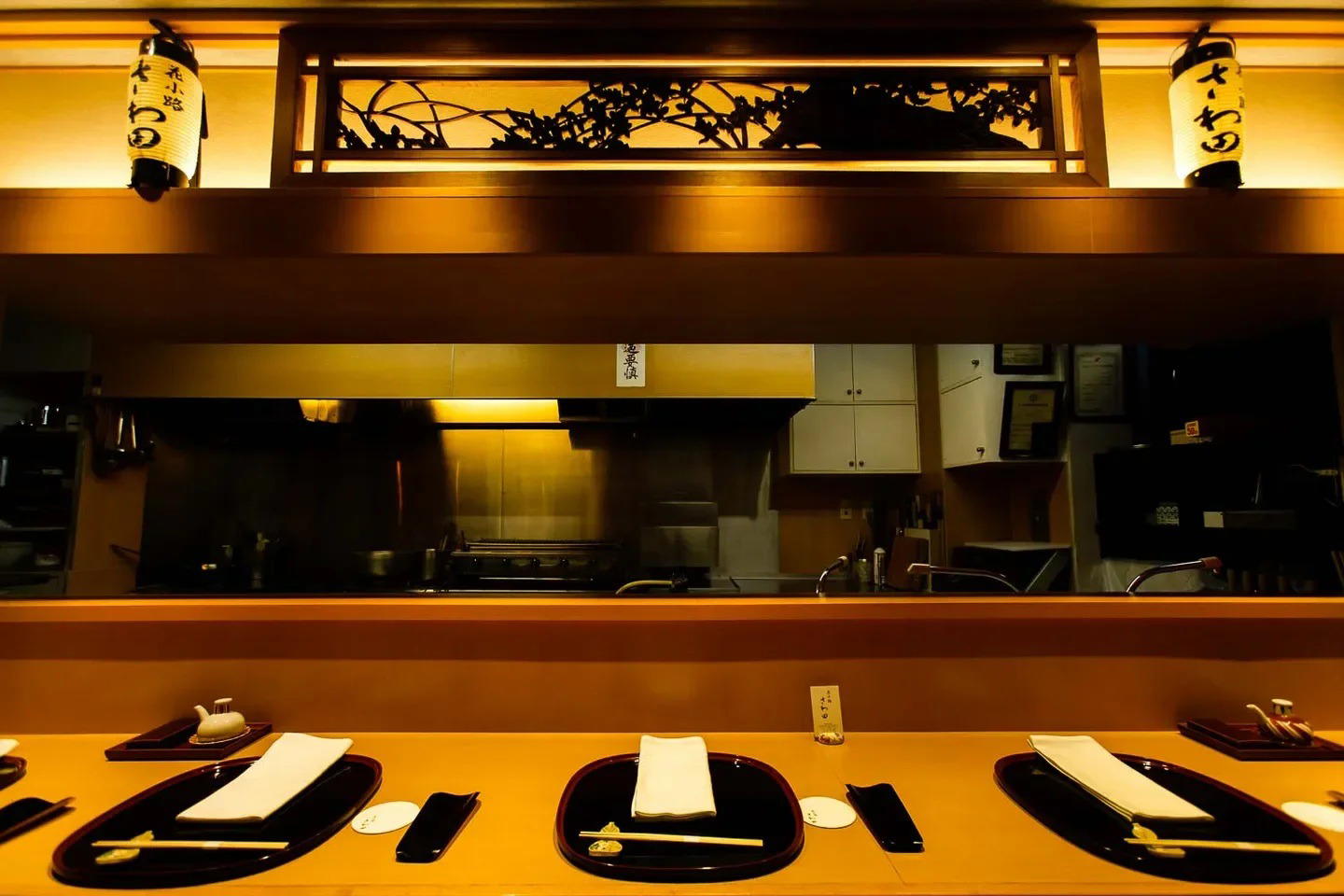
Ginza contains several versions of luxury dining. Some rooms trade on old-guard ceremony; others on international polish; others on narrow craft and a room small enough that every seating feels compressed. The restaurant is closer to the third category. Its 15-seat layout, split between a main counter and a separate counter, gives it more flexibility than an eight-seat shrine but keeps it firmly in the small-room register. That scale affects the experience. Conversation stays contained, service rhythm is easier to read, and the meal’s success depends on attention rather than spectacle.
Within Tokyo’s comparison set, Sushi Takahashi is the cleanest sushi reference among nearby peers, while Oniku Karyu and Meat Hanayagi show how Ginza’s premium dining market also runs deep in beef-focused formats. 銀座 うち山 belongs to another Japanese dining lane, and ARROCERÍA La Panza illustrates how Ginza’s restaurant map is no longer only sushi, tempura, kappo, and steak. The useful point is not that these restaurants compete dish for dish. It is that Ginza diners are choosing among highly specific formats, and the restaurant’s case rests on whether the traveller wants a focused sushi counter rather than a broader Japanese or international meal.
That decision is especially relevant for visitors planning a wider Tokyo itinerary. A serious sushi counter should not be treated as interchangeable with yakitori, curry, café culture, or izakaya-style seafood. For contrast across the city, EP Club’s Tokyo restaurant coverage ranges from . 鮪と炭火焼き うお炭 秋葉原店 and 124. KAGURAZAKA (Yakitori) to 3 Chome no Curry Ya San, 12/10 Shinjuku ten, and 2D Cafe. The restaurant should be read as a concentrated counter meal inside that broader city map, not as a general-purpose night out.
Who this counter suits
The strongest fit is the diner who values format discipline: a set omakase, small counter, seafood focus, and a room where the meal’s tempo is predetermined. The weaker fit is the diner who needs extensive dietary adaptation, a free-form order, or a birthday-plate style celebration. Tokyo has plenty of restaurants for looser evenings; this category rewards diners who accept constraints in exchange for precision.
The restaurant’s 2023 opening date also matters. Tokyo sushi is full of heritage counters, but newer addresses can move faster in the way they handle reservations, pairings, and room design. Recognition in the 2025 Tabelog Sushi TOKYO 100 suggests quick traction inside a crowded category. That is not a guarantee of personal preference, but it is a meaningful trust signal in a market where local diners punish inconsistency.
For travellers building a full trip around food, the better strategy is to separate categories rather than stack similar meals. Pair a Ginza sushi counter with yakitori in Kagurazaka, curry in Kyobashi, seafood in Akihabara, or a café stop in Shin-Okubo, then use Our full Tokyo restaurants guide to avoid repeating the same register. For the rest of the city plan, Our full Tokyo hotels guide, Our full Tokyo bars guide, Our full Tokyo wineries guide, and Our full Tokyo experiences guide give the meal a more coherent travel frame.
Readers comparing Japanese dining outside Tokyo can also look at -Grilled beef Sukiyaki- KAMAKURA TANUKIAN 鎌倉 たぬき庵 in Kamakura.cafe in Osaka.know in Kumamoto, (Shoku) Vietnam in Kawasaki, [Curry Senmon Ten] Maruyama Kyoju. in Sapporo, and [ki:] in Kyoto. For a transpacific sake-and-Japanese-food comparison, Jōdo Saké Bar in Los Angeles and Onigiri Time in Pasadena show how differently Japanese formats read once they leave their home context.
A Lean Comparison
Comparable venues to place this listing in its category.
| Venue | Cuisine | Price | Notes |
|---|---|---|---|
| Sushi YuuThis venue — the venue you are viewing | Chūō, Traditional Edomae Omakase Sushi | $$$$ | Not listed |
| Fukuji (ふぐ福治) | Ginza, Natural Tiger Fugu Fine Dining | $$$$ | Not listed |
| Yakatabune Izanagi | Not listed | $$$$ | Shinagawa, Wagyu Omakase on Tokyo Bay Yakatabune |
| Kitagawa | Chūō, Modern Japanese Kappo | $$$$ | Not listed |
| Azabu Muroi | Chūō, Seasonal Kaiseki Omakase | $$$$ | Not listed |
| 銀座 下鴨茶寮 東のはなれ | Chiyoda, Kyoto Kaiseki Tea House | $$$$ | Not listed |
Recognition history
Dated appearances from independent guides and award organizations, with the underlying list record or original source where available.
Tabelog 100 #9 · No. 9
Tabelog · Tabelog 100 - Sushi - TOKYO - 2025


At a Glance
- Classic
- Intimate
- Elegant
- Date Night
- Business Dinner
- Celebration
- Special Occasion
- After Work
- Solo
- Chefs Counter
- Standalone
- Sake Program
- Local Sourcing
- Sustainable Seafood
Current opening hours
- Monday
- 5:30–10 PM
- Tuesday
- Closed
- Wednesday
- Closed
- Thursday
- 5:30–10 PM
- Friday
- 12–2 PM, 5:30–10 PM
- Saturday
- 12–2 PM, 5:30–10 PM
- Sunday
- 12–2 PM, 5:30–10 PM
Hours can change for holidays and private events. Last verified .
The atmosphere is that of a traditional, understated Tokyo sushi-ya: a compact counter-focused room with classic Japanese decor, quietly attentive staff, and a relaxed but serious focus on the omakase experience rather than scene or spectacle.