
Sushi Saryu occupies a six-seat hinoki counter behind a discreet wooden door in the Kronos Sathorn building, delivering a 15-course omakase built on seafood sourced directly from Tokyo's Toyosu Fish Market. Holding a Michelin Plate in 2024 and 2025, it sits at the compact, reservation-essential end of Bangkok's Japanese dining tier. The name itself, referencing the precious passing of time, signals the deliberate pace at which each course arrives.
Pearl is the En Primeur Club membership app — saves, bookings, and concierge access live there. Same editors, same standards.
- Address
- อาคาร โครนอส สาทร ชั้น G 46 N Sathon Rd, Bang Rak, Bangkok 10500, Thailand
- Phone
- +66 83 912 9288
- Website
- wly.sg
- Directions
- Get directions
 Saves & bookings on Pearl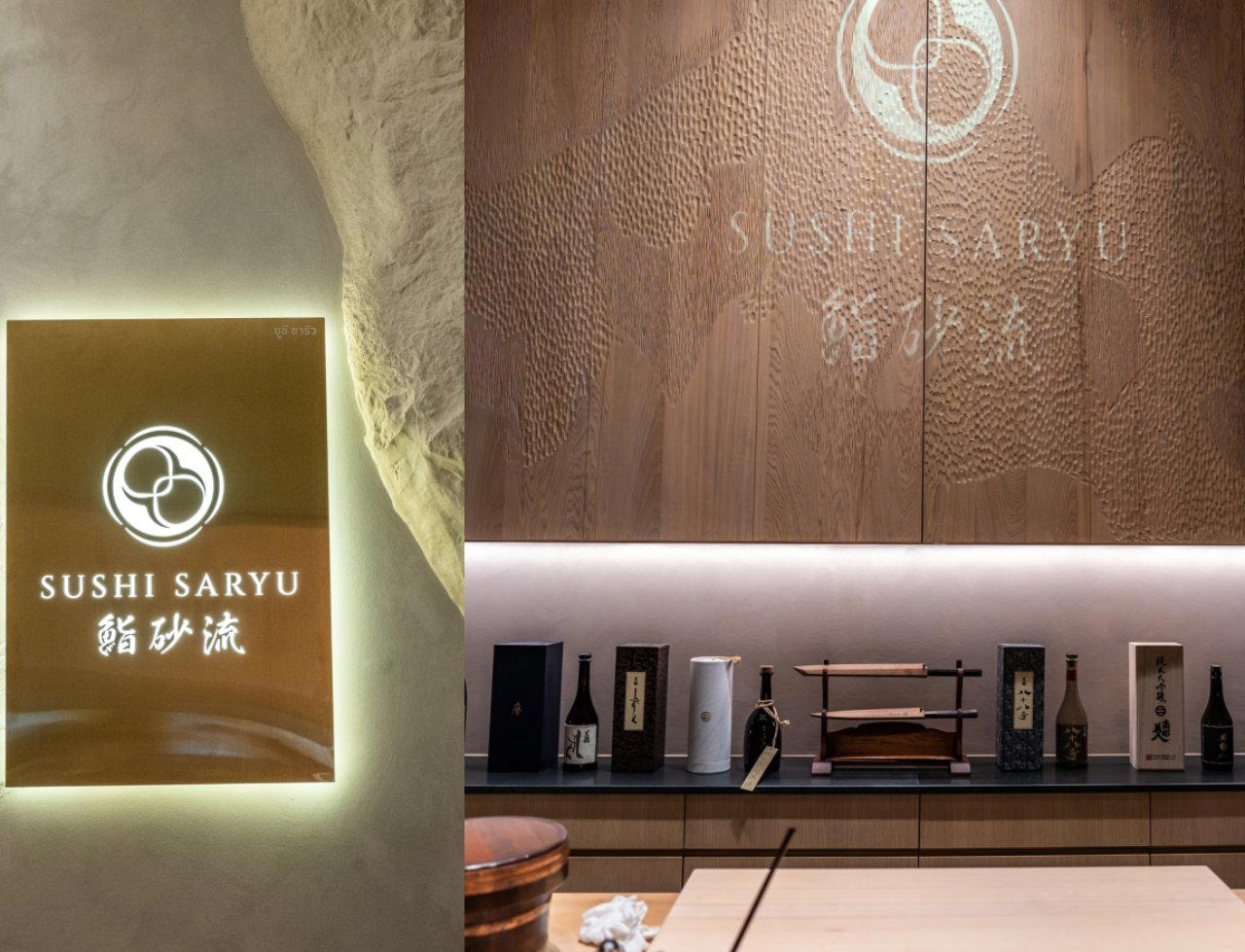
Behind the Wooden Door on Sathorn
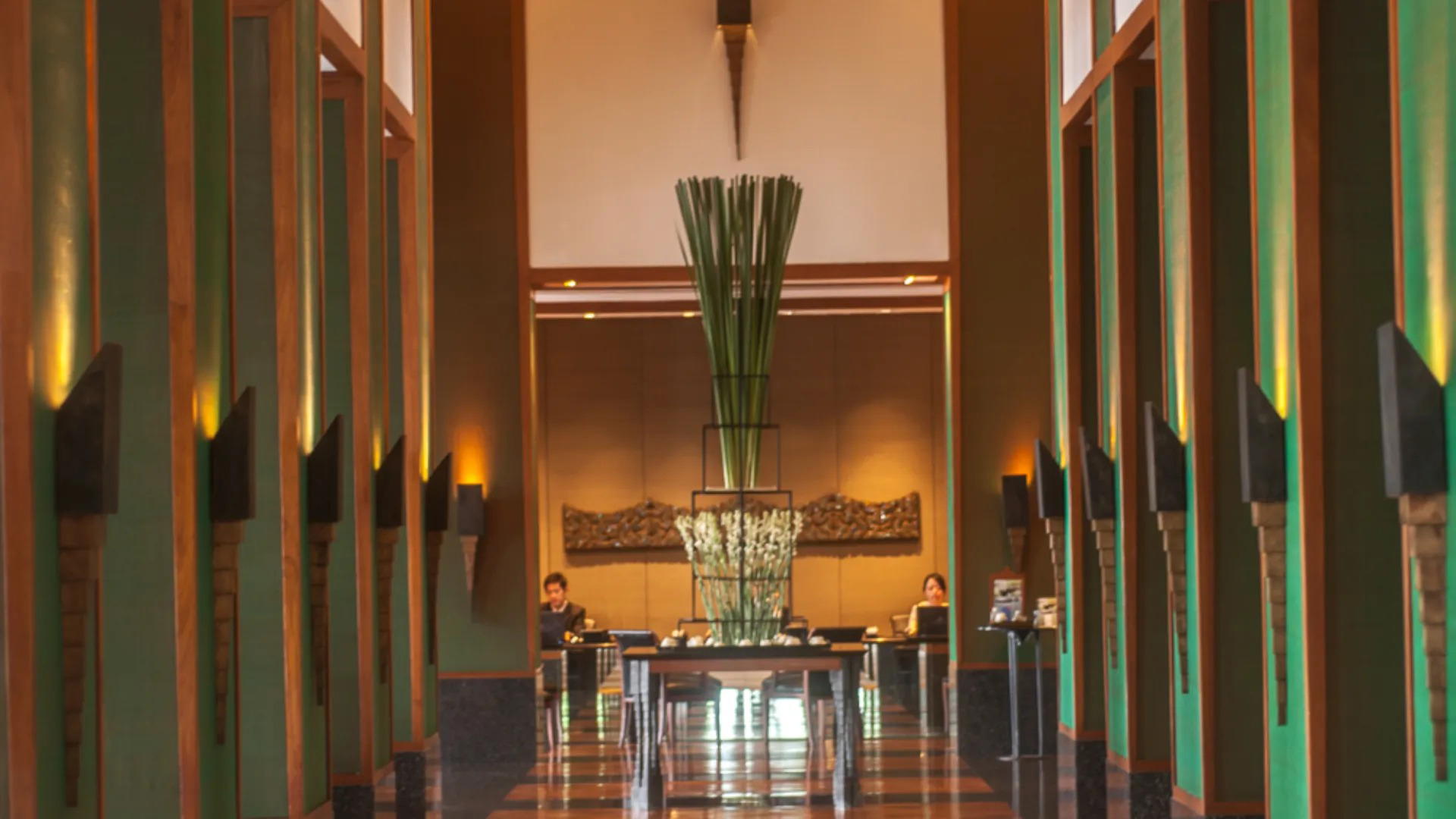
Bangkok's Sathorn Road has a long history of housing Japanese restaurants that feel separate from the city around them. Step through the right doorway and the traffic, heat, and noise of one of Southeast Asia's most intense thoroughfares simply disappear. Sushi Saryu works on exactly this principle. A discreet wooden door on the ground floor of the Kronos Sathorn building opens into a lounge-cum-cave, and beyond that, a dining area centred on a counter of Hinoki cypress, the same aromatic, pale timber used in high-end omakase rooms from Ginza to Nishi-Azabu. The material choice is not decorative. Hinoki carries specific meaning in Japanese counter culture: it ages visibly, absorbs the oils and scent of the kitchen, and becomes, over time, a record of every service held at its surface.
The room holds six seats daily. That capacity is a deliberate constraint rather than a logistical limitation, and it places Sushi Saryu firmly in Bangkok's small-counter omakase tier, a category that has expanded considerably over the past decade as the city's appetite for format-driven Japanese dining has grown alongside its wealth of expatriate and high-net-worth Thai diners.
What Six Seats Actually Buys You
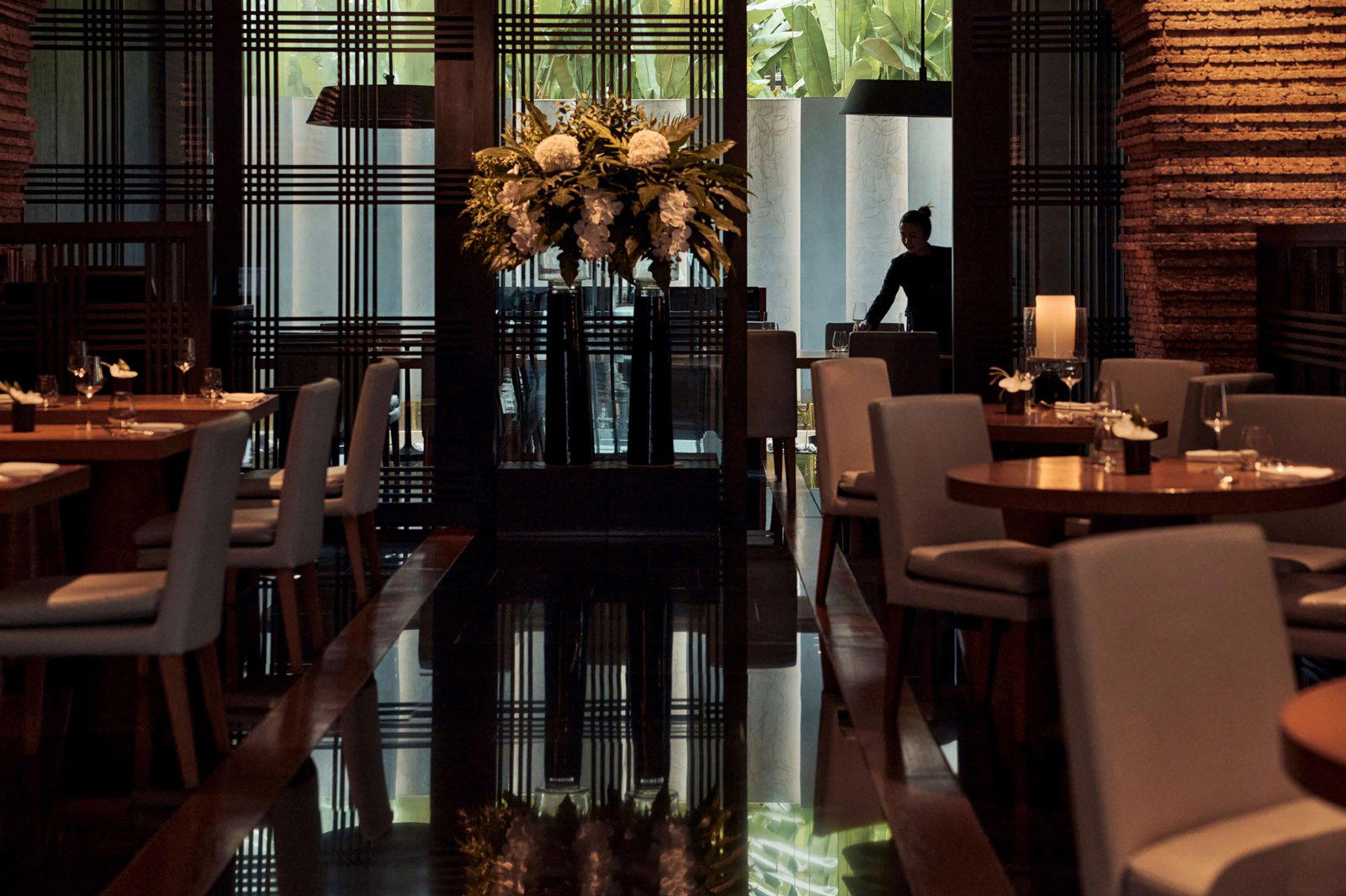
Bangkok's ฿฿฿฿ dining tier spans considerable range. At one end sit large-format tasting menus with 30-plus covers per service; at the other, counters with single-digit capacity where the economics only work if the sourcing, execution, and chef attention justify a price point that competes with similar rooms in Tokyo or Hong Kong. Sushi Saryu sits in the latter group. The omakase is built around seafood sourced directly from Toyosu Fish Market in Tokyo. That supply chain is significant. Many Bangkok Japanese restaurants source regionally or use Bangkok-based Japanese wholesalers; direct Toyosu procurement adds cost but also accountability, connecting each piece of fish to a market where provenance and grading are documented at the point of sale.
In practical terms, this means the per-seat cost at Sushi Saryu reflects more than labour and rent. It reflects the logistics of moving perishable, premium product across international supply chains at frequency. For diners calibrating value at this price range, the comparison point is not the broader Bangkok Japanese dining scene, it is what an equivalent counter in Tokyo charges for the same sourcing standard, and whether Bangkok's premium represents a discount or a premium on that baseline.
Comparable omakase counters operating in the same city tier include Ginza Sushi Ichi, which draws its lineage directly from the Tokyo original, and Sushi Ichizu. Further along the format spectrum, In the Mood for Love and Nikaku offer different readings of how Japanese counter dining translates to Bangkok. Fillets occupies a more accessible price point in the same cuisine category.
The Michelin Plate in Context
Michelin recognized the restaurant with Plate designations in 2024 and 2025. In the Michelin hierarchy, the Plate signals a kitchen producing food that inspires inspector interest, quality cooking that merits attention without yet reaching the one-star threshold. For a six-seat counter in Bangkok, consecutive Plate recognitions carry real weight.
The name Saryu references the precious passing of time, a framing that extends to the pace of the omakase itself. A 15-course sequence at a six-seat counter is not a format designed for efficiency. It is designed to allow each piece of fish to be addressed individually, with the counter rhythm set by the chef's preparation rather than by table turnover targets. For diners comparing this against the city's other ฿฿฿฿ options, including Thai contemporary rooms like Baan Tepa or German tasting menus like Sühring, the format difference is as significant as the cuisine difference. This is a counter experience, not a dining room experience, and the distinction shapes everything from sightlines to conversation to the pace at which you eat.
Bangkok's Omakase Counter Scene
The growth of small-format omakase in Bangkok reflects broader shifts in how the city's premium dining market has matured. A decade ago, high-end Japanese dining in Bangkok was dominated by large hotel restaurants with extensive à la carte menus. The counter format, intimate, chef-led, no-choice, has moved from niche to its own recognised category, with multiple counters now holding or competing for Michelin recognition. The pattern mirrors what happened in cities like Singapore and Hong Kong in the years before Bangkok's Japanese scene reached critical mass: a consolidation around format purity, sourcing transparency, and capacity restriction as markers of seriousness.
The restaurant's position in this arc is direct. What the Michelin record and the Toyosu sourcing model together signal is a counter that has chosen depth of product over breadth of offer, and format discipline over scale, a positioning that aligns it with a defined tier of peer counters both in Bangkok and regionally. For comparison points outside Thailand, the operating model finds closer parallels at counters like Harutaka in Tokyo or Sushi Shikon in Hong Kong than at the large-format Japanese restaurants that still dominate hotel dining across Southeast Asia.
Planning Your Visit
With six seats per service, reservations are non-negotiable. The address is Kronos Sathorn Building, Ground Floor, 46 North Sathorn Road, Bang Rak, Bangkok 10500.
| Venue | Format | Capacity | Price Tier | Michelin Recognition |
|---|---|---|---|---|
| The restaurant | Omakase counter | 6 (8 private) | ฿฿฿฿ | Plate 2024, 2025 |
| Ginza Sushi Ichi | Omakase counter | Not confirmed | ฿฿฿฿ | See listing |
| Sushi Ichizu | Omakase counter | Not confirmed | ฿฿฿฿ | See listing |
| In the Mood for Love | Sushi counter | Not confirmed | ฿฿฿฿ | See listing |
AKKEE in Pak Kret, PRU in Phuket, Aeeen in Chiang Mai, Agave in Ubon Ratchathani, Angeum in Phra Nakhon Si Ayutthaya, and The Spa in Lamai Beach.
What Sushi Saryu Is Famous For
The venue does not trade on a single signature dish. At a format-driven counter built around Toyosu-sourced fish, the menu shifts with market availability and seasonal supply, which is structurally the point. What the restaurant is documented as delivering is a 15-course sequence assembled from premium Tokyo market fish, served at a six-seat hinoki counter with consecutive Michelin recognition for its execution. That consistency of sourcing and format discipline, rather than any fixed dish, is the offering the kitchen has built its reputation on.
- Botan Ebi
- O-toro
- Nodoguro
- Uni
- Sujiko
- Buri
Price and Recognition
Comparable venues nearby, for context on price, style, and recognition.
| Venue | Cuisine | Price | Awards | Notes |
|---|---|---|---|---|
| Sushi SaryuThis venue — the venue you are viewing | Si Lom, Edo-mae Sushi Omakase | $$$$ | Michelin Plate | Not listed |
| Torisawa 22 | Watthana Khwaeng, Yakitori Omakase | $$$$ | Michelin Plate | Not listed |
| Fillets (Sushi) | Suan Lumphini, Modern Japanese Omakase | $$$$ | Not listed | Not listed |
| Issaya Siamese Club | Thung Maha Mek, Modern Thai | $$$$ | Not listed | Not listed |
| Bisou | Not listed | $$$$ | Michelin Plate | Suan Lumphini, Modern French with Japanese Influences |
| Den Kushi Flori | Not listed | $$$$ | Michelin Plate | Siam Square, Japanese-French Fusion Skewer Omakase |
Recognition history
Dated appearances from independent guides and award organizations, with the underlying list record or original source where available.
Michelin Plate
Michelin
Michelin Plate
Michelin
Michelin Plate
Michelin
At a Glance
- Intimate
- Elegant
- Sophisticated
- Minimalist
- Special Occasion
- Date Night
- Celebration
- Chefs Counter
- Open Kitchen
- Private Dining
- Sake Program
- Sommelier Led
- Sustainable Seafood
- Local Sourcing
Current opening hours
- Monday
- Closed
- Tuesday
- 6–10 PM
- Wednesday
- 6–10 PM
- Thursday
- 6–10 PM
- Friday
- 6–10 PM
- Saturday
- 6–10 PM
- Sunday
- 6–10 PM
Hours can change for holidays and private events. Last verified .
Minimalist dining area with a traditional Hinoki wood omakase counter, creating an intimate and meditative atmosphere where guests watch Chef Sudo meticulously prepare each dish with precision and artistry.