Our verdict
Sushi Ichizu occupies a specific position in Bangkok's omakase market: a counter under Chef Riku Toda that has held consecutive rankings on Opinionated About Dining's Asia list since 2023, peaking at #70 before settling at #126 in 2025. Located in Huai Khwang, away from the central hotel corridor, it runs tightly structured sittings across lunch and dinner six days a week, drawing a reservation-forward crowd who track the OAD rankings closely.

Pearl is the En Primeur Club membership app, where members save venues, book tables and use the concierge.
The menu
What to order
- Murasaki Uni from Hokkaido
- Akami Yushimo Zuke Bluefin Tuna
- Kuruma Ebi Tiger Prawn
- Nodoguro Blackthroat Seaperch
- Warabi Mochi
Bangkok's Omakase Tier: Where Sushi Ichizu Sits
The counter sushi format arrived in Bangkok gradually over the past two decades, first as a luxury hotel offering, then as a standalone category with its own competitive logic. Today the city hosts a recognisable tier of Japanese-trained omakase counters, among them Ginza Sushi Ichi, Sushi Masato, and In the Mood for Love, each positioned against a different slice of the dining public. Sushi Ichizu, operating out of Huai Khwang rather than the Silom or Sukhumvit corridors, occupies a position that rewards guests who follow critic-led rankings rather than hotel concierge recommendations.
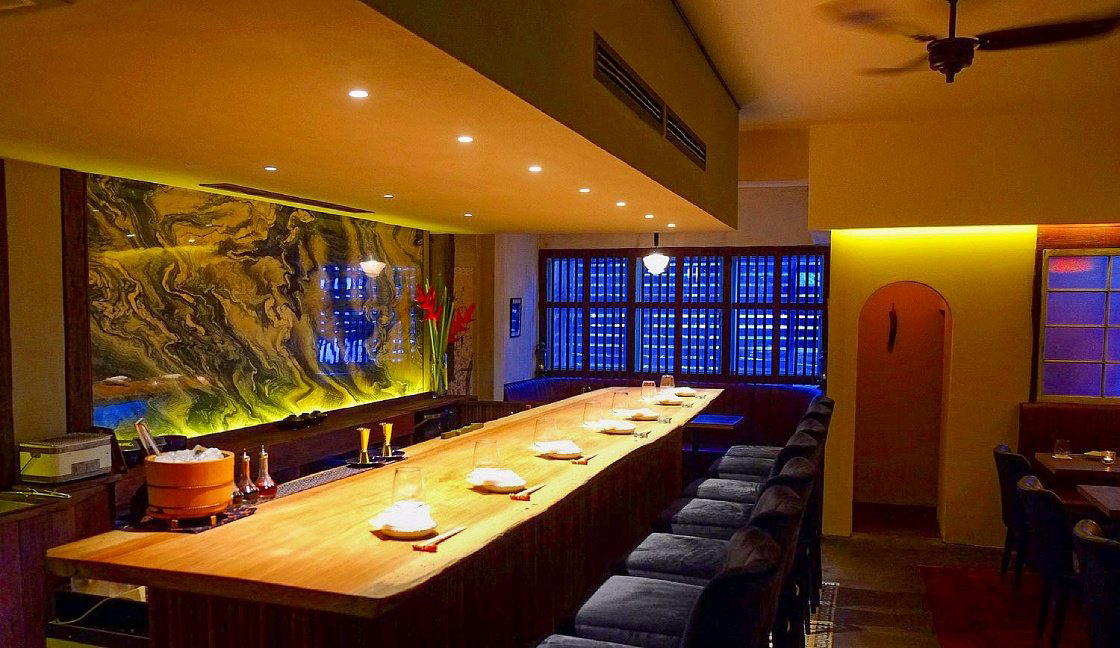
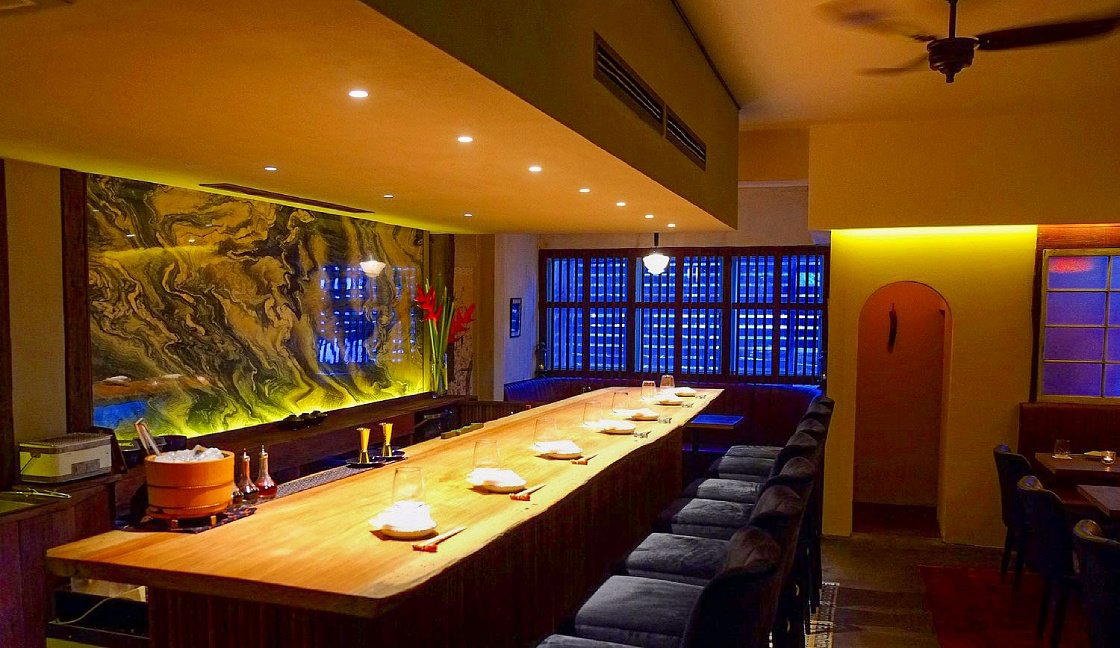
The address matters here. Bang Kapi and Huai Khwang sit outside the gravitational pull of Bangkok's premium hospitality district, which means the counter attracts a self-selecting audience: guests who have found it through Opinionated About Dining's Asia rankings and made a deliberate choice to seek it out. That audience profile shapes the room's atmosphere more than any deliberate design decision.
Three Years on the OAD Asia List
Opinionated About Dining's rankings draw from a voter base of serious eaters rather than industry insiders, which gives its placements a different weight than hospitality-facing guides. Sushi Ichizu has held a position on the OAD Leading Restaurants in Asia list for three consecutive years: ranked #70 in 2023, #103 in 2024, and #126 in 2025. The trajectory, a dip after a strong debut year, is worth reading carefully. A drop from #70 to #126 over two years does not indicate a decline in quality so much as it reflects the rapid expansion of serious omakase options across Asia, particularly in cities like Seoul, Singapore, and Bangkok itself. The list has grown more competitive; a position in the top 130 across the entire continent remains a meaningful data point.
Among Bangkok's sushi counters specifically, this places Sushi Ichizu in the critically recognised bracket alongside Nikaku and Fillets, each of which draws from a similar pool of informed diners. For context on how this fits into Bangkok's wider fine dining scene, the city's other OAD-tracked counters and restaurants, including Southern Thai specialist Sorn and the German-trained kitchen at Sühring, position the city as a genuinely pluralist fine dining destination, not one defined by any single cuisine. Sushi Ichizu contributes to that breadth as the Japanese counter format with the clearest critical pedigree outside the hotel tier.
Chef Riku Toda and the Japanese Training Lineage
In omakase, the chef's training background functions as a quality signal in the same way a winery's Burgundy apprenticeship does in wine. Guests book knowing roughly what philosophical approach to expect: the sourcing logic, the pacing of a nigiri sequence, the temperature management of the rice. What the OAD rankings imply is that the execution reads as credible to a voter base that eats at counters across Japan, Hong Kong, and Southeast Asia. That is a form of indirect credentialing.
The Japanese omakase counter has a particular pedagogy: years at a single house, internalising the master's approach to aging fish, seasoning rice, and structuring a meal around tempo rather than novelty. When that model is exported to cities like Bangkok, the question is always how much of that structure survives the transplant. The critical reception of Sushi Ichizu suggests the transfer has been largely intact. For comparison across Asia's transplanted counter format, Sushi Shikon in Hong Kong and Harutaka in Tokyo represent the range from transplanted to origin-house standards.
The Sitting Structure and What It Signals
Sushi Ichizu runs three sittings across Tuesday through Sunday: a lunch service from 12 to 2 pm, and two dinner services at 5:30–7:30 pm and 8–10 pm. Monday is closed. This format, multiple fixed sittings rather than open-ended reservation windows, is the standard architecture of serious omakase counters globally. It allows the chef to control ingredient use precisely, source for a known number of covers, and maintain a consistent rhythm across each service.
The two-hour dinner windows are tight by the standards of multi-course tasting menus in Bangkok's Thai contemporary or French kitchens, where two and a half to three hours is more common. A focused nigiri omakase, however, is designed for that pace. The compression is intentional, not a limitation. For guests unfamiliar with the format, arriving at the start of a sitting rather than the middle matters: the sequence is structured to build, and entry mid-way disrupts both the guest experience and the kitchen's rhythm.
Planning Your Visit
Sushi Ichizu is in Huai Khwang, a district that sits northeast of the city's hotel and nightlife core. Guests coming from Silom or Sukhumvit should allow extra travel time, particularly for the 5:30 pm sitting when Bangkok's early-evening traffic compounds standard transit times. The BTS and MRT networks do not serve Huai Khwang directly; a taxi or ride-share from the nearest interchange point is the practical approach.
Given the fixed-sitting format and the counter's critical visibility, reservations are the only sensible path. Walk-in availability at a three-times-ranked OAD counter is unlikely outside of cancelled spots.
| Venue | Format | OAD Asia Ranking (2025) | Location | Sittings |
|---|---|---|---|---|
| Sushi Ichizu | Omakase counter | #126 | Huai Khwang | 3 per day (Tue–Sun) |
| Ginza Sushi Ichi | Omakase counter | Ranked | Central Bangkok | Multiple sittings |
| Sushi Masato | Omakase counter | Ranked | Central Bangkok | Multiple sittings |
| Nikaku | Omakase counter | Ranked | Bangkok | Multiple sittings |
Bangkok's Broader Dining Map
Sushi Ichizu represents one strand of Bangkok's wider fine dining offer. For guests building a multi-day itinerary, the city's range extends from Japanese counter formats to contemporary Thai tasting menus, European-trained kitchens, and regional Thai specialists. Our full Bangkok restaurants guide maps the full competitive set. Elsewhere in Thailand, critics tracking the OAD and Michelin ecosystem have noted strong performances from PRU in Phuket and AKKEE in Pak Kret, while the country's culinary range extends to more unexpected addresses like Aeeen in Chiang Mai and Angeum in Phra Nakhon Si Ayutthaya. For visitors planning beyond the plate, our Bangkok hotels guide, bars guide, and experiences guide cover the adjacent decisions that shape how a meal like this fits into a longer stay.
Frequently asked questions
Where exactly is Sushi Ichizu?
Sushi Ichizu is located at 1982 New, Bang Kapi, Huai Khwang, Bangkok 10310, Thailand, Bangkok.
Is Sushi Ichizu Michelin-listed?
Sushi Ichizu has received recognition including: Opinionated About Dining Top Restaurants in Asia Ranked #126 (2025); Opinionated About Dining Top Restaurants in Asia Ranked #103 (2024); Opinionated About Dining Top Restaurants in Asia Ranked #70 (2023).
What's the best thing to order at Sushi Ichizu?
Sushi Ichizu operates as a full omakase counter, meaning guests do not select individual dishes. Chef Riku Toda determines the progression of the meal, which is standard practice at this tier of Japanese counter dining. The format places trust in the chef's sourcing and sequencing rather than a printed menu.
What kind of cuisine does Sushi Ichizu serve?
What are the opening hours for Sushi Ichizu?
Hours at Sushi Ichizu: Hours: Monday Closed Tuesday 12–2 pm, 5:30–7:30 pm, 8–10 pm Wednesday 12–2 pm, 5:30–7:30 pm, 8–10 pm Thursday 12–2 pm, 5:30–7:30 pm, 8–10 pm Friday 12–2 pm, 5:30–7:30 pm, 8–10 pm Saturday 12–2 pm, 5:30–7:30 pm, 8–10 pm Sunday 12–2 pm, 5:30–7:30 pm, 8–10 pm.
Who is the chef at Sushi Ichizu?
The chef associated with Sushi Ichizu is Riku Toda.
What do critics highlight about Sushi Ichizu?
Opinionated About Dining, whose rankings reflect votes from a community of serious independent eaters, has placed Sushi Ichizu on its Asia list three consecutive years: #70 in 2023, #103 in 2024, and #126 in 2025. The consistent presence on that list across multiple cycles signals sustained kitchen performance rather than a single strong year. OAD's voter base skews toward repeat visitors with broad regional reference points, which gives the ranking meaningful comparative weight within Bangkok's omakase tier.
The Minimal Set
A quick peer list to put this venue’s basics in context.
| Venue | Cuisine | Price | Awards | Notes |
|---|---|---|---|---|
| Sushi IchizuThis venue (the venue you are viewing) | Authentic Edomae Omakase | $200–300 | Not listed | Not listed |
| Sorn | Fine Southern Thai | $200–300 | 3 Michelin Stars · World's 50 Best #12 | Southern Thai, ฿฿฿฿ |
| Côte by Mauro Colagreco | Riviera Mediterranean Fine Dining | $200–300 | 2 Michelin Stars · World's 50 Best #91 | Mediterranean, Modern Cuisine, ฿฿฿฿ |
| Baan Tepa | Creative Thai Fine Dining | $150–200 | 2 Michelin Stars · World's 50 Best #53 | Thai contemporary, ฿฿฿฿ |
| Gaa | Modern Indian Fine Dining with Thai Influences | $150–200 | 2 Michelin Stars · World's 50 Best #95 | Modern Indian, Indian, ฿฿฿฿ |
| Sühring | Modern German Fine Dining | $200–300 | 3 Michelin Stars · World's 50 Best #18 | German, ฿฿฿฿ |
Recognition history
Dated appearances from independent guides and award organizations, with the underlying list record or original source where available.
Opinionated About Dining Top Restaurants in Asia Highly Recommended
Opinionated About Dining
Full recognition history (4 entries)
Opinionated About Dining Top Restaurants in Asia Ranked #126
Opinionated About Dining
Opinionated About Dining Top Restaurants in Asia Ranked #103
Opinionated About Dining
Opinionated About Dining Top Restaurants in Asia Ranked #70
Opinionated About Dining