Super Taste
Our verdict
Super Taste at 26 Eldridge Street is a Chinatown counter institution where hand-pulled noodles and Lanzhou-style beef broths define the offering. The room is sparse and the prices are low, placing it in a different register entirely from the tasting-menu tier that dominates New York City fine dining coverage. For noodle purists, the draw is the technique and the bowl itself, not the surroundings.

Pearl is the En Primeur Club membership app, where members save venues, book tables and use the concierge.
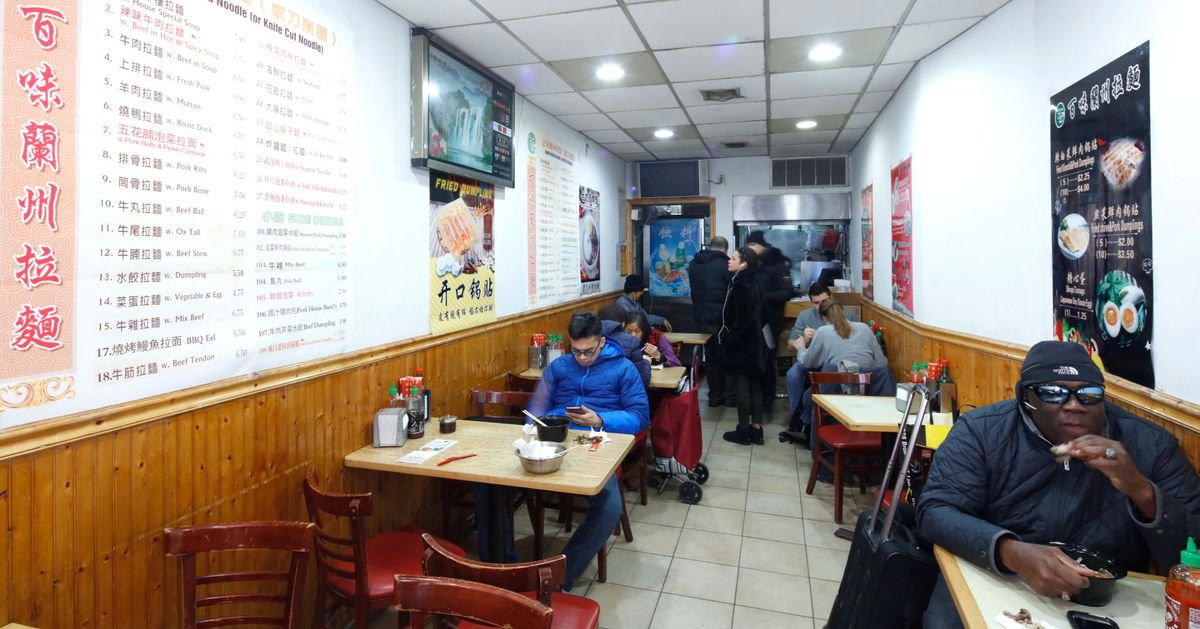
The menu
What to order
- Spicy Beef Noodle Soup
- Mount Qi Beef Noodles
- Pork House Bao
What a Chinatown Counter Tells You About New York's Noodle Culture
On Eldridge Street, a few blocks south of Delancey and deep into the working fabric of Manhattan's Chinatown, the physical container of a restaurant can communicate more about its purpose than any menu description. Super Taste operates in a room that strips the dining experience back to its functional core: fluorescent light, communal seating, tiled surfaces, and a counter position from which you can watch the kitchen work. The space is not incidental to the experience; it is the experience. In a city where dining rooms have become increasingly curated objects in themselves, with Atomix deploying considered darkness and material restraint, or Per Se framing Columbus Circle views through floor-to-ceiling glass, Super Taste makes the opposite architectural argument: the bowl in front of you is the only designed object that matters.
The Architecture of the Utilitarian
New York's Chinatown has historically sustained a category of eating space that functions on near-industrial logic. High turnover, shared tables, laminate surfaces, and lighting designed for visibility rather than atmosphere describe a format that predates the contemporary dining room as a concept. These rooms are not minimalist in the Scandinavian or Japanese design-led sense; they are utilitarian in the immigrant-economic sense, built to feed volume efficiently while keeping overheads low enough to justify prices that have no equivalent in the tasting-menu tier populated by Masa or Le Bernardin.
Super Taste fits this format precisely. The seating arrangement encourages proximity to strangers, which in practice means the room operates as a social equalizer: solo diners, families, and food-focused visitors from outside the neighbourhood occupy the same benches under the same lighting. There is no spatial hierarchy, no preferred table, no room design that codes status onto where you sit. The counter, where the noodle work happens, is the closest thing to a focal point, and it draws attention for functional rather than theatrical reasons.
This physical approach places Super Taste in a distinct tier of New York dining that gets underrepresented in coverage that focuses on the tasting-menu circuit running from Jungsik to the outer boroughs' ambitious newcomers. The Chinatown counter is a format with its own internal logic and its own metrics of quality, none of which involve the room's design ambitions.
Lanzhou Noodle Tradition in a Manhattan Context
The noodle format at Super Taste connects to a northwestern Chinese tradition built around hand-pulled la mian, the technique of stretching and folding dough repeatedly to produce noodles of varying thickness from the same base. Lanzhou-style beef noodle soup, the category most associated with this method, typically involves a clear, long-simmered broth, thin-sliced beef, white radish, and chili oil, with the noodle thickness chosen by the diner. The technique is visible in execution and audible in the pull and slap of dough against the counter surface.
In New York, hand-pulled noodles exist across a spectrum from high-volume Chinatown shops to more presentation-conscious interpretations uptown and in other neighbourhoods. What distinguishes the Eldridge Street tier is the directness of the lineage: practitioners trained in or on the tradition rather than adapted from it for a different audience. The bowl that arrives is calibrated for flavour and texture, not for photography or cross-cultural accessibility.
For readers accustomed to referencing the tasting-menu circuit that includes destinations like The French Laundry, Alinea, or Blue Hill at Stone Barns, the Super Taste model represents a different kind of craft argument entirely: one where technique is non-negotiable and presentation is irrelevant, where the credential is the noodle itself.
Neighbourhood Placement and What It Means for the Visit
Eldridge Street sits in the dense southern portion of Manhattan's Chinatown, a few minutes' walk from the Bowery and Canal Street. The immediate block is commercially active throughout the day, with the street-level density of shops, market stalls, and eating places that characterises this part of Lower Manhattan. Super Taste's address at number 26 puts it in a stretch of Eldridge that runs between Division Street and Canal, an area that sees a mix of neighbourhood residents, food-focused visitors, and weekday lunch traffic from nearby workplaces.
Arrival timing matters in this format: peak lunch and dinner hours at high-turnover counters produce queues that move at the pace of tables clearing rather than reservation slots opening. Coming slightly ahead of peak service or after the initial rush is the standard approach for Chinatown counter visits of this kind.
For context on the broader New York City eating scene, including higher-commitment tasting experiences at venues like Providence-tier equivalents and the full range of neighbourhood options, see our full New York City restaurants guide. Readers building a multi-stop itinerary might also consider the contrast Super Taste offers against destinations like Single Thread Farm, Addison, or The Inn at Little Washington, where the room is as deliberate as the plate.
Planning Your Visit
| Factor | Super Taste | Atomix | Masa | Le Bernardin |
|---|---|---|---|---|
| Format | Counter / casual | Tasting menu | Omakase counter | À la carte / tasting |
| Price tier | $ | $$$$ | $$$$ | $$$$ |
| Booking required | No (walk-in) | Yes, weeks ahead | Yes, months ahead | Yes, advance recommended |
| Dress code | None | Smart casual | Smart / formal | Business casual |
| Neighbourhood | Chinatown | Midtown | Midtown | Midtown |
For international reference points on room-as-experience dining, the contrast also holds against destinations like 8½ Otto e Mezzo Bombana in Hong Kong or Alain Ducasse's Louis XV in Monte Carlo, where the dining room is a primary product of the experience. Super Taste makes the opposite case, and makes it effectively. Readers interested in the American fine dining circuit beyond New York might also reference Emeril's in New Orleans, Lazy Bear in San Francisco, or Bacchanalia in Atlanta for different takes on the relationship between room and menu.
Frequently asked questions
Is Super Taste suitable for children?
Yes: the format, price point, and no-reservation walk-in structure make it one of the more practical options in New York City for families with children who eat noodles.
Is Super Taste better for a quiet night or a lively one?
If you want a quiet, unhurried room, the Chinatown counter format will not deliver that: the space is fast-paced and communal by design. For a lively, high-energy meal at a price that leaves room in the budget for other stops in the city, it fits well; if the night calls for something slower and more considered, venues operating at the $$$$ tier with reservation structures offer a different pace entirely.
What should I eat at Super Taste?
Order the hand-pulled noodles in beef broth; that is the core of the Lanzhou tradition the kitchen operates within, and it is the dish around which everything else is secondary. Noodle thickness is typically a choice you make at ordering, so decide before you reach the counter.
Is Super Taste part of a broader Chinatown noodle tradition worth understanding before visiting?
Super Taste draws on the Lanzhou hand-pulled noodle tradition, a northwestern Chinese regional form with a distinct technique lineage separate from Cantonese or Fujianese cooking that dominates much of New York's Chinatown. Understanding that distinction helps calibrate expectations: this is not a general Chinese-American diner but a specific regional format, and the broth, noodle construction, and condiment approach all reflect that specificity. The Eldridge Street location places it within a block of other specialists, making the immediate area a useful study in how different Chinese regional traditions have taken root in the same few city blocks.
Price and Recognition
Comparable venues nearby, for context on price, style, and recognition.
| Venue | Cuisine | Price | Awards | Notes |
|---|---|---|---|---|
| Super TasteThis venue (the venue you are viewing) | Hand-Pulled Noodles | $10–20 | Not listed | Not listed |
| Deluxe Green Bo | Shanghainese Dumplings | $10–20 | Not listed | Chinatown-Two Bridges, Shanghainese Dumplings |
| Spicy Village | Henan Chinese Noodles | $20–30 | Not listed | Lower East Side, Henan Chinese Noodles |
| Empire Szechuan | Szechuan Chinese & Noodles | $20–30 | Not listed | Upper West Side-Lincoln Square, Szechuan Chinese & Noodles |
| Shu Jiao Fu Zhou | Fuzhou Dumplings & Noodles | $10–20 | Chinese Restaurant Awards · Opinionated About Dining Casual in North America | Chinatown-Two Bridges, Fuzhou Dumplings & Noodles |
| Rulin | Modern Chinese Hand-Pulled Noodles | $20–30 | Not listed | Union Square, Modern Chinese Hand-Pulled Noodles |
Continue exploring
More in New York City
Restaurants in New York City
All restaurants in New York City →
Bars in New York City
All bars in New York City →






Details
- Cozy
- Casual Hangout
- Open Kitchen
- A La Carte
- Vegetarian Friendly
Current opening hours
- Monday
- 11 AM–9:20 PM
- Tuesday
- 11 AM–9:20 PM
- Wednesday
- 11 AM–9:20 PM
- Thursday
- 11 AM–9:20 PM
- Friday
- 11 AM–9:20 PM
- Saturday
- 11 AM–9:20 PM
- Sunday
- 11 AM–9:20 PM
Hours can change for holidays and private events. Last verified .
No-frills with few tables and printed menus on the walls, focusing on the food.