Sultán serves authentic Moroccan cooking on Carrer de Sant Antoni Maria Claret in Horta-Guinardó, with couscous and tagines for lunch or dinner.
Pearl is the En Primeur Club membership app — saves, bookings, and concierge access live there. Same editors, same standards.
- Address
- Carrer de Sant Antoni Maria Claret, 123, local 1 Bajo 1, Horta-Guinardó, 08025 Barcelona, Spain
- Phone
- +34644897654
- Website
- covermanager.com
- Directions
- Get directions
 Saves & bookings on Pearl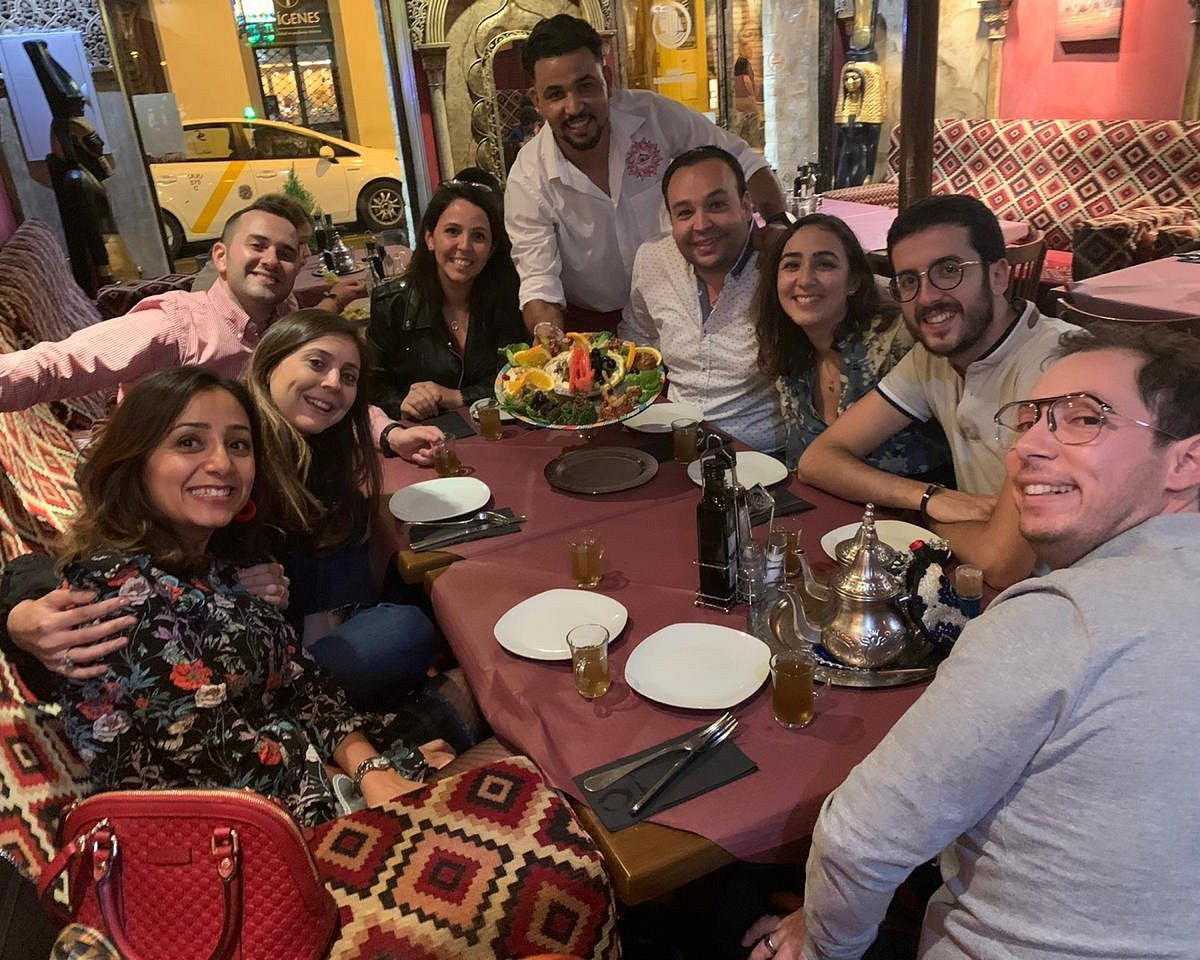
Horta-Guinardó and the Question of Where Barcelona Eats Next
The approach to Carrer de Sant Antoni Maria Claret tells you something about how dining in Barcelona has shifted over the past decade. The neighbourhood of Horta-Guinardó sits well clear of the Eixample grid and the tourist corridors of the Gothic Quarter, in a part of the city where residents still outnumber visitors and the pace of a meal is determined by appetite rather than turnover. Sultán occupies a ground-floor local on this street. the interesting conversations in Barcelona dining are no longer confined to a handful of avenues around the Passeig de Gràcia.
How the Neighbourhood Shapes the Format
Barcelona's dining geography has been reorganising for years. The concentration of headline restaurants in central postcodes, from the tasting-menu temples around Eixample to the seafront fish houses of Barceloneta, created a predictable circuit for visitors. As rents in central zones climbed through the 2010s, a secondary tier of serious independent kitchens began appearing in districts that had historically been residential rather than gastronomic. Horta-Guinardó belongs to that second wave. The neighbourhood lacks the media footprint of Gràcia or Poblenou, which means venues here tend to build reputation through local loyalty before attracting wider attention. For a place named Sultán, that kind of slow-burn credibility is more durable.
The trajectory fits a pattern visible across Spanish cities. In Girona, the pull of El Celler de Can Roca has demonstrated that serious dining does not require a capital-city address. In San Sebastián, Arzak has operated for generations in a residential district rather than a tourist zone. The lesson is consistent: venues that embed in their communities rather than orbiting the visitor economy tend to develop a more defined identity over time.
The Evolution Question: What Sultán Has Become
The editorial angle that matters most for Sultán is not where it started but where it is heading. Restaurants in transitional neighbourhoods go through recognisable phases. The first phase is survival: building enough of a local base to remain viable. The second is definition: deciding what kind of cooking the kitchen will commit to as the audience grows. The third is reputation: becoming the kind of place that draws diners from outside the immediate catchment, whether from across the city or from further afield.
For context, Barcelona's most discussed restaurants have each made a version of that evolution publicly visible. Disfrutar moved from a project by three former elBulli chefs into a globally cited progressive creative kitchen. Cocina Hermanos Torres converted a former industrial space into one of the city's most architecturally distinctive dining rooms. ABaC and Lasarte represent the hotel-anchored end of Barcelona's creative spectrum, while Enigma built its identity around format experimentation rather than a fixed menu structure. Sultán sits outside all of these peer groups by geography and price point.
The address on Carrer de Sant Antoni Maria Claret places it within walking distance of the Hospital de Sant Pau, one of the city's great Modernista landmarks, which draws a steady stream of visitors to the immediate area without generating the same density of dining demand as the Sagrada Família corridor. That distinction matters for understanding the clientele a restaurant in this location is likely to cultivate: more neighbourhood-driven, less transient.
Spanish Independent Dining and the Pressure to Pivot
The broader evolution of independent dining in Spain over the past fifteen years has created pressure on mid-tier restaurants to choose a lane clearly. The Michelin-starred tier, visible across Spain from Aponiente in El Puerto de Santa María to Azurmendi in Larrabetzu and Quique Dacosta in Dénia, has codified a particular style of ambition: technical, seasonal, regionally rooted, often tasting-menu-led. Below that tier, the independents that have survived with coherent identities tend to be those that resisted trying to replicate the tasting-menu format without the kitchen depth or the price tolerance in their local market to support it. The smartest pivots in Spanish independent dining have been toward clarity: a tighter menu, a defined cuisine identity, and pricing that matches the actual competitive set in the neighbourhood rather than the aspirational peer group in the Eixample.
What the location and name suggest is a venue that has staked a position in a part of Barcelona where the competition is less intense and the margin for building a loyal audience is wider. A defined cuisine identity, maintained over years, becomes a restaurant's most durable asset.
Spain's most compelling dining right now is not concentrated solely in the headline addresses. Mugaritz in Errenteria, Martin Berasategui in Lasarte-Oria, Ricard Camarena in València, and Atrio in Cáceres each built their reputations at a remove from the country's largest cities. The pattern is instructive for thinking about where the next generation of serious independent kitchens will emerge: in districts and cities where operational costs allow a kitchen to take risks and build at its own pace. DiverXO in Madrid is one extreme example of how a non-central address can become a destination in itself once the cooking achieves a clear enough identity.
Planning a Visit to Sultán
Sultán is located at Carrer de Sant Antoni Maria Claret, 123, Local 1 Bajo 1, in the Horta-Guinardó district of Barcelona, postcode 08025. The Recinte Modernista de Sant Pau is a short walk from the address. Reservations: Walk-ins are welcome. Dress: Casual. Budget: About $20 per person.
Booking and Cost Snapshot
Comparable venues nearby, for context on price, style, and recognition.
| Venue | Cuisine | Price | Notes |
|---|---|---|---|
| SultánThis venue — the venue you are viewing | el Baix Guinardo, Authentic Moroccan | $$ | Not listed |
| Koikoi Sushi | el Baix Guinardo, Japanese Sushi Fusion | $$ | Not listed |
| El Felino | Not listed | $$ | la Sagrada Familia, Traditional Italian Pizza and Pasta |
| Pizzería RAGVSA | el Guinardo, Italian Neapolitan Pizza | $$ | Not listed |
| Casa Lola | Not listed | $$ | la Dreta de l'Eixample, Modern Spanish Tapas |
| Lateral Consell | Not listed | $$ | la Dreta de l'Eixample, Spanish & Catalan Tapas |
Continue exploring
More in Barcelona
Restaurants in Barcelona
Browse all →
Bars in Barcelona
Browse all →
Hotels in Barcelona
Browse all →
At a Glance
- Cozy
- Intimate
- Casual Hangout
- Family
Warm and welcoming Moroccan hospitality in a cozy, home-like setting.