Barcelona's Japanese dining scene has a clear upper tier of Michelin-decorated tasting rooms and a broader mid-market of neighbourhood sushi counters. Koikoi Sushi, on Travessera de Gràcia in the Horta-Guinardó district, sits in the latter category, offering a Japanese-focused format in a city where Spanish avant-garde cooking dominates critical attention. For visitors willing to step outside the Eixample circuit, it represents a neighbourhood-level alternative worth investigating.
Pearl is the En Primeur Club membership app — saves, bookings, and concierge access live there. Same editors, same standards.
- Address
- Travessera de Gràcia, 320, +34666790616, Horta-Guinardó, 08025 Barcelona, Spain
- Phone
- +34666790616
- Website
- koikoi.es
- Directions
- Get directions
 Saves & bookings on Pearl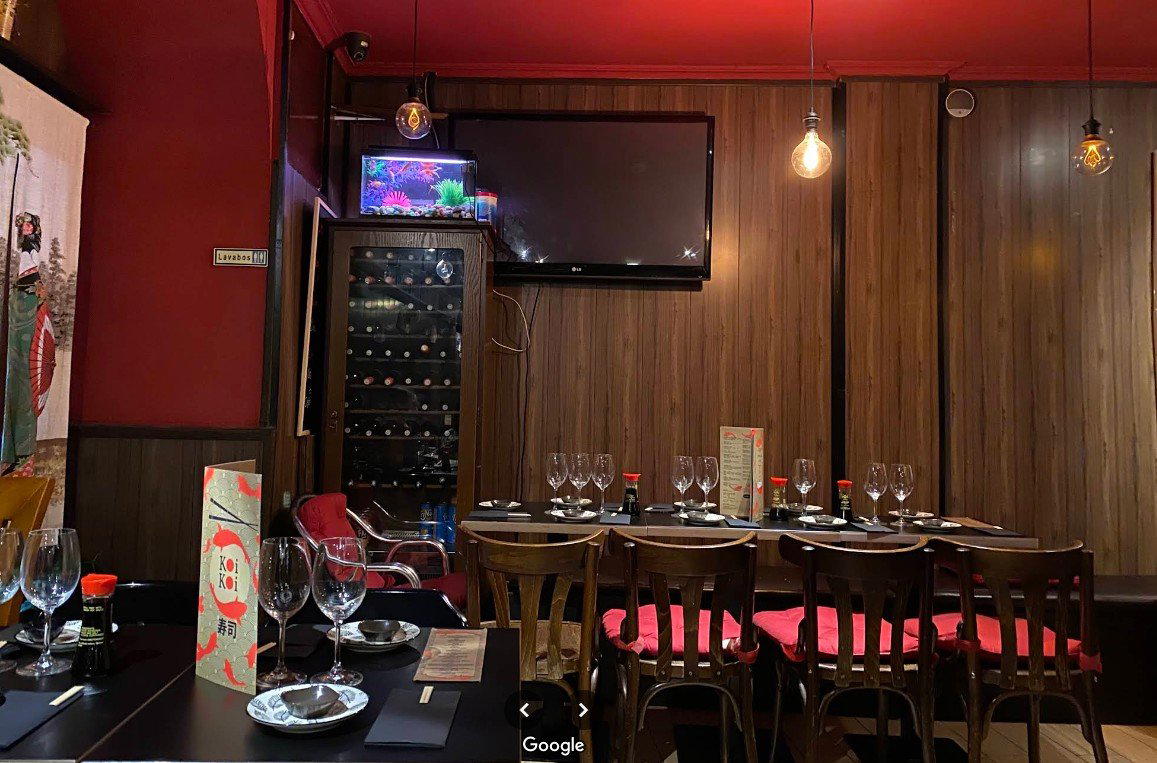
A Different Register on Travessera de Gràcia
The city that gave the world Disfrutar's molecular theatre and Enigma's labyrinthine tasting sequences does not, on the surface, seem like fertile ground for a restrained Japanese counter. Yet the appetite for Japanese food in Spain's second city has grown steadily over the past decade, partly as a counterpoint to the intensity of Catalan creative cuisine and partly because Barcelona's international population has imported its own dining expectations. Koikoi Sushi, on Travessera de Gràcia in the Horta-Guinardó district, sits within that quieter, neighbourhood-scale layer of the city's Japanese offering.
Travessera de Gràcia is a long commercial artery that connects several of Barcelona's inland districts, running parallel to but well north of the tourist corridors. The stretch around the 08025 postcode leans residential: pharmacy counters, local bakeries, and the kind of bar where the lunch menu is still written on a chalkboard. A Japanese restaurant here is not positioning itself against the Eixample dining tier, where tasting menus at higher prices are common. It is instead addressing the regular dining habits of a neighbourhood, which implies a different set of expectations on both sides of the counter.
Japanese Dining in a Spanish Context
Spain's relationship with Japanese cuisine has followed a trajectory similar to other western European capitals, but with its own inflections. The country's own fish culture, anchored in the mercats, the lonja system, and a deep Atlantic and Mediterranean supply chain, has meant that Spanish diners bring unusually high baseline expectations to raw fish. The question for any Japanese restaurant operating here is not simply whether the rice is seasoned correctly or the nigiri temperature controlled, but whether the sourcing can hold up against what a local already knows about what good fish looks and tastes like.
Barcelona specifically draws from the Mediterranean, where red prawn from Palamós, sea bass from the Delta de l'Ebre, and tuna from the Almadraba trap fisheries in the south are well-understood reference points. These are not obscure credentials: the same fish appear on the menus of Cocina Hermanos Torres and Lasarte, priced accordingly. A neighbourhood sushi counter that can connect its sourcing to any part of that supply chain earns credibility that a similar restaurant in, say, a central European landlocked city simply cannot claim by proximity alone.
The broader Spanish dining scene has long demonstrated that fish cookery at high technical levels is a Spanish strength. That context shapes what Barcelona diners bring to any fish-forward format, Japanese or otherwise.
The Sensory Register of a Neighbourhood Counter
The sensory experience of a Japanese counter in a residential Barcelona setting tends to differ from the high-ceremony omakase model associated with Tokyo's Ginza or counters like Atomix in New York. There is less ritual architecture: no carefully staged lighting designed to frame each piece of fish, no reverential silence. What tends to replace it in neighbourhood Japanese restaurants across southern European cities is a warmer, more conversational atmosphere, where the counter format encourages direct exchange rather than performance.
Sound matters in this context. The ambient noise level of a residential-district restaurant in Barcelona is shaped by the neighbourhood itself: the hum of a street outside, tables close enough together that separate conversations blur into a shared register. The experience of eating at a counter here is less meditative than its Tokyo equivalent and more social in the way that Spanish dining across all formats tends to be. Whether that is a strength or a limitation depends on what the diner is seeking. For those accustomed to the concentrated quiet of a Japanese omakase, it represents a genuine shift in register. For those who find high-ceremony tasting formats alienating, it may be exactly the right pitch.
Where Koikoi Sits in the Barcelona Japanese Tier
Barcelona's Japanese restaurant scene divides, broadly, into three price and format tiers. At the leading, a small number of high-end operations have staked claims on premium fish sourcing and tasting-menu formats that place them in direct conversation with the city's Michelin-decorated Spanish restaurants. ABaC and the creative Spanish houses set the price ceiling in this market, and any Japanese restaurant that wants to compete at that level needs both sourcing and technique that can justify similar spend. Below that, a mid-market of neighbourhood Japanese restaurants across Gràcia, Eixample, and Horta-Guinardó serves regular dining traffic at more accessible price points. Koikoi Sushi belongs to this middle tier.
That positioning is not a diminishment. The mid-market Japanese counter, done well, often delivers more reliable value than a tasting-menu operation where ambition occasionally outruns execution. The key differentiators at this level are consistency of fish handling, rice quality, and the judgement to keep a focused menu rather than expanding into every sub-format of Japanese cuisine simultaneously. Restaurants that try to be sushi counter, izakaya, and ramen house in one room rarely excel at any of them.
Planning Your Visit
Koikoi Sushi is located at Travessera de Gràcia, 320, in the Horta-Guinardó district, with a contact number of +34 666 790 616. The address places it away from the central tourist circuits, which in practice means less competition for tables from visitors and a dining room that skews local.
| Venue | District | Format | Price Tier | Advance Booking Required |
|---|---|---|---|---|
| The restaurant | Horta-Guinardó | Neighbourhood sushi | Not confirmed | Recommended (call +34 666 790 616) |
| Disfrutar | Eixample | Progressive tasting menu | €€€€ | Months in advance |
| Cocina Hermanos Torres | Les Corts | Creative tasting menu | €€€€ | Weeks to months ahead |
| Lasarte | Eixample | Progressive Spanish | €€€€ | Weeks ahead |
Spain's wider fine dining geography, from Arzak in San Sebastián to Mugaritz in Errenteria, Azurmendi in Larrabetzu, DiverXO in Madrid, Martin Berasategui, Quique Dacosta in Dénia, Ricard Camarena in València, and Atrio in Cáceres, provides useful reference for calibrating expectations across the country's dining register. For Japanese reference points at the international level, Le Bernardin in New York and Atomix illustrate how fish-forward precision operates at the highest tier.
Just the Basics
Comparable venues nearby, for context on price, style, and recognition.
| Venue | Cuisine | Price | Notes |
|---|---|---|---|
| Koikoi SushiThis venue — the venue you are viewing | el Baix Guinardo, Japanese Sushi Fusion | $$ | Not listed |
| La COCO | Not listed | $$ | la Vila de Gracia, Japanese-Mediterranean Fusion |
| Restaurant Sushi Taller | Not listed | $$ | Sant Gervasi - la Bonanova, Authentic Japanese Sushi |
| Koku Kitchen Buns | El Born, Japanese Bao Buns and Ramen | $$ | Not listed |
| IKOYA Izakaya | Not listed | $$$ | Sant Pere, Santa Caterina i la Ribera, Japanese Izakaya with Robata Grill |
| Ikibana | Sant Antoni, Japanese-Brazilian Fusion | $$$ | Not listed |
Continue exploring
More in Barcelona
Restaurants in Barcelona
Browse all →
Bars in Barcelona
Browse all →
Hotels in Barcelona
Browse all →



At a Glance
- Cozy
- Trendy
- Modern
- Group Dining
- Casual Hangout
- Open Kitchen
- Sake Program
- Craft Cocktails
Current opening hours
- Monday
- 12:30 PM–12 AM
- Tuesday
- Closed
- Wednesday
- 12:30 PM–12 AM
- Thursday
- 12:30 PM–12 AM
- Friday
- 12:30 PM–12 AM
- Saturday
- 12:30 PM–12 AM
- Sunday
- 12:30 PM–12 AM
Hours can change for holidays and private events. Last verified .
Cozy and informal atmosphere with friendly service and innovative elements like robot servers.