




Open since 1918 and family-run across five generations, the Majestic Hotel & Spa sits on Passeig de Gràcia at the address that defines Barcelona luxury. Its 276 rooms and 41 suites, rooftop restaurant with Michelin-starred advisory from Nandu Jubany, and membership in Leading Hotels of the World place it squarely in the city's grand-hotel tier, scored 91 points by La Liste Top Hotels 2026.
Pearl is the En Primeur Club membership app — saves, bookings, and concierge access live there. Same editors, same standards.
- Address
- Pg. de Gràcia, 68, Eixample, 08007 Barcelona
- Phone
- +34 934 88 17 17
- Website
- hotelmajestic.es
- Directions
- Get directions
 Saves & bookings on Pearl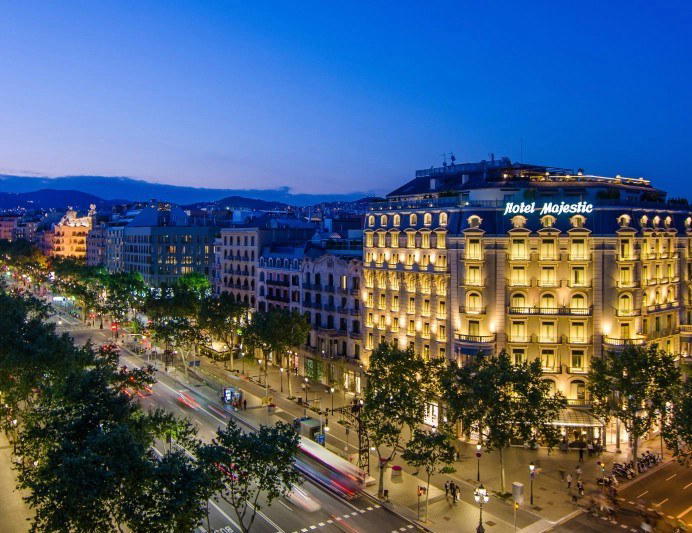
Passeig de Gràcia and What It Demands of a Hotel
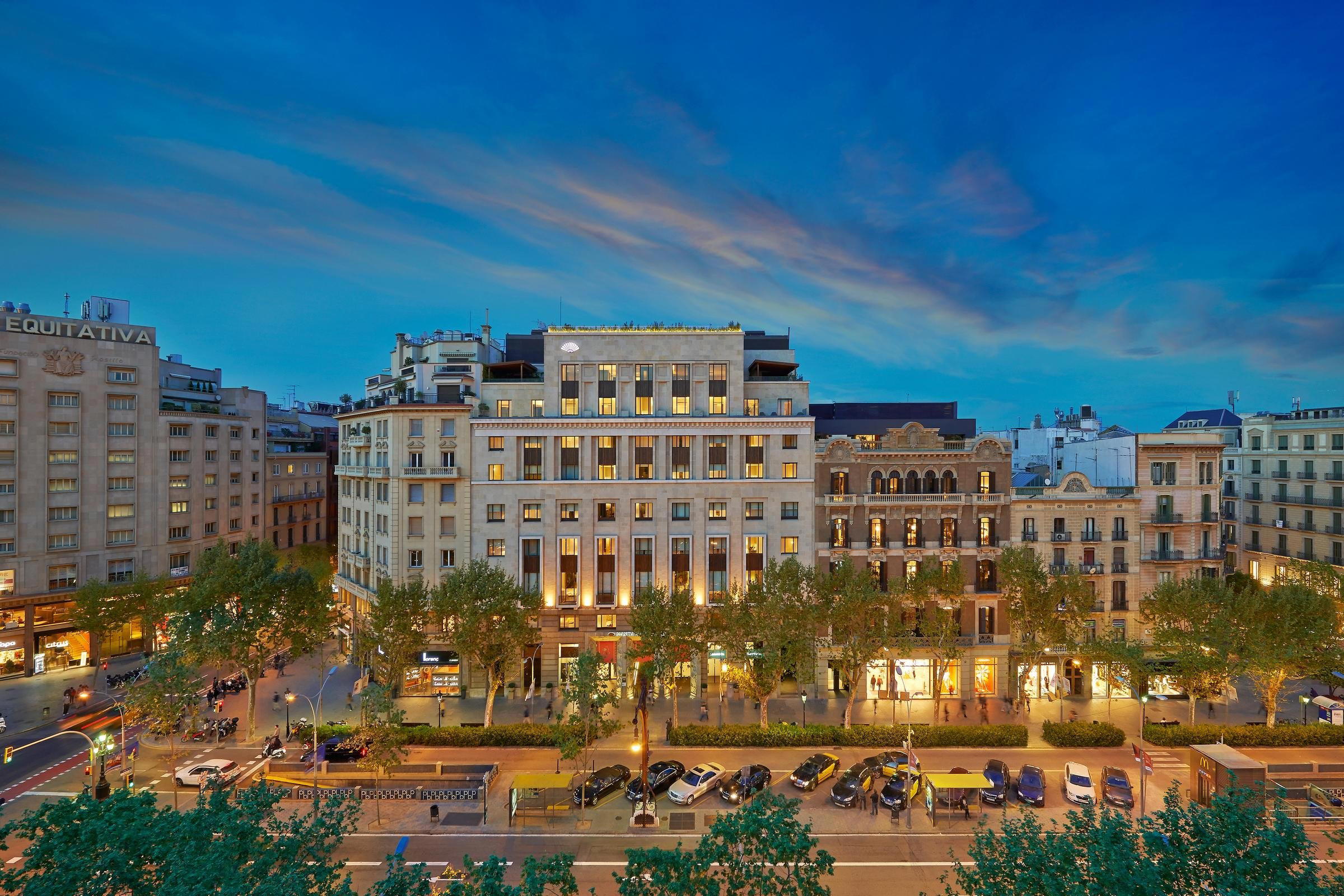
Barcelona's premium hotel addresses are not distributed evenly. The Eixample grid contains hundreds of properties, but Passeig de Gràcia operates as a separate category: a six-lane boulevard lined with Modernista architecture, Gaudí landmarks at nearly every block, and ground-floor boutiques running from Chanel and Bulgari to Gucci and Louis Vuitton. Staying on this stretch means that the city's defining monuments are a short walk in either direction, that the concierge is fielding requests from guests who have already seen most things once, and that the hotel itself is competing visually with particularly elaborate facades in Europe. The Majestic Hotel and Spa, at Passeig de Gràcia 68, has occupied this position since 1918. That it is still family-run after more than a century places it in a distinct tier among city-centre grand hotels, most of which have long since passed through corporate or chain ownership. La Liste ranked it at 91 points in its 2026 Leading Hotels edition.
For guests who want to understand Barcelona's geometry from a central point, there is no more practical base. The Sagrada Família, Casa Batlló, and Casa Milà are all within close range. The Gothic Quarter and El Born are reachable on foot or by a short metro ride from Passeig de Gràcia station, directly below the hotel's block.
The Rooftop Question
In Barcelona, the rooftop terrace has become a standard feature of mid-range and upscale hotels alike. The meaningful distinction now lies in what happens there beyond the views. At the Majestic, the Dolce Vitae rooftop restaurant operates under the advisory of Nandu Jubany, a Catalan chef with Michelin Star recognition, whose contribution takes the form of a tapas programme built around both classical Catalan formulations and contemporary technique. The format suits the setting: rooftop dining in Barcelona rarely lends itself to long tasting menus, and a well-constructed tapas selection lets guests eat at the pace the city actually runs at, with a comprehensive wine and cocktail list alongside.
The sunset view from that terrace, facing toward the Eixample grid and the hills beyond, is one of the practical draws the hotel openly highlights, and the elevation of the building on Passeig de Gràcia gives it a clear sightline above much of the immediate neighbourhood. It is the kind of view that requires no editorial embellishment.
Dining Below the Skyline
Not all the hotel's dining operates at rooftop level. Restaurant SOLC anchors the property's daytime and evening food programme at street or courtyard level, positioning itself explicitly around a farm-to-table sourcing model, with a vertical garden as part of the space. Dinner at SOLC runs Wednesday to Saturday evenings in the patio. The weekend brunch has developed a local following in the city, partly for its buffet format and partly because the kitchen operates with some visibility, allowing guests to observe preparation in progress. That kind of transparency around sourcing and technique has become a meaningful signal in Spanish urban dining over the past decade, as diners in cities like Barcelona, Madrid, and San Sebastián have become more attentive to provenance questions.
El Bar del Majestic, the hotel's piano bar, occupies an Art Deco interior and functions as one of those rare hotel bars that generates its own local traffic rather than serving exclusively in-house guests. It has live music in the evenings, a broad selection of wines by the glass, and a Fashion Afternoon Tea format that pairs sweet and savoury options with coffee, tea, or champagne. The tea's thematic tie to the adjacent fashion boutiques is a knowing local reference rather than a marketing conceit. Every afternoon, a shoe shiner arrives at the hotel, occupying a chair set aside specifically for this purpose, a tradition maintained for more than twenty years. Details like this are how long-running family hotels hold their identity across management generations.
Rooms, Suites, and the Scale Question
The property runs 276 rooms and 41 suites across recently renovated floors. The design language is neoclassical with contemporary touches: creamy whites, billowy drapes, white marble bathrooms, and high-end product placement. The renovation has kept the visual register close to what the building's 1918 origins suggest, which is a deliberate choice at a time when many historic hotels have tilted toward maximalist or fashion-led rebranding.
At the penthouse level, the hotel offers what it describes as Barcelona's largest suite: a 5,000 square-foot space with a dining room, two terraces, and direct access to a personal butler and chauffeur. The terrace jacuzzi looks out over Gaudí buildings from above. For guests whose benchmark is the grand suite tier in cities like Paris, London, or New York, the specification is competitive. Properties like Mandarin Oriental Barcelona and Almanac Barcelona also offer penthouse-level products on the same boulevard, and the competition between them reflects how seriously Barcelona's upper hotel market has invested in the suite tier over the past decade.
For guests seeking a different scale or positioning in the city, Alma Barcelona, Hotel Boutique Mirlo, and Antiga Casa Buenavista represent the smaller design-led properties that operate in a different competitive frame. Mercer Hotel Barcelona and Hotel Arts Barcelona anchor the Gothic Quarter and seafront ends of the city's premium range respectively. ABaC Restaurant & Hotel sits closer to the Zona Alta and leads with its two-Michelin-starred restaurant. Each address serves a different version of Barcelona.
The Spa and the Wider Property
The Majestic Spa operates with double treatment cabins and a private hydrotherapy area, using products from Natura Bissé. The spa completes a property profile that covers most of what a full-service city hotel is expected to deliver: dining across multiple formats, bar culture with local draw, a rooftop programme, a serious suite tier, and treatment facilities. That breadth is precisely what makes the grand-hotel format viable in a competitive urban market: guests spending three or four nights do not need to leave the building for every decision.
Planning a Stay
The hotel's location on Passeig de Gràcia suits both leisure and corporate stays. Those periods also align with the city's most comfortable weather for rooftop dining and outdoor exploration. Booking in advance is advisable for suite-level accommodation. The concierge service at the Majestic is oriented toward shopping, art, and cultural experiences in Eixample and beyond, with curated tours available as part of the hotel's broader programming. Mandarin Oriental Ritz, Madrid, Akelarre in San Sebastián, Cap Rocat in Cala Blava, Marbella Club Hotel, Mas de Torrent Hotel & Spa, La Residencia, A Belmond Hotel, Mallorca, Hotel Can Cera in Palma, Abadía Retuerta LeDomaine, Atrio Restaurante Hotel in Cáceres, Terra Dominicata in Escaladei, Torre del Marqués Hotel Spa & Winery, Pepe Vieira Restaurant & Hotel in Poio, and Casa Beatnik Hotel in A Coruña. For comparison beyond Spain, The Fifth Avenue Hotel in New York City, Aman New York, and Aman Venice offer useful reference points for how the grand-hotel format has been reinterpreted in other cities.
Pricing, Compared
Comparable venues nearby, for context on price, style, and recognition.
| Venue | Price | Awards | Notes |
|---|---|---|---|
| Majestic Hotel & SpaThis venue — the venue you are viewing | $$$$ | 5-Star | Not listed |
| Nobu Hotel Barcelona | $$$$ | 5-Star | Hostafrancs, Luxury lifestyle hotel blending Japanese philosophy with local artistry. |
| Hyatt Regency Barcelona Tower | $$$$ | 5-Star | L'Hospitalet de Llobregat, Modern high-rise tower hotel positioned between Barcelona Airport and city center |
| BLESS Hotel Barcelona | $$$$ | 5-Star | la Dreta de l'Eixample, Contemporary luxury urban hotel blending stately architecture with sophisticated interiors. |
| Claris Hotel & Spa GL | $$$$ | 5-Star | la Dreta de l'Eixample, Neoclassical palace with modern luxury renovations |
| Sir Victor Hotel | $$$$ | 5-Star | la Dreta de l'Eixample, Cultural design hotel inspired by Catalonian lifestyle with emphasis on comfort, nature, and local art. |
Recognition history
Dated appearances from independent guides and award organizations, with the underlying list record or original source where available.
Forbes Recommended
Forbes
La Liste Top Hotels
La Liste
Virtuoso Luxury Hotel Partner
Virtuoso
Forbes Recommended
Forbes
Leading Hotels of World Member
Leading Hotels of World
Michelin Selected
Michelin
Continue exploring
More in Barcelona
Hotels in Barcelona
Browse all →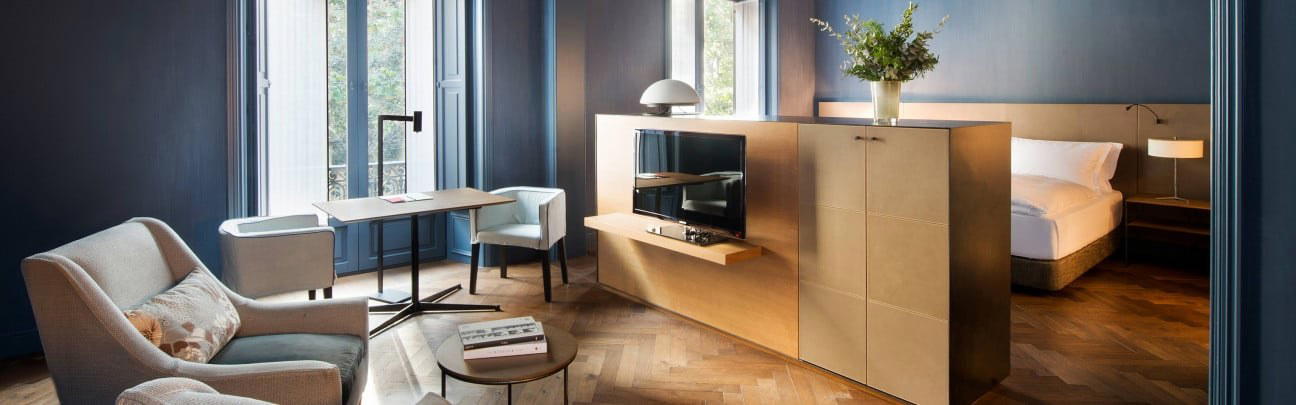
Bars in Barcelona
Browse all →
Restaurants in Barcelona
Browse all →
At a Glance
- Elegant
- Sophisticated
- Classic
- Ornate
- Romantic Getaway
- Business Trip
- Anniversary
- Celebration
- Rooftop Pool
- Historic Building
- Panoramic View
- Terrace
- Wi Fi
- Pool
- Spa
- Fitness Center
- Room Service
- Concierge
- Business Center
- Valet Parking
- EV Charging
- Skyline
- Street Scene
- Wi Fi
- Pool
- Spa
- Fitness Center
- Room Service
- Concierge
- Business Center
- Valet Parking
- EV Charging
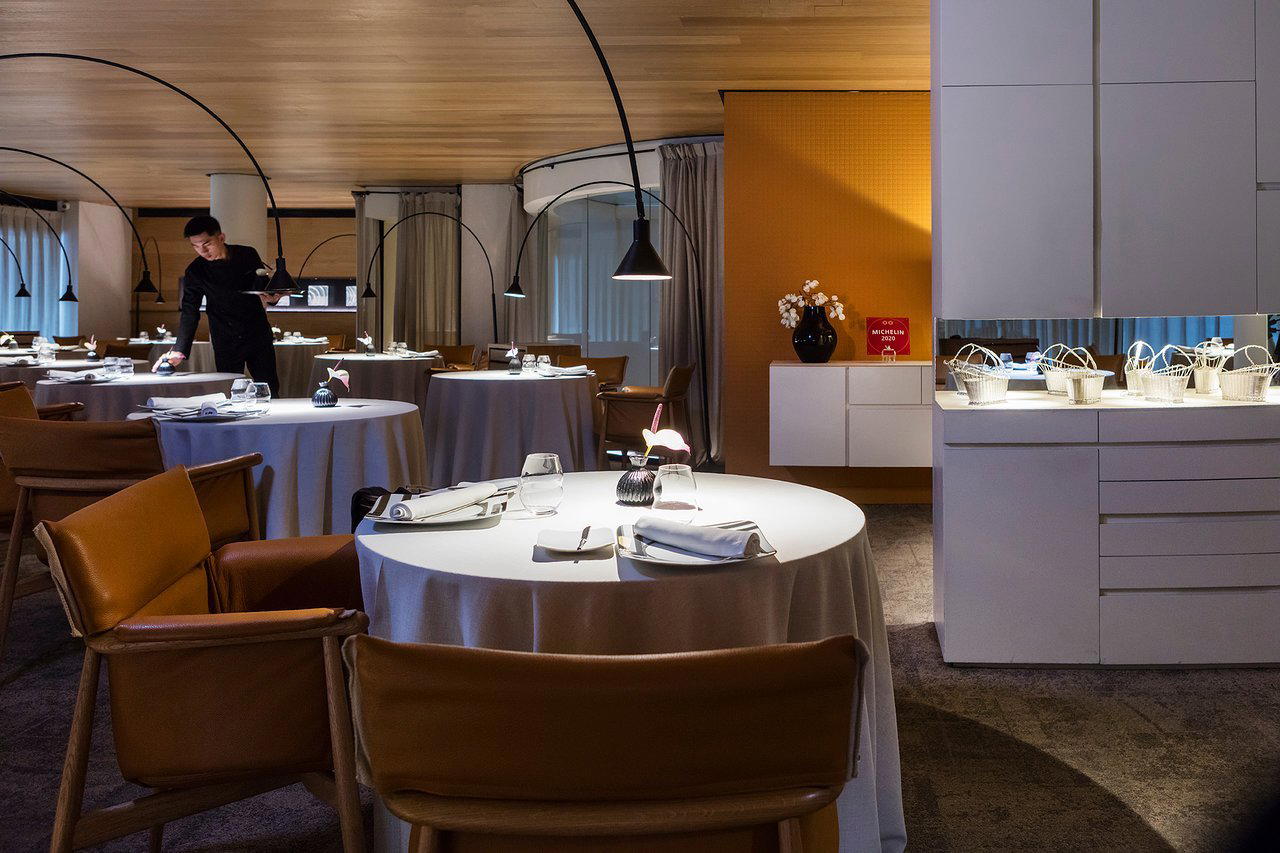
Elegant neoclassical grandeur with creamy whites, billowy drapes, and sophisticated lighting enhanced by live music at the piano bar.