
Suikou Dou Honten is a Shinkawa wagashi shop associated with daifuku and selected for Tabelog 100 Japanese traditional sweets / Japanese sweets cafe Tokyo 2023. Its takeaway format places it in Tokyo’s everyday sweets culture rather than the formal dessert-course world, with reputation built on focused craft, accessibility, and local repeat use.
Pearl is the En Primeur Club membership app — saves, bookings, and concierge access live there. Same editors, same standards.
- Address
- 2 Chome-17-13 Shinkawa, Chuo City, Tokyo 104-0033, Japan
- Phone
- +81 3-3551-5728
- Website
- suikoudou.jp
 Saves & bookings on Pearl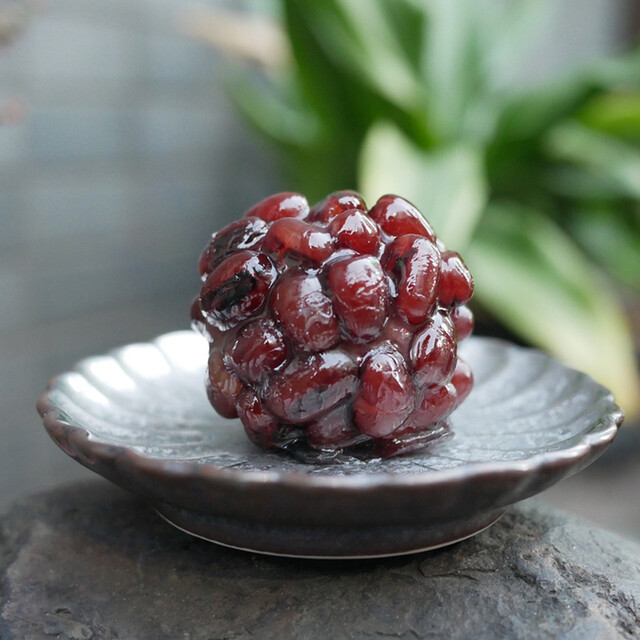
Shinkawa does not announce itself with Ginza’s theatrical density or Shinjuku’s late-night voltage. East of Hatchobori, the rhythm is quieter: office workers moving between low-rise blocks, river-adjacent streets, and small food shops built on routine rather than spectacle. That setting matters for wagashi. Tokyo’s traditional sweets culture is not only in ceremonial tearooms or department-store counters; it survives in neighbourhood shops where the purchase is brief, the craft specific, and customers often know what to ask for before reaching the door.
Suikou Dou Honten belongs to that second Tokyo. Its public identity is tied to Japanese traditional sweets and daifuku, a category that rewards restraint over novelty. In a city where desserts are often pulled toward photogenic café formats, the older wagashi shop has had to evolve without surrendering its grammar: rice, bean paste, seasonality, wrapping, gifting, and take-home timing. Selection for Tabelog 100 Japanese traditional sweets / Japanese sweets cafe Tokyo 2023 gives this small-format address a useful marker in a crowded field. It is not a Michelin-style fine-dining signal, but category-specific recognition inside Japan’s user-driven food culture, where sweets shops compete on repeat confidence as much as ceremony.
Daifuku as Tokyo's compact test of craft
Daifuku looks simple until Tokyo becomes the measuring stick. Mochi texture, filling balance, size, handling, and freshness leave little margin for error, and the city has enough specialists to punish vagueness. The category sits between daily snack, gift, office treat, and seasonal gesture, so the takeaway-only format is not a limitation. It is part of the tradition. Wagashi often travels: to a meeting, a home visit, a hotel room, or a train seat before the wrapper has fully settled.
That portability separates the experience from sushi counters and tasting-menu rooms, where value is built through time at the seat. Sushi Dai represents Tokyo’s seafood-counter tradition, while Chinese Sai Kan and Ushiko Honten sit in higher dinner-spend territory. Japanese Supaisu Curry Karisshu and Tsutsui occupy more casual pricing bands, but the cultural contract differs: curry and yoshoku-style meals fill a lunch break; wagashi compresses craft into a smaller transaction. Suikou Dou Honten’s place in the city is better read through that compactness than through restaurant conventions.
Tokyo sweets have been shaped by two opposite pressures. One is the department-store basement, where packaging, gifting codes, and brand recognition create polished retail theatre. The other is the neighbourhood specialist, where repetition and product focus matter more than display scale. This shop’s recognition in a Japanese traditional sweets category places it closer to the specialist end. The point is not abundance, but confidence in a narrow lane.
A Shinkawa shop in a city that keeps redefining sweets
Tokyo’s dessert culture has expanded sharply over the past decade, from character cafés and parfait rooms to patisserie counters, shaved-ice destinations, and convenience-store seasonal releases engineered with serious precision. Against that backdrop, wagashi has not disappeared; it has become more legible as craft for travellers who understand that Japanese dining is not only about lunch and dinner reservations. A daifuku stop can say as much about the city’s food habits as a formal meal, especially in business districts where practical routines keep older shops from becoming museum pieces.
Shinkawa and Hatchobori frame the experience. This is central Tokyo, but not the version built around luxury retail or hotel lobbies. The area’s food culture leans functional: weekday trade, office-adjacent purchases, and small addresses serving people already moving through the neighbourhood. In that context, Suikou Dou Honten reads less like a spectacle detour than a precise Tokyo errand. The editorial value is seeing how a traditional sweets shop functions inside contemporary urban life, not treating it as a frozen relic.
The Tabelog score of 3.63 adds another signal. In Japan, where user ratings cluster tightly, a mid-3 rating can indicate sustained local approval rather than international hype. Combined with the Tabelog 100 selection, it suggests a shop that has cleared two filters: category recognition and ongoing public use. That combination matters for wagashi, where craft is judged through repeated purchases, not one long meal.
How to fold it into a Tokyo eating day
The smartest way to understand this shop is to resist over-scheduling it. Tokyo rewards precision, but wagashi works well as a hinge between larger meals: before a walk toward Nihonbashi, after a morning in Hatchobori, or as a quiet counterpoint to a night built around charcoal, sushi, or curry. The purchase is small, but the category carries weight. Rice-cake sweets and bean-paste confections sit close to tea culture, gifting etiquette, and seasonal Japanese taste, even in a quick takeaway exchange.
Readers building a broader Tokyo food map can use the restaurant as the traditional-sweets anchor, then move outward by format. For casual Tokyo contrasts, see 3 Chome no Curry Ya San, 2D Cafe, and 12/10 Shinjuku ten. For a different evening register, . 鮪と炭火焼き うお炭 秋葉原店 and 124. KAGURAZAKA (Yakitori) show how Tokyo’s casual and specialist rooms can sit close together without sharing the same rules.
For city-wide planning, use Our full Tokyo restaurants guide alongside Our full Tokyo hotels guide, Our full Tokyo bars guide, Our full Tokyo wineries guide, and Our full Tokyo experiences guide. Regional comparisons sharpen the point: -Grilled beef Sukiyaki- KAMAKURA TANUKIAN 鎌倉 たぬき庵 in Kamakura.cafe in Osaka.know in Kumamoto, (Shoku) Vietnam in Kawasaki, [Curry Senmon Ten] Maruyama Kyoju. in Sapporo, and [ki:] in Kyoto underline how Japanese food culture changes by city and format. Outside Japan, Jōdo Saké Bar in Los Angeles and Onigiri Time in Pasadena show how portable Japanese forms translate abroad, though the Tokyo original operates with a different density of context.
The appeal is not spectacle. It is the discipline of a category that has survived Tokyo’s appetite for reinvention by staying useful. The restaurant makes sense for travellers who want a concise encounter with wagashi culture: a specialist sweets stop in a working central district, backed by a category award, and grounded in the everyday mechanics of Tokyo eating.
Price and Positioning
Comparable venues by cuisine and category.
| Venue | Cuisine | Price | Notes |
|---|---|---|---|
| Suikou Dou HontenThis venue — the venue you are viewing | Not listed | $ | Not listed |
| Ten mame | Chūō, Japanese Traditional Sweets | $ | Not listed |
| Kobiki Cho Yuzukamiya | Chūō, Traditional Soba & Tempura | $ | Not listed |
| Tadokoro Foods Eat-in | Not listed | $ | Chūō, Fish roe pasta & rice bowls eat-in counter |
| Daitsune Udon Ginza honten | Chūō, Japanese Udon and Tempura | $ | Not listed |
| Teuchi Ren | Sumida, Handmade ramen shop | $ | Not listed |
Recognition history
Dated appearances from independent guides and award organizations, with the underlying list record or original source where available.
Tabelog 100 #60 · No. 60
Tabelog · Tabelog 100 - Japanese traditional sweets / Japanese sweets cafe - TOKYO - 2023






At a Glance
- Classic
- Cozy
- Solo
- Family
- Casual Hangout
- After Work
- Standalone
Current opening hours
- Monday
- 9 AM–6 PM
- Tuesday
- 9 AM–6 PM
- Wednesday
- 9 AM–6 PM
- Thursday
- 9 AM–6 PM
- Friday
- 9 AM–6 PM
- Saturday
- 9 AM–2 PM
- Sunday
- Closed
Hours can change for holidays and private events. Last verified .
A small, traditional Japanese sweets shop with a simple, nostalgic interior focused on display cases of wagashi; the atmosphere is calm and low‑key, more like a neighborhood confectioner than a sit‑down café.