
Tabelog 100 #21
Our verdict
SPICE Cafe places Tokyo’s curry and Asian-ethnic dining conversation in a small Sumida room rather than a central-city luxury frame. Its menu architecture moves between casual lunch pricing and a dinner course format, with Tabelog 100 recognition across curry and Asian-ethnic categories giving it a clear critical signal.

Pearl is the En Primeur Club membership app, where members save venues, book tables and use the concierge.
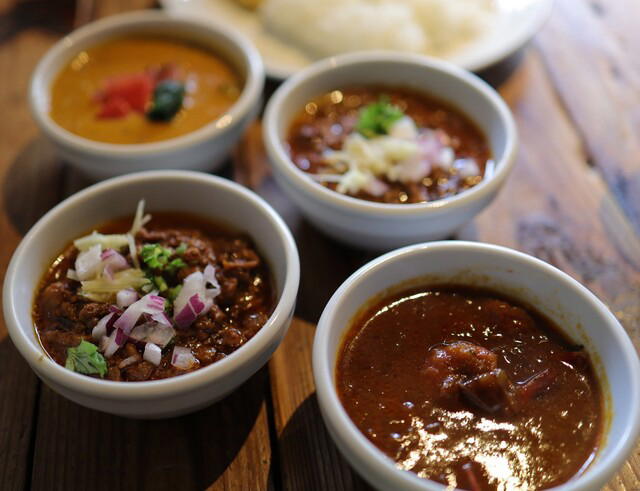
The menu
What to order
- Curry plates with chicken, coconut or mutton
- Spice-driven course menus
- Handmade bread and sausage
- Appetizers mixing Japanese and foreign flavors
Approaching SPICE Cafe shifts the register of Tokyo dining. The city’s grand counters and hotel dining rooms recede; the appeal becomes more local and format-driven: a restaurant built around a spice-led kitchen and a menu that treats curry as more than a quick plate. SPICE Cafe belongs to a Tokyo category serious eaters abroad often underestimate: the curry and Asian-ethnic restaurant, where balance, sequencing, and repeatability matter more than ceremony.
Tokyo curry is not one lane. There are familiar everyday versions, specialist interpretations, and newer spice restaurants borrowing a more deliberate dining rhythm without needing to mimic formal fine dining. SPICE Cafe sits comfortably in that broader conversation. Lunch is listed at a lower spend, while dinner is positioned at a more considered level. That distinction matters: it asks diners to read spice as the organizing idea rather than treat curry as a simple finish line.
A restaurant format that reframes Tokyo curry as progression
The restaurant is best understood through menu rhythm. In many Tokyo curry shops, the choice compresses into one plate: base, heat, topping, portion. Here the appeal is more extended, placing curry within a fuller restaurant experience rather than a purely utilitarian stop. The comparison set changes. It is not competing with fast curry counters on speed, or chasing the hushed codes of other formal genres. It occupies a middle tier where spice literacy, consistency, and repeat recognition create authority.
The Tabelog trail supports that reading. SPICE Cafe was recognized in 2024 by Tabelog Hyakumeiten, with a listed score of 3.73 and categories that place it in Asian, Ethnic, and Curry. In a city where user-driven critical attention can be as revealing as formal guide awards, that signal is more useful than a vague claim of buzz. It suggests a reputation held through changing Tokyo dining fashions and the city’s constant appetite for new formats.
That context separates it from other Tokyo choices, including Yakitori Omino, Tamahide, KOKYU, Tomo Rakunou 63℃, and Gion Tsujiri Toukyou sukaitsurii taun soramachi ten. SPICE Cafe is more modest on the surface, but its seriousness comes from staging spice as the central language of the meal. For travelers building a Tokyo itinerary, that matters more than genre labels.
Tokyo gives the meal a different tempo
Location changes expectation. Tokyo does not operate as one dining map, and that is part of the point. The city often rewards narrower searches: focused restaurants, lower-friction hospitality, and venues whose reputations are carried by local diners before overseas visitors catch up. SPICE Cafe fits that pattern. It can be read as part of Tokyo’s independent dining culture without turning the meal into a performance of formality.
The category mix is telling. Asian, ethnic, and curry are broad Tokyo labels, sometimes used too loosely for anything outside washoku or European templates. At SPICE Cafe, they function less as a map of national authenticity than as method. The kitchen uses spice as a compositional tool, and the restaurant’s structure gives it room to vary. The listed budget also helps define the proposition: dinner is JPY 6,000 - JPY 7,999, while lunch is JPY 1,000 - JPY 1,999.
For readers comparing neighborhoods and formats, a broader Tokyo plan helps. A spice-focused meal in Tokyo can sit cleanly beside other forms of dining rather than duplicate them. EP Club’s wider city coverage helps map those choices: Our full Tokyo restaurants guide, Our full Tokyo hotels guide, Our full Tokyo bars guide, Our full Tokyo wineries guide, and Our full Tokyo experiences guide give the meal a more useful frame than treating it as an isolated address.
How to place it in a Tokyo itinerary
The strongest case for SPICE Cafe is not rarity alone. It clarifies a Tokyo dining pattern between casual specialization and destination dining. The spend range moves from approachable lunch to more considered dinner, and the 2024 Tabelog Hyakumeiten recognition gives an external signal beyond neighborhood affection. That combination is especially useful for travelers with one or two formal meals planned who want a different register without dropping into anonymous convenience.
The practical reading is simple: treat lunch and dinner as different propositions. Lunch belongs to Tokyo’s efficient daytime dining culture; dinner is where the restaurant’s more deliberate structure does the critical work. The scale and popularity of this kind of Tokyo restaurant make planning valuable, especially for diners who care about format rather than simply finding nearby curry. Payment, seating, and reservation rules are better confirmed before arrival, because Tokyo restaurants rarely benefit from improvisation.
For wider comparison within Japan and beyond, curry and casual-specialist formats can be read against other unnamed curry rooms and neighborhood specialists. Tokyo breadth can be sharpened further with other dining rooms across the city, from traditional specialists to contemporary cooking and dessert-led stops. Outside Tokyo, the same question of format versus category appears in many cities: is the meal valuable because of the label, or because the format makes the cooking more focused? SPICE Cafe’s answer is clear enough to justify its place in a serious Tokyo plan.
Cost Snapshot
Comparable venues by category and price.
| Venue | Cuisine | Price | Awards | Notes |
|---|---|---|---|---|
| SPICE CafeThis venue (the venue you are viewing) | Creative spice-focused curry cafe | $20–30 | Tabelog 100 #21 | Not listed |
| パヴォーネ・インディアーノ | Italian-Indian Fusion | $20–30 | Not listed | Shibuya, Italian-Indian Fusion |
| hide mode | Creative French-Influenced Fusion | $30–50 | Tabelog 100 #49 | Bunkyō, Creative French-Influenced Fusion |
| Hatsudai Spice Shokudo Wakon Insai Tandoru | Japanese-inspired Indian curry & spice canteen | $10–20 | Tabelog 100 #6 | Shinjuku, Japanese-inspired Indian curry & spice canteen |
| Restaurant Quinbell | French–Italian yoshoku with seasonal fish and a famous beef fillet cutlet sandwich | $20–30 | Tabelog 100 #78 | Sumida, French–Italian yoshoku with seasonal fish and a famous beef fillet cutlet sandwich |
| TexturA | Chinese-Spanish Fusion | $50–100 | Tabelog 100 #83 | Chiyoda, Chinese-Spanish Fusion |
Recognition history
Dated appearances from independent guides and award organizations, with the underlying list record or original source where available.
Tabelog 100 #21 · No. 21
Tabelog · Tabelog 100 - Asian cuisine / Ethnic cuisine - TOKYO - 2024
Continue exploring
More in Tokyo
Restaurants in Tokyo
All restaurants in Tokyo →









Details
- Cozy
- Rustic
- Intimate
- Date Night
- Solo
- Casual Hangout
- Special Occasion
- Standalone
- Design Destination
- A La Carte
- Set Menu
Current opening hours
- Monday
- Closed
- Tuesday
- Closed
- Wednesday
- Closed
- Thursday
- 11:30 AM–2 PM, 6–8:30 PM
- Friday
- 11:30 AM–2 PM, 6–8:30 PM
- Saturday
- 11:30 AM–2 PM, 6–8:30 PM
- Sunday
- 11:30 AM–2 PM, 6–8:30 PM
Hours can change for holidays and private events. Hours as of .
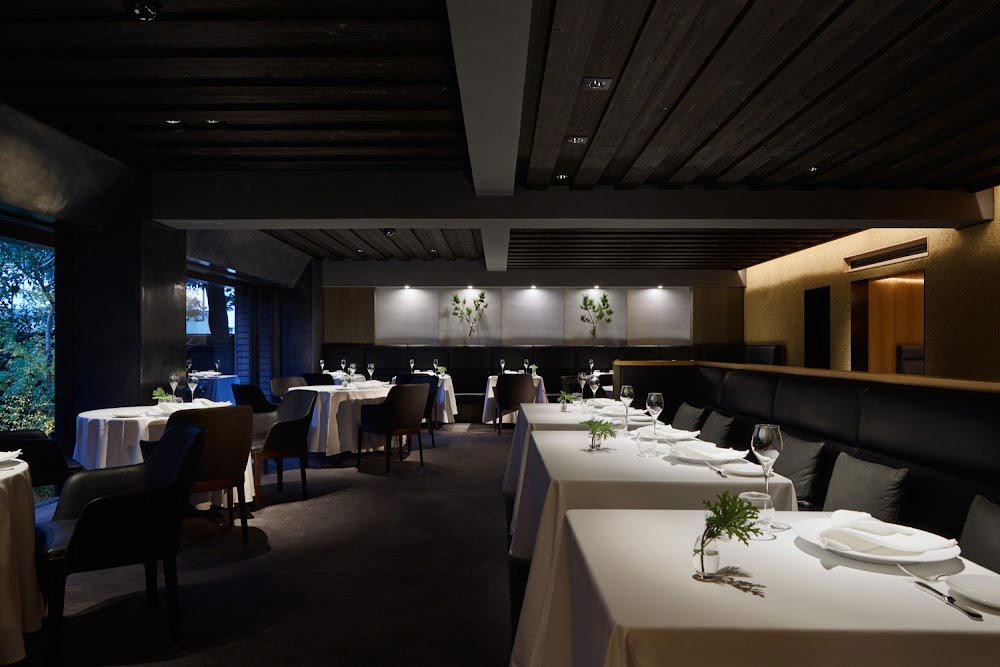
Set inside a converted old wooden apartment, the cafe feels warm, cozy, and slightly rustic, with an intimate, relaxed atmosphere that curry fans describe as quietly charming rather than flashy.