Tabelog 100 #78
Our verdict
Restaurant Quinbell sits in Tokyo’s yoshoku tradition, where Western forms are translated through Japanese habits of rice, sauce, restraint, and set-meal logic. Its selection for Tabelog 100 Yoshoku EAST 2025 places it among the region’s noted specialists, while its Sumida setting keeps the experience closer to neighbourhood dining than destination theatre.

Pearl is the En Primeur Club membership app, where members save venues, book tables and use the concierge.
The menu
What to order
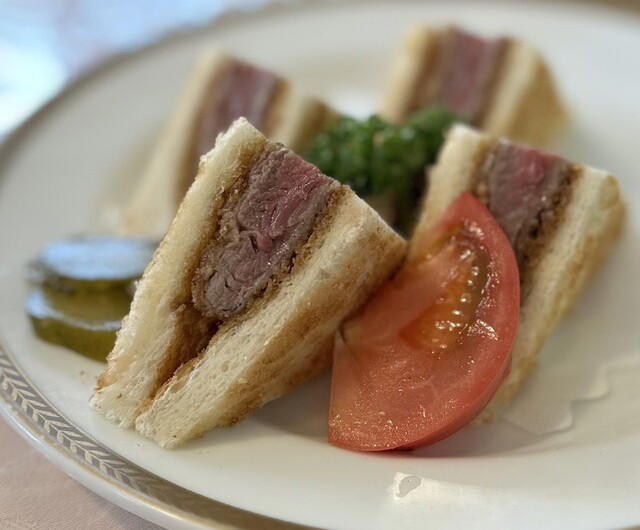
- 牛ヒレカツサンド(ビーフフィレカツサンド)
- 旬の魚料理を中心としたサービスコース
- 白身魚と帆立、海老のノイリー酒蒸しウニ入りソース クールジェット添え
Approaching yoshoku in Tokyo means lowering the volume. The genre rarely announces itself with spectacle; it works through familiar rooms, compact menus, and plates borrowing from Europe without behaving like Europe. In Tokyo, the better yoshoku addresses can feel practical before ceremonial.
Restaurant Quinbell fits that register. The format is grounded, and the menu spans yoshoku, bistro cooking, and steak rather than one narrow category. In Tokyo, yoshoku is not simply “Western food.” It is a domestic cuisine shaped by familiar sauces, rice-friendly pacing, grills, and lunch-set economics, with a grammar that rewards clarity over novelty.
Yoshoku here reads as a structured Tokyo menu, not retro decoration
Tokyo’s yoshoku scene splits between nostalgic shops built around canonical plates and broader kitchens using the form as a flexible restaurant language. Restaurant Quinbell sits closer to the latter. Its listed categories, yoshoku, bistro, and steak, point to a menu built around choice rather than one flagship item.
That breadth explains why it makes sense as part of Tokyo’s everyday dining fabric rather than only its luxury circuit. The city has long supported restaurants serving regulars first and culinary tourists second. Compared with Edosoba Hosokawa or Kameido Gyoza Ryougoku shiten, this format can be read less as a single-purpose stop and more as a fuller meal. It is not a counter sprint; it is a dining room in the mid-market space where yoshoku keeps its everyday intelligence.
The Tabelog Hyakumeiten 2025 selection is the central trust signal. Tabelog’s Hyakumeiten lists are not Michelin-style fine-dining judgments; they work better as maps of specialist depth across Japanese categories. For yoshoku, that matters because the genre is easy to underrate from outside Japan. The recognition places Restaurant Quinbell among peers often backed by local loyalty and specific ordering habits.
Menu architecture is the reason to pay attention. A yoshoku-bistro-steak structure gives diners several paths: lighter lunch logic and a fuller dinner around grilled or sauced mains. The category has become flexible in Tokyo. Yoshoku once sat in a family-restaurant mental box for many visitors; at better addresses, it now overlaps with bistro expectations without abandoning rice-friendly seasoning and Japanese pacing.
Tokyo gives the meal a different frame from luxury dining
Tokyo’s everyday restaurant culture does not always behave like the city’s luxury dining corridors. The frame can feel more local, practical, and less performative. This changes how the category should be judged: not by a choreographed tasting menu or chef biography turned into theatre, but by whether the kitchen can make a broad yoshoku menu coherent, useful, and worth planning for in a city full of specialist counters.
Restaurant Quinbell suits that reading. Yoshoku benefits from a room neither anonymous nor over-managed: approachable enough for regular use, focused enough that the kitchen’s rhythm still matters. The social function is part of the appeal. It can make sense for meals with companions without becoming banquet dining.
The price band reinforces that position. Dinner is listed at JPY 3,000 - JPY 3,999, while lunch is listed at JPY 1,000 - JPY 1,999. Against Shiki no Aji Fujiyoshi, Quinbell’s appeal is not framed by exclusivity. Against McLean -old burger stand- or Hasegawa, it offers a broader yoshoku dining structure. The useful comparison is not which is better, but which meal shape the day needs.
A practical clue sits in the way the restaurant is categorized and recognized. With a Tabelog score of 3.57 and placement in the 2025 Hyakumeiten selection, Restaurant Quinbell reads as a dependable Tokyo address rather than a purely destination-driven luxury booking. It suits a rail, bus, or taxi plan within the city better than a dining itinerary built only around hotel lobbies and tasting menus.
How to place it in a Tokyo itinerary
For travellers using food to read the city, Restaurant Quinbell counters the narrowest version of Tokyo dining. It belongs in an itinerary that gives everyday Tokyo dining its due: casual specialist meals, yoshoku, old coffee shops, and small restaurants that do not need luxury signals to justify attention. Place it within a Tokyo day rather than treating it as a cross-city dash between unrelated marquee reservations.
Planning ahead is sensible for a restaurant with category recognition. The listed budget makes it approachable at lunch and moderate at dinner, so it can work either as a daytime yoshoku stop or as a fuller evening meal. Those contours make it better for a considered plan than an improvised stop if the aim is to understand why the category matters.
The occasion logic leans toward comfort, clarity, and companions rather than ceremony. Do not treat this as a hushed special-occasion room. Treat it as a Tokyo restaurant with enough recognition to merit planning, and a menu broad enough for diners wanting Western-derived comfort without leaving Tokyo’s culinary language.
For broader city context, compare it with other Tokyo dining rooms across seafood, casual restaurants, yakitori, cafes, and curry shops. The wider city edit sits in Our full Tokyo restaurants guide, with planning context in Our full Tokyo hotels guide, Our full Tokyo bars guide, Our full Tokyo wineries guide, and Our full Tokyo experiences guide.
Outside Tokyo, the comparison becomes a study in how Japanese comfort formats travel and mutate across other cities. For a trans-Pacific echo of Japanese drinking and casual dining culture, compare it generically with Japanese-influenced bars and casual dining rooms abroad.
Frequently asked questions
Is Restaurant Quinbell okay with children?
Restaurant Quinbell is in Tokyo. For children, group dining, or other visit-specific needs, confirm directly with the restaurant before booking.
What's the vibe at Restaurant Quinbell?
Expect a Tokyo yoshoku restaurant rather than a formal luxury dining room. Its listed categories are yoshoku, bistro, and steak, and the Tabelog Hyakumeiten selection for 2025 signals standing within the category.
How much does it cost to eat at Restaurant Quinbell?
Pricing at Restaurant Quinbell is listed as Dinner: JPY 3,000 - JPY 3,999; Lunch: JPY 1,000 - JPY 1,999.
What time does Restaurant Quinbell open and close?
Opening hours were not provided in the source details used. Confirm current hours directly with Restaurant Quinbell before visiting.
Side-by-Side Snapshot
Comparable venues for orientation by cuisine and category.
| Venue | Cuisine | Price | Awards | Notes |
|---|---|---|---|---|
| Restaurant QuinbellThis venue (the venue you are viewing) | French–Italian yoshoku with seasonal fish and a famous beef fillet cutlet sandwich | $20–30 | Tabelog 100 #78 | Not listed |
| LOOP TOKYO | Innovative Creative Tasting Menu in Asakusa | $100–150 | Tabelog 100 #89 | Taitō |
| Nicolai Bergmann NOMU Aoyama | Scandinavian-inspired flower café with Danish smørrebrød and seasonal salads | $20–30 | Tabelog 100 #79 | Minato |
| ケトハレ | French-Japanese Izakaya | $50–100 | Not listed | Shinjuku |
| Tama | Ryukyu Chinese Fusion | $30–50 | Not listed | Shibuya |
| パヴォーネ・インディアーノ | Italian-Indian Fusion | $20–30 | Not listed | Shibuya |
Recognition history
Dated appearances from independent guides and award organizations, with the underlying list record or original source where available.
Tabelog 100 #78 · No. 78
Tabelog · Tabelog 100 - Yoshoku - EAST - 2025