Soy Club occupies a address on Schloßstraße in Stuttgart's West district, positioning itself within a city that has quietly built one of Germany's more concentrated fine-dining scenes. The name signals an Asian-inflected kitchen, though details on format and chef remain limited, making an advance call to confirm current offering the sensible first step before booking.
Pearl is the En Primeur Club membership app — saves, bookings, and concierge access live there. Same editors, same standards.
- Address
- Schloßstraße 112, 70176 Stuttgart, Germany
- Phone
- +4971139014069
- Website
- soyclub.de
- Directions
- Get directions
 Saves & bookings on Pearl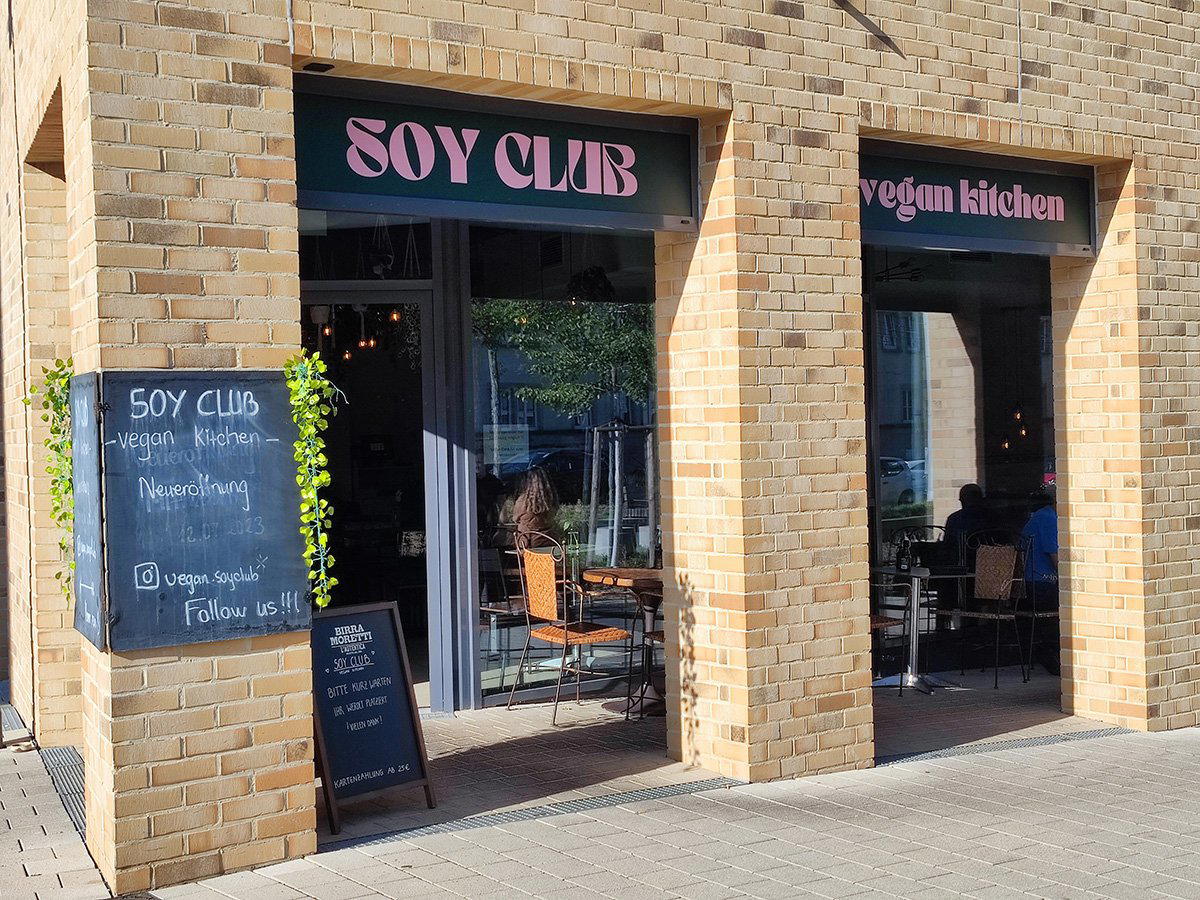
Stuttgart's West District and the Shape of the City's Dining Scene
Stuttgart's reputation in serious German dining circles tends to concentrate on the obvious anchors: the Michelin-decorated rooms in the hills, the long-established French-influenced houses, the handful of creative kitchens that have built national profiles over decades. What gets less attention is the quieter residential spread of the West district, where Schloßstraße functions as a neighbourhood corridor rather than a destination strip. That positioning matters. Restaurants operating here are not trading on tourist foot traffic or proximity to a landmark. They are building a local constituency, which in Stuttgart tends to be an audience with considered opinions about what a meal should cost and deliver.
Germany's southwestern dining corridor, stretching from Stuttgart through the Black Forest and into the villages beyond, produces some of the country's most technically accomplished restaurant cooking. Houses like Schwarzwaldstube in Baiersbronn and Waldhotel Sonnora in Dreis have anchored the region's credibility at the highest level for years. Within Stuttgart itself, the concentration of recognised addresses, from Speisemeisterei and Délice to the more recent arrivals such as 5 and Hegel Eins, means that even mid-tier kitchens are operating in a market that rewards precision over novelty.
Soy Club at Schloßstraße 112 enters that context. The name itself carries a signal: an Asian-inflected kitchen in a city where the dominant fine-dining grammar remains either French-classical or New European. That is not a peripheral observation. In Stuttgart's current scene, a restaurant foregrounding soy, whether as fermentation base, seasoning architecture, or broader Japanese or pan-Asian framing, is working in a distinct register from Der Zauberlehrling's creative European approach or the classic French lines that still define much of the city's top tier.
The Logic of Asian-Inflected Tasting Menus in European Cities
Across Germany's major dining cities, the Asian-influenced tasting format has moved from novelty to a recognisable structural category. Berlin's Atomix counterpart in New York and the Korean fine-dining wave it represents have found European parallels in kitchens that treat fermentation, umami depth, and course sequencing as a distinct vocabulary rather than a fusion shortcut. CODA Dessert Dining in Berlin demonstrates how a non-traditional structural approach to a meal's progression can sustain serious critical attention over time. The question for any kitchen operating in this space is whether the progression, from opener to closer, holds its logic course by course, or whether the Asian references appear selectively without structural coherence.
In a well-executed Asian-inflected menu in a European city, the sequencing tends to follow a different tension curve than the French model. Where classical European progressions build weight incrementally toward a protein centrepiece, Japanese-influenced formats often distribute intensity across the meal, using broth or cleansing elements as resets rather than punctuation. A soy-forward kitchen, if it is working seriously with the ingredient, has access to a spectrum that runs from fresh and grassy through to long-aged and deeply savoury. How that spectrum is deployed across courses is as much an editorial decision as a culinary one.
Germany has produced serious practitioners in this territory. JAN in Munich has shown how a European kitchen can build a distinct personality through non-French reference points. ES:SENZ in Grassau and Vendôme in Bergisch Gladbach illustrate the range of technical ambition operating across the country's fine-dining tier. Within that national frame, a Stuttgart kitchen building around soy as a core identity occupies a specific niche, one that has room to develop precisely because the competition in that register within the city is limited.
What the Address on Schloßstraße Implies About the Format
Schloßstraße in Stuttgart-West is a neighbourhood artery, not a restaurant row. The address at number 112 places Soy Club in a stretch of the street that serves a residential catchment. This is relevant for understanding what kind of operation makes sense here. Large-format, high-theatre dining rooms tend to cluster closer to the city's commercial centre or on refined sites with view lines. A kitchen on this stretch is more likely to be working at a scale, in seat count, in format ambition, in price positioning, calibrated to a regular local audience rather than a destination-travel crowd.
That neighbourhood calibration is not a limitation. Some of Stuttgart's most consistent kitchens operate precisely because they have built a repeat-visitor relationship rather than chasing the one-time special-occasion diner. The German fine-dining cities that have produced particularly durable track records, Stuttgart among them, alongside Hamburg's addresses like Restaurant Haerlin and the Moselle-anchored Schanz in Piesport, tend to reward kitchens that maintain consistency rather than those that push novelty for its own sake.
For the reader deciding whether Soy Club warrants a visit in a city with many strong rooms, the framing question is about format fit. If you are building a Stuttgart evening around an Asian-inflected tasting progression that sits outside the city's dominant French and New European grammar, this address is one of the few options in that register.
Where Soy Club Sits in the German Fine-Dining Frame
Germany's three-star tier, Aqua in Wolfsburg, Victor's Fine Dining by Christian Bau in Perl, operates in a different register of ambition and price from a neighbourhood restaurant on Schloßstraße. That is not a slight. The more useful comparison for the restaurant is with the tier of Stuttgart dining that sits between casual and Michelin-decorated: restaurants that have a clear kitchen identity, a considered progression to the meal, and pricing that reflects craft without requiring a special-occasion budget. How the restaurant prices and formats its offering relative to addresses like Der Zauberlehrling is the kind of practical calibration that matters here.
Confirming current format, reservation approach, and menu structure directly with the restaurant before planning a visit is the appropriate starting point. A restaurant operating in a specific culinary register in a competitive city market is worth the due diligence of a direct inquiry. Stuttgart's dining scene rewards that level of planning, and the restaurant's positioning, Asian-inflected, neighbourhood-anchored, operating in a distinct register from the city's French-dominant fine-dining tier, gives it a specific identity worth verifying in person.
Know Before You Go
- Address: Schloßstraße 112, 70176 Stuttgart, Germany
- District: Stuttgart-West
- Cuisine Identity: Asian-inflected; soy-forward kitchen
- Reservations: Recommended
- Hours: Mon to Fri 11:30 AM to 3 PM and 5 PM to 10 PM; Sat and Sun 11:30 AM to 10 PM
- Price Range: About $20 per person
- Nearest Context: Residential Schloßstraße corridor, Stuttgart-West
Budget Reality Check
Comparable venues nearby, for context on price, style, and recognition.
| Venue | Cuisine | Price | Notes |
|---|---|---|---|
| Soy ClubThis venue — the venue you are viewing | Heslach, Vegan Vietnamese-Asian Fusion | $$ | Not listed |
| Hanoi | Gaisburg, Authentic Vietnamese | $$ | Not listed |
| Banh Mi & Bubbles | Not listed | $$ | Gablenberg, Asian Fusion with Banh Mi and Bubbles |
| Enso Sushi & Grill | Not listed | $$ | Gablenberg, Japanese Sushi & Grill Fusion |
| Zum Becher | Gablenberg, Traditional Swabian German | $$ | Not listed |
| Taverna Yol | Not listed | $$ | Heslach, Authentic Turkish & Mediterranean |
Continue exploring
More in Stuttgart
Restaurants in Stuttgart
Browse all →
Bars in Stuttgart
Browse all →
Hotels in Stuttgart
Browse all →

At a Glance
- Trendy
- Lively
- Modern
- Casual Hangout
- After Work
- Group Dining
- Open Kitchen
Current opening hours
- Monday
- 11:30 AM–3 PM, 5–10 PM
- Tuesday
- 11:30 AM–3 PM, 5–10 PM
- Wednesday
- 11:30 AM–3 PM, 5–10 PM
- Thursday
- 11:30 AM–3 PM, 5–10 PM
- Friday
- 11:30 AM–3 PM, 5–10 PM
- Saturday
- 11:30 AM–10 PM
- Sunday
- 11:30 AM–10 PM
Hours can change for holidays and private events. Last verified .
Lively and relaxed atmosphere ideal for after-work snacks or casual dinners with friends, featuring fresh and flavor-packed vegan dishes.