
Tabelog 100 #2
Our verdict
Akasaka’s cake-and-kissa culture rewards restraint: small rooms, regulars, takeaway boxes, and sweets that sit closer to daily ritual than spectacle. SIROTAE belongs to that Tokyo tradition, with Tabelog Sweets TOKYO “Tabelog 100” selections in 2018, 2019, 2020, 2022, and 2023, an 18-seat café format, and a price band that keeps it grounded in repeatable celebration rather than grand-occasion dining.

Pearl is the En Primeur Club membership app, where members save venues, book tables and use the concierge.
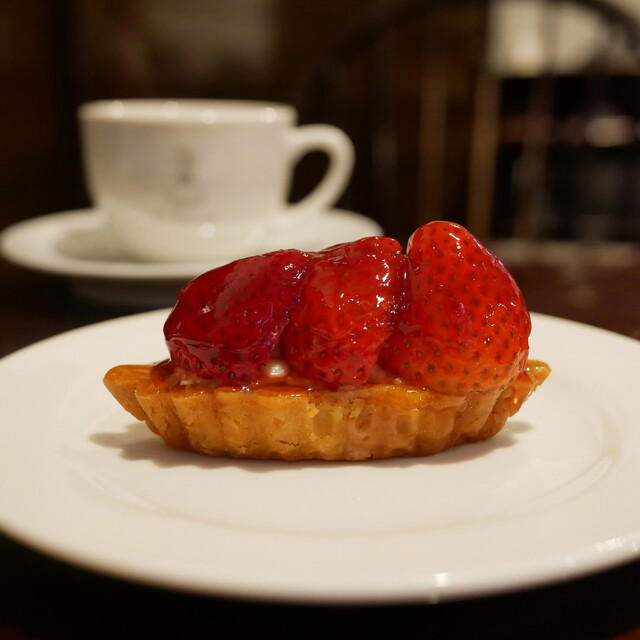
The menu
What to order
- Rare cheesecake (no-bake cheesecake)
- Cream puffs
- Western-style cakes and pastries
Tokyo shifts quickly between office towers, political gravity, hotel corridors, then older cafés and pastry counters. Tokyo’s serious sweets culture often lives in that transition, less as dessert theatre than precision: a cake box carried through the city, a short café pause between meetings, a family birthday order placed ahead, not a tasting menu booked months out. SIROTAE sits in that older Tokyo rhythm, where cake-shop and kissa habits overlap without luxury performance.
The category matters. Tokyo’s cake culture is not only a patisserie story, even with its high sweets ceiling. The city absorbed cakes into daily rituals: department-store counters, neighborhood cake shops, coffee rooms, seasonal gifting, and take-home celebration cakes. Here, a modest price band and café setting can carry more cultural weight than a grand dining room. Selection for Tabelog’s sweets-focused Hyakumeiten recognition in 2023 places SIROTAE in a competitive Tokyo sweets bracket judged by repeat local attention, not hotel polish.
Tokyo's celebration cake culture favors precision over spectacle
Occasion dining in Tokyo does not always mean a chef’s counter or hotel dining room. For birthdays, parent visits, office farewells, and small private celebrations, the cake shop can be more revealing: careful packaging, punctual collection, familiar categories, and consistency. SIROTAE’s format points directly at that habit, separating serious occasion purchase from casual sit-down visit.
That distinction helps travelers. A cake shop with café use works differently from a restaurant: the issue is not whether the room can carry a long evening, but whether the operation can anchor a specific moment without friction. The point is compact rhythm, not lingering salon. Cake purchase and café use sit close to the shop’s listed categories, rather than turning it into event dining.
Tokyo’s premium dining conversation often tilts toward sushi and yakiniku, where scarcity, counter seats, and chef-led pacing dominate value. The comparison is useful because sweets follow different rules. Kizaki and Sushisho Saito belong to sushi reservation culture; Raimon sits in yakiniku’s dinner-driven lane; Makitori Shinkobe reflects yakitori precision. SIROTAE works in a less formal but equally disciplined register: a cake-and-café address recognized through selection in a sweets-specific list, not a multi-course format.
The kissa element keeps the experience local, not ceremonial
The attached categories, cake, café, and kissa, are not interchangeable. A kissa in Japan suggests a room built for pause rather than speed, usually quieter and less fashion-led than a contemporary coffee bar. Paired with cake, it gives SIROTAE its Tokyo character: confectionery filtered through Japanese service habits, portion discipline, and order over display.
For milestone use, SIROTAE is more practical than many destination restaurants. It suits daytime celebrations: a parent’s Tokyo visit, a low-key anniversary, a cake collected before dinner, or a small group treating the café as a brief stop rather than the whole plan. The price range is JPY 1,000 to JPY 1,999, important where acclaimed dining can quickly become exclusionary. The value is not cheapness; it is marking an occasion without a major reservation project.
The operating style feels traditional rather than theatrical. For visitors used to Tokyo’s cashless hotels, cocktail bars, and modern restaurants, that matters as a planning cue: this is closer to old-school local commerce than international hospitality. Its usefulness lies in the clarity of the category: cake, café, kissa, and a modest price band.
Tokyo fits because it connects office routines, hotel stays, civic districts, and evening dining routes. A traveler based in the city may use SIROTAE as a daytime sweets anchor before dinner elsewhere. For broader planning, Our full Tokyo restaurants guide is the stronger starting point; drinks-focused nights belong in Our full Tokyo bars guide, lodging in Our full Tokyo hotels guide. The city’s category spread also extends through Our full Tokyo experiences guide and Our full Tokyo wineries guide.
How to place it within a Tokyo food day
Treat the shop as a precise daytime chapter, not a dinner substitute. Tokyo rewards sequencing. A sweets stop can precede a protein-driven evening at another Tokyo dining room, or a casual café-minded itinerary might pair it conceptually with other dessert-led stops. The point is not sameness, but contrast: SIROTAE belongs to cake-shop continuity rather than graphic novelty or restaurant ceremony.
Tokyo’s occasion dining has several registers. A counter restaurant gives ceremony through proximity to craft; a bar gives it through pace and mood; a cake shop gives it through reliability and portability. SIROTAE is strongest in that last role: useful when the celebration is specific, small, and daytime-friendly, especially when cake matters more than a reserved restaurant seat.
For travelers comparing beyond central Tokyo, the same logic applies across Japan’s dining map: category defines expectation. Meat-focused rooms, regional dining rooms, and café formats each carry different forms of occasion value. More casual or specialist comparisons underline that Japan’s dining intelligence often appears in formats that know exactly what they are for. Even outside Japan, Japanese food categories travel with their own rules. SIROTAE’s rule is simple: cake first, café second, celebration without excess.
For a Tokyo day, the editorial call is clear. Use this address when the occasion needs a recognized Tokyo sweets specialist rather than full restaurant production. The 2023 Tabelog sweets recognition gives it public trust; the café format grounds expectations; the cake-led identity makes it especially relevant for birthdays, office gifts, and family gatherings. It is not the place for spectacle. It is the place to understand how Tokyo turns a cake counter into a serious social tool.
Peers Worth Knowing
Comparable venues at the same tier.
| Venue | Cuisine | Price | Awards | Notes |
|---|---|---|---|---|
| SIROTAEThis venue (the venue you are viewing) | Traditional Japanese cake shop & café | Not listed | Tabelog 100 #2 | Not listed |
| Kizaki | Sushi | Not listed | Tabelog 100 #49 | Not listed |
| Bar Tiare | Cocktail Bar | $30–50 | Tabelog 100 #100 | JPY 4,000 - JPY 4,999 |
| Sushisho Saito | Innovative Edomae Omakase | $500+ | Tabelog Silver #131 | Sushi |
| Raimon | Premium Yakiniku | $200–300 | Tabelog Gold #22 | Yakiniku |
| Makitori Shinkobe | Wood-Fired Yakitori Omakase | $150–200 | Tabelog Silver #73 | Yakitori |
Recognition history
Dated appearances from independent guides and award organizations, with the underlying list record or original source where available.
Tabelog 100 #2 · No. 2
Tabelog · Tabelog 100 - Sweets - TOKYO - 2023
Continue exploring
More in Tokyo
Restaurants in Tokyo
All restaurants in Tokyo →


Bars in Tokyo
All bars in Tokyo →





Details
- Classic
- Cozy
- Intimate
- Casual Hangout
- Solo
- Family
- After Work
- Standalone
- Historic Building
- A La Carte
Current opening hours
- Monday
- Closed
- Tuesday
- 10:30 AM–7:30 PM
- Wednesday
- 10:30 AM–7:30 PM
- Thursday
- 10:30 AM–7:30 PM
- Friday
- 10:30 AM–7:30 PM
- Saturday
- 10:30 AM–7 PM
- Sunday
- Closed
Hours can change for holidays and private events. Hours as of .