1 Michelin Star · Tabelog Bronze #414
Our verdict
Open since April 2016, Sincère occupies a basement space in Sendagaya and has held Tabelog Bronze recognition every year from 2018 through 2026, plus a Michelin star in 2024 and an Opinionated About Dining ranking of #215 in Japan. Chef Shinsuke Ishii shapes the menu around underutilised fish species and producer relationships, with dinner running ¥20,000–¥29,999 across 18 seats.

Pearl is the En Primeur Club membership app — saves, bookings, and concierge access live there. Same editors, same standards.
- Address
- Japan, 〒151-0051 Tokyo, Shibuya, Sendagaya, 3 Chome−7−13 原宿東急アパートメント B1F
- Phone
- +81 3-6804-2006
- Hours
- Mon ClosedTue–Sat 6–11 PMSun Closed
- Website
- facebook.com
- Directions
- Get directions
- Booking
- Book on Omakase
French Cooking and Provenance in Sendagaya
Tokyo's French dining tier has always operated on a spectrum between formal classicism and something more hybrid, where Japanese ingredient culture reshapes the logic of a European kitchen. At the serious mid-tier, where dinner runs in the ¥20,000–¥29,999 range and Tabelog scores sit in the 4.2s, a distinct group of restaurants has built sustained reputations less on theatrical spectacle and more on the sourcing decisions behind each plate. Sincère, open since April 2016 in a basement on Sendagaya's quieter residential streets near Kita-Sando, belongs to that category.
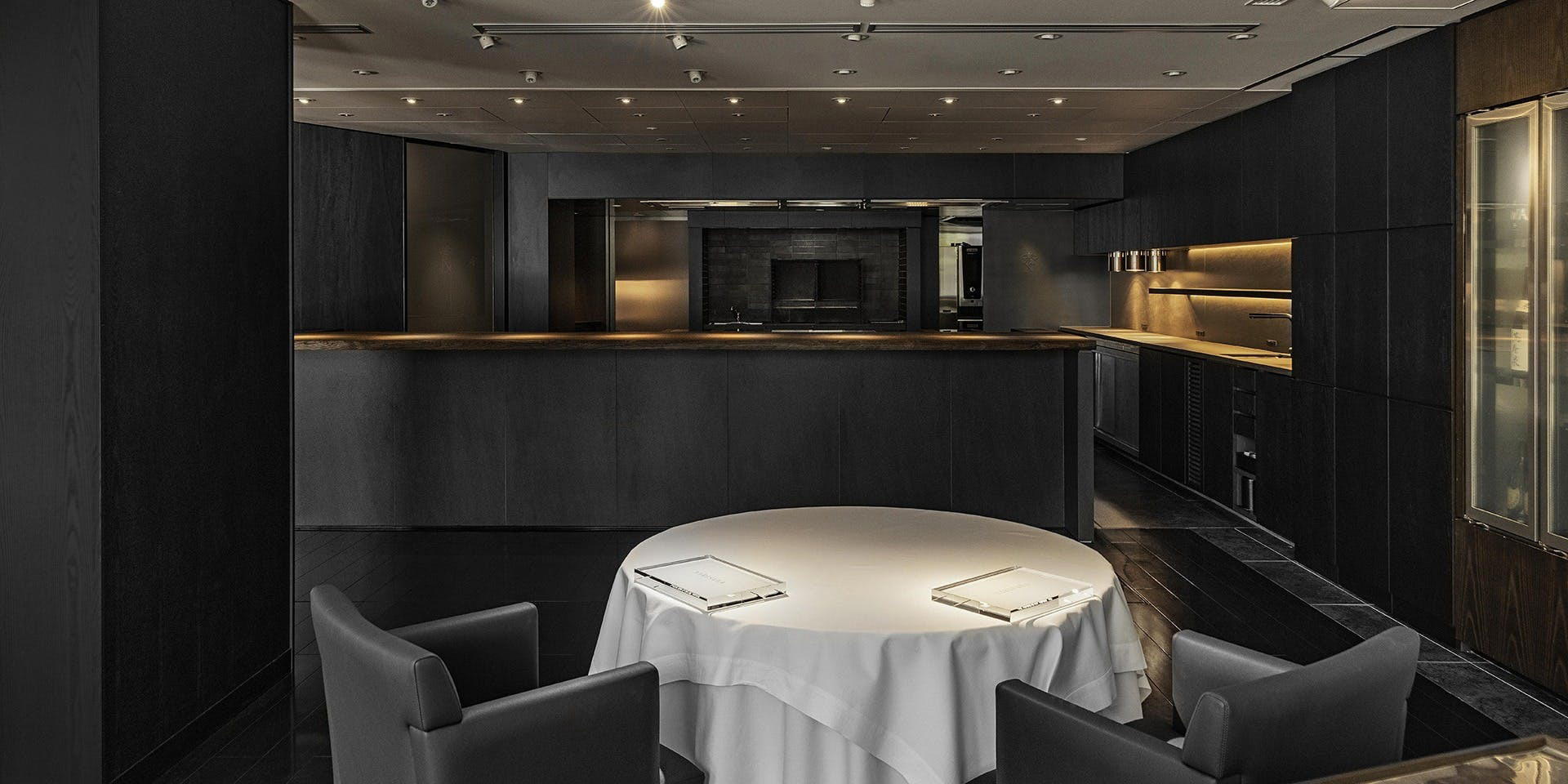
The Sendagaya address is not incidental. This is a neighbourhood that attracts a particular kind of restaurant: not the high-gloss Ginza French where prestige address and formal service do much of the work, but a more focused operation where the room is secondary to what arrives at the table. The building entrance is marked by ivy; the dining room itself holds 18 seats at table, with sofa seating and the option of an open terrace. A 10% service charge applies, and children aged 12 and over are welcome.
The Provenance Argument at the Centre of the Menu
What distinguishes a small but coherent group of Tokyo French restaurants from their European counterparts is not technique, which in many cases is equivalent, but the relationship between kitchen and supply chain. Japanese chefs working in a French idiom have access to a domestic produce network of unusual depth: regional fish markets, small-scale farming operations, foragers and fishermen with hyper-local knowledge. At Sincère, Chef Shinsuke Ishii has built the menu around underutilised fish species, a choice that reflects both a sourcing philosophy and a positioning relative to peers who might default to more recognisable proteins. Using less commercially prominent species places the kitchen in direct conversation with specific producers and coastal communities, and signals a commitment to the supply chain that goes beyond simply sourcing premium ingredients.
This approach connects Sincère to a broader pattern visible across the top tier of Japanese-French cooking. At L'Effervescence, the connection to Japanese farming and fermentation traditions has been central to the kitchen's identity for years. At Sézanne, seasonal Japanese ingredients shape what might otherwise read as a purely contemporary French programme. Sincère sits in this same current, at a price point slightly below the ¥¥¥¥ tier occupied by venues like Château Restaurant Joël Robuchon, and with a format that makes the producer relationship legible to the guest rather than treating it as background context.
The kitchen's particular attention to fish extends beyond species selection. The food described by reviewers involves pastry-wrapped preparations that carry a knowing nod to Japanese street food forms, placing technical French craft alongside local cultural reference. This is not fusion in any blunt sense; it is a kitchen that understands both traditions precisely enough to draw on each without collapsing into either. The restaurant's drink programme reinforces the same dual frame: Sincère maintains a particular focus on both wine and sake, with a sommelier on hand, which positions the beverage selection as an extension of the provenance argument rather than a secondary consideration.
A Record of Recognition Built Over Nearly a Decade
Few Tokyo French restaurants have maintained consistent peer recognition across as many consecutive years as Sincère. The Tabelog Award record runs from a Silver in 2017 through continuous Bronze recognition from 2018 to 2026, with Silver again in 2019. The restaurant has been selected for the Tabelog French TOKYO Top 100 in 2021, 2023, and 2025. That pattern of sustained, if not escalating, recognition is informative: it signals a kitchen that has held a consistent standard rather than one that peaked early or depends on novelty to retain attention. The Michelin star awarded in 2024 represents external validation from a different evaluation framework, and the Opinionated About Dining rankings at #220 (2025) and #215 (2024), with a Highly Recommended designation in 2023, confirm that the restaurant reads well to international critics as well as domestic review platforms.
Within Tokyo's French tier, that combination puts Sincère in a relatively small group. Restaurants that perform consistently across both Tabelog's crowd-sourced scoring system and international critic frameworks tend to be doing something with genuine coherence, not merely executing technical French cooking at a marketable address. For reference, the broader Tokyo French scene includes operations at much higher price points and with more significant international profiles, including the three-star establishments. Sincère's ¥¥¥ pricing and 18-seat format place it in a more accessible bracket without any corresponding reduction in the seriousness of the programme.
For visitors exploring French cooking across Japan's cities, the comparison set extends beyond Tokyo. HAJIME in Osaka and akordu in Nara represent different regional takes on French and European cooking using Japanese produce, while internationally, the provenance-led French approach finds parallels at Hotel de Ville Crissier in Switzerland and Les Amis in Singapore.
The Room, the Format, and What to Expect
The basement location in a residential apartment building is a format that Tokyo executes better than almost any other city. The intimacy of a small underground dining room, in this case 18 table seats, creates a pressure that works in the kitchen's favour: every detail of service and food delivery carries more weight when there is nowhere to hide behind scale. Sincère lists its location type as a hideout, which reflects the physical reality of arriving in a basement past a building marked by ivy, but also describes the experiential register: this is not a restaurant that performs visibility on a prominent street corner.
Chef Ishii's practice of personally serving dishes to guests, noted across multiple sources, reinforces the small-format logic. In an 18-seat room, direct chef-to-table service is operationally feasible and communicatively significant, it closes the distance between the sourcing decisions made in the kitchen and the guest's ability to understand what they are eating and why. The energy described by reviewers is deliberately warm rather than formal, aligning Sincère with the group of Tokyo French restaurants that have moved away from the stiff service conventions of mid-century European fine dining.
Dinner operates Tuesday through Saturday, with last entry at 20:30, and the restaurant is closed every Sunday and on alternate Mondays. Lunch service runs separately under the name Sincere Plus. The dress code is described as casual formal, with men required to avoid tank tops, shorts, and beach sandals. Credit cards are accepted across major networks; electronic money and QR payments are not.
Planning Your Visit
Reservations: Reservation only; book well in advance given the 18-seat capacity and sustained recognition across multiple platforms. Getting there: Eight minutes on foot from the Takeshita Exit of JR Harajuku Station, or three minutes from Exit 3 of Kita-Sando Station on the Fukutoshin Line; parking is unavailable. Budget: Dinner ¥20,000–¥29,999 per person before the 10% service charge; lunch is operated as Sincere Plus under a separate format. Dress: Casual formal; men must avoid tank tops, shorts, and beach sandals. Private hire: The full space is available for private use for groups of up to 20.
For a broader view of Tokyo's dining and hospitality options, see our full Tokyo restaurants guide, our full Tokyo hotels guide, our full Tokyo bars guide, our full Tokyo wineries guide, and our full Tokyo experiences guide. Elsewhere in Japan, Gion Sasaki in Kyoto, Goh in Fukuoka, 1000 in Yokohama, and 6 in Okinawa represent the same commitment to place-driven cooking across different regional contexts.
Frequently asked questions
Is Sincère good for families?
Sincère accepts reservations for children aged 12 and over. With only 18 seats, a reservation-only policy, and a dinner price range of JPY 20,000–29,999 per person plus a 10% service charge, this is a considered choice for older children comfortable in a formal dining setting.
What kind of setting is Sincère?
The restaurant occupies the basement floor of a residential apartment building in Sendagaya, accessible from Kita-Sando Station in three minutes on foot. The 18-seat room is configured around table seating with sofa options, no private rooms, and a dress code that prohibits tank tops, shorts, and beach sandals for men. Tabelog classifies the location as a hideout format — deliberately low-profile for a restaurant that has held Michelin recognition and consecutive Tabelog Awards since 2017.
Is Sincère award-winning?
Sincère has received recognition including: {"Year":"2026","Award Source":"Tabelog","Award Type":"The Tabelog Award","Award Group":"bronze","Award Group Rank":"414","Restaurant Name":"sincere","Score":"4.24","Budget":"Dinner: JPY 20,000 - JPY 29,999; Lunch: -","Budget Dinner":"JPY 20….
What should I eat at Sincère?
Chef Shinsuke Ishii's menu centres on underutilised fish species and Japanese local produce interpreted through French technique. The kitchen places particular emphasis on fish, and the wine and sake programmes are both given serious attention, with a sommelier on staff. Specific current dishes are not published in advance; the format is best approached as a set course experience with the kitchen directing the meal.
What's the cuisine at Sincère?
Quick Comparison
Comparable venues nearby, for context on price, style, and recognition.
| Venue | Cuisine | Price | Awards | Notes |
|---|---|---|---|---|
| SincèreThis venue — the venue you are viewing | Modern French Fine Dining | $100–150 | 1 Michelin Star · Tabelog Bronze #414 | Not listed |
| L'Atelier de Joël Robuchon Tokyo | Modern French Fine Dining | $150–200 | 1 Michelin Star · La Liste Top Restaurants | Minato |
| Tour D'argent Tokyo | Classic French Fine Dining | $300–500 | 1 Michelin Star · La Liste Top Restaurants | Chiyoda |
| Nabeno-Ism | French-Edo Fusion Fine Dining | $200–300 | 1 Michelin Star · La Liste Top Restaurants | Taitō |
| Simplicité | Modern French Seafood Omakase | $150–200 | Michelin Plate · Tabelog 100 #31 | Shibuya |
| Edition Koji Shimomura | Modern French with Japanese Ingredients | $200–300 | 1 Michelin Star · La Liste Top Restaurants | Minato |
Recognition history
Dated appearances from independent guides and award organizations, with the underlying list record or original source where available.
Michelin 1 Star
Michelin
Opinionated About Dining Top Restaurants in Japan Recommended
Opinionated About Dining
Tabelog Bronze #414
Tabelog
Full recognition history (9 entries)
Opinionated About Dining Top Restaurants in Japan Ranked #220
Opinionated About Dining
Tabelog Bronze
Tabelog
Tabelog 100 #36 · No. 36
Tabelog · Tabelog 100 - French - TOKYO - 2025
Michelin 1 Star
Michelin
Opinionated About Dining Top Restaurants in Japan Ranked #215
Opinionated About Dining
Opinionated About Dining Top Restaurants in Japan Highly Recommended
Opinionated About Dining