Sim Sim occupies a quietly considered position on Augustenstraße in Munich's Maxvorstadt, a neighbourhood whose dining scene runs from student-facing trattorias to Michelin-tracked creative kitchens. Where many addresses in this tier trade on a single strong personality, Sim Sim's appeal rests on how its front-of-house, kitchen, and service components work in concert. For Munich diners accustomed to the city's more ceremonial fine-dining rooms, it reads as a purposeful alternative.
Pearl is the En Primeur Club membership app — saves, bookings, and concierge access live there. Same editors, same standards.
- Address
- Augustenstraße 67, 80333 München, Germany
- Phone
- +498961565947
- Website
- sim-sim-falafel.de
- Directions
- Get directions
 Saves & bookings on Pearl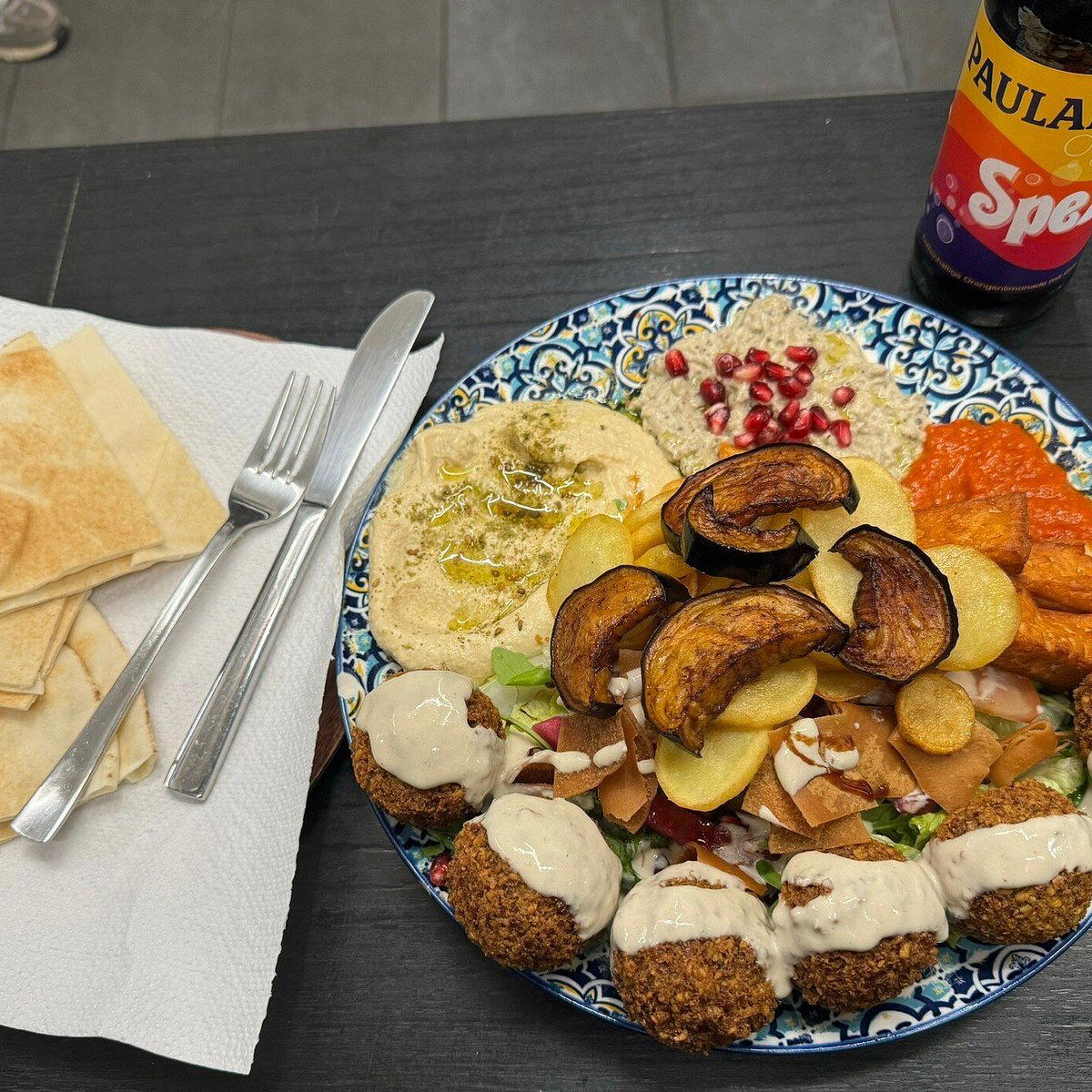
Maxvorstadt's Quieter Register
JAN, Tantris, Atelier, and Alois - Dallmayr Fine Dining shape the terms of reference for what the city considers serious cooking. But there is a second register in Munich's restaurant culture, one that operates with less institutional weight and more room for a particular kind of hospitality. Augustenstraße, running through Maxvorstadt toward the edges of the Neuhausen corridor, belongs to that second register. The street mixes independent cafés, art-adjacent residences, and mid-scale dining rooms that serve the neighbourhood rather than the broader city's prestige circuit.
Sim Sim sits at Augustenstraße 67, planted in this context rather than imported from somewhere more conspicuous. That address is worth reading as an editorial choice: Maxvorstadt is a district that draws students, museum visitors, and long-term residents in roughly equal measure. A restaurant here is not making a statement about aspirational fine dining so much as it is committing to a more habitual relationship with its community. That distinction shapes everything from the room's atmosphere to the logic of the menu.
The Case for Collaborative Service
Germany's most decorated dining rooms increasingly distinguish themselves through the coordination between kitchen, floor, and cellar, rather than through any single virtuoso performance. At Tohru in der Schreiberei, the calibration between the kitchen's German-Japanese synthesis and the front-of-house's ability to narrate that hybridity is what makes the experience cohere. Further afield, the service architecture at Aqua in Wolfsburg or Vendôme in Bergisch Gladbach reflects years of institutional alignment between every department in the room.
Sim Sim operates in a different tier, but the principle holds. In smaller, neighbourhood-embedded restaurants, the team dynamic often matters more than at larger operations precisely because there is less structural redundancy to absorb a weak link. When a floor team is genuinely fluent in what the kitchen is doing, and when that fluency shows in how dishes are introduced and pacing is managed, it changes the quality of a meal in ways that are difficult to achieve through menu ambition alone. The hospitality at addresses of this type, when it works, tends to feel less transactional than at their grander peers.
A City That Has Diversified Its Reference Points
Munich's restaurant culture spent several decades anchored to a fairly narrow set of reference points: Bavarian tradition, French technique filtered through the post-nouvelle generation, and a persistent conservatism about what constituted serious dining. That picture has changed. The emergence of restaurants trading in cross-cultural synthesis, like the German-Japanese work happening at Tohru, or the more experimental dessert-focused format demonstrated by CODA Dessert Dining in Berlin, signals a broader shift in how German urban diners think about what a restaurant can do.
Maxvorstadt, with its concentration of galleries, the Pinakothek museums, and a graduate-heavy resident population, has been receptive to that diversification earlier than some other Munich districts. A restaurant on Augustenstraße in 2024 is not necessarily anchored to the same assumptions that would have governed the same address twenty years ago. That context is relevant to reading Sim Sim: its positioning is shaped by a neighbourhood that has grown comfortable with a wider range of culinary reference points, and that expects its restaurants to reflect some of that range.
Where Sim Sim Sits in the comparable set
Munich's €€€€ fine-dining tier, represented by Tantris, Atelier, and their peers, operates with a particular logic: long tasting menus, formal room design, wine programs built around aged Burgundy and German Riesling, and service that foregrounds ceremony. The Italian-Mediterranean category, where addresses like Acquarello have held consistent recognition, operates differently, with shorter menus, a stronger emphasis on ingredient sourcing, and a less rigid service register.
The restaurant sits squarely in a casual, walk-in-friendly lane rather than the city’s formal tasting-menu tiers. What the address and neighbourhood context suggest is a restaurant that functions closer to the neighbourhood-anchored model than to the institutional fine-dining one: accessible by comparison, walk-in-friendly, and more oriented toward repeat local custom than single-occasion destination dining. For visitors familiar with Germany's more formally decorated kitchens, from Schwarzwaldstube in Baiersbronn to Schanz in Piesport or Waldhotel Sonnora in Dreis, the restaurant represents a different kind of proposition: lower ceremony, higher proximity to the neighbourhood's rhythm.
That peer comparison is worth extending internationally. The difference between a neighbourhood restaurant that punches at its level and one that merely occupies a space is often invisible from the outside, but legible once you are in the room. The team dynamic, the coherence between what is being cooked and how it is being presented, and the sense that the front-of-house actually understands the food, are the variables that separate the two. At addresses like Atomix in New York City, that coherence has been built into an extremely formal and self-conscious structure. At a Maxvorstadt neighbourhood restaurant, it has to be built through a different kind of discipline, one that operates without the scaffolding of international prestige.
Bagatelle in Trier, ES:SENZ in Grassau, Victor's Fine Dining by Christian Bau in Perl, and Restaurant Haerlin in Hamburg each represent nodes in Germany's broader fine-dining network, a network against which a Maxvorstadt neighbourhood address like Sim Sim defines its own quieter coordinates. Outside Germany, the technical ambition of Le Bernardin in New York City represents a different end of the collaborative team dynamic spectrum entirely.
Planning Your Visit
Address: Augustenstraße 67, 80333 München, Germany. Reservations: Walk-in friendly. Dress: casual. Timing: Mon-Sun: 11 AM-9:15 PM. Budget: about $10 per person.
The Short List
Comparable venues nearby, for context on price, style, and recognition.
| Venue | Cuisine | Price | Notes |
|---|---|---|---|
| Sim SimThis venue — the venue you are viewing | Not listed | $ | Not listed |
| Sababa | Not listed | $ | Altstadt, Traditional Middle Eastern Falafel & Shawarma |
| Pivasta | Isarvorstadt, Authentic Afghan | $$ | Not listed |
| Schmock | Theresienwiese, Israeli-Arabic Mezze | $$ | Not listed |
| Tahdig | Lehel, Authentic Persian | $$ | Not listed |
| Eclipse | Schwabing, Israeli Grill & Mediterranean | $$ | Not listed |
At a Glance
- Casual
- Cozy
- Casual Hangout
- Open Kitchen
- Street Scene
Current opening hours
- Monday
- 11 AM–9:15 PM
- Tuesday
- 11 AM–9:15 PM
- Wednesday
- 11 AM–9:15 PM
- Thursday
- 11 AM–9:15 PM
- Friday
- 11 AM–9:15 PM
- Saturday
- 11 AM–9:15 PM
- Sunday
- 11 AM–9:15 PM
Hours can change for holidays and private events. Last verified .
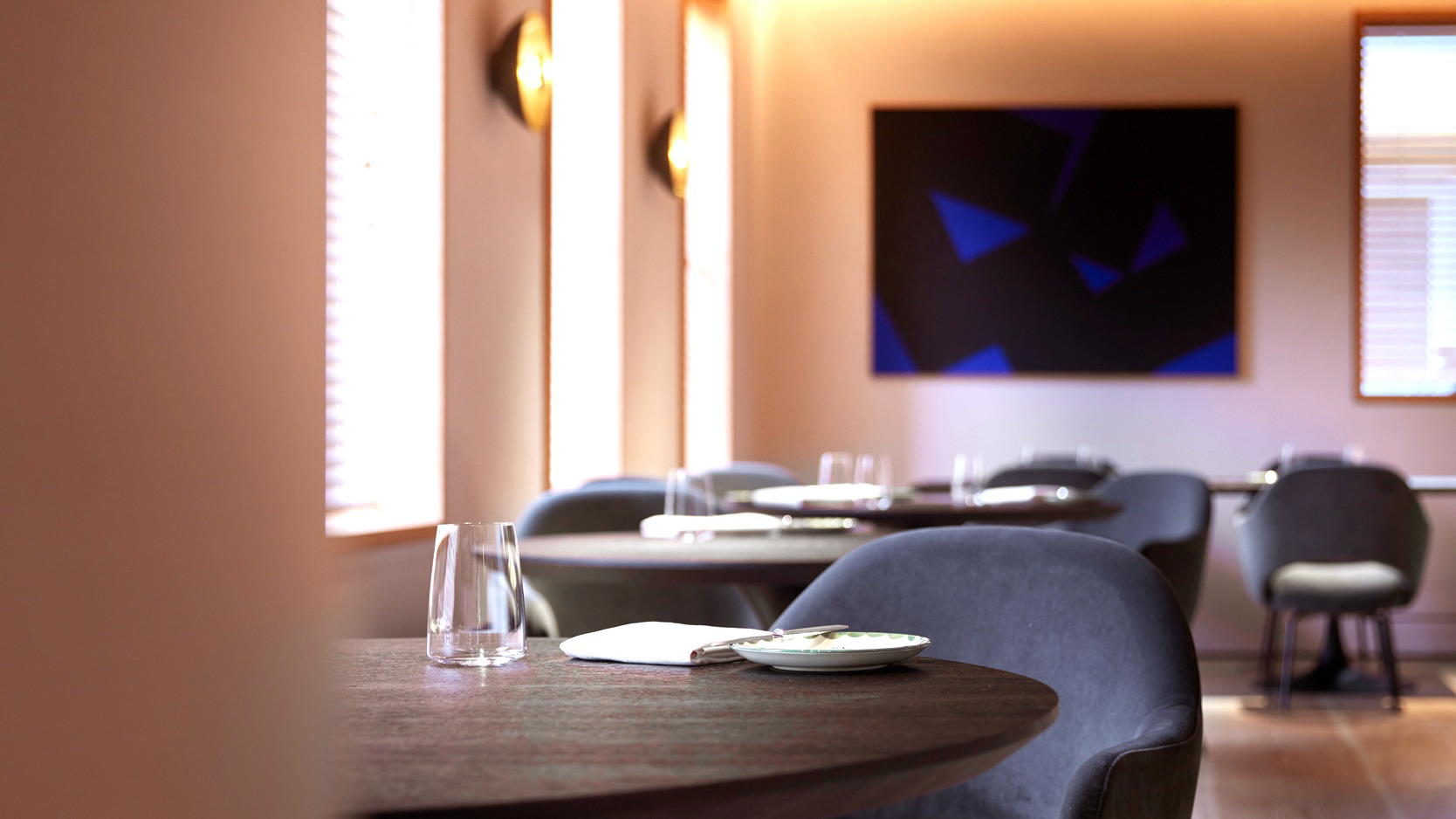
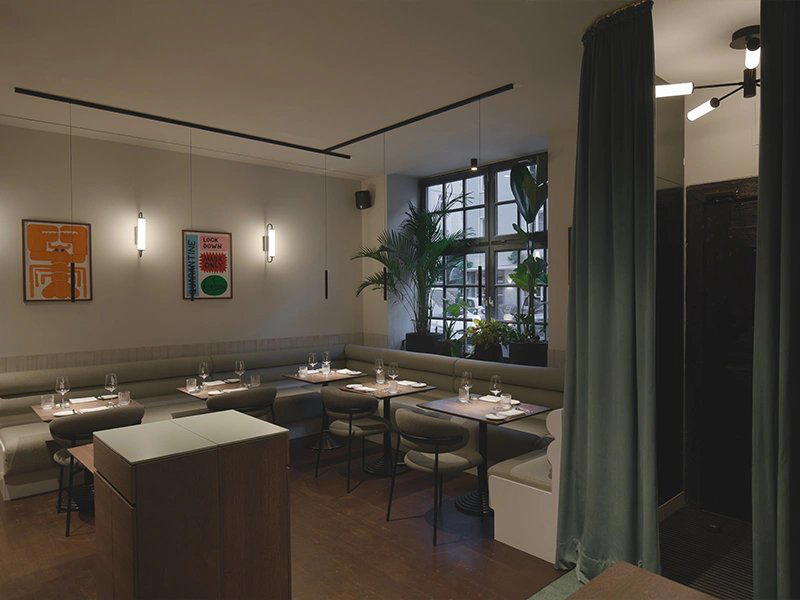
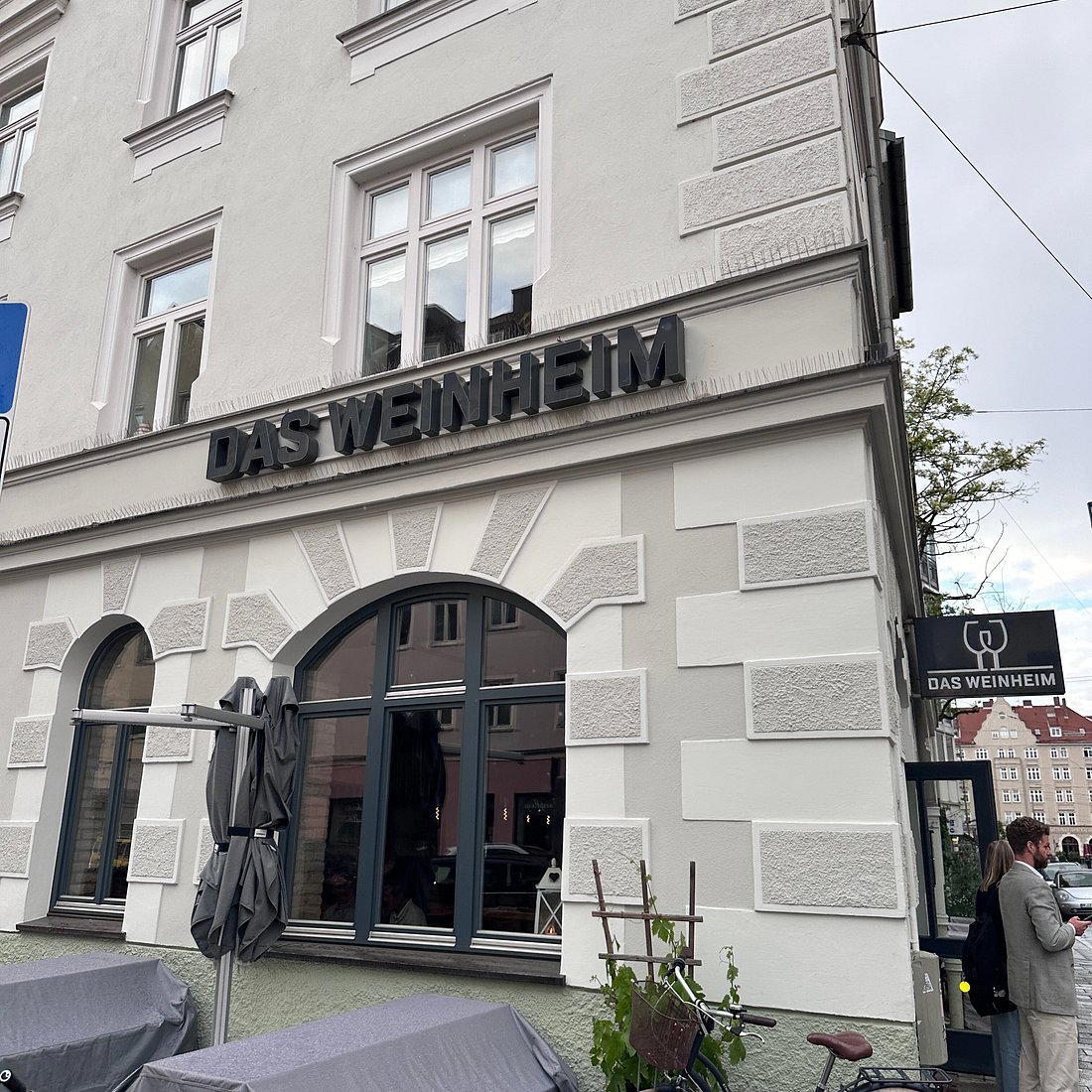
Casual small eatery with limited indoor and street-side outdoor seating, busy atmosphere focused on quick street food.