
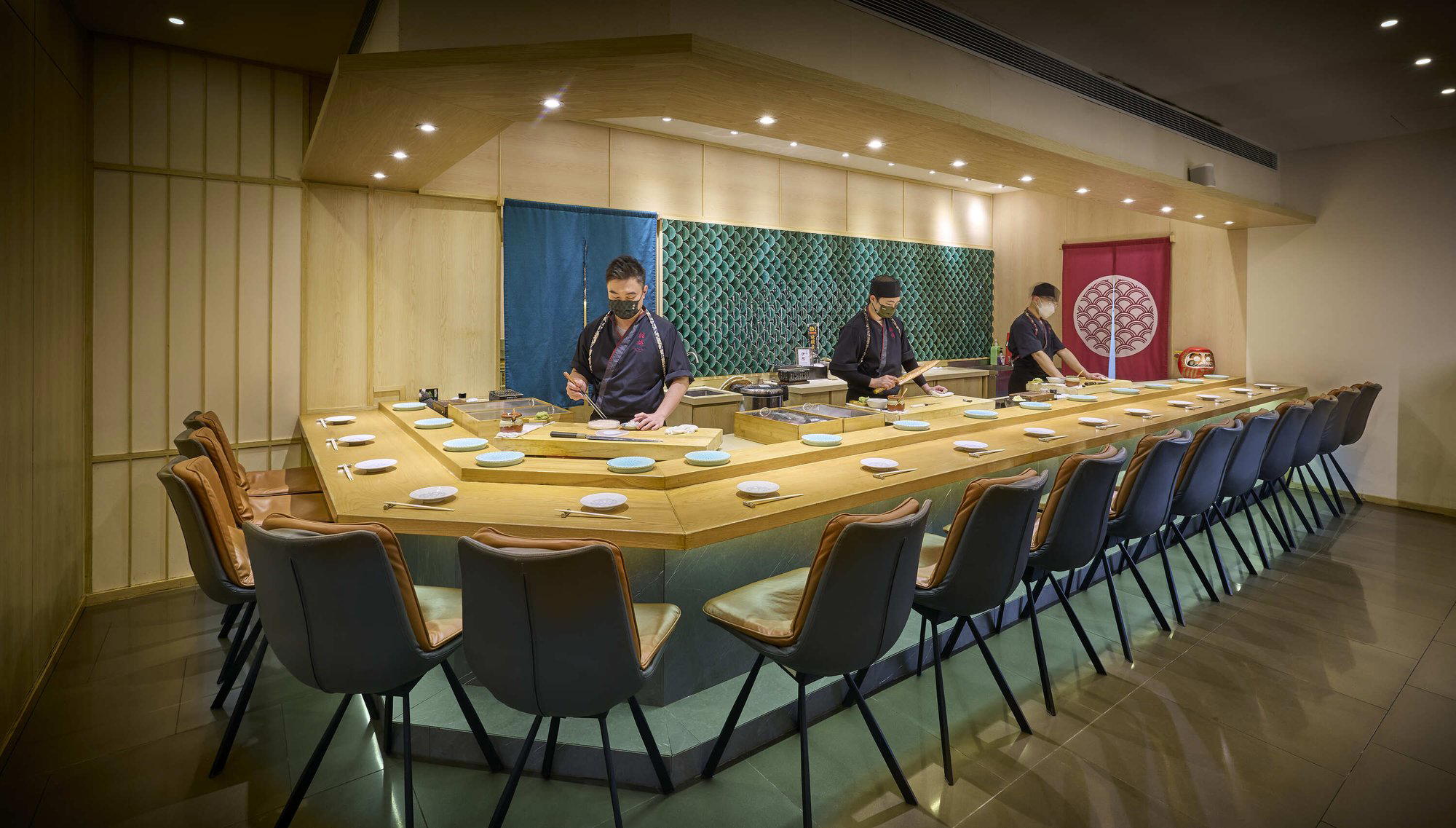
Shukou Yuzen Jinen is a Hamamatsu izakaya with a seafood and fugu focus, selected for Tabelog’s Izakaya EAST 100 in 2025 after earlier selections in 2024 and 2022. The appeal is its split personality: an eight-seat counter for close-range dining downstairs and tatami rooms upstairs for groups, placing it in the city’s more serious sake-and-seafood tier.
Pearl is the En Primeur Club membership app — saves, bookings, and concierge access live there. Same editors, same standards.
- Address
- 323-4 Tamachi, Chuo Ward, Hamamatsu, Shizuoka 430-0944, Japan
- Phone
- +81 53-456-7025
- Website
- jinen-g.jp
 Saves & bookings on Pearl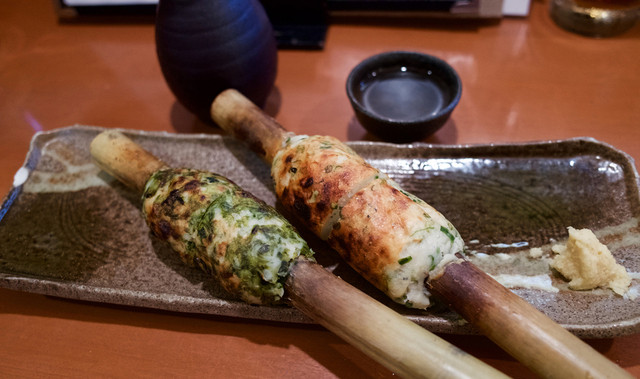
Approaching the tighter dining streets around Tamachi, Hamamatsu’s izakaya culture feels less like a late-night add-on and more like a complete dinner language: fish, sake, counter conversation, and private rooms for groups that want the evening to stretch. Shukou Yuzen Jinen belongs to that older, more deliberate strain. The first floor is built around only eight counter seats, while the second floor shifts into tatami-room territory, a format that says a great deal about how regional izakaya dining works outside Tokyo: intimacy below, social utility above.
Hamamatsu is often read through eel, gyoza, and its position between Tokyo and Nagoya, but the city’s stronger dining rooms also reflect Shizuoka’s coastal identity. Seafood-led izakaya here do not need to mimic the formality of kaiseki to command attention. They use a looser structure: seasonal fish, sake, shochu, and the pacing of shared plates. In that context, a venue selected for Tabelog’s Izakaya EAST 100 in 2025, with prior selections in 2024 and 2022, is not just another neighborhood tavern. It sits in the category where an izakaya is judged against specialist cooking rather than casual drinking.
Seafood, fugu, and the serious end of Hamamatsu's izakaya tradition
The listed categories tell the story clearly: izakaya, seafood, and fugu. That combination places the cooking inside a Japanese tradition where a meal can move between small plates, sharper fish work, and drinks without adopting the ceremony of a tasting-menu restaurant. Fugu, in particular, changes the signal. It is not a casual ingredient in Japan; it carries licensing, technique, and a built-in expectation of restraint. Even without a named chef or published signature dish, the category itself points to a kitchen working beyond standard pub repertory.
The drinking side reinforces the same reading. Sake and shochu are treated as core to the format, with wine and cocktails also available. That spread is common in contemporary Japanese dining, but the emphasis on nihonshu and shochu matters in a seafood room: these are not decorative pairings, they are part of how the meal is structured. In a city where business dinners, friends’ gatherings, and family meals overlap, the izakaya remains one of Japan’s more flexible dining forms, and this address operates at the higher-spend end of that form rather than the quick-drink end.
Compared with Hamamatsu peers, the positioning is easy to read. Tenkin occupies a lower dinner spend band, while Yoshitomo sits above it in a more expensive bracket. 彩席かわかみ and other local specialists fill out a market where diners choose not only by cuisine but by evening type: counter, private room, seafood focus, or formal progression. Shukou Yuzen Jinen lands in the middle-upper zone, where the expectation is not ceremony for its own sake, but dependable cooking, a considered drinks list, and enough structure for a serious dinner.
An eight-seat counter downstairs, tatami rooms upstairs
The split room is more than a layout detail. Eight counter seats on the first floor create the small-scale experience that serious izakaya regulars often prefer: direct sightlines, compact pacing, and little distance between ordering and eating. Upstairs tatami rooms shift the restaurant into another register, accommodating groups of four, six, eight, and larger gatherings. For visitors, that matters because the same address can serve two different Hamamatsu nights: a focused counter dinner or a private-room meal where conversation matters as much as the food.
The venue is non-smoking, accepts credit cards including Visa, JCB, Amex, and Diners, and does not offer parking. It is close to Daiichi Dori Station and within walking range of Hamamatsu Station, which makes it practical for travelers staying central rather than driving in from the suburbs. Reservations are available, and they make sense for a room with such limited counter capacity. Sunday closure also shapes the week: plan this as a weekday or Saturday evening rather than a final-night fallback.
Opening date, 1997, adds another useful signal. Hamamatsu has plenty of casual eating, but longevity in the higher-spend izakaya bracket usually means a place has served regulars through changing tastes, not merely caught a recent ranking cycle. Tabelog’s repeated Izakaya 100 selections in 2022, 2024, and 2025 support that view. The number attached to a user score is less revealing than the pattern of category recognition: this is a restaurant being measured within an izakaya field, not floated as a generic fine-dining address.
How to place it in a Hamamatsu dining itinerary
For travelers building a few nights in the city, this is the seafood-and-sake slot rather than the quick local-specialty stop. Hamamatsu’s broader table can include noodles, grilled meat, curry, and casual cafés, but an izakaya like this gives a different reading of the city: how local diners use private rooms, how seafood anchors an evening, and how drinks remain integrated with the food rather than treated as an afterthought. The right comparison is not a Tokyo tasting counter; it is the regional Japanese dinner that balances craft with social ease.
EP Club’s Hamamatsu coverage helps place that choice alongside nearby options, from Abondance, Binshan Li, Fukumitsu, Honkaku Teuchi Moriya Toukyou ten, and Kibori to Our full Hamamatsu restaurants guide. For the wider trip frame, use Our full Hamamatsu hotels guide, Our full Hamamatsu bars guide, Our full Hamamatsu wineries guide, and Our full Hamamatsu experiences guide.
Readers comparing Japanese dining formats beyond Shizuoka can also look at -Grilled beef Sukiyaki- KAMAKURA TANUKIAN 鎌倉 たぬき庵 in Kamakura,. 鮪と炭火焼き うお炭 秋葉原店 in Tokyo,.cafe in Osaka,.know in Kumamoto, (Shoku) Vietnam in Kawasaki, [Curry Senmon Ten] Maruyama Kyoju. in Sapporo, Jōdo Saké Bar in Los Angeles, and Onigiri Time in Pasadena. The comparison is useful because izakaya culture is not a single template: in Hamamatsu, the stronger version is coastal, drink-literate, and comfortable moving between counter focus and group hospitality.
Price Lens
Nearby venues at a similar price tier for orientation.
| Venue | Cuisine | Price | Awards | Notes |
|---|---|---|---|---|
| Shukou Yuzen JinenThis venue — the venue you are viewing | Tamachi, Naka-ku, Japanese Izakaya | $$$ | , | |
| Sumiyaki Unagi Hajime | $$$ | , | Nishi-ku, Charcoal-grilled Unagi Specialist | |
| Unagi Ryori Atsumi | $$ | , | Chuo-ku, Traditional Unagi (eel) Restaurant | |
| Sumiyaki Unagi Aoiya | $$ | , | Chuo Ward (Iidamachi), Kansai-style Charcoal-Grilled Unagi | |
| 彩席かわかみ | $$$$ | , | 第一通り (Daiichi-dori), Shizuoka Kaiseki | |
| Sushi Hiroya | Hamamatsucho, Modern Omakase Sushi | $$$$ | , |
Continue exploring
More in Hamamatsu
Restaurants in Hamamatsu
Browse all →

Hotels in Hamamatsu
Browse all →
At a Glance
- Classic
- Cozy
- Elegant
- Hidden Gem
- Group Dining
- Casual Hangout
- After Work
- Standalone
- Sake Program
- Beer Program
Traditional and relaxed, with a cozy izakaya atmosphere suited to seafood-focused dining.