
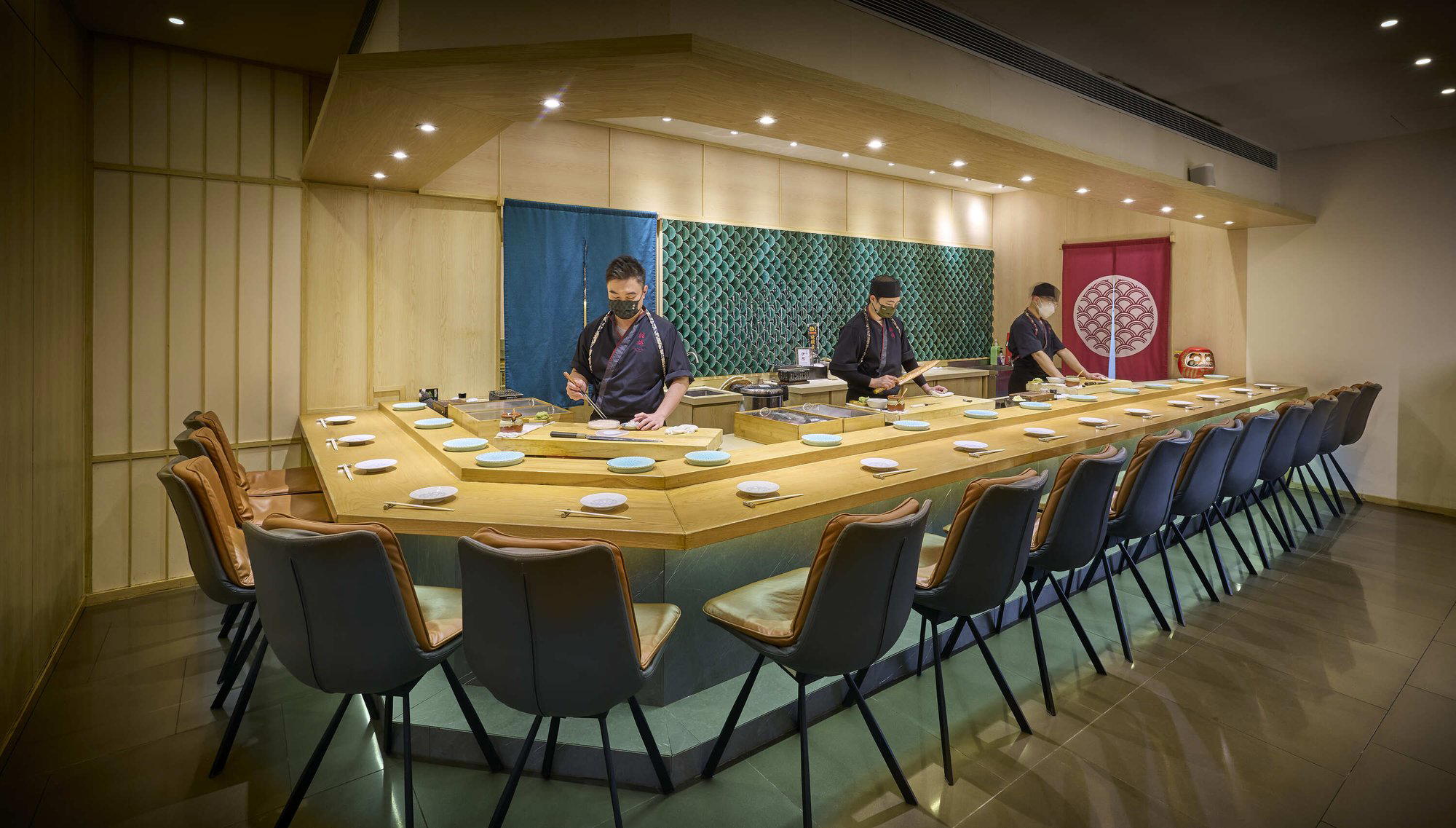
Hamamatsu’s tempura culture rewards small rooms where batter, oil, and local produce are handled in close view rather than hidden behind ceremony. Tenkin belongs to that counter-led tradition, with Tabelog Tempura 100 selections in 2023 and 2025, a compact format, and a price tier that keeps it closer to serious neighborhood dining than luxury omakase theater.
Pearl is the En Primeur Club membership app — saves, bookings, and concierge access live there. Same editors, same standards.
- Address
- 静岡県浜松市中央区田町325-29
- Phone
- +81534529528
- Website
- tabelog.com
 Saves & bookings on Pearl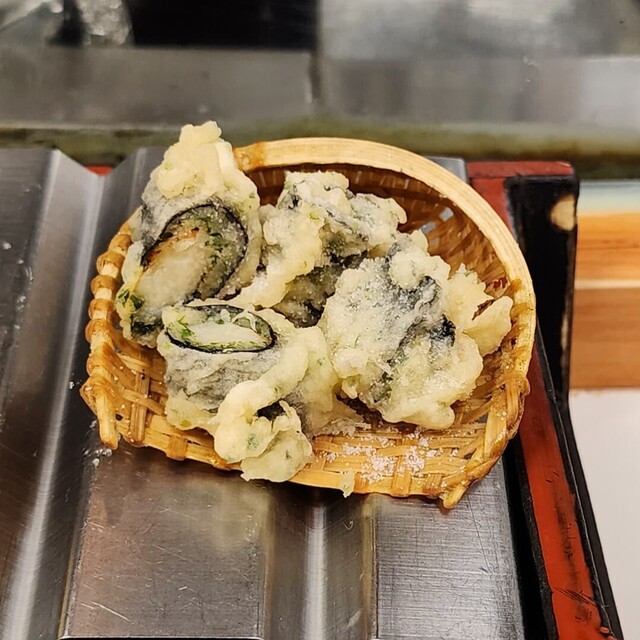
The first cue is the counter. Hamamatsu is not a city that needs theatrical dining rooms to make a point, and tempura benefits from that restraint: heat, timing, and proximity matter more than decoration. In a small counter setting, the meal becomes a study in sequence, with vegetables, seafood, rice, dipping sauce, and sake working as a practical grammar rather than a parade of set pieces.
That matters in Shizuoka. The prefecture has a broad agricultural base, a long coastline, and easy access to inland produce, so tempura here is less convincing when it tries to mimic Tokyo luxury and more persuasive when it behaves like a regional craft. Tenkin sits in that lane. Its Tabelog Tempura 100 selections in 2023 and 2025 place it inside a national conversation about specialist tempura, but the appeal is not trophy dining. It is the tighter pleasure of a counter where sourcing, frying rhythm, and rice-based comfort remain close together.
Counter tempura in Hamamatsu works when sourcing stays visible
Tempura is often misread as a technique-first cuisine. Technique is essential, but the ingredient decides the ceiling. Batter can protect sweetness, sharpen bitterness, or mute both; oil temperature can make a root vegetable taste concentrated or dull. In Hamamatsu, the stronger version of the form uses regional logic: seasonal vegetables, seafood suited to quick frying, and rice dishes that make sense for lunch as much as dinner.
Tenkin’s listed categories, tempura and ten-don, point to that dual identity. The counter format supports the more precise side of the craft, while tempura bowl culture keeps the restaurant connected to everyday Japanese dining. That combination is valuable in a city where high-spend Japanese restaurants such as Shukou Yuzen Jinen and Yoshitomo occupy a higher budget bracket, and where a lower-priced local option such as Kitanose speaks to a different kind of night out. The distinction is not hierarchy; it is use case. Tempura at this scale can be serious without requiring the posture of a formal tasting menu.
The Tabelog Tempura 100 recognition is the cleanest trust signal here. It does not turn the room into a luxury temple, and it should not be read that way. It says the address has enough specialist credibility to sit among Japan’s notable tempura selections, while the format remains compact and direct. For travelers building a Hamamatsu eating itinerary, that is a useful category: a focused meal with national recognition, not a broad survey of local cuisine.
The appeal is regional craft, not imported Tokyo ceremony
Tokyo’s high-end tempura counters often lean into omakase pacing, polished service ritual, and a bill that competes with sushi. Hamamatsu’s stronger proposition is different. The city rewards places that fold craft into daily life: soba, eel, gyoza, kaiseki, izakaya cooking, and specialist counters that do one thing with discipline. Tenkin belongs to that practical school, where the question is not how grand the room feels, but whether the frying respects the ingredient and the meal has a clear rhythm.
That regional reading also explains why ten-don matters. A tempura bowl is not a lesser cousin to counter tempura; it is a separate expression of the same craft, with rice and sauce changing the center of gravity. For visitors used to tasting-menu tempura, the bowl format offers a more local measure of confidence. It asks whether the frying can hold structure, whether the sauce supports rather than smothers, and whether the rice turns individual pieces into a meal.
Hamamatsu’s dining map is worth reading laterally rather than by status alone. French-influenced dining at Abondance, Chinese cooking at Binshan Li, and local Japanese restaurants such as Fukumitsu and Kibori show how varied the city’s serious dining can be without copying the capital. For a broader sweep, use Our full Hamamatsu restaurants guide, then pair the meal with Our full Hamamatsu hotels guide, Our full Hamamatsu bars guide, Our full Hamamatsu wineries guide, and Our full Hamamatsu experiences guide for the rest of the trip architecture.
How to place it in a Japan itinerary
Tenkin makes the strongest sense for travelers who already understand that Japan’s compelling meals often sit below the grand-occasion tier. The draw is not a chef biography or a room built for international attention. It is a specialist Japanese format in a regional city, with enough recognition to justify planning around it and enough restraint to keep the meal grounded.
That makes it a useful counterpoint to more destination-driven restaurants elsewhere in Japan. A Tokyo day might include Honkaku Teuchi Moriya Toukyou ten or. 鮪と炭火焼き うお炭 秋葉原店 in Tokyo; a Kansai stop could point toward.cafe in Osaka; Kyushu and Hokkaido have their own casual-specialist logic at.know in Kumamoto and [Curry Senmon Ten] Maruyama Kyoju. in Sapporo. Even outside Japan, the same itinerary instinct applies: Jōdo Saké Bar in Los Angeles and Onigiri Time in Pasadena appeal when format and focus matter more than spectacle.
For travelers moving through Shizuoka and Kanagawa, compare the decision with category-specific meals such as -Grilled beef Sukiyaki- KAMAKURA TANUKIAN 鎌倉 たぬき庵 in Kamakura or (Shoku) Vietnam in Kawasaki. The point is not to chase a single national style, but to let each stop do one job clearly. In Hamamatsu, Tenkin’s job is tempura with a regional pulse, small-room discipline, and enough recognition to make it a deliberate choice rather than a convenient meal.
Comparison Snapshot
Comparable venues by cuisine and price in the same metro.
| Venue | Cuisine | Price | Awards | Notes |
|---|---|---|---|---|
| TenkinThis venue — the venue you are viewing | Traditional Tempura & Tendon Counter | $$ | , | |
| Kiyo | Traditional Hamamatsu gyoza & horumon | $ | , | Naka Ward (Kamoe) |
| Kitanose | Upscale Japanese Kappo / Kaiseki | $$$ | , | Tamachi, Chuo Ward |
| Yoshitomo | High-end Tempura Omakase | $$$$ | , | Chuo Ward, Hamamatsu City |
| 彩席かわかみ | Shizuoka Kaiseki | $$$$ | , | 第一通り (Daiichi-dori) |
| Honkaku Teuchi Moriya Toukyou ten | Traditional Sanuki Udon | $$ | , | Hamamatsucho |
Continue exploring
More in Hamamatsu
Restaurants in Hamamatsu
Browse all →
Hotels in Hamamatsu
Browse all →
At a Glance
- Iconic
- Intimate
- Classic
- Cozy
- Hidden Gem
- Solo
- Family
- Casual Hangout
- Special Occasion
- Chefs Counter
- Standalone
- Historic Building
- Sake Program
An intimate 9‑seat counter-only shop with a classic, slightly old-school feel; guests sit close to the chef and each other, creating a cozy, conversational atmosphere focused on the performance of tempura frying rather than decor.