
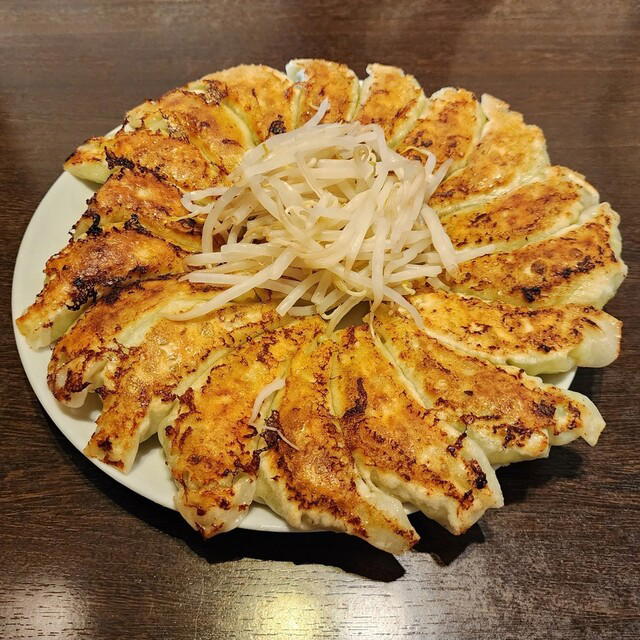
Binshan Li gives Hamamatsu’s Chinese dining scene a specialist address for dim sum, dumplings, and pork buns rather than a broad banquet-house survey. Its 2026 Tabelog 100 Chinese EAST selection and mid-range dinner pricing place it in a useful bracket for travelers who want a serious meal without moving into the city’s higher-ticket kaiseki or counter formats.
Pearl is the En Primeur Club membership app — saves, bookings, and concierge access live there. Same editors, same standards.
- Address
- Japan, 〒430-0928 Shizuoka, Hamamatsu, 中区Itayamachi, 628 Y3ビル5階
- Phone
- +81 53-451-3031
- Website
- bing-xiang-li.com
- Directions
- Get directions
 Saves & bookings on Pearl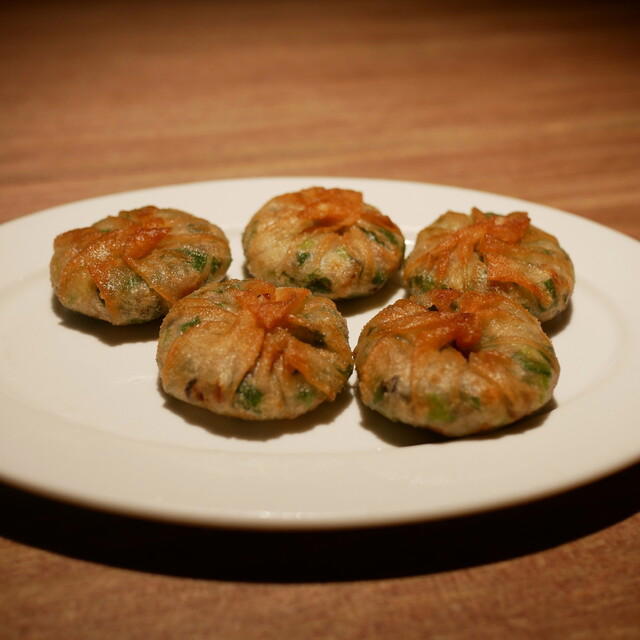
The approach is urban Hamamatsu rather than resort Japan: upper-floor dining, station-side streets, and a room built for people who arrive with a table in mind rather than drift in from a shopping arcade. In that setting, Chinese cooking reads differently. It is less about banquet spectacle and more about small-format precision, the kind of meal where dough, filling, steam, and timing carry the argument.
Hamamatsu is often reduced to eel in travel shorthand, but the city’s eating culture is broader than that single association. Its position between Tokyo and Nagoya gives it a practical, commuter-city appetite: restaurants need to work for local regulars as well as visitors, and awards alone do not sustain a dining room. Binshan Li sits in that more useful category, a Chinese restaurant whose public identity is tied to dim sum, yum cha, dumplings, and pork buns, with a 2026 Tabelog 100 Chinese EAST selection giving the address a credential beyond neighbourhood loyalty.
Dim sum in a city better known for eel
Chinese restaurants in regional Japanese cities often divide into two camps. One is the broad, family-style chuka model: ramen-adjacent dishes, fried rice, gyoza, and volume. The other is more focused, treating dumplings, buns, and steamed dishes as craft rather than side orders. Binshan Li belongs to the second camp. That matters because dim sum is not a forgiving format. The appeal depends on dough thickness, filling ratio, heat retention, and how quickly the kitchen can move from steamer to table.
The ingredient-sourcing angle here is not a theatrical farm list or named-producer performance. It is visible in the category logic. Dumplings and pork buns expose shortcuts quickly: coarse filling, tired wrappers, or poorly managed steam cannot be hidden under plating. In Japan, where Chinese cooking has long been adapted through local wheat, pork, seafood, and vegetable supply chains, the genre often succeeds when the kitchen treats regional availability as a strength rather than imitating Hong Kong or Shanghai by force. A health-and-wellness menu signal also points toward lighter, ingredient-led decision-making rather than the heavy-sauce register often associated with casual chuka.
The Tabelog 100 Chinese EAST 2026 recognition places the restaurant inside an eastern Japan list that covers a far wider field than Hamamatsu. That is the useful point. In a city without the density of Tokyo’s high-end Chinese rooms, a specialist dim sum address with that selection gives travelers a different reason to stay in town for dinner. It also creates a contrast with Hamamatsu’s higher-priced Japanese formats: Yoshitomo and Shukou Yuzen Jinen occupy a more expensive local tier, while Kitanose sits below this price band. The comparison clarifies the decision. This is not the splurge end of Hamamatsu dining; it is the technical middle, where value depends on execution more than ceremony.
What the room says about the meal
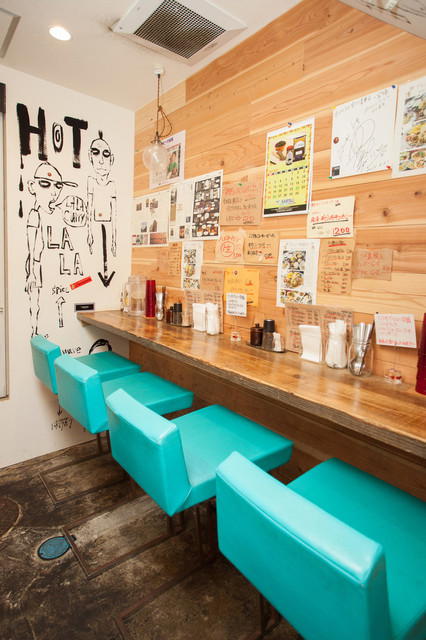
Restaurant’s 45-seat scale is large enough to avoid the hushed preciousness of a tiny counter, but small enough that timing still matters. A larger banquet room can absorb inconsistency with noise and abundance; a room this size puts more pressure on each round of dishes. Private-room dining is not the point, and that suits the food. Dim sum and dumplings benefit from a table that stays active, with drinks and small plates moving in rhythm rather than a long, formal progression.
Drinks list covers sake, shochu, wine, and cocktails, a Japanese answer to Chinese dining. That flexibility is more than convenience. It reflects how regional Chinese restaurants in Japan operate within local drinking habits rather than importing a single pairing model. Sake can work with steamed dough and pork fat; shochu gives a cleaner line through richer fillings; wine and cocktails widen the table for groups. The result is a dining format that can handle dates and friends without forcing either into banquet etiquette.
For travelers comparing Hamamatsu options, the better question is not whether Chinese food belongs on a short stay in Shizuoka. It is whether the meal adds a register that eel, sushi, soba, or kappo cannot. In that sense, Binshan Li earns its place because it focuses on a Chinese craft vocabulary that is easy to underrate and hard to fake. For a broader read on the city’s dining spread, Our full Hamamatsu restaurants guide is the better starting point; for nearby dining contrasts, Abondance, Fukumitsu, Kibori, and Honkaku Teuchi Moriya Toukyou ten show how varied the local map becomes once it moves beyond a single regional specialty.
How it fits into a Hamamatsu itinerary
Because the restaurant is close to Daiichi Dori Station, it works particularly well for visitors staying around central Hamamatsu rather than driving in from hot-spring country or the lakeside. Parking is not part of the setup, so the more intelligent plan is rail, taxi, or a central hotel base. The no-smoking policy and elementary-school-and-above family rule make the room more controlled than a casual all-ages dining hall, while take-out adds flexibility for travelers who want the food without committing to a full evening.
The booking signal is simple: reservations are available, and the award profile means planning is sensible. This is not a restaurant to treat as a generic drop-in if the date matters. Its place in the Tabelog 100 Chinese EAST list raises demand beyond ordinary local discovery, especially for visitors using award lists to structure regional eating in 2026.
Within a wider Hamamatsu trip, the restaurant pairs well with an itinerary that treats the city as more than a transit point. Use Our full Hamamatsu hotels guide for where to stay, Our full Hamamatsu bars guide for after-dinner drinking, Our full Hamamatsu wineries guide for regional bottles, and Our full Hamamatsu experiences guide for non-restaurant planning. Readers building a broader Japan dining circuit can also compare formats through -Grilled beef Sukiyaki- KAMAKURA TANUKIAN 鎌倉 たぬき庵 in Kamakura. 鮪と炭火焼き うお炭 秋葉原店 in Tokyo.cafe in Osaka.know in Kumamoto, (Shoku) Vietnam in Kawasaki, [Curry Senmon Ten] Maruyama Kyoju. in Sapporo, Jōdo Saké Bar in Los Angeles, and Onigiri Time in Pasadena.
Quick Comparison
Comparable venues by cuisine and price in the same metro.
| Venue | Cuisine | Price | Notes |
|---|---|---|---|
| Binshan Li | Modern Chinese dim sum & small plates | $$$ | / Daiichi Dori area (central Hamamatsu) |
| Shukou Yuzen Jinen | Japanese Izakaya | $$$ | Tamachi, Naka-ku |
| Fukumitsu | Hamamatsu gyoza & Chinese dumplings | $ | Chuo Ward |
| Sumiyaki Unagi Aoiya | Kansai-style Charcoal-Grilled Unagi | $$ | Chuo Ward (Iidamachi) |
| Sumiyaki Unagi Kamo | Traditional Kansai-style unagi (eel) restaurant | $$ | Hamana Ward |
| Yakiniku Kunimoto Honten | Traditional Wagyu Yakiniku | $$$ | Hamamatsucho / Shimbashi area |
Recognition history
Dated appearances from independent guides and award organizations, with the underlying list record or original source where available.
Tabelog 100 #46 · No. 46
Tabelog · Tabelog 100 - Chinese cuisine - EAST - 2026
Continue exploring
More in Hamamatsu
Restaurants in Hamamatsu
Browse all →

At a Glance
- Cozy
- Lively
- Modern
- Casual Hangout
- Group Dining
- Solo
- After Work
- Date Night
- Standalone
Current opening hours
- Monday
- Closed
- Tuesday
- 5:30–11 PM
- Wednesday
- 5:30–11 PM
- Thursday
- 5:30–11 PM
- Friday
- 5:30–11 PM
- Saturday
- 5:30–11 PM
- Sunday
- 5:30–11 PM
Hours can change for holidays and private events. Last verified .
Compact, modern Chinese dim sum house with warm lighting, counter and table seating, and a lively but relaxed atmosphere suited to small groups and casual occasions.