
Shisen Sai Hiro brings Sichuan and Chinese cooking into Nagoya’s quieter Meito Ward dining circuit, with Tabelog Chinese EAST 100 selection in 2026 giving it a clear signal beyond neighbourhood convenience. The appeal is the compact format: a small room, counter seating, and a menu structure that suits both lunch regulars and dinner diners looking for spice-led Chinese cooking without the ceremony of a luxury tasting counter.
Pearl is the En Primeur Club membership app — saves, bookings, and concierge access live there. Same editors, same standards.
- Address
- 1 Chome-713 Takabaridai, Meito Ward, Nagoya, Aichi 465-0061, Japan
- Phone
- +81 52-385-0577
- Website
- tabelog.com
 Saves & bookings on Pearl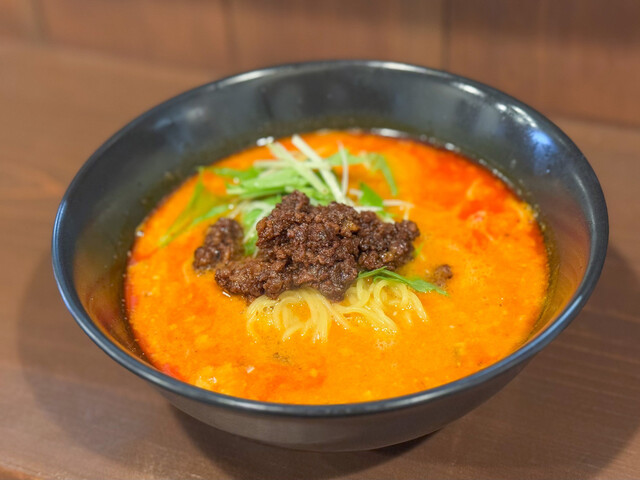
Approaching this part of Meito Ward, Nagoya’s dining rhythm changes. The central districts trade on density and late-night movement; Takabaridai is residential, car-dependent, and less performative. In that setting, a 14-seat Sichuan and Chinese restaurant with counter seating reads differently from a downtown destination. The meal is judged less by theatre than by discipline: how many choices the kitchen can carry, how sharply it separates lunch from dinner, and whether the cooking has enough identity to pull diners from the usual station-adjacent circuit.
That is the lens for Shisen Sai Hiro. Its 2026 selection for Tabelog Chinese EAST 100 places it in a regional conversation about Chinese cooking in eastern Japan, while the format stays small and local. Nagoya has long favoured pragmatic dining, from teishoku counters to specialist noodle shops and compact bistros. Here, Sichuan technique uses heat, oil, fermentation, and aroma as structure, not garnish. The point is not maximal firepower. Serious Sichuan cooking depends on balance between chile, numbing pepper, vinegar, garlic, stock, and texture, and small restaurants often show that balance more clearly than banquet-led Chinese rooms.
Small-room Sichuan in a city that rewards precision over spectacle
Nagoya’s Chinese dining scene lacks the international visibility of Tokyo or Osaka, making recognition lists useful discovery tools. A Tabelog Chinese EAST 100 nod is not a Michelin star, and should not be read as one, but it signals entry into a vetted field beyond neighbourhood approval. For travellers, that matters: this is not a luxury detour built around imported ceremony, but a compact specialist restaurant with enough external validation to plan around.
The menu architecture matters because Sichuan cooking in Japan can split into two weak versions: softened family-style Chinese, or chile spectacle. The stronger middle uses spice as a framework for sequencing. Lunch pricing in this category often pushes restaurants toward set meals and quick turnover; dinner allows more range across shared plates, rice, noodles, and drinks. Shisen Sai Hiro sits in that middle register, with a format suited to repeat local use rather than one ceremonial sitting. That makes it a better read for diners interested in how Chinese cooking has localized in Nagoya than for those chasing a grand-room experience.
Compared with nearby Nagoya listings, the positioning is telling. Shinra Kan Meitou honten sits in a higher dinner band, while With occupies a far more expensive tier. kitchen NOMU aligns more closely on spend, though in a different idiom. Those contrasts explain why this restaurant’s award recognition carries weight: it competes through category specificity, not scale or price escalation. In a city where polished meals often cluster around central wards, a recognized Chinese counter in Meito Ward asks whether the cooking is distinctive enough to pull the map outward.
The menu's message is clearer than the room's ambitions
The strongest reason to pay attention is the cuisine category itself. Sichuan cooking in Japan has a long history of adaptation, especially through mapo tofu, dandan noodles, and stir-fried dishes calibrated for local palates. Contemporary specialist kitchens are judged by whether they restore sharper grammar without turning the meal into a heat contest. A concise room helps. With limited seats, the kitchen’s range must be edited; there is less room for an encyclopedic menu that flatters choice while weakening execution.
That edited quality separates a specialist from a generic Chinese restaurant. Counter seating changes the meal’s energy, reducing the distance between cooking and dining, and suiting dishes where timing matters: wok work, sauces finished close to service, noodles that lose texture if they sit. None of that requires luxury plating. The better measure is whether the menu feels built for pace, heat control, and repeat ordering rather than a linear tasting progression.
The restaurant’s opening in 2023 adds a temporal note. Post-pandemic Nagoya dining has seen smaller independent rooms sharpen their identities, partly because broad menus struggle against rising costs and staffing pressure. A focused Sichuan-Chinese address with award recognition by 2026 fits that shift. It is young enough to feel current, but not so new that recognition rests only on novelty.
How to place it in a Nagoya itinerary
For visitors, the decision is less whether to cross town for Chinese food than what kind of Nagoya meal is being built. If the itinerary is anchored in Sakae, Nagoya Station, or hotel dining, this is a change of tempo: smaller, more residential, and less oriented toward walk-in tourism. It pairs better with a day on the city’s eastern side than with a tightly scheduled central-night crawl. The practical appeal is that the restaurant’s scale encourages intention; the risk is that casual timing leaves too much to chance.
Readers mapping a broader Nagoya stay should start with Our full Nagoya restaurants guide, then use Our full Nagoya hotels guide, Our full Nagoya bars guide, Our full Nagoya wineries guide, and Our full Nagoya experiences guide to keep the day coherent. Within the restaurant field, nearby Nagoya references such as 1022, 451, Aaron, Alan., and All Day Dining Montmartre show how varied the city’s dining map becomes beyond a single neighbourhood.
For wider Japan context, the useful comparison is format clarity, not cuisine similarity. Specialist restaurants across the country often win loyalty by narrowing the offer: -Grilled beef Sukiyaki- KAMAKURA TANUKIAN 鎌倉 たぬき庵 in Kamakura. 鮪と炭火焼き うお炭 秋葉原店 in Tokyo.cafe in Osaka.know in Kumamoto, (Shoku) Vietnam in Kawasaki, and [Curry Senmon Ten] Maruyama Kyoju. in Sapporo all point to the same modern pattern: a narrower promise can make a meal easier to understand. Overseas Japanese-adjacent formats, Jōdo Saké Bar in Los Angeles and Onigiri Time in Pasadena, underline how format, not size, increasingly defines credibility.
The verdict is practical rather than romantic. Shisen Sai Hiro is for diners who want a compact Sichuan-Chinese meal with recognized standing in Nagoya, not a trophy-room evening. Its value lies in the friction between modest scale and serious category recognition: a small counter-led room in a residential ward, carrying a cuisine that rewards control more than display.
Same-City Peers
Nearby venues at a similar price tier for orientation.
| Venue | Cuisine | Price | Notes |
|---|---|---|---|
| Shisen Sai HiroThis venue — the venue you are viewing | Sichuan Chinese | $$ | Not listed |
| Shaotsai Iedie | Authentic Sichuan Chinese | $$ | Higashi |
| Chinese Sai Tanaka | Chinese Tantan-men & noodle shop | $$ | Midori |
| China Hime Hana | Chinese restaurant | $ | Shōwa |
| Tatsumi | Gyoza-focused Chinese Izakaya | $ | Naka |
| MASA'S KITCHEN Nagoya JR geeto tawaa | Modern Chinese & Sichuan | $$$ | Nakamura |
Recognition history
Dated appearances from independent guides and award organizations, with the underlying list record or original source where available.
Tabelog 100 #94 · No. 94
Tabelog · Tabelog 100 - Chinese cuisine - EAST - 2026
Continue exploring
More in Nagoya
Restaurants in Nagoya
Browse all →

At a Glance
- Cozy
- Classic
- Quiet
- Family
- Casual Hangout
- Solo
- Standalone
Current opening hours
- Monday
- 11:30 AM–2 PM, 5:30–9 PM
- Tuesday
- 11:30 AM–2 PM
- Wednesday
- Closed
- Thursday
- 11:30 AM–2 PM, 5:30–9 PM
- Friday
- 11:30 AM–2 PM, 5:30–9 PM
- Saturday
- 11:30 AM–2 PM, 5:30–9 PM
- Sunday
- 11:30 AM–2 PM, 5:30–9 PM
Hours can change for holidays and private events. Last verified .
A small, relaxed neighborhood Chinese restaurant with counter seating and a low-key, residential feel.