
Nagoya’s dumpling culture is often read through small rooms rather than grand dining rooms, and Tatsumi fits that scale with an 18-seat, non-smoking space in Shinsakae. Its Tabelog 100 Dumplings selections in 2021 and 2024 put a modest Chinese-izakaya format into a national conversation about gyoza craft, queue discipline, and low-price dining in Japan.
Pearl is the En Primeur Club membership app — saves, bookings, and concierge access live there. Same editors, same standards.
- Address
- 愛知県名古屋市中区新栄2-8-13 シャトー秋月 1F
- Phone
- +81522613011
- Website
- tabelog.com
 Saves & bookings on Pearl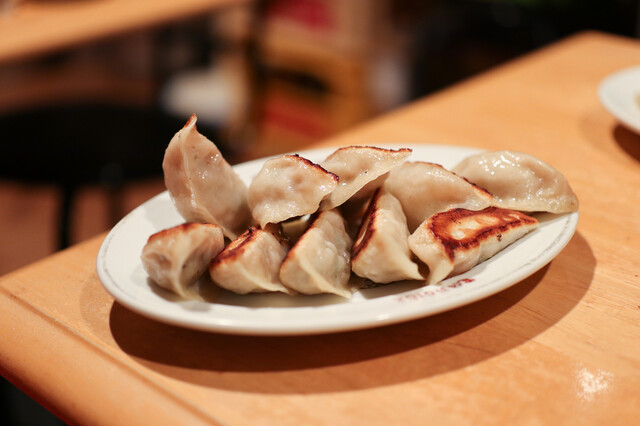
Shinsakae changes register quickly after dark: office blocks thin out, small eating rooms take over the side streets, and the scale of dinner becomes more intimate. In that setting, Tatsumi belongs to a Nagoya tradition that does not need ceremony to signal seriousness. The room is small, the category is direct, and the appeal sits in the tension between everyday pricing and national dumpling recognition.
Japan’s gyoza culture rewards repetition. The category is not built around long menus or theatrical service; it is built around consistency, heat management, filling balance, and the rhythm of a room that can turn a casual meal into a focused ritual. Nagoya adds its own angle because the city’s dining identity has always made space for strong-flavoured, casual, often working-neighbourhood food alongside polished restaurant formats. A dumpling counter can carry as much local meaning as a tasting menu room if the execution holds.
A compact Shinsakae room where dumplings set the pace
The physical container matters here. An 18-seat restaurant changes the way gyoza is experienced: orders move through the room in short bursts, conversation stays close, and the line between Chinese restaurant and izakaya becomes practical rather than conceptual. The listed categories, dumpling, Chinese, and Japanese-style tavern, describe a hybrid that is common in Japan but often misunderstood by visitors looking for cleaner genre labels.
That hybrid format is the point. Gyoza in Japan often functions as a drinking companion, a quick dinner, a late-evening stop, or a family-friendly meal, not as a single-purpose tasting exercise. Tatsumi’s non-smoking room and children-welcome status keep the experience broader than a bar-only address, while the small seat count keeps it from feeling anonymous. The design signal is not luxury; it is compression. In compact Nagoya rooms, service, kitchen timing, and guest turnover are part of the architecture.
The award context gives the format weight. Tatsumi was selected for Tabelog 100 Dumplings in 2021 and again in 2024, a useful signal in a category where national attention usually concentrates in Tokyo, Osaka, and regional specialists with loyal local followings. Its Tabelog score of 3.67 places it in a serious bracket for an everyday-price dumpling address, especially in a city where diners can be exacting about value.
Why low-price gyoza can carry serious editorial weight
Price is part of the cultural argument. Japan’s dumpling shops are judged less by expense than by precision under pressure. A low dinner budget does not make the category minor; it makes faults more visible. At this tier, repetition becomes evidence. If a small room earns repeat national selection without the machinery of fine dining, the distinction usually comes from consistency rather than spectacle.
That is why the comparison within Nagoya should be made by format, not by cuisine alone. Restaurants such as 吉い, フランス惣菜と串カツ マルブラード, アリーニュ, kitchen Toshiki, and PORKMAN operate in different registers of the city’s casual and specialist dining culture. The useful question is not which venue is more elaborate, but which kind of evening the diner wants: a compact dumpling-and-izakaya rhythm, a French-leaning casual counter, a pork-focused meal, or a more composed restaurant format. Tatsumi sits on the side of narrow focus and quick decisiveness.
For travellers, that focus is valuable because Nagoya’s restaurant scene can be overshadowed by the city’s better-known regional dishes. Hitsumabushi, miso katsu, tebasaki, and kishimen dominate many first-time itineraries, but gyoza shows another side of the city: small neighbourhood rooms where Chinese influence has been absorbed into Japanese drinking culture and local dinner habits. A place like this helps explain how Nagoya eats when it is not performing its tourist canon.
How to place it in a Nagoya itinerary
The smartest use is as a tightly framed dinner rather than a leisurely destination meal. Shinsakae is central enough to combine with other Nagoya plans, and the restaurant’s no-reservation format changes the calculation: treat timing as part of the meal rather than an afterthought. The room’s scale means a casual category can demand serious patience, particularly when national recognition has put it on more lists than a neighbourhood dumpling shop would normally expect.
Payment and access details also shape the experience. Credit cards are not accepted, while electronic money and PayPay are listed, a common reminder that low-price Japanese dining can be digitally modern and cash-conscious at the same time. Parking is not provided, with coin parking nearby, so this is better approached as an urban stop than a drive-in dinner. The nearest station context keeps it aligned with Shinsakae’s small-room dining pattern.
EP Club readers building a broader Nagoya map should place this in the casual specialist lane, then use more formal meals and bars around it rather than trying to make every booking carry the same level of ceremony. For city-wide planning, start with Our full Nagoya restaurants guide, then cross-check sleep, drinking, and non-restaurant time through Our full Nagoya hotels guide, Our full Nagoya bars guide, Our full Nagoya wineries guide, and Our full Nagoya experiences guide.
Within Japan and beyond, the useful editorial thread is the rise of focused casual addresses that earn attention without mimicking fine dining. Compare that with other restaurant formats on EP Club, from 1022, 451, Aaron, Alan., and All Day Dining Montmartre to regional Japanese entries such as -Grilled beef Sukiyaki- KAMAKURA TANUKIAN 鎌倉 たぬき庵 in Kamakura. 鮪と炭火焼き うお炭 秋葉原店 in Tokyo.cafe in Osaka.know in Kumamoto, (Shoku) Vietnam in Kawasaki, [Curry Senmon Ten] Maruyama Kyoju. in Sapporo, Jōdo Saké Bar in Los Angeles, and Onigiri Time in Pasadena. The lesson is consistent: small-format dining can be minor in footprint and serious in intent.
Peers in This Market
Side-by-side context: comparable cuisine and price.
| Venue | Cuisine | Price | Notes |
|---|---|---|---|
| Tatsumi | Gyoza-focused Chinese Izakaya | $ | Naka |
| China Hime Hana | Chinese restaurant | $ | Shōwa |
| Hyakurotei Imaike ten | Nagoya gyoza & dumpling counter | $ | Chikusa |
| Manchin Ken | Nagoya egg-drop ramen & Chinese | $ | Nakamura |
| Jinsei Gyoza | Casual Chinese Gyoza & Ramen Shop | $ | Nakagawa |
| toraneko | Cantonese-inspired Creative Chinese | $$$ | Higashi |
Recognition history
Dated appearances from independent guides and award organizations, with the underlying list record or original source where available.
Tabelog 100 #27 · No. 27
Tabelog · Tabelog 100 - Dumplings - 2024
Continue exploring
More in Nagoya
Restaurants in Nagoya
Browse all →
At a Glance
- Lively
- Cozy
- Casual
- Casual Hangout
- After Work
- Family
- Solo
- Standalone