
Chinese Sai Tanaka puts Nagoya’s suburban Chinese dining into a sharper frame: compact, counter-led, and serious enough to earn selection in Tabelog’s Chinese EAST 100 for 2026. The draw is not luxury theater but a disciplined meal rhythm, with Chinese cooking and tantan-men sitting in the same small-room format that suits solo diners, families, and regulars who value precision over ceremony.
Pearl is the En Primeur Club membership app — saves, bookings, and concierge access live there. Same editors, same standards.
- Address
- Kyoden-166番地 Narumi, Midori Ward, Nagoya, Aichi 458-0801, Japan
- Phone
- +81 52-622-4710
- Website
- instagram.com
 Saves & bookings on Pearl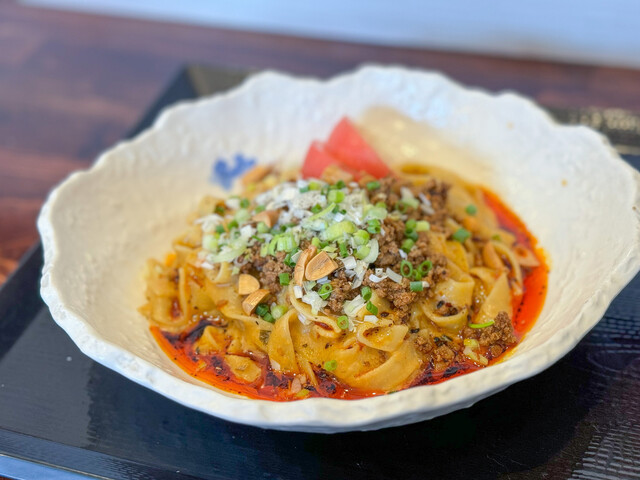
Approach in Narumi and the meal feels less like a downtown occasion than a local ritual: a compact room, counter seating, and a small kitchen working close to its guests. Nagoya’s dining identity is often framed by miso-katsu, hitsumabushi, kishimen, and coffee-shop morning sets, but its Chinese restaurants form a quieter layer of daily eating. Here, the distinction is not marble or ceremony; it is whether flavor, timing, and repetition stay aligned in a format built for regular use.
Chinese Sai Tanaka belongs to that practical side of the city. Its selection for Tabelog’s Chinese EAST 100 in 2026 gives it a credential beyond neighbourhood loyalty, while its scale keeps the experience closer to a local counter than a destination dining room. That tension is useful for travelers: Nagoya’s serious casual restaurants often ask less than Tokyo’s reservation economy, yet the stronger rooms still reward attention to pacing, category, and local habits.
Chinese cooking in Nagoya, stripped to a small-room rhythm
Japanese Chinese dining ranges from banquet rooms and hotel Cantonese to gyoza counters, noodle shops, and family-run kitchens. The Nagoya version often sits in the middle: approachable, efficient, and built around repeatable dishes rather than long tasting menus. Tantan-men fits naturally because it works as both noodle meal and Chinese-inflected comfort dish, with spice, sesame richness, and broth structure carrying the role that course progression might handle elsewhere.
The ritual here is direct. A small counter changes the social temperature: guests see the kitchen’s cadence, solo dining feels normal, and the room needs no formal choreography. This is where Chinese Sai Tanaka’s format matters. The category is Chinese and tantan-men, but the experience is closer to a precise neighbourhood kitchen than a grand regional survey. That is the point. In Japan, many serious casual restaurants gain authority by narrowing the frame and executing it repeatedly.
Within Nagoya’s casual-price Chinese and ramen-adjacent field, the comparison helps. Banrai Tei, Ramen Burai, Shurakutei Kuan, RAMEN Burosu, and Ramen mellow occupy nearby everyday-spend territory, with noodle-led meals competing on accessibility and frequency rather than spectacle. Chinese Sai Tanaka sits just above the simplest ramen-counter logic because Tabelog Chinese EAST 100 recognition places it in a broader regional Chinese category, not only a local noodle conversation. For a traveler, this is not just a quick bowl between plans, but a compact expression of how Nagoya diners fold Chinese cooking into ordinary life.
The etiquette is casual, but the room rewards focus
Small Japanese restaurants have their own etiquette, even when informal. The meal moves better when guests arrive ready to order, keep the counter uncluttered, and treat the room as shared space rather than a private stage. In limited seating with counter-service cues, the reward is not theatrical intimacy; it is a meal that keeps tempo. Waiting too long over a finished bowl or treating the room like a lounge misses the format.
The 2026 Tabelog recognition is a useful trust signal because it separates the restaurant from the mass of competent casual Chinese rooms across eastern Japan. Tabelog’s Hyakumeiten lists tend to reward depth within a category rather than luxury markers alone, which is why a small Narumi address can enter the same broader conversation as more conspicuous city-center restaurants. For visitors without local regulars guiding them, it says the kitchen has been noticed beyond its immediate catchment.
Still, the appeal should not be misread as a universal Nagoya dining answer. Travelers seeking a long dinner, rare wine, private rooms, or a chef-led tasting format should look elsewhere. This is tighter: Chinese cooking, noodle culture, counter pacing, and a room whose discipline comes from repetition. For a Nagoya itinerary, it pairs better with a day in the city’s eastern or southern districts than with a night chasing hotel-bar polish.
How to place it in a Nagoya itinerary
Narumi sits outside the city-center dining loop that pulls many visitors toward Sakae, Nagoya Station, and Fushimi. That geography is part of the case. Some of Nagoya’s more telling meals are not in the hotel corridor; they sit near residential rail nodes where restaurants serve locals first and destination diners second. The restaurant suits travelers who already want that side of the city, or repeat visitors who have moved past the expected regional specialties.
For broader planning, use Our full Nagoya restaurants guide to place this meal beside other city choices, then cross-check adjacent categories through Our full Nagoya hotels guide, Our full Nagoya bars guide, Our full Nagoya wineries guide, and Our full Nagoya experiences guide. The city rewards clustering: one strong suburban meal makes more sense when transport and neighbourhood time are planned together.
Readers comparing casual Japanese dining formats can also scan other restaurant pages for contrast, from 1022, 451, Aaron, Alan., and All Day Dining Montmartre to more distant reference points such as -Grilled beef Sukiyaki- KAMAKURA TANUKIAN 鎌倉 たぬき庵 in Kamakura. 鮪と炭火焼き うお炭 秋葉原店 in Tokyo.cafe in Osaka.know in Kumamoto, (Shoku) Vietnam in Kawasaki, [Curry Senmon Ten] Maruyama Kyoju. in Sapporo, Jōdo Saké Bar in Los Angeles, and Onigiri Time in Pasadena. Together, they show how casual formats travel across cities without meaning the same thing in each place.
The verdict is clear: the restaurant is for diners who understand that Nagoya’s food culture is not only famous local dishes, but also disciplined everyday restaurants locals fold into routine. The recognition gives external validation; the small-room format gives character. Go for the ritual of a compact Chinese meal in a residential part of the city, not for luxury signals or a long evening of performance.
What It’s Closest To
Comparable venues for context, by category and price tier.
| Venue | Cuisine | Price | Notes |
|---|---|---|---|
| Chinese Sai TanakaThis venue — the venue you are viewing | Chinese Tantan-men & noodle shop | $$ | Not listed |
| rokuhachikyuujuuba | Modern Sichuan Chinese Tavern | $$ | Higashi |
| Yaba Misen | Spicy Taiwan Ramen & Taiwanese-Chinese | $$ | Naka |
| Szechuan Restaurant Chin Nagoya | Modern Sichuan Chinese with city views | $$$ | Nakamura |
| KOBOYA Ikeshita ten | Seasonal fruit parlor & dessert café | $$ | Chikusa |
| Spanish Bar BULBO | Cozy Spanish bar with tapas and wine | $$ | Naka |
Recognition history
Dated appearances from independent guides and award organizations, with the underlying list record or original source where available.
Tabelog 100 #84 · No. 84
Tabelog · Tabelog 100 - Chinese cuisine - EAST - 2026
Continue exploring
More in Nagoya
Restaurants in Nagoya
Browse all →


At a Glance
- Casual Hangout
- Solo
- After Work
- Standalone
Current opening hours
- Monday
- 11 AM–2:30 PM, 6–9:30 PM
- Tuesday
- 11 AM–2:30 PM, 6–9:30 PM
- Wednesday
- Closed
- Thursday
- 11 AM–2:30 PM, 6–9:30 PM
- Friday
- 11 AM–2:30 PM, 6–9:30 PM
- Saturday
- 11 AM–2:30 PM, 6–9:30 PM
- Sunday
- 11 AM–2 PM, 6–9 PM
Hours can change for holidays and private events. Last verified .