Shiro Sushi
Our verdict
Shiro Sushi occupies a prominent address at 100 Broadgate in the City of London, placing Japanese counter dining within the Square Mile's dense professional district. Where London's top-tier sushi venues tend to cluster in Mayfair or Knightsbridge, Broadgate signals a different kind of positioning: proximity to finance rather than tourism, with a lunchtime crowd that knows exactly what it wants.

Pearl is the En Primeur Club membership app, where members save venues, book tables and use the concierge.

The menu
What to order
- Crystal Sushi
- Edomae Sushi
- Seafood Ramen
Counter Culture in the City
London's sushi scene has reorganised itself over the past decade into recognisable tiers. At one end sit the high-volume conveyor operations and supermarket grab-and-go formats. At the other, a smaller and considerably more expensive cohort of omakase counters has taken shape, drawing on Japanese technique and, increasingly, on chefs with verifiable Tokyo or Osaka lineage. Shiro Sushi at 100 Broadgate sits within the City of London EC2 postcode, a location that immediately tells you something about who this restaurant is aimed at and what register it operates in. The Square Mile has limited patience for the theatrical or the leisurely; the dining here tends to be purposeful, the rooms quieter at weekends than the surrounding streets, and the expectation of quality calibrated to the spending power of its immediate neighbourhood.
That postcode context matters because it shapes the competitive comparison. Mayfair omakase counters, including those that have attracted consistent press attention and waiting lists, operate in an environment saturated with high-spend tourism and corporate entertainment. Broadgate is more concentrated: the audience is largely finance and professional services, with a weekday lunch culture that demands precision rather than performance.
What the Room Communicates
Japanese counter dining has a specific spatial grammar that London has taken time to understand. In Tokyo, the omakase counter is a theatre of restraint: pale wood, the chef's hands, the measured tempo of courses placed directly in front of you. The room communicates that nothing here is accidental. This discipline has been imported into London with varying degrees of fidelity. Some venues retain the counter format but dilute the atmosphere with ambient noise levels borrowed from Western brasseries. Others lean so heavily into minimalism that they lose the warmth that makes great Japanese hospitality distinctive. The better counters manage a calibrated stillness, where the physical environment reinforces the food's precision rather than competing with it.
At Broadgate, the address itself carries a certain architectural seriousness. The area around Liverpool Street has seen significant investment in its commercial and retail offer over the past several years, with new developments alongside older Exchange Square infrastructure creating a district that reads as contemporary without being ostentatious. For a sushi counter aiming at a professional clientele, that surrounding tone is an asset rather than a distraction.
How London's Japanese Dining Tier Has Shifted
The broader context for any serious sushi venue in London now is the rapid compression of the top tier. A decade ago, the handful of omakase-format restaurants operating in the capital occupied a relatively uncrowded space. Today, the category has expanded, with venues bringing Japanese-trained chefs, imported fish from Toyosu, and ticket-based booking systems that signal commitment to the format's integrity. This compression has raised the baseline for what serious diners expect: sourcing transparency, nigiri served at the correct temperature, and a pace that allows each piece its full attention.
Venues like Atomix in New York City and Le Bernardin in New York City set reference points for how non-Japanese cities can execute precision tasting menus with genuine technical authority. Within the UK, the standard for ingredient-led, technique-rigorous dining has been pushed by restaurants such as L'Enclume in Cartmel and Moor Hall in Aughton, where sourcing and kitchen discipline define the critical conversation. These are not direct competitors to a City sushi counter, but they represent the wider standard against which London's premium dining is now measured.
In that environment, any venue occupying a Broadgate address and positioning itself in the Japanese counter format enters a specific critical frame. The question the market asks is not whether the sushi is pleasant, but whether the sourcing, technique, and format meet the standards that well-travelled diners now take as baseline.
The City Dining Moment
London's fine dining concentration has historically favoured the West End. CORE by Clare Smyth, Restaurant Gordon Ramsay, Sketch, The Lecture Room and Library, The Ledbury, and Dinner by Heston Blumenthal all operate in zones that attract both destination diners and the luxury hotel circuit. The City has a different dynamic: it generates high weekday spend, significant corporate dining volume, and a clientele that often prioritises efficiency alongside quality. A sushi counter in this zone that executes well has a readymade audience; the challenge is maintaining the unhurried discipline of the omakase format against the tempo the neighbourhood sets.
For comparison, venues like Midsummer House in Cambridge and Gidleigh Park in Chagford operate in locations where the pace is defined by the restaurant rather than the surrounding district. City dining inverts that relationship. The restaurants that succeed here tend to do so by creating enough internal atmosphere to insulate the experience from the street's rhythm. The Waterside Inn in Bray and Le Manoir aux Quat'Saisons in Oxford solve this with physical separation from urban density. Urban counters have to solve it with room design, sound management, and pacing.
Planning Your Visit
Shiro Sushi is located at 100 Broadgate, London EC2M 2QS, a short walk from Liverpool Street station, which is served by the Elizabeth line, Central line, Circle line, Hammersmith and City line, and the Overground. The area is also accessible from Moorgate. Broadgate is a dedicated commercial estate, and weekday access is direct; weekend footfall in the immediate area is considerably lower, which can affect the atmosphere in surrounding streets. For those visiting from elsewhere in the UK, Restaurant Andrew Fairlie in Auchterarder, Opheem in Birmingham, and hide and fox in Saltwood represent the kind of precision dining available outside the capital, but for City-specific Japanese counter dining, the Liverpool Street corridor is the relevant geography.
Direct contact with the venue is advisable before visiting. Our full London restaurants guide covers the broader dining picture across the capital, including further Japanese and precision tasting menu options. For destination dining outside London, Hand and Flowers in Marlow and hide and fox in Saltwood offer distinct alternatives worth considering alongside a London itinerary.
Quick reference: Shiro Sushi, 100 Broadgate, London EC2M 2QS. Nearest station: Liverpool Street (Elizabeth, Central, Circle lines).
Frequently asked questions
What do regulars order at Shiro Sushi?
Do I need a reservation for Shiro Sushi?
What do critics highlight about Shiro Sushi?
What if I have allergies at Shiro Sushi?
Is Shiro Sushi at Broadgate suited to solo dining?
A Minimal comparable set
Comparable venues nearby, for context on price, style, and recognition.
| Venue | Cuisine | Price | Notes |
|---|---|---|---|
| Shiro SushiThis venue (the venue you are viewing) | Contemporary Japanese Sushi | $30–50 | Not listed |
| Yoshino | Traditional Japanese Restaurant & Sushi | $50–100 | St James's, Traditional Japanese Restaurant & Sushi |
| Sticks'n'Sushi Greenwich | Japanese-Danish Fusion Sushi & Yakitori | $30–50 | Greenwich, Japanese-Danish Fusion Sushi & Yakitori |
| Shack-Fuyu | Yōshoku Japanese Izakaya | Not listed | Soho, Yōshoku Japanese Izakaya |
| Sachi | Modern Kappo-Style Japanese | $50–100 | Belgravia, Modern Kappo-Style Japanese |
| Tokii | Modern Japanese Omakase | $150–200 | Marylebone, Modern Japanese Omakase |
Continue exploring
More in London
Restaurants in London
All restaurants in London →
Bars in London
All bars in London →

Details
- Modern
- Trendy
- Lively
- Sophisticated
- Business Dinner
- Date Night
- Group Dining
- Open Kitchen
- Sake Program
- Craft Cocktails
- A La Carte
- Small Plates
- Sake
- Cocktails
- Vegetarian Friendly
Current opening hours
- Monday
- 12–9:30 PM
- Tuesday
- 12–9:30 PM
- Wednesday
- 12–9:30 PM
- Thursday
- 12–9:30 PM
- Friday
- 12–9:30 PM
- Saturday
- 12–9:30 PM
- Sunday
- Closed
Hours can change for holidays and private events. Hours as of .
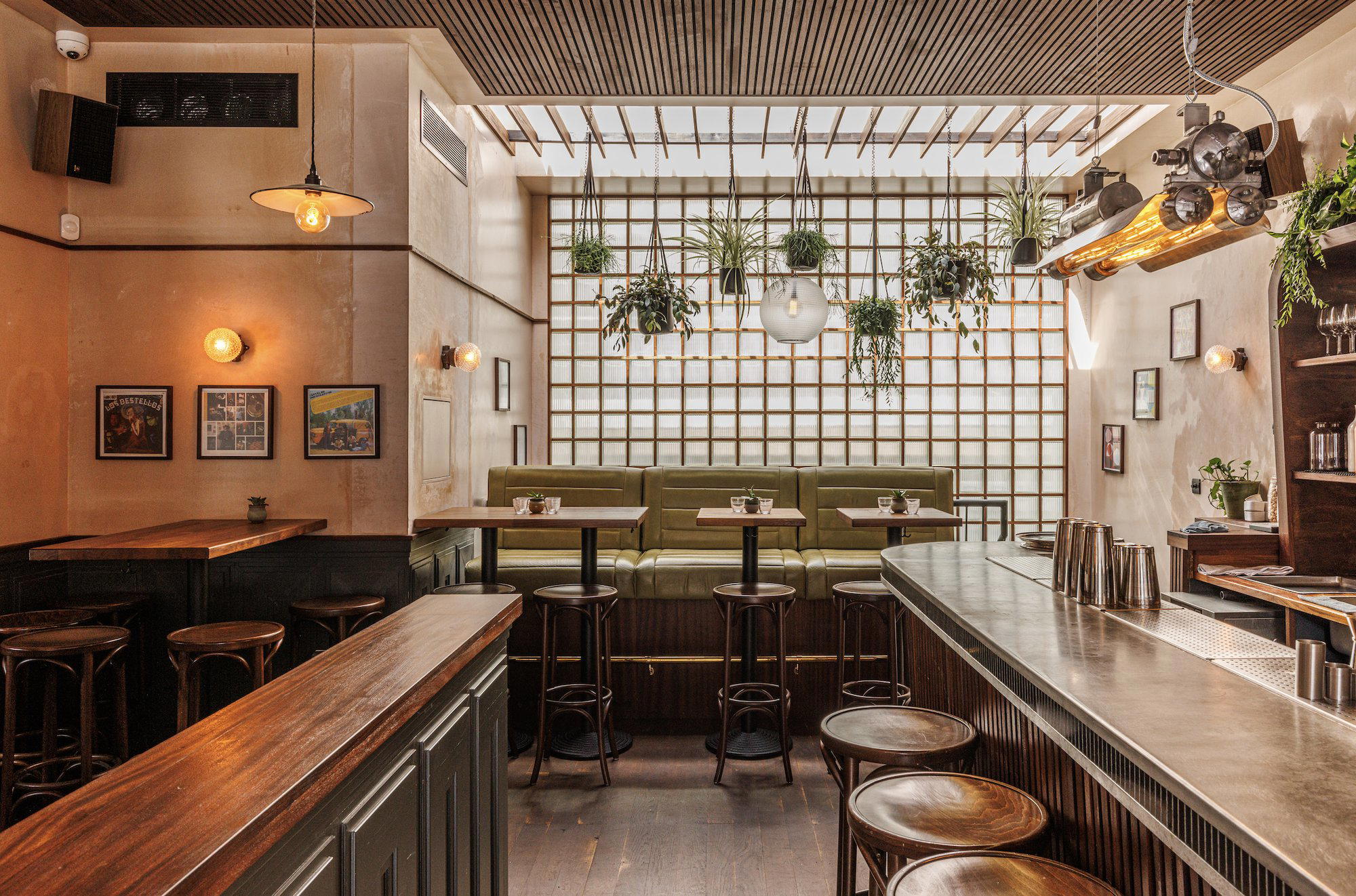
Contemporary light-filled Japanese style with pale wood, foliage, and lively open kitchen.