Brat









1 Michelin Star · World's 50 Best #65 · Star Wine List
Our verdict
A Michelin-starred East London address where Basque fire-cooking techniques meet British seasonal ingredients, Brat sits above Redchurch Street in a former pub space that has become one of London's most decorated casual dining rooms. Ranked 65th on the World's 50 Best Restaurants list in 2024 and a multiple Star Wine List of the Year winner, the turbot-centred menu draws on Wales, the Basque Country, and lumpwood charcoal in equal measure.

Pearl is the En Primeur Club membership app — saves, bookings, and concierge access live there. Same editors, same standards.
- Address
- 4 Redchurch St, London E1 6JL, United Kingdom
- Hours
- Daily 12–3:30 PM, 5–10 PM
- Website
- bratrestaurant.com
- Directions
- Get directions
- Booking
- Book on SevenRooms
The menu
What to order
- Turbot
- Grilled bread with anchovies
- Beef rib
From Strip Club to Star: The Reinvention of a Shoreditch Address
The story of how a former pole-dancing bar above a Shoreditch pub became a World's 50 Best restaurant is, in miniature, the story of East London's dining evolution over the past decade. When Brat opened on the first floor of what is now also home to Smoking Goat on Redchurch Street, the neighbourhood was still in transition: galleries and coffee shops, but few serious kitchens. The address has since become a reference point for a particular mode of London eating that prizes live-fire technique, seasonal British sourcing, and a room loud enough that you need to lean in to hear your companion.
That trajectory matters because Brat's current form is not the venue it was at launch. The concept originated at Climpson's Arch in Hackney, where chef Tomos Parry first worked through the logic of Basque-inflected fire cooking in a stripped-back railway arch. Redchurch Street took those principles into a more permanent, more scrutinised setting, and the restaurant has been refined under that pressure. The awards came quickly: a Michelin star, then a World's 50 Best ranking of 53rd in 2023, adjusting to 65th in 2024, and consistent recognition from Star Wine List, which rated the wine programme number one in both 2021 and 2024. Each of those credentials signals something slightly different about where the restaurant sits in London's competitive field, but together they describe a kitchen that has maintained its footing through what would, for a less disciplined operation, be an unsteady period of hype and expectation.
The Logic of the Grill
London has seen two distinct waves of fire-cooking restaurants. The first arrived around 2014 to 2017, largely as a reaction against the tasting-menu format: fewer courses, more smoke, a deliberate informality. The second, which Brat helped define, brought more rigour to the same premise. Burning lumpwood charcoal over a bespoke grill is not a casual decision; it produces a specific heat profile, a particular char, and flavours that replicate conditions closer to an asador in the Basque Country than a conventional London kitchen. The smell reaches you before you see the room, climbing the stairs from street level. That sensory sequencing is not accidental.
The Basque influence runs through the menu's logic more than its geography. Techniques that have been refined over generations in coastal northern Spain — whole fish grilled in a basket, vegetables charred rather than blanched, stocks built from shellfish shells — translate into a menu that reads as British in its sourcing but Basque in its method. Menai oysters, seasonal English vegetables, Cambridgeshire-grown peppers treated in the manner of pimientos de Padrón: these are not fusion gestures but applications of a coherent technique to local produce. The distinction matters because it separates Brat from the broader category of London restaurants that borrow Basque aesthetics without the underlying precision.
The beef programme runs parallel to the fish focus. Cuts are sourced from selected British farms, dry-aged in the main, and cooked over the same bespoke grill. In a restaurant that holds a Michelin star and ranks on the World's 50 Best list, the decision to keep the format openly casual, shared plates, a room that prioritises volume over ceremony, is a considered one. Brat occupies a position in London's dining field that none of the four-symbol Michelin addresses do: it operates at the intersection of serious technique and genuine informality, a combination that London has historically found difficult to sustain at this level.
For comparison, the city's other prominent fire-cooking addresses tend to resolve the tension differently. Those in the £££££ tier add tableside formality that dilutes the rustic premise; those at a lower price point rarely invest in the quality of sourcing that gives the format its authority. Brat holds the middle ground and holds it deliberately.
The Room and the Wine
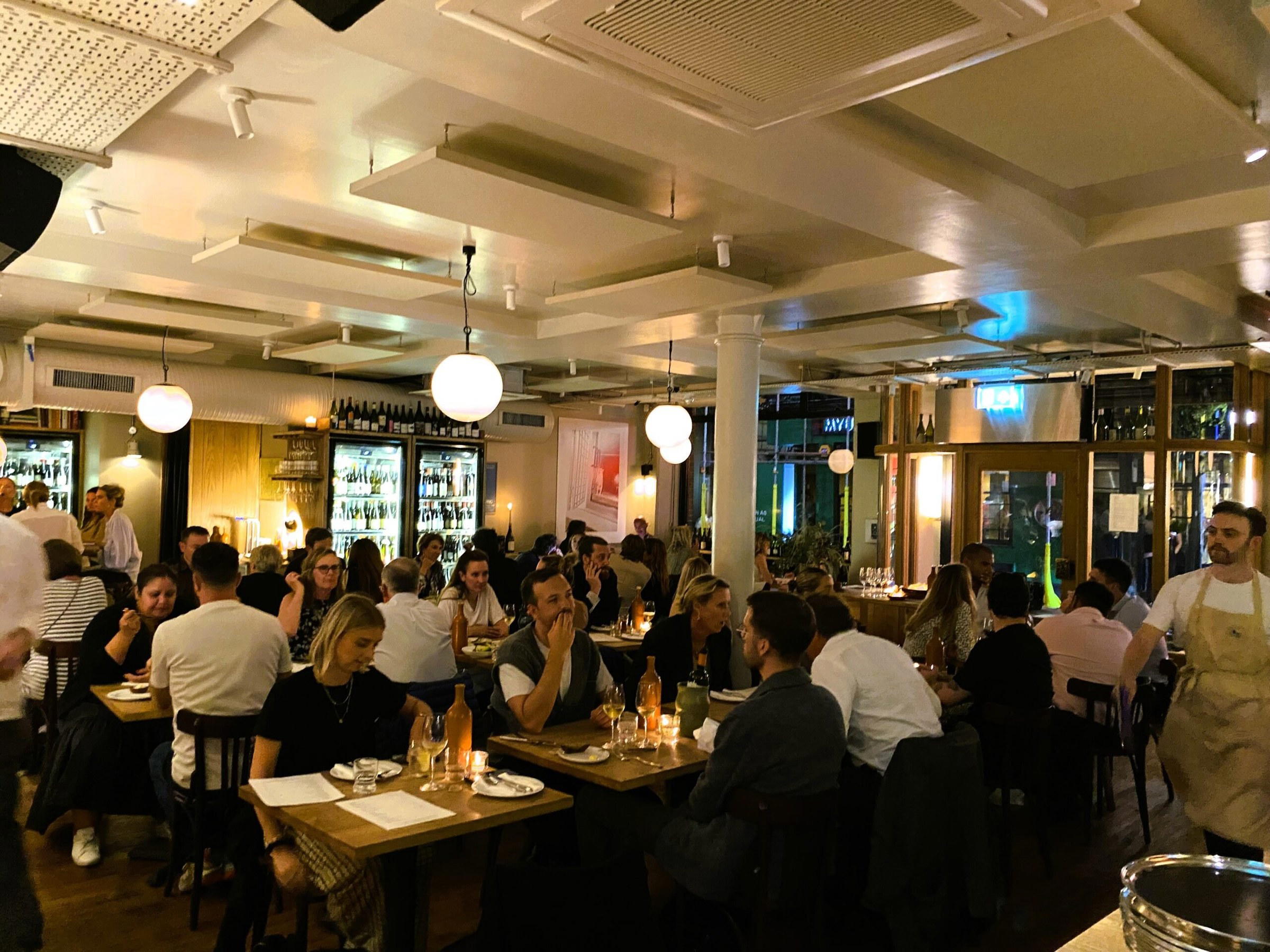
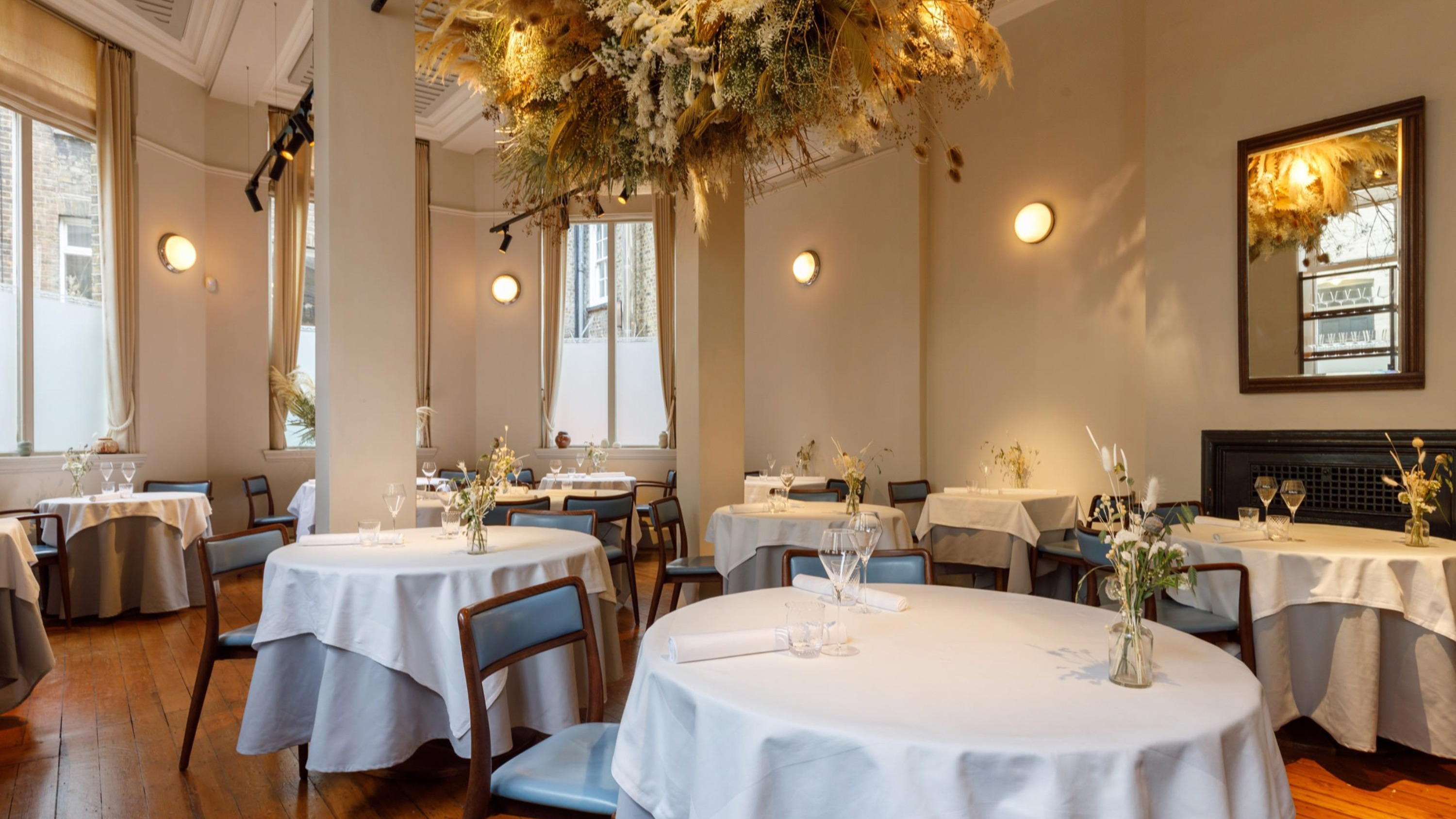
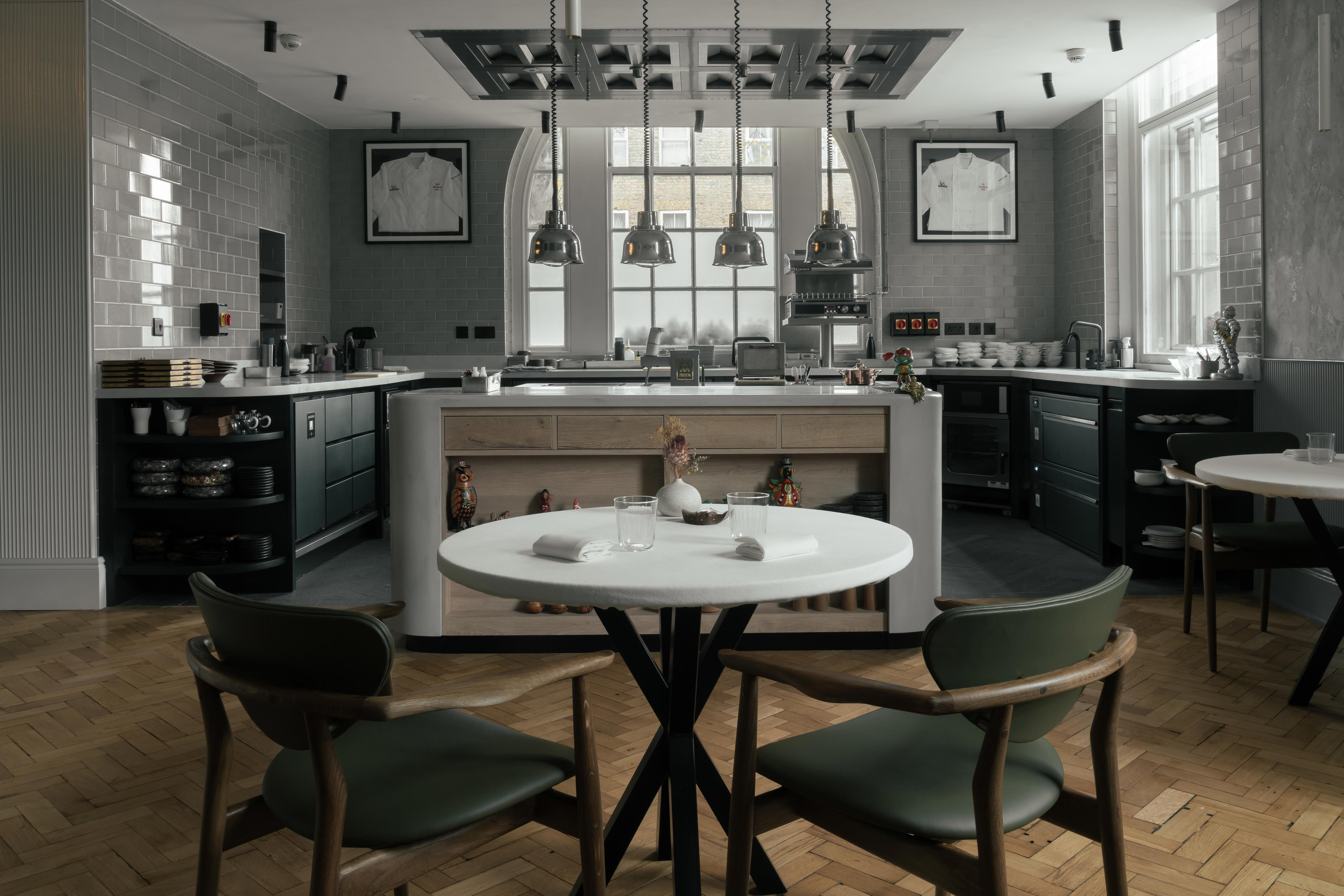
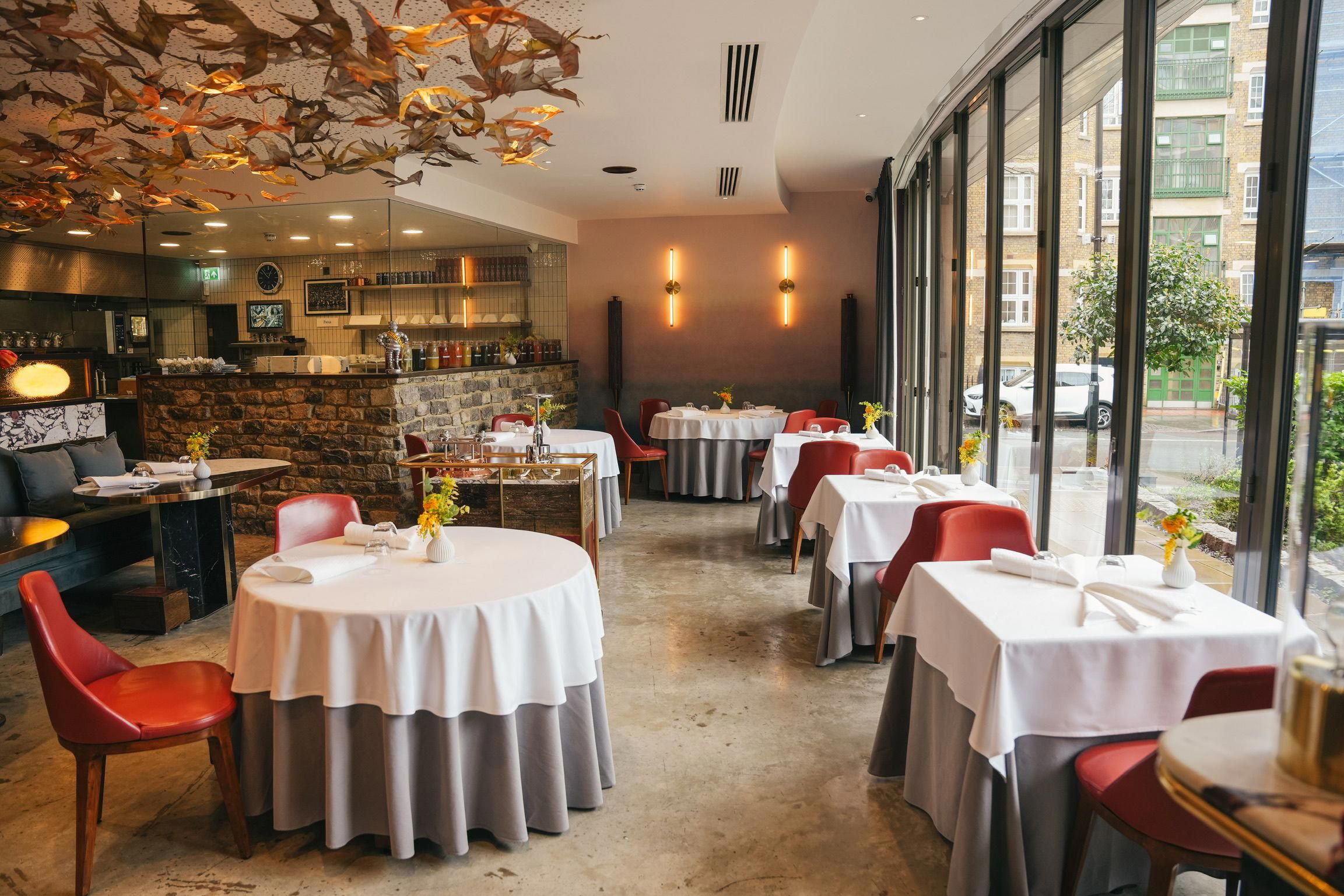
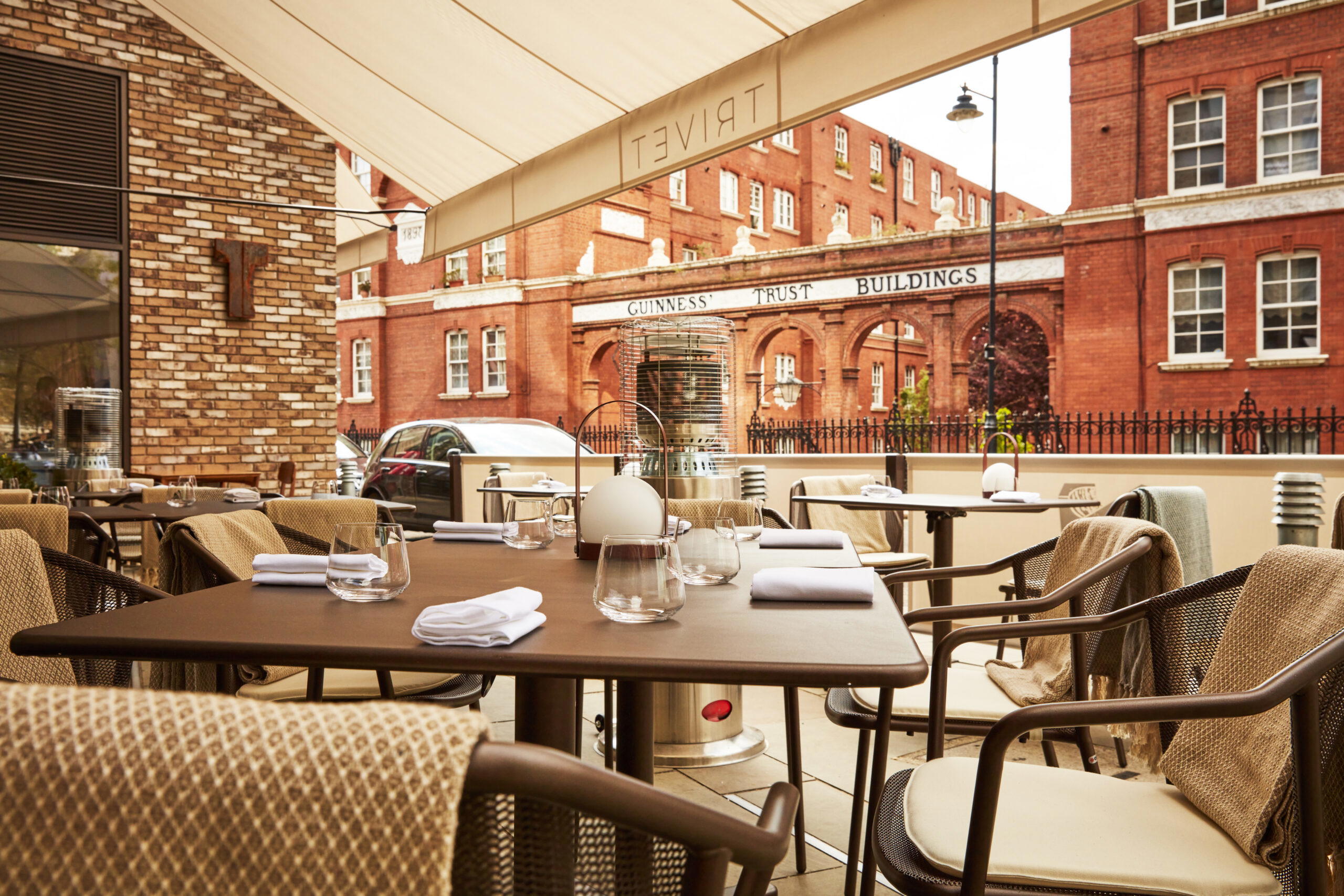
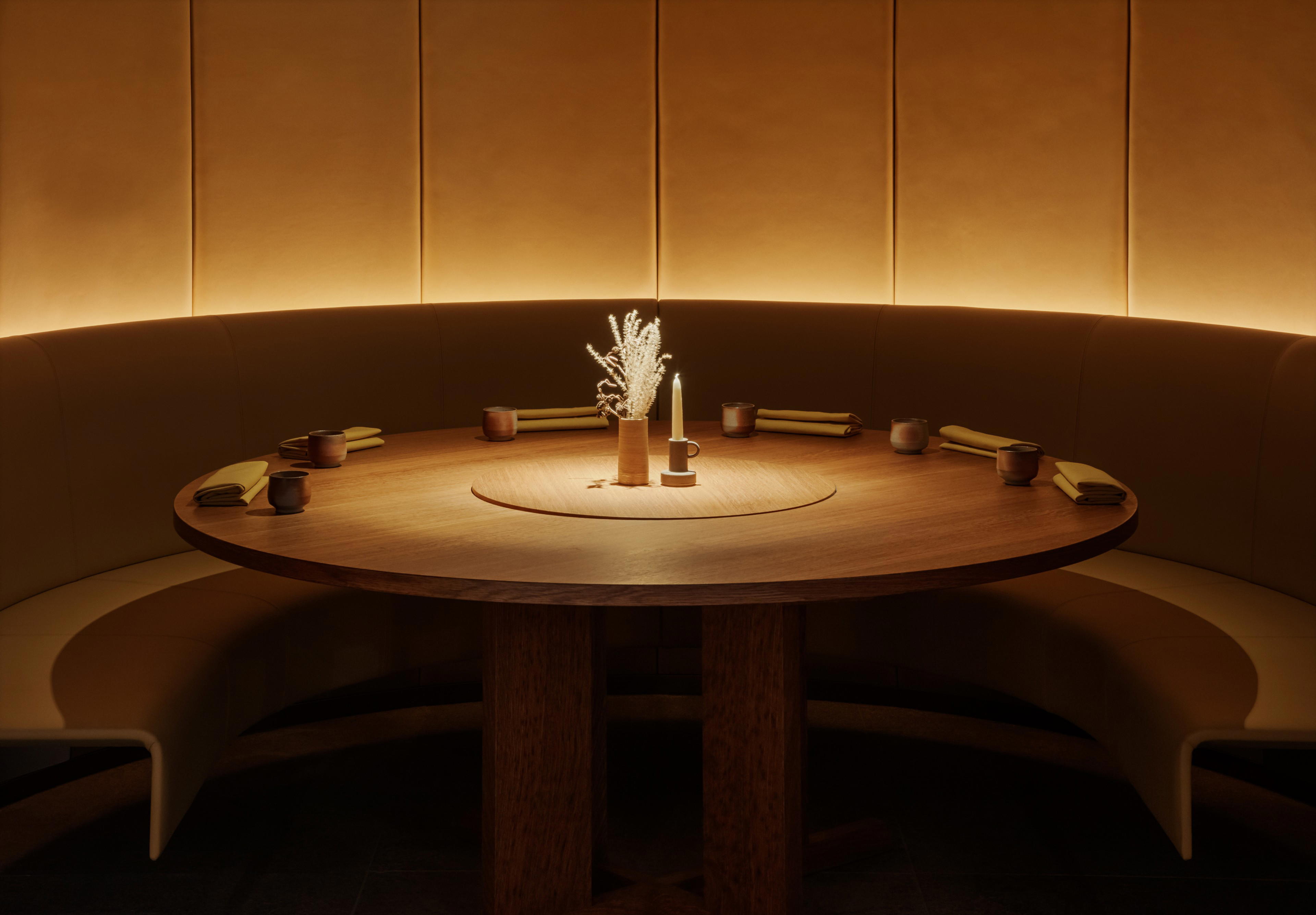
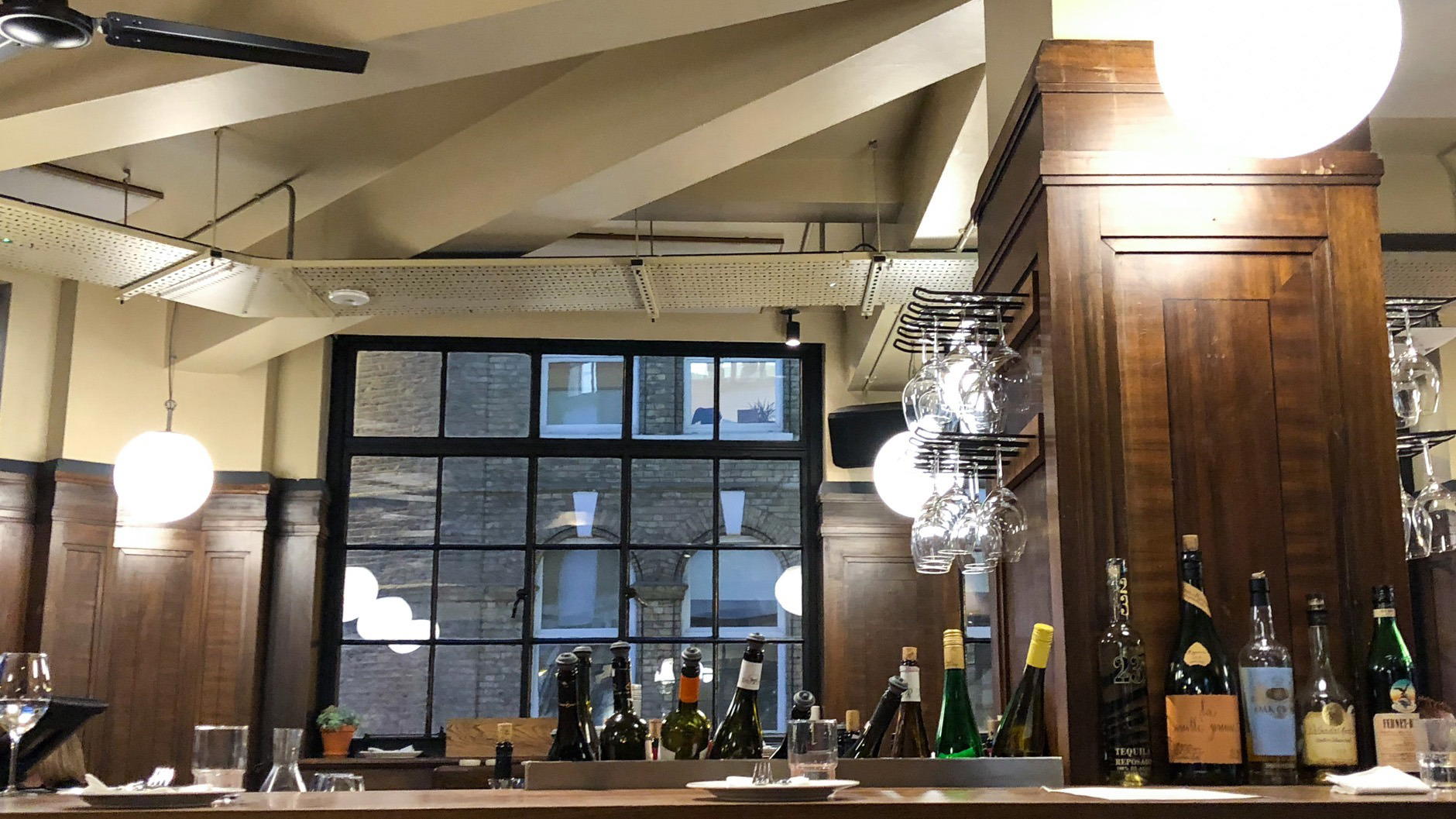
The dining room is wood-panelled, tightly packed, and lit by large industrial windows that admit natural light during service. The open kitchen design places the grill in view, which means the theatre of the cooking is visible and audible throughout the meal. Lunch in this room is not quiet; the format invites sharing, ordering in rounds, and the kind of conversation that requires presence. Diners seeking the composed silence of a formal tasting room would do better at CORE by Clare Smyth, Sketch, The Lecture Room and Library, or Restaurant Gordon Ramsay. Brat is not that kind of venue and has never positioned itself as one.
The wine list fits on a single page of A4, which is itself a curatorial statement. A list of that length cannot accommodate hedging; every bottle is a choice, and the selection runs across European styles and grapes at prices that reflect the Shoreditch market without exploiting the restaurant's status. Star Wine List's consecutive number-one rankings in 2021 and 2024 are not typically awarded to lists that play it safe. For London visitors looking beyond Brat's immediate neighbourhood, the The Ledbury and Dinner by Heston Blumenthal represent the city's other serious wine programmes at the upper end of the casual-to-formal range.
The Turbot Question
Restaurant's name is Old English for turbot, and the whole fish served grilled in a handmade basket over lumpwood charcoal remains the dish that defines it. Priced from approximately £150 and designed for four, it is a commitment that rewards groups willing to build a meal around a single ingredient. The velvet crab soup is another point of reference: it arrives with a crown of shells, mussels floating through the broth, and a flavour that is direct and oceanic rather than refined. These are not subtle dishes. The kitchen is making an argument for intensity, and the argument is consistent from the starters through to the burnt cheesecake and crème caramel that anchor the dessert section.
Simpler preparations sometimes reveal more than the showpieces. Grilled bread with anchovies has acquired a following on social media that slightly outpaces the dish's actual impact, which is worth noting for expectation management. The Cambridgeshire peppers treated à la Padrón, by contrast, carry more interest than their description suggests: the addition of chopped herbs to a preparation that would otherwise be conventional produces a shift in register that illustrates the kitchen's approach at its most economical.
Where Brat Sits in a Wider British Context
Placed against the field of fire-cooking restaurants that have opened across the United Kingdom since Brat's launch, the Redchurch Street address occupies a distinct position. The approach shares DNA with venues like Moor Hall in Aughton and L'Enclume in Cartmel in its commitment to British sourcing and technical seriousness, though those restaurants operate at higher formality and higher price points. Hand and Flowers in Marlow and Gidleigh Park in Chagford represent the country-house end of that spectrum, where provenance and technique are equally foregrounded but the setting is entirely different. The reference to the Basque Country as a culinary framework rather than a geographic identity also distinguishes Brat from those that draw their primary inspiration from French classical tradition, including Le Manoir aux Quat' Saisons and The Fat Duck in Bray.
Internationally, the live-fire format has its own competitive field. Le Bernardin in New York City represents a different mode of fish cookery, precision and minimalism rather than fire and intensity, while Atomix in New York shows how a tasting counter can hold informal energy within a highly structured format. Brat's contribution to that broader conversation is the demonstration that live-fire cooking can sustain critical recognition over time without migrating toward the formal dining conventions that the format initially set itself against.
Explore the wider picture through our full London restaurants guide, or browse our London hotels guide, London bars guide, London experiences guide, and London wineries guide for a fuller picture of the city's current offering.
Know Before You Go
- Address: 4 Redchurch St, London E1 6JL (first floor, above Smoking Goat)
- Hours: Monday to Sunday, 12:00–15:30 and 17:00–22:00
- Price range: £££ (whole turbot from approximately £150 for four)
- Awards: Michelin 1 Star (2024); World's 50 Best Restaurants #65 (2024); Star Wine List of the Year #1 (2024, 2021); Opinionated About Dining Casual in Europe #142 (2025)
- Table tip: Request a table opposite the open kitchen for a direct view of the grill during service
- Group format: The whole turbot serves four and anchors the sharing format; solo or pair visits work better around the à la carte fish and starter sections
What Do Regulars Order at Brat?
The whole turbot, grilled in a handmade basket over lumpwood charcoal and priced for four, is the reference order and the dish the restaurant is built around. Among starters, the velvet crab soup with its shell crown and mussel broth is the kitchen's most direct statement: intense, seafood-forward, and built for the grill rather than the stove. The Cambridgeshire peppers, prepared in the style of pimientos de Padrón with the addition of fresh herbs, consistently draw more attention than their position on the menu suggests. For those who prefer meat, the dry-aged beef cuts from British farms represent the grill programme applied to a different material, and the paella-style roast duck rice has its own following. The burnt cheesecake closes the meal for most regulars; the crème caramel is an equally sound choice for those who prefer restraint at the dessert stage. On wine, the single-page list rewards asking the floor staff: the selection is tight enough that the staff know it well, and the Star Wine List rankings confirm there is more depth here than a one-page format implies.
Frequently asked questions
Is Brat award-winning?
Brat has received recognition including: A regular Star Wine List of the Year award winner, this Basque-inspired, Michelin-starred spot serves up wood-fired delights. “Brat” is old English for “turbot,” though this East London favourite offe...; The culinary techniques of the Basq….
Where is Brat in London?
Brat is located at 4 Redchurch St, London E1 6JL, United Kingdom, London.
What do regulars order at Brat?
The whole turbot, grilled in a handmade basket over lumpwood charcoal, is the dish the restaurant is named after — 'brat' being Old English for turbot — and remains the reference order, priced around £150 and designed to feed four. Beyond the turbot, the beef rib draws consistent attention, with Hereford sirloin and Angus cuts dry-aged and cooked on a bespoke grill. The burnt cheesecake is the standard way to close, cited across multiple sources including Michelin's own notes on the restaurant.
How would you describe the cuisine at Brat?
Is Brat more mid-range or high-end?
Pricing at Brat is listed as £££.
What time does Brat open and close?
Hours at Brat: Monday 12 PM-3:30 PM 5 PM-10 PM Tuesday 12 PM-3:30 PM 5 PM-10 PM Wednesday 12 PM-3:30 PM 5 PM-10 PM Thursday 12 PM-3:30 PM 5 PM-10 PM Friday 12 PM-3:30 PM 5 PM-10 PM Saturday 12 PM-3:30 PM 5 PM-10 PM Sunday 12 PM-3:30 PM 5 PM-10 PM.
Peers Worth Knowing
| Venue | Cuisine | Price | Awards | Notes |
|---|---|---|---|---|
| BratThis venue — the venue you are viewing | Live-Fire Grill with Basque Influences | $100–150 | 1 Michelin Star · World's 50 Best #65 | Not listed |
| The Ledbury | Modern British Fine Dining | $300–500 | 3 Michelin Stars · World's 50 Best #42 | Modern European, Modern Cuisine |
| Sketch, The Lecture Room and Library | Modern French Fine Dining | $200–300 | 3 Michelin Stars · World's 50 Best #18 | Modern French |
| CORE by Clare Smyth | Modern British Fine Dining | $150–200 | 3 Michelin Stars · World's 50 Best #97 | Modern British |
| Restaurant Gordon Ramsay | French Fine Dining | $200–300 | 3 Michelin Stars · World's 50 Best #13 | Contemporary European, French |
| Dinner by Heston Blumenthal | Historic British Fine Dining | $200–300 | 2 Michelin Stars · World's 50 Best #45 | Modern British, Traditional British |
Recognition history
Dated appearances from independent guides and award organizations, with the underlying list record or original source where available.
Michelin 1 Star
Michelin
World's 50 Best Restaurants #65
World's 50 Best
Star Wine List
Star Wine List
National Restaurant Awards Top 100 #50 · No. 50
National Restaurant Awards · 2026 National Restaurant Awards Top 100
Opinionated About Dining Casual in Europe Highly Recommended
Opinionated About Dining
Full recognition history (20 entries)
World's Best Steaks 101 Best Steak Restaurants #17
World's Best Steaks
Michelin 1 Star
Michelin
National Restaurant Awards Top 100 #54
National Restaurant Awards
Opinionated About Dining Casual in Europe Ranked #142
Opinionated About Dining
The Best Chef One Knife
The Best Chef
The Good Food Guide GFG Good
The Good Food Guide
World's Best Steaks 101 Best Steak Restaurants #24
World's Best Steaks
Michelin 1 Star
Michelin
Opinionated About Dining Casual in Europe Ranked #106
Opinionated About Dining
Star Wine List
Star Wine List
Opinionated About Dining Casual in Europe Ranked #135
Opinionated About Dining
World's 50 Best Restaurants #53
World's 50 Best
Star Wine List
Star Wine List
World's Best Wine Lists Awards WBWL 3-Star
World's Best Wine Lists Awards
Star Wine List
Star Wine List