Shack-Fuyu

Our verdict
On Old Compton Street in the thick of Soho, Shack-Fuyu occupies the casual, Japanese-inflected end of a neighbourhood that has always rewarded the confident and the informal. The kitchen works a pan-Asian register that sits closer to izakaya comfort than fine-dining ceremony, making it a useful counterpoint to the more formal rooms a short walk north or west.

The menu
What to order
- Prawn toast okonomiyaki
- Kinako french toast
- Aubergine with four miso
Old Compton Street and the Logic of Eating in Soho
Old Compton Street does not reward timidity. It is one of the few streets in London where the foot traffic at 6pm is already loud, the restaurant windows are already steaming, and the decision about where to eat gets made quickly or not at all. Shack-Fuyu sits at 14A, a short address on a street dense with options, and the question worth asking before you arrive is not simply what it serves but what kind of room it is in this particular pocket of the city.
Soho has historically supported two registers of dining: the destination rooms that draw visitors from across London and beyond, and the neighbourhood operators that thrive on proximity, informality, and repeat custom. The latter category is harder to sustain in a district where rents move quickly and novelty cycles fast. Shack-Fuyu belongs, by most accounts, to the second register — a place shaped by the character of Old Compton Street rather than working against it.
The Pan-Asian Casual Tier in Central London
London's Japanese-influenced casual dining category has expanded considerably over the past decade. The izakaya format — small plates, shared ordering, drinks woven through the meal, arrived properly in the mid-2010s and has since split into several price tiers. At the upper end, counter omakase rooms in Mayfair and the City price against international peers. In the middle sits a broader group of operators running yakitori, ramen, and small-plate menus at accessible price points. Shack-Fuyu operates in this middle tier, where the comparison set is less about Michelin recognition and more about how well the kitchen executes a casual format night after night.
That middle tier is competitive in ways that are not always obvious from the outside. It lacks the prestige ladder of fine dining, no stars, no formal accolades, but it demands consistency, personality, and an ability to hold a room that returns. The venues in this category that last are the ones that understand their neighbourhood's tempo and build a menu to match it.
For contrast, the formal end of London dining is well-documented. CORE by Clare Smyth and The Ledbury represent the kind of serious, multi-course commitment that requires booking months ahead and approaching the evening as a structured event. Dinner by Heston Blumenthal, Sketch's Lecture Room and Library, and Restaurant Gordon Ramsay sit in the same formal bracket. Shack-Fuyu is not competing with those rooms. Its frame of reference is the Soho street itself.
What the Location Determines About the Experience
Old Compton Street in the early evening has a specific energy: close, sociable, a little compressed. Tables tend to be near other tables. Conversations carry. The room, by the standards of what surrounds it, is not large. These are not criticisms, they are the conditions of eating in this part of London, and the better operators in the area design their format to work with them rather than around them.
The izakaya and small-plate formats suit this environment well precisely because they are built for sharing and iteration rather than solitary focus. You order, something arrives, you order again. The pacing is responsive. In a room where the atmosphere is part of what you are paying for, that format keeps the energy moving in ways a fixed tasting menu cannot.
The broader UK dining context is worth holding in mind. Outside London, the formal Michelin tier is represented by rooms such as L'Enclume in Cartmel, Moor Hall in Aughton, Waterside Inn in Bray, and Le Manoir aux Quat'Saisons in Oxford. Those are destination decisions that require planning, travel, and occasion. Shack-Fuyu is a different kind of decision, one made by someone already in Soho, already hungry, already in the mood for something direct and informal.
Soho in the Context of London's Casual Dining Geography
London's casual dining geography has shifted in the past decade. Bermondsey, Hackney, and Peckham have all developed serious casual scenes with lower overheads and more experimental kitchens. But Soho retains a specific advantage: density. Nowhere else in London can you walk fifty metres and be choosing between four or five legitimate options at the same price point. That density compresses decision-making and rewards places that communicate their offer clearly from the outside.
Internationally, London's casual Asian mid-tier competes with reference points in New York, where rooms like Atomix represent a more ambitious Korean fine-dining interpretation, and Le Bernardin anchors a different tier of seafood precision entirely. Those comparisons clarify what the Soho casual format is not aiming for. The ambition is narrower and, arguably, more honest about what a 6pm Tuesday in W1 actually needs.
Elsewhere in the UK, rooms like Gidleigh Park in Chagford, Midsummer House in Cambridge, Opheem in Birmingham, Restaurant Andrew Fairlie in Auchterarder, Hand and Flowers in Marlow, and Hide and Fox in Saltwood each represent a considered dining commitment in a specific setting. Shack-Fuyu is the other side of that coin: the spontaneous London evening rather than the planned occasion.
For a fuller map of where Shack-Fuyu sits within the city's wider dining geography, the EP Club London restaurants guide covers the range from formal destination rooms to casual neighbourhood operators across all major areas.
Planning Your Visit
Old Compton Street is reachable on foot from Leicester Square or Tottenham Court Road stations, both a few minutes' walk. Given the venue's location and format, booking ahead for weekend evenings is advisable; mid-week tends to be more accessible. Dress code is in keeping with the Soho casual register.
Quick reference: Shack-Fuyu, 14A Old Compton St, London W1D 4TJ. Casual format, walk-in or reservation depending on timing.
Frequently asked questions
What do regulars order at Shack-Fuyu?
Shack-Fuyu is known for its Japanese-inflected small-plate format, and the ordering style mirrors that of an izakaya: several dishes shared across the table rather than a single main course per person. The kitchen's reputation rests on this casual, iterative approach to eating, which suits the Old Compton Street setting well. Specific dish details are best confirmed directly with the venue, as the menu reflects seasonal availability.
Do I need a reservation for Shack-Fuyu?
In a Soho venue on a central street with high foot traffic, the practical answer depends heavily on timing. Weekend evenings on Old Compton Street fill quickly across the board, and a venue in this format and location would typically warrant advance booking for Friday and Saturday. Mid-week visits, particularly early in the evening, tend to offer more flexibility. If you are in London specifically for a formal dining occasion, rooms in the Michelin-starred tier such as CORE by Clare Smyth or The Ledbury operate on booking windows measured in weeks or months; Shack-Fuyu operates in a different rhythm.
What do critics highlight about Shack-Fuyu?
Critical attention to casual pan-Asian rooms in London generally focuses on consistency of execution, the quality of the sharing format, and how well the kitchen sustains its output during a busy service in a dense urban setting. Shack-Fuyu's position on Old Compton Street places it in a competitive cohort where the benchmark is the neighbourhood's own high standard rather than formal award recognition. It occupies the casual, personality-led end of London's Japanese-influenced dining scene rather than the counter-omakase or fine-dining tier.
How does Shack-Fuyu compare to other Japanese-style casual venues in central London?
Central London's Japanese casual tier has grown substantially, with distinct clusters in Soho, Covent Garden, and Fitzrovia. What distinguishes the Old Compton Street location is the street-level energy and the density of the surrounding offer, which means a venue needs a clear identity to hold its position. Shack-Fuyu's izakaya-adjacent format and compact setting place it in a peer group defined more by atmosphere and culinary register than by price ceiling or accolade count, making it a reference point for visitors planning a less formal London evening rather than a destination occasion.
Booking and Cost Snapshot
A quick snapshot of similar venues for side-by-side context.
| Venue | Cuisine | Price | Awards | Notes |
|---|---|---|---|---|
| Shack-FuyuThis venue — the venue you are viewing | Yōshoku Japanese Izakaya | Not listed | Not listed | Not listed |
| CORE by Clare Smyth | Modern British Fine Dining | $150–200 | 3 Michelin Stars · World's 50 Best #97 | Modern British |
| Restaurant Gordon Ramsay | French Fine Dining | $200–300 | 3 Michelin Stars · World's 50 Best #13 | Contemporary European, French |
| Sketch, The Lecture Room and Library | Modern French Fine Dining | $200–300 | 3 Michelin Stars · World's 50 Best #18 | Modern French |
| The Ledbury | Modern British Fine Dining | $300–500 | 3 Michelin Stars · World's 50 Best #42 | Modern European, Modern Cuisine |
| Dinner by Heston Blumenthal | Historic British Fine Dining | $200–300 | 2 Michelin Stars · World's 50 Best #45 | Modern British, Traditional British |
Recognition history
Dated appearances from independent guides and award organizations, with the underlying list record or original source where available.
Opinionated About Dining Casual in Europe Recommended
Opinionated About Dining
Continue exploring
More in London
Restaurants in London
All restaurants in London →
Bars in London
All bars in London →
Hotels in London
All hotels in London →


Details
- Lively
- Trendy
- Modern
- Group Dining
- Casual Hangout
- After Work
- Open Kitchen
- Sake Program
- Small Plates
- A La Carte
- Vegetarian Friendly
- Gluten Free Options
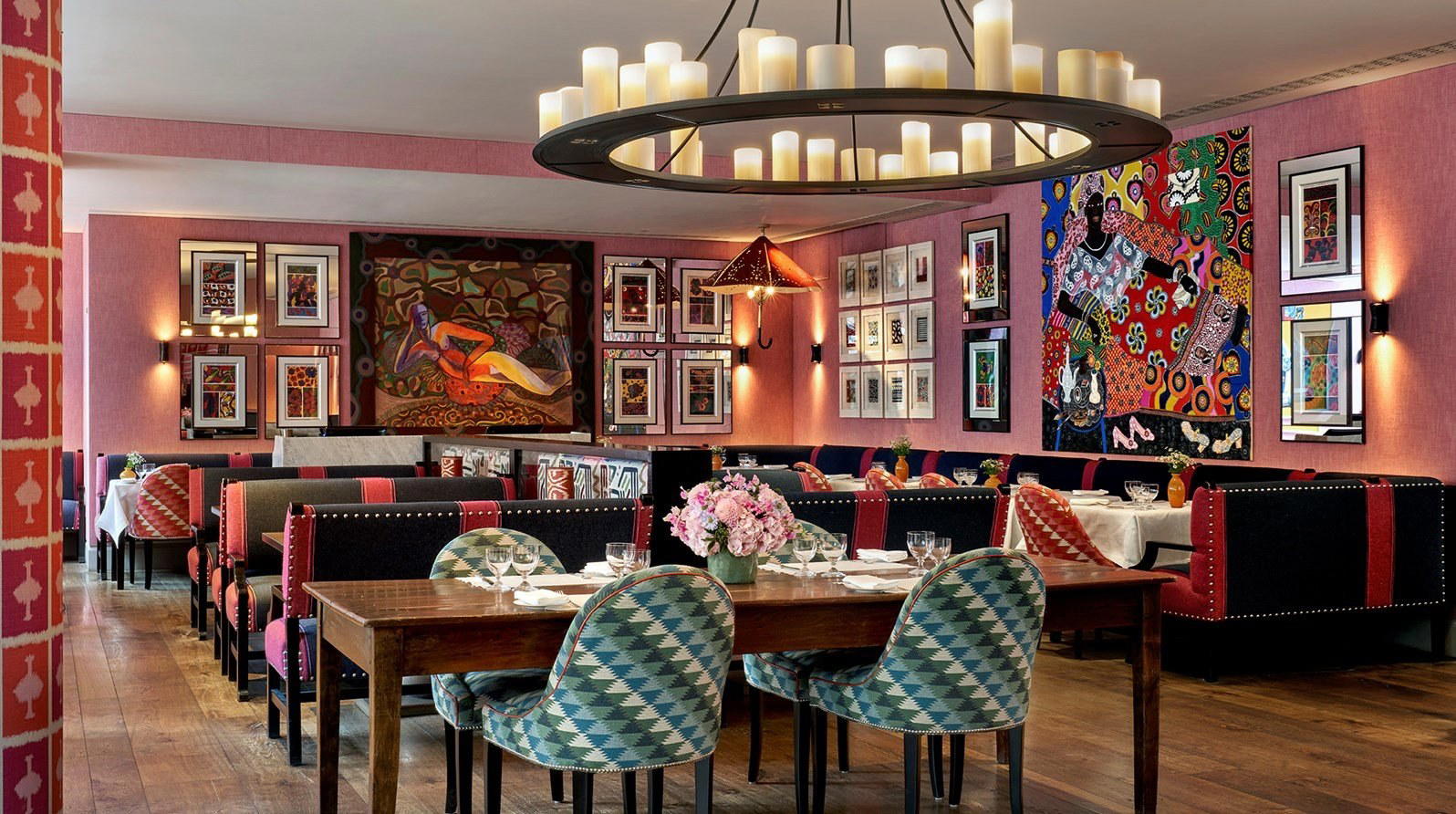
Upbeat and casual with bare wood floors, distressed brick walls, lime green accents, and a soundtrack of American hard rock, creating a lively izakaya atmosphere.