Tokii
Tokii occupies a Marble Arch address that sits just outside the concentrated fine-dining corridor of Mayfair, placing it in a tier where neighbourhood loyalty tends to outweigh destination traffic. The kitchen works within a tradition where returning guests shape the menu's rhythms as much as any printed format. For those already acquainted with London's upper-bracket dining scene, it represents an alternative cadence to the city's more publicised rooms.
Pearl is the En Primeur Club membership app — saves, bookings, and concierge access live there. Same editors, same standards.
- Address
- 50 Great Cumberland Pl, Marble Arch, London W1H 7FD, United Kingdom
- Phone
- +44 20 7724 4700
- Website
- theprinceakatokilondon.com
- Directions
- Get directions
 Saves & bookings on Pearl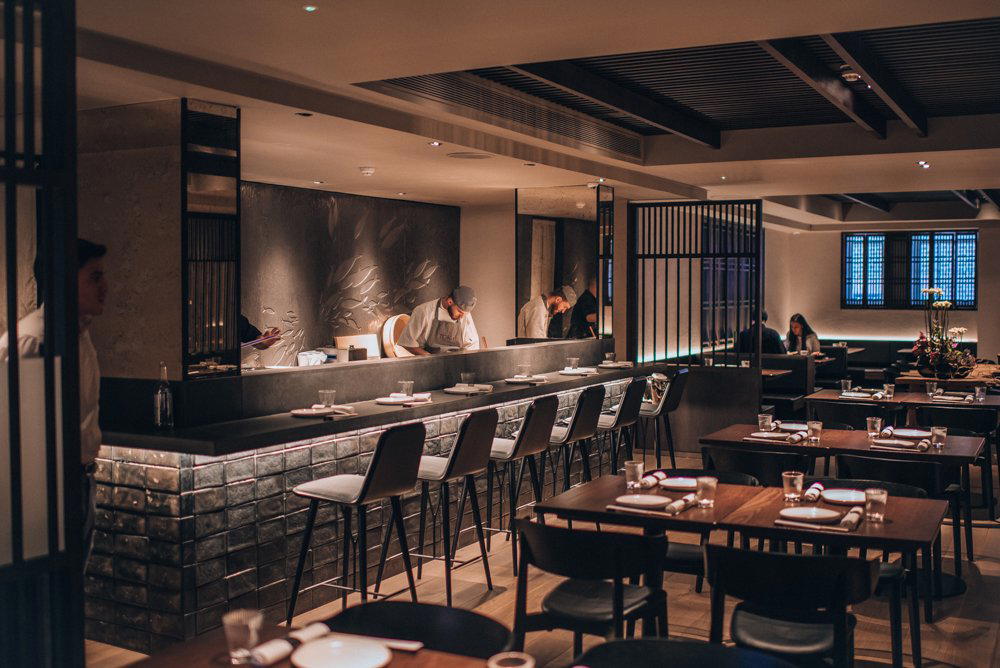
Why Marble Arch Rewards the Return Visit
London's premium dining map has long been anchored in a few well-documented postcodes: the Mayfair corridor running from Berkeley Square toward Park Lane, the Notting Hill stretch where The Ledbury holds court, and the Chelsea addresses occupied by rooms like Restaurant Gordon Ramsay and CORE by Clare Smyth. The area around Marble Arch sits at the edge of all three without quite belonging to any of them, close enough to draw from the same clientele, far enough to cultivate its own rhythm. Tokii is a Modern Japanese Omakase restaurant at 50 Great Cumberland Pl, Marble Arch, London, with a price point around £150 per person and reservations essential. That geography matters. Rooms in less saturated pockets of the city tend to build their reputations differently: less through destination-dining foot traffic, more through the kind of loyalty that accumulates over multiple visits rather than a single occasion.
Tokii, at 50 Great Cumberland Place, occupies that precise kind of position. The address sits just north of the Marble Arch junction, removed from the acute competition of the Mayfair fine-dining cluster but within comfortable walking distance of Hyde Park and the westward hotel belt. In a city where diners increasingly sort restaurants into the categories of 'destination occasion' and 'reliable regular', this location skews the latter, and that distinction shapes everything about how a room like this functions.
The Regulars' Calculus
There is a category of London restaurant that the serious food press tends to underserve: the room with a committed local following that doesn't generate the same column inches as a new opening or a Michelin announcement. These are the places where the front-of-house team recognises faces, where the unwritten menu, the dishes or adjustments that regulars know to request, carries as much weight as whatever is printed on the card. London has a number of them, and the pattern is consistent: they tend to occupy slightly off-centre addresses, they tend not to shout about themselves, and they tend to outlast the more loudly heralded openings nearby.
The question worth asking about any room in this category is what the returning guest gets on a third or fourth visit that a first-timer doesn't. In practice, it is usually a combination of pacing intelligence, the kitchen having learned how a particular table eats, and the incremental refinements that come from a chef responding to regular feedback rather than performing for critics. Compare this to the more theatrical formats found at rooms like Sketch, The Lecture Room and Library, where the experience is tightly choreographed and broadly consistent across visits, or Dinner by Heston Blumenthal, where the menu concept itself is a stable proposition. The regulars' restaurant operates on a different logic: the room is the constant, and the relationship is what deepens.
Where Tokii Sits in the London Dining Tier
London's premium restaurant set has stratified considerably over the past decade. At the upper end, a small cluster of three-Michelin-star rooms defines one competitive tier, a group that now includes internationally recognised addresses and draws diners who plan visits from abroad. Below that, a larger and more interesting middle bracket contains rooms that may hold one or two stars, maintain strong critical recognition from publications including the Evening Standard, Time Out, and national broadsheets, and price at the level where a dinner for two with wine regularly clears £150 to £250. This is the tier where most of London's genuine dining culture actually happens: ambitious food, professional service, and pricing that reflects quality without the trophy-restaurant surcharge.
The Marble Arch neighbourhood feeds into this tier naturally. It draws hotel guests from the immediate surrounding area, local residents from the Connaught Village and Bayswater fringes, and the kind of business dining that prefers proximity to the West End without the visibility cost of a Mayfair dining room. For those planning a broader London eating trip, the neighbourhood also connects logically to a circuit that includes The Ledbury to the west and the Mayfair corridor to the east.
The Wider Context: London and Beyond
For visitors calibrating London against other major dining cities, it helps to note that the British capital now operates with a density of premium options that rivals Paris or New York. The concentration of Michelin-starred rooms in a roughly three-square-mile zone, from Knightsbridge through Mayfair and into Soho, means that a week of serious eating in London can match a similar week in cities where the fine-dining culture is older but more geographically dispersed. UK destinations outside the capital, from The Fat Duck in Bray to L'Enclume in Cartmel, Moor Hall in Aughton, Gidleigh Park in Chagford, and Hand and Flowers in Marlow, demonstrate that British fine dining no longer concentrates exclusively in the capital. Internationally, rooms like Le Bernardin in New York City and Atomix in New York City offer useful calibration points for how London's premium tier compares globally, and London generally holds its own on technique and ambition, if not always on value per cover.
Within London itself, the country-house register, exemplified by Le Manoir aux Quat' Saisons in Great Milton, represents a distinct experience type that the city's in-town rooms cannot replicate. What London's neighbourhood restaurants do offer, in exchange, is a more unguarded version of the city: smaller, less ceremony-bound, and shaped by the specific tastes of whoever actually eats there regularly.
Planning a Visit
Tokii is located at 50 Great Cumberland Place, Marble Arch, London W1H 7FD. Marble Arch Underground station (Central line) provides direct public transport access, with the address a short walk north of the junction. For those arriving by car, the surrounding area falls within the Congestion Charge zone during weekday charging hours. Booking is essential, and the restaurant sits at 50 Great Cumberland Place, Marble Arch, London W1H 7FD.
Address: 50 Great Cumberland Place, Marble Arch, London W1H 7FD.
- Omakase 11-Course Tasting Menu
- Miso Cod
- Wagyu Beef Ramen
- Pork Belly Skewers
- Seabass Nigiri
- Prawn Tempura Maki
Comparable Spots
Comparable venues nearby, for context on price, style, and recognition.
| Venue | Cuisine | Price | Notes |
|---|---|---|---|
| TokiiThis venue — the venue you are viewing | Modern Japanese Omakase | $$$$ | Not listed |
| Aki London | Modern Kyoto-Inspired Japanese | $$$$ | Marylebone |
| Colony Club | Japanese Fusion with Teppanyaki | $$$$ | Mayfair |
| Sake No Hana | Modern Japanese Fine Dining | $$$$ | St. James's |
| Luna Omakase | Modern Sosaku-style Edomae Omakase | $$$$ | Broadgate |
| Ikeda | Traditional Japanese | $$$$ | Mayfair |
Continue exploring
More in London
Restaurants in London
Browse all →
Bars in London
Browse all →
Hotels in London
Browse all →



At a Glance
- Elegant
- Sophisticated
- Intimate
- Modern
- Quiet
- Date Night
- Special Occasion
- Celebration
- Chefs Counter
- Open Kitchen
- Hotel Restaurant
- Sake Program
- Sommelier Led
- Sustainable Seafood
Warm atmospheric lighting with minimalist Japanese décor, clean and crisp design featuring tables made from whole oak trees with floral displays, creating a calm oasis away from London's bustle.