
A Nishitenma tempura counter where two cooks work in wordless synchrony, one wreathing each ingredient in batter, the other managing the flame. The kitchen operates on methods set by its founder, preserving a flavour profile that has held steady across decades.
Pearl is the En Primeur Club membership app — saves, bookings, and concierge access live there. Same editors, same standards.
- Address
- Japan, 〒530-0047 Osaka, Kita Ward, Nishitenma, 2 Chome−5−5 てんぷら新太呂
- Phone
- +81 6-6361-5293
- Directions
- Get directions
 Saves & bookings on Pearl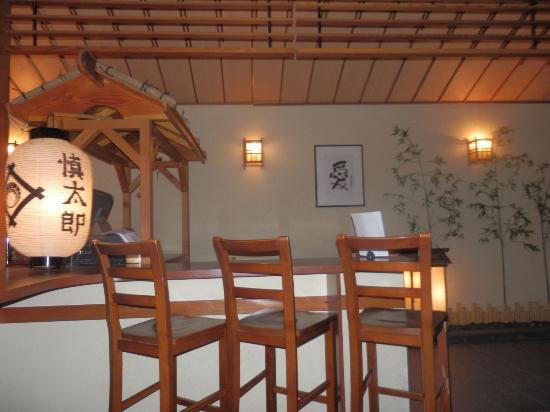
The Counter Where Nothing Changes (and That Is the Point)
Shintaro is a Kansai-style tempura restaurant in Osaka, priced at about $100 per person. Walk into Shintaro in Osaka's Nishitenma district and the first thing you notice is not the food. It is the choreography. Two cooks stand side by side at the frying station, facing their pot with a focus that edges toward ceremony. One wraps each ingredient in batter; the other monitors and adjusts the flame. Neither role is incidental. This division of labour, batter-work separated entirely from heat-management, reflects a philosophy about tempura that most kitchens abandoned long ago in favour of consolidation and speed.
At the leading end, restaurants like Hiraishi and multi-course kaiseki houses such as Shunsaiten Tsuchiya operate at ¥¥¥¥ price points with elaborate seasonal structures. Shintaro occupies the ¥¥¥ mid-premium tier, the same bracket as the Japanese-format Numata, and prices accordingly. It does not compete on spectacle or seasonal menu engineering. It competes on the consistency of a single technique executed the same way, every service.
What Keeps the Regulars Returning
Tempura has a deceptive simplicity as a format. Ingredients, oil temperature, batter hydration, and timing interact in ways that are easy to disrupt and difficult to consistently control. The regulars at Shintaro are not returning for surprise. They are returning because the outcome is known: a thin, flavoursome coating that neither overwhelms the ingredient beneath it nor becomes a structural distraction. Salt, applied after frying rather than as a pre-seasoning, is used to clarify rather than to season in the conventional sense, it pulls the ingredient's own character forward.
This is the defining choice at a counter like this: salt over sauce, restraint over elaboration. Across Japan's tempura tradition, the more formal counters in Tokyo, among them Tempura Ginya, have moved toward lighter coatings and ingredient provenance as the primary message. Shintaro's version is thicker in legacy: it follows the methods of its founder rather than adapting to contemporary tempura aesthetics. For the regulars, that is not a limitation. It is the contract.
A Michelin Plate at this price tier signals consistent quality without the theatrical apparatus of a starred progression. At ¥¥¥, Shintaro sits below the ¥¥¥¥ tier occupied by Osaka's French and innovative kitchens, places like Gochiso nene, but it does not read as a compromise. It reads as a different register of seriousness.
Tempura in the Kansai Context
Osaka's relationship with fried food is long and specific. Kushi-katsu counters, takoyaki stalls, and tempura houses each represent a distinct register of the city's appetite for hot oil and light coatings. Tempura in Kansai has historically differed from its Tokyo counterpart: lighter dashi influence, a tendency toward cleaner presentation, and an ingredient selection that tracks seasonal availability more closely than prestige provenance. Shintaro sits within that Kansai tradition while operating at a formality level that separates it from casual fry counters.
For context beyond Osaka, the tempura category across Japan carries a significant range. At the specialist end in Tokyo, counters focus on a narrow set of seasonal ingredients prepared at a precise temperature sequence. In Taipei, Mudan Tempura represents how the format has translated into other Asian markets. Shintaro's position within this geography is that of a heritage counter: its methods predate the current wave of tempura refinement and it has not updated them. That is a deliberate choice, not an oversight.
The address in Nishitenma places Shintaro in Osaka's Kita Ward. It is not a tourist corridor. The customer base skews toward locals who know what they are ordering and why, which aligns with the format: no extended explanatory preamble, no theatrical plating ceremony, just two cooks and a pot.
How Shintaro Compares in the Mid-Premium Tier
| Venue | Cuisine | Price | Michelin Recognition | Format |
|---|---|---|---|---|
| Shintaro | Tempura | ¥¥¥ | Plate (2024, 2025) | Counter, founder methods |
| Numata | Japanese | ¥¥¥ | , | Counter |
| OIMATSU Tempura Suzuki | Tempura | ¥¥¥ | , | Counter, Osaka tempura |
| Shunsaiten Tsuchiya | Japanese | ¥¥¥ | , | Kaiseki-adjacent |
Within this tier, tempura specialists are a minority. Most ¥¥¥ counters in Osaka operate in Japanese or kaiseki formats. The two tempura houses in this comparison, Shintaro and OIMATSU Tempura Suzuki, each represent a distinct approach to the craft, making Osaka a more considered destination for the format than its reputation typically suggests.
Planning Your Visit
Shintaro is located at 2 Chome-5-5 Nishitenma, Kita Ward, Osaka.
If tempura is your focus in Osaka, pairing Shintaro with a visit to OIMATSU Tempura Suzuki gives a comparative read on how different Osaka kitchens approach the same format.
Elsewhere in the Kansai and national context: Gion Sasaki in Kyoto represents the kaiseki tradition about an hour away; akordu in Nara sits a short train ride from central Osaka. Further afield, Harutaka in Tokyo, Goh in Fukuoka, 1000 in Yokohama, and 6 in Okinawa represent the range of serious Japanese dining beyond the Kansai corridor.
Price and Positioning
Comparable venues nearby, for context on price, style, and recognition.
| Venue | Cuisine | Price | Awards |
|---|---|---|---|
| ShintaroThis venue — the venue you are viewing | Kita, Kansai-Style Tempura | $$$$ | Michelin Plate |
| Kitashinchi Fukutatei | Kita, Modern Wagyu Steakhouse | $$$$ | Michelin Plate |
| Sushi Enishi | Kita, Edomae Sushi Omakase | $$$$ | Michelin Plate |
| Kurubushi | Kita, Modern Kappo Omakase | $$$ | Michelin Plate |
| Sushisho Nehachi | Fukushima, Modern Omakase Sushi | $$$$ | Michelin Plate |
| Hozan | Tennōji, Traditional Japanese Kaiseki | $$$ | Michelin Plate |
Recognition history
Dated appearances from independent guides and award organizations, with the underlying list record or original source where available.
Michelin Plate
Michelin
Michelin Plate
Michelin
Michelin Plate
Michelin
Continue exploring
More in Osaka
Restaurants in Osaka
Browse all →




Bars in Osaka
Browse all →




Hotels in Osaka
Browse all →




Wineries in Osaka
Browse all →
At a Glance
- Classic
- Elegant
- Intimate
- Sophisticated
- Special Occasion
- Business Dinner
- Chefs Counter
- Sake Program
Current opening hours
- Monday
- 5–9:30 PM
- Tuesday
- 5–9:30 PM
- Wednesday
- 5–9:30 PM
- Thursday
- 5–9:30 PM
- Friday
- 5–9:30 PM
- Saturday
- 5–9:30 PM
- Sunday
- Closed
Hours can change for holidays and private events. Last verified .
Retro counter seating with a serene, focused atmosphere centered on the two chefs frying tempura.