Macarfi 8.8 Food Rating
Our verdict
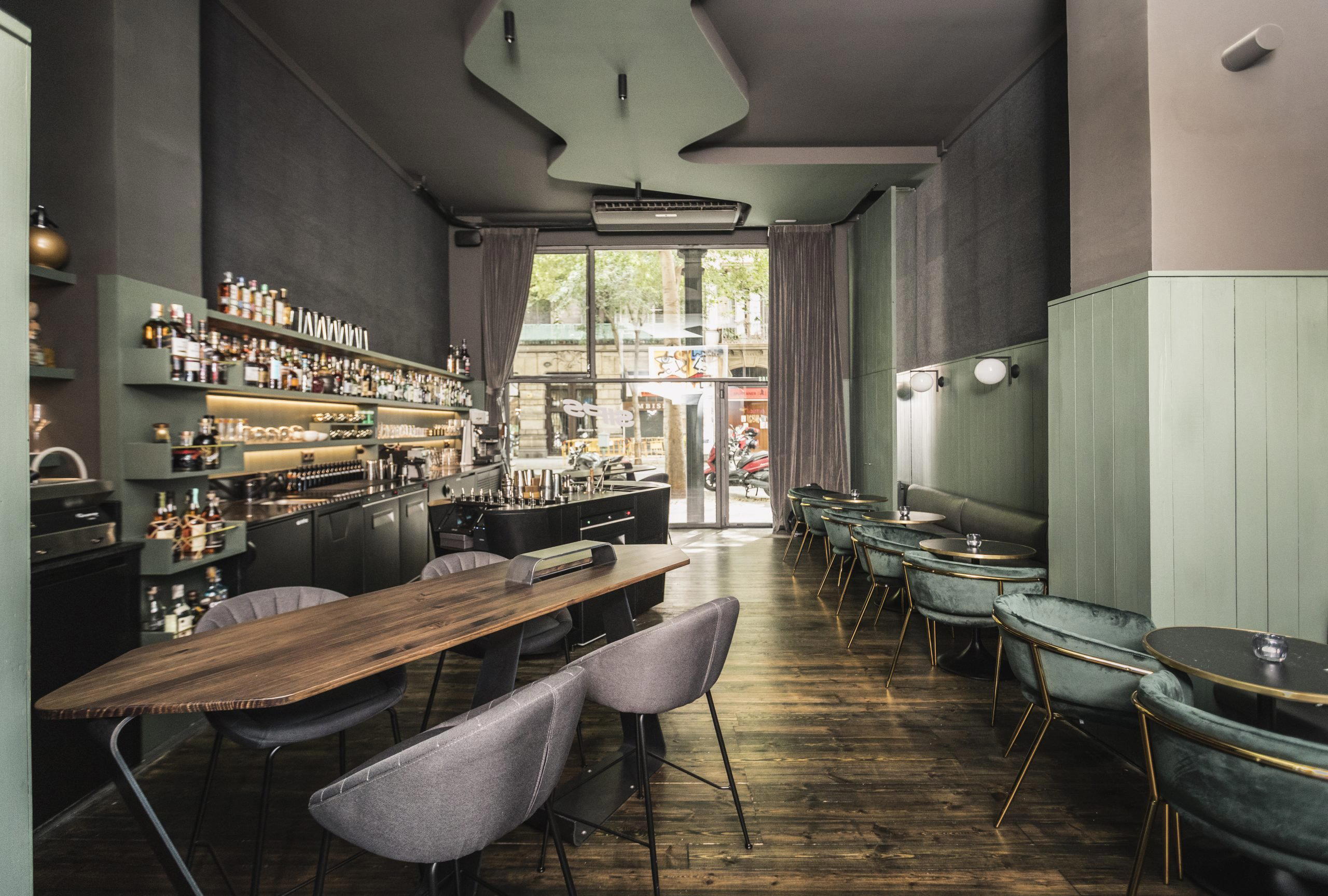
On Carrer d'Enric Granados, one of Eixample's pedestrianised ramblas, Sense Pressa has moved steadily up the Opinionated About Dining Casual Europe rankings, from Recommended in 2023 to #700 in 2024 and #877 in 2025. Chef José Luis Díaz runs a Catalan kitchen that opens Wednesday through Saturday, signalling a deliberate pace over volume.

Pearl is the En Primeur Club membership app, where members save venues, book tables and use the concierge.
The menu
What to order
- Chickpeas with cockles
- Clams and artichokes
- Hake throats
A Pedestrian Street and a Catalan Kitchen in Eixample
Carrer d'Enric Granados is one of Eixample's more considered streets: traffic-free, lined with low terraces and plane trees, and positioned between the grid's more commercial arteries. The neighbourhood built its dining reputation on density rather than any single destination, and the streets running between Passeig de Gràcia and the university district now carry a range of rooms from old-school Catalan to creative tasting formats. Sense Pressa occupies this stretch as a neighbourhood anchor rather than a destination import, which is a meaningful distinction in a city where restaurant geography increasingly correlates with tourism flow.
The broader Eixample casual tier has been shaped by the same pressure affecting Barcelona's mid-market dining more generally: rising rents on the main boulevards have pushed quality operators onto secondary streets, which has inadvertently concentrated some of the city's more consistent Catalan cooking away from the obvious tourist corridors. Sense Pressa, at number 96 on Granados, is part of that pattern. Its Wednesday-to-Saturday schedule, with both lunch and dinner service running on those days, reflects an operational philosophy that prioritises quality over covers, closed on Sundays and Mondays and shut entirely on Tuesdays, the kitchen works a tight four-day week.
Catalan Cooking Through an Atlantic and Mediterranean Lens
Catalan cuisine draws simultaneously from the sea and the land, and the coastal dimension has always been integral rather than decorative. The Costa Brava and the Costa Daurada flank the region on either side, and the markets that supply Barcelona's better kitchens, La Boqueria and the Mercat de l'Abaceria among them, carry produce that reflects both Atlantic and Mediterranean influences. Pulpo a la gallega has Galician roots but appears throughout Catalonia with local inflection; gambas de Palamós, sourced from the cold deep waters off the Costa Brava, carry a sweetness and density that separates them from shrimp further south; percebes, barnacles harvested from Atlantic-facing rock faces, arrive in Barcelona largely via Galicia and the Cantabrian coast but fit naturally into Catalan seafood culture.
For context on where Barcelona's Catalan dining sits within Spain's broader seafood-focused cooking, the reference points are instructive. Aponiente in El Puerto de Santa María and Quique Dacosta in Dénia represent the avant-garde Mediterranean seafood tier; Arzak in San Sebastián and Azurmendi in Larrabetzu anchor the Basque end of Spain's coastal-informed haute cuisine. Sense Pressa operates at a different register entirely, casual, neighbourhood-facing, and ranked within the OAD Casual Europe list rather than the fine-dining tier occupied by rooms like El Celler de Can Roca in Girona or DiverXO in Madrid. The casual classification matters: it signals that the kitchen is being measured against everyday execution rather than tasting-menu architecture.
Recognition and Trajectory
The Opinionated About Dining ranking sequence tells a clear story. A Recommended listing in 2023 became a position of #700 in Europe's Casual category in 2024, and by 2025 the restaurant had moved to #877 in the same list. The apparent numerical retreat from 700 to 877 should be read carefully: OAD's casual list has expanded substantially year over year as more restaurants enter the programme's coverage, and a position inside the top 900 in 2025 across all of Europe's casual dining reflects continued recognition in a more crowded field. The consistent inclusion across three consecutive years is the more significant signal. OAD rankings aggregate reviewer visits rather than one-off inspections, which means sustained listing reflects repeated positive experiences rather than a single strong night.
How Sense Pressa Sits in Barcelona's Catalan Restaurant Tier
Barcelona's Catalan dining market splits into broadly three operational tiers. At the leading, creative-format rooms, Coure and Cinc Sentits among the mid-range creative set, with Disfrutar and Lasarte operating at the €€€€ ceiling, chase tasting-menu recognition. In the middle, neighbourhood bistros and modern Catalan rooms operate seasonal menus at accessible price points. At the base, traditional tabernas and local lunch spots hold the city's working-dining culture intact. Sense Pressa's OAD Casual classification and its Granados address place it in the middle register, competing with rooms like Ca l'Isidre and Granja Elena that have built long reputations on consistent Catalan cooking rather than on concept rotation.
The comparison with 7 Portes, Barcelona's most historically embedded Catalan room, is instructive in a different way. 7 Portes trades on institutional longevity and scale; Sense Pressa trades on the opposite qualities. The four-day week and the focused scope suggest a kitchen that has chosen depth over reach. Bonanova operates in a similar mode in a different neighbourhood, anchoring its local catchment with Catalan fundamentals rather than pursuing a wider profile.
For Catalan cooking outside Spain, B44 in San Francisco and Bell-Lloc in Santa Cristina d'Aro represent the cuisine's geographic range, the former an export to the US market, the latter a regional expression close to home.
Frequently asked questions
How do I find Sense Pressa?
Sense Pressa is located at Carrer d'Enric Granados, 96, Eixample, 08008 Barcelona, Spain, Barcelona.
Is there a head chef associated with Sense Pressa?
The chef associated with Sense Pressa is José Luis Díaz.
What should I order at Sense Pressa?
The kitchen operates on Catalan principles that draw from both coastal and inland traditions, so the menu shifts with market availability rather than running fixed signatures year-round. Given chef José Luis Díaz's Catalan focus and the restaurant's OAD Casual recognition across 2023–2025, dishes are likely to reflect seasonal produce and seafood from the Costa Brava corridor. Arriving with an appetite for whatever the kitchen is running that week is the more reliable strategy than targeting a specific dish. The Wednesday-to-Saturday schedule, with both lunch and dinner service, means the offering stays tight by design.
What type of food is Sense Pressa known for?
Reputation Context
A quick peer check to anchor this venue’s price and recognition.
| Venue | Cuisine | Price | Awards | Notes |
|---|---|---|---|---|
| Sense PressaThis venue (the venue you are viewing) | Authentic Catalan | Not listed | Macarfi 8.8 Food Rating | Not listed |
| Disfrutar | Avant-Garde Catalan Fine Dining | $300–500 | 3 Michelin Stars · World's 50 Best #1 | Progressive, Creative |
| Cocina Hermanos Torres | Modern Spanish Fine Dining | $300–500 | 3 Michelin Stars · World's 50 Best #78 | Creative |
| Lasarte | Modern Basque-Mediterranean Fine Dining | $300–500 | 3 Michelin Stars · La Liste Top Restaurants | Progressive Spanish, Creative |
| Cinc Sentits | Modern Catalan Fine Dining | $150–200 | 2 Michelin Stars · La Liste Top Restaurants | Modern Spanish, Creative |
| Enoteca Paco Pérez | Modern Mediterranean Seafood | $200–300 | 2 Michelin Stars · La Liste Top Restaurants | Modern Spanish, Modern Cuisine |
Recognition history
Dated appearances from independent guides and award organizations, with the underlying list record or original source where available.
Macarfi 8.8 Food Rating
Macarfi
Opinionated About Dining Casual in Europe Recommended
Opinionated About Dining
Full recognition history (5 entries)
Opinionated About Dining Casual in Europe Ranked #877
Opinionated About Dining
Opinionated About Dining Casual in Europe Ranked #700
Opinionated About Dining
Opinionated About Dining Casual in Europe Recommended
Opinionated About Dining