

One of Barcelona's most enduring dining rooms, 7 Portes has anchored the Barceloneta end of Passeig d'Isabel II since 1836, serving Catalan classics in a high-ceilinged, tile-floored setting that predates the city's modern restaurant boom by well over a century. Ranked in Opinionated About Dining's Casual Europe list in both 2023 and 2024, it operates daily from 1pm to midnight, making it one of the few kitchens in the neighbourhood that bridges lunch, afternoon, and dinner without a break.
Pearl is the En Primeur Club membership app — saves, bookings, and concierge access live there. Same editors, same standards.
- Address
- Pg. d'Isabel II, 14, Ciutat Vella, 08003 Barcelona, Spain
- Phone
- +34 933 19 30 33
- Website
- 7portes.com
- Directions
- Get directions
 Saves & bookings on Pearl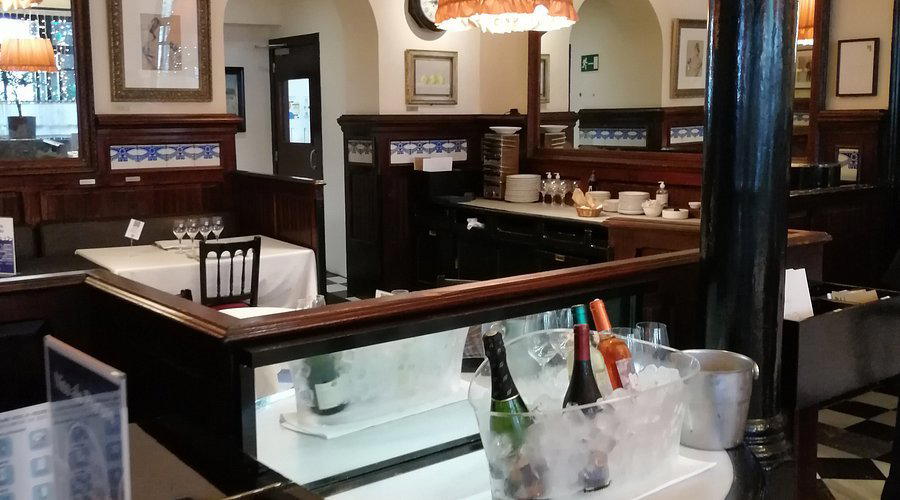
A Room That Earns Its Age
Passeig d'Isabel II runs along the edge of the Born district where the city meets the old port, and the arcaded facade at number 14 has been receiving diners since 1836. That longevity shapes everything about 7 Portes before a single plate arrives. The long mirrored walls, the dark wood panelling, the marble-topped tables, these are not a designed approximation of nineteenth-century Barcelona. They are the original object. Walking in during a busy Saturday lunch, the room carries the particular density of a space that has absorbed decades of conversation: old families occupying corner tables, tourists reading the menu with appropriate seriousness, a table of local professionals splitting a mid-afternoon carafe. The atmosphere is accumulated.
In a city where Barcelona's highest-profile restaurants, Disfrutar, Lasarte, and El Celler de Can Roca in Girona nearby, are defined by technical ambition and tasting menu formats, 7 Portes occupies a different register. It is not competing in that tier. Its comparable set is the city's roster of long-standing Catalan dining rooms: places where the tradition of the cuisine is the point, and where refinement means precision of execution rather than conceptual invention.
Catalan Cooking as a Shared Practice
The editorial angle on Catalan dining is frequently distorted by the city's international reputation for avant-garde cooking. That reputation, built largely around Ferran Adrià's work at elBulli and sustained today by kitchens like Azurmendi in Larrabetzu and Aponiente in El Puerto de Santa María, represents one strand of Iberian cooking culture. It is not the whole picture. The older tradition, rooted in the cuina de mercat, the market-driven household cooking of Catalonia, runs through establishments like 7 Portes, Ca l'Isidre, and Restaurant Can Pineda. This is food organised around specific dishes rather than menus, around sharing and sequencing rather than a fixed procession of courses set by the kitchen.
The small-plates and sharing instinct in Catalan eating is often collapsed, in international coverage, into the broader category of tapas culture. The distinction matters. Where Andalusian tapas developed partly as accompaniment to drinks, small, frequent, often free, Catalan sharing culture is more deliberately meal-structured. Dishes arrive in a chosen order, and the table governs the rhythm. At the restaurant, the format reflects this: a full menu of Catalan preparations, from rice dishes to salt cod, from grilled meats to seasonal vegetables, with the expectation that two or three people will compose a meal from several plates rather than each ordering a single main. This is not a format imposed for novelty. It is simply how Catalan families have eaten in restaurants for generations.
Comparable approaches can be found in Barcelona's Catalan dining cohort. Granja Elena, Bonanova, and Coure each occupy different positions within the city's traditional restaurant tier, and each takes a somewhat different approach to the balance between modern technique and classical preparation. The restaurant sits firmly at the classical end of that spectrum. For those interested in how Catalan cooking is interpreted beyond Spain, B44 in San Francisco and Bell-Lloc in Santa Cristina d'Aro each represent the tradition in different contexts.
What the OAD Recognition Actually Signals
Opinionated About Dining's Casual Europe list evaluates restaurants outside the fine-dining tier, where the quality argument rests on ingredient sourcing, kitchen consistency, and cultural authenticity rather than tasting menu ambition. The restaurant appeared on that list as a Recommended entry in 2023 and moved to a ranked position at number 450 in 2024. That directional movement in a list of several thousand evaluated restaurants across the continent is a meaningful signal: the kitchen is maintaining standards that a well-travelled, critically-oriented eating public is prepared to stand behind. It does not position the restaurant against three-Michelin-star Barcelona houses like Disfrutar or Cocina Hermanos Torres. It positions it against other long-established European casual institutions where the question is not innovation but sustained, honest execution.
3 across more than 19,000 reviews is a different kind of signal. At that volume, the rating reflects a genuinely broad dining public, a mix of locals, international tourists, and the curious traveller who looked it up before arriving in the Born district. Scores at that scale reflect what a large number of people experienced. 4.2 from 14,443 reviewers suggests consistent delivery across a wide range of expectations and contexts.
The Neighbourhood and the Right Time to Go
The Barceloneta end of Passeig d'Isabel II is a transitional stretch: the Born's gallery and bar culture is a few blocks inland, the seafront promenade and beach restaurants begin just south, and the old port infrastructure frames the view to the east. In the summer months, this part of Ciutat Vella is dense with visitors; the room at the restaurant absorbs that pressure more comfortably than smaller venues because of its scale and because the staff manage high-turnover dining at volume. In the quieter shoulder months of October, November, March, and early April, the room feels more like a neighbourhood institution and less like a tourist draw, though the resident clientele is present year-round. The kitchen operates seven days a week from 1pm to midnight.
That continuity of hours matters for visitors arriving from outside Spain and for anyone whose itinerary runs across meal-time boundaries. A late lunch at three-thirty or an early dinner at six-thirty are both accommodated without compromise, which is not a given in this part of the city.
For those exploring the broader geography of serious Spanish cooking, Arzak in San Sebastián, Martin Berasategui in Lasarte-Oria, and DiverXO in Madrid represent the country's other major creative poles.
What Regulars Order
Specific dish recommendations cannot be confirmed here without risk of inaccuracy. At a Catalan table of this type, the standard approach is to anchor the meal around one of the rice dishes for the table to share, add one or two starters, and let the kitchen's sourcing lead the decision. The OAD casual ranking is partly a recognition of exactly this kind of consistent, ingredient-led cooking rather than a rotating conceptual programme.
Quick Comparison
Comparable venues nearby, for context on price, style, and recognition.
| Venue | Cuisine | Price | Notes |
|---|---|---|---|
| 7 PortesThis venue — the venue you are viewing | Traditional Catalan Paella | $$$ | Not listed |
| Cachitos | Spanish Mediterranean Tapas & Paella | $$$ | la Dreta de l'Eixample |
| Suru Bar | Modern Spanish-Japanese Yakitori Tapas | $$$ | l'Antiga Esquerra de l'Eixample |
| Leku | Modern Catalan Mediterranean | $$$ | les Corts |
| Sergi de Meià | Modern Catalan KM0 | $$$ | Sant Gervasi - Galvany |
| El Xampanyet | Traditional Spanish Tapas | $$ | Sant Pere, Santa Caterina i la Ribera |
Recognition history
Dated appearances from independent guides and award organizations, with the underlying list record or original source where available.
Macarfi 7.2 Food Rating
Macarfi
Opinionated About Dining Casual in Europe Recommended
Opinionated About Dining
Opinionated About Dining Casual in Europe Ranked #450
Opinionated About Dining
Opinionated About Dining Casual in Europe Recommended
Opinionated About Dining
Continue exploring
More in Barcelona
Restaurants in Barcelona
Browse all →
Bars in Barcelona
Browse all →
Hotels in Barcelona
Browse all →
At a Glance
- Classic
- Elegant
- Historic
- Well Known
- Sophisticated
- Special Occasion
- Business Dinner
- Group Dining
- Celebration
- Historic Building
- Live Music
- Private Dining
- Extensive Wine List
- Street Scene
Current opening hours
- Monday
- 1 PM–12 AM
- Tuesday
- 1 PM–12 AM
- Wednesday
- 1 PM–12 AM
- Thursday
- 1 PM–12 AM
- Friday
- 1 PM–12 AM
- Saturday
- 1 PM–12 AM
- Sunday
- 1 PM–12 AM
Hours can change for holidays and private events. Last verified .
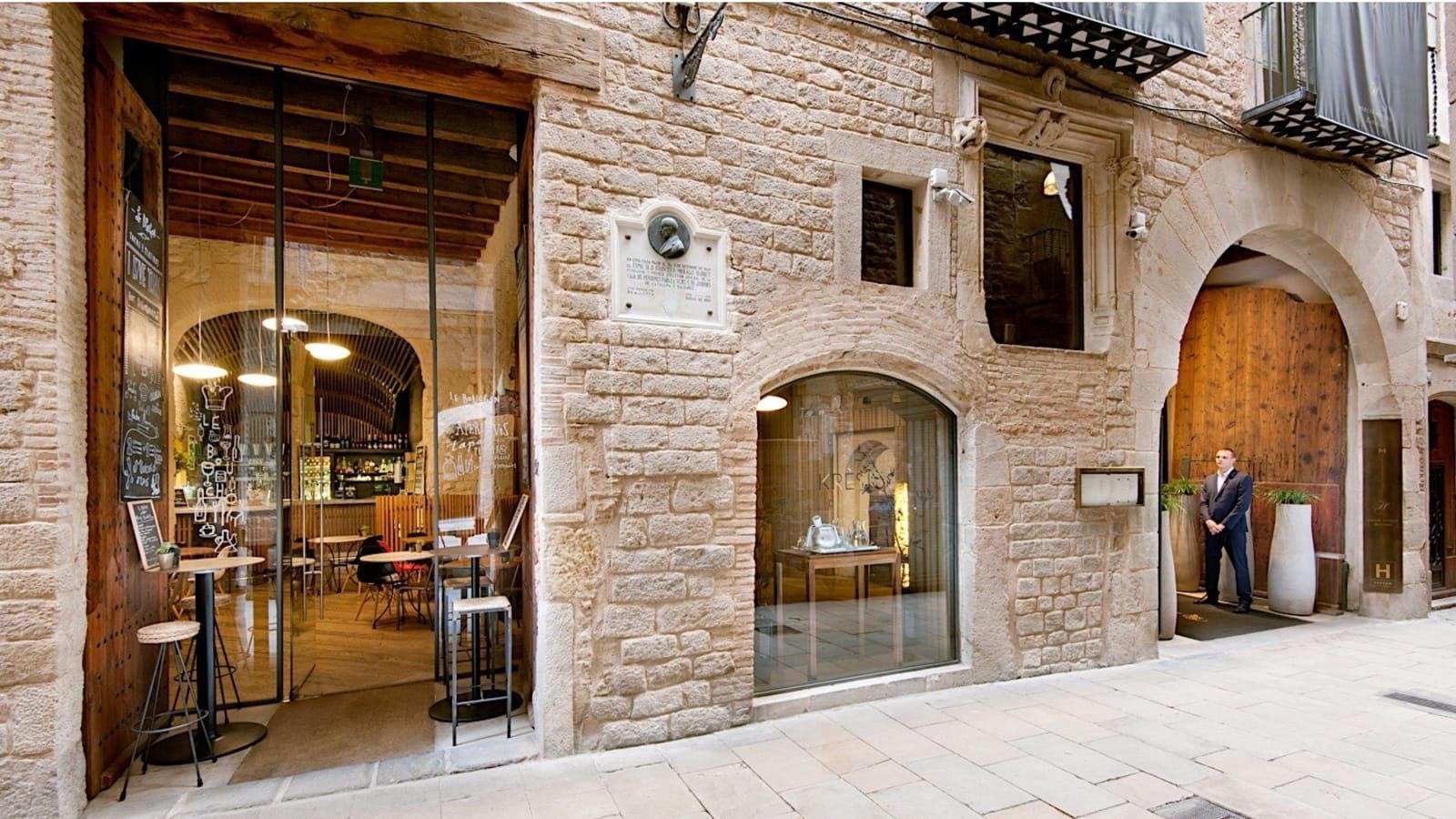
Elegant historic atmosphere with classic decor, live piano music, and sophisticated lighting creating a timeless charm.