SEND RAMEN
Our verdict
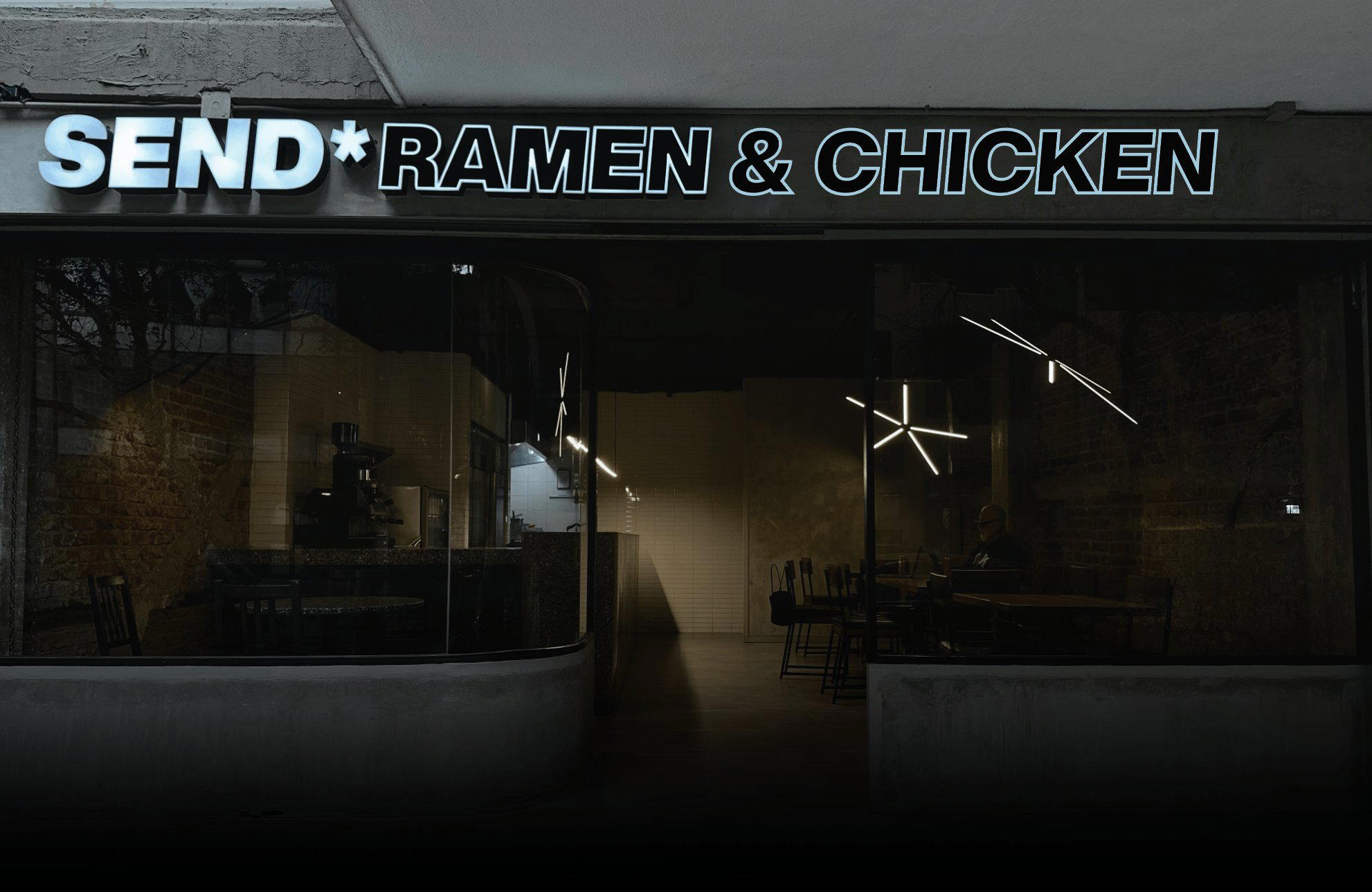
A ramen counter in Mexico City's Hipódromo neighbourhood, SEND RAMEN occupies a niche that barely exists in the capital: serious Japanese noodle craft in a city whose dining conversation is dominated by modern Mexican tasting menus. The address on Iztaccihuatl puts it inside one of the city's most walkable and restaurant-dense pockets, where casual precision tends to outperform formal ambition.

Pearl is the En Primeur Club membership app — saves, bookings, and concierge access live there. Same editors, same standards.
- Address
- Iztaccihuatl 26, Hipódromo, Cuauhtémoc, 06100 Ciudad de México, CDMX, Mexico
- Phone
- +525543927006
- Hours
- Daily 12–10 PM
- Website
- sendsend.me
- Directions
- Get directions
- Booking
- Book on OpenTable
The menu
What to order
- Tonkotsu Ramen
- Shoyu Ramen
- Korean Chicken Sandwiches
Ramen in Mexico City: A Format That Travels Differently
Mexico City's dining identity is shaped by a handful of dominant formats: the long tasting menu at places like Pujol or Quintonil, the neighbourhood bistro doing creative work within a shorter format (think Rosetta), and the mid-tier modern Mexican room that has proliferated across Condesa and Roma in the last decade. Ramen does not fit neatly into any of those categories, which is precisely what makes SEND RAMEN a worth-noting address. The Japanese noodle counter is a format built around repetition and refinement: the same bowls, executed daily, adjusted incrementally over months and years until the broth, the noodle gauge, and the seasoning stack achieve something close to equilibrium. That kind of obsessive narrow focus is relatively rare in a city where menus tend toward breadth.
Hipódromo, the sub-neighbourhood of Cuauhtémoc where SEND RAMEN sits on Iztaccihuatl 26, is one of Mexico City's more interesting blocks for exactly this reason. It draws a mix of long-established local spots and newer openings that tend toward specificity rather than scale, which makes it a logical home for a restaurant built around a single dish category. The area sits between the broader Condesa park circuit and the denser commercial strips of Roma Norte, giving it foot traffic without the saturation that can flatten a neighbourhood's culinary character.
What the Menu Architecture Signals
The ramen counter format, wherever it appears in the world, communicates something through its menu structure before a single bowl arrives. A short menu, often four to eight options built around one or two broth styles, signals that the kitchen has made deliberate choices about what to omit. Each addition to a ramen menu requires maintaining a separate broth or seasoning base at consistent quality, so restraint in the menu is usually a sign of operational discipline rather than a limited kitchen. The opposite, a sprawling ramen menu with ten or fifteen bowls across every regional Japanese style, typically signals a different priority: coverage over depth.
In Mexico City's context, this format distinction matters more than it might in Tokyo or Osaka, where the ramen tradition has centuries of regional variation behind it and diners arrive with calibrated expectations. A CDMX ramen counter is working to establish a local reference point rather than compete against an existing canon. That places menu architecture at the centre of the restaurant's argument: what it chooses to serve, and how it structures the ordering experience, tells you what it thinks ramen should mean in this city.
For context on the broader Mexico dining scene and how different formats are sitting against each other right now, our full Mexico City restaurants guide maps the current picture across neighbourhoods and price tiers.
Placing SEND RAMEN in the Wider Mexican Restaurant Picture
The conversation about serious dining in Mexico extends well beyond the capital. Venues like Alcalde in Guadalajara and KOLI Cocina de Origen in Monterrey are doing precision work rooted in their own regional ingredients and traditions. In the south, Levadura de Olla in Oaxaca and Huniik in Merida represent a different kind of specificity, one tied to pre-Hispanic grain and fermentation traditions. On the Baja peninsula, Animalón in Valle de Guadalupe, Olivea Farm to Table in Ensenada, and Lunario in El Porvenir have built a wine-country dining circuit that rivals better-known regions internationally. Along the Caribbean coast, HA' in Playa del Carmen and Le Chique in Puerto Morelos operate at a technical level that competes with any resort-adjacent dining in Latin America. And in Nuevo León, Pangea in San Pedro Garza Garcia has been a reference point for northern Mexican fine dining for years.
What that landscape makes clear is that Mexico's serious dining scene is no longer Mexico City-centric, and within the capital itself, the competitive set for any given restaurant has become more granular. A ramen counter in Hipódromo is not competing against Em or Sud 777. It is competing against the handful of other Japanese-format operations in the city, and against the question of whether CDMX diners will accept a narrow-format Japanese counter as a destination rather than a convenience stop. The evidence from comparable cities in Latin America and from Asian-format restaurants that have taken root in Mexico City over the last five years suggests the appetite is there.
For international comparison, the ramen counter model has been stress-tested in New York, where venues like Atomix and Le Bernardin represent the extreme upper end of what precision and focus can achieve in an imported format. The ramen tier operates well below that price ceiling, but the underlying logic, that a non-local cuisine can find a permanent and serious footing in a city with a strong existing culinary identity, is the same.
Planning Your Visit
SEND RAMEN is located at Iztaccihuatl 26, Hipódromo, Cuauhtémoc, 06100 Ciudad de México. The address puts it within walking distance of the main Condesa park circuit and accessible from Roma Norte on foot. Reservations: Budget: price range not confirmed; ramen counters in this part of Mexico City generally sit in the mid-casual tier, below the $$$ threshold of places like Em, and roughly comparable to the $$ range at Rosetta. Hours: Website and phone:
Frequently asked questions
Where is SEND RAMEN located?
SEND RAMEN is located at Iztaccihuatl 26, Hipódromo, Cuauhtémoc, 06100 Ciudad de México, CDMX, Mexico, Mexico City.
Is SEND RAMEN a good option for solo diners visiting Mexico City?
Counter-format ramen venues are structurally well-suited to solo dining — single seats are easier to place than tables for two or four, and the focus on individual bowls removes the pressure to share. SEND RAMEN's address in Hipódromo, at Iztaccihuatl 26 within Cuauhtémoc borough, puts it in a walkable, transit-accessible part of Mexico City that solo travellers based in Roma or Condesa can reach without difficulty. It represents a format that rarely appears in CDMX's dining coverage, which skews heavily toward chef-driven tasting experiences.
What should I eat at SEND RAMEN?
The menu architecture at a focused ramen counter like SEND RAMEN is typically built around a short selection of broths rather than a sprawling list — which means each bowl available is worth attention. SEND RAMEN sits at Iztaccihuatl 26 in Hipódromo, a neighbourhood with enough dining density that specials and rotating options are worth asking about on arrival.
How hard is it to get a table at SEND RAMEN?
Counter-format ramen operations in dense urban neighbourhoods like Hipódromo often run on a walk-in basis, but demand at a specific address in Condesa's orbit can make timing a factor. Arriving outside peak lunch and dinner windows — roughly before 1:30pm or after 9pm — is the standard approach at comparable counters across Mexico City.
What makes SEND RAMEN worth seeking out?
Mexico City's serious restaurant identity is anchored in long tasting menus and market-driven Mexican cooking, which makes a venue committed to the ramen counter format a deliberate outlier rather than an incidental one. The Hipódromo address at Iztaccihuatl 26 places SEND RAMEN within walking distance of Condesa's main dining corridor, giving it neighbourhood reach without being absorbed into the tourist circuit. Format specificity in a city that defaults to maximalist menus is itself a credential worth noting.
At-a-Glance Comparison
Comparable venues nearby, for context on price, style, and recognition.
| Venue | Cuisine | Price | Notes |
|---|---|---|---|
| SEND RAMENThis venue — the venue you are viewing | Japanese-Korean Ramen Fusion | $10–20 | Not listed |
| Yamasan Ramen House | Authentic Japanese Ramen | $10–20 | Hipodromo de la Condesa |
| Daikoku | Traditional Japanese with Teppanyaki | $20–30 | Extremadura Insurgentes |
| Daikoku Reforma | Traditional Japanese with Teppanyaki | $30–50 | Tabacalera |
| Mikado | Classic Japanese Teppanyaki & Sushi | $20–30 | Cuauhtemoc |
| Onomura Prado Norte | Premium Nigiri Sushi | $50–100 | Del Bosque |