Yamasan Ramen House
Yamasan Ramen House serves Authentic Japanese Ramen on Av. Tamaulipas, with a quick-bite pace, a sake program, and dishes such as Texan Brisket Miso Ramen.
Pearl is the En Primeur Club membership app — saves, bookings, and concierge access live there. Same editors, same standards.
- Address
- Av. Tamaulipas 103, Hipódromo Condesa, Cuauhtémoc, 06170 Ciudad de México, CDMX, Mexico
- Phone
- +525552117847
- Website
- yamasan.mx
- Directions
- Get directions
 Saves & bookings on Pearl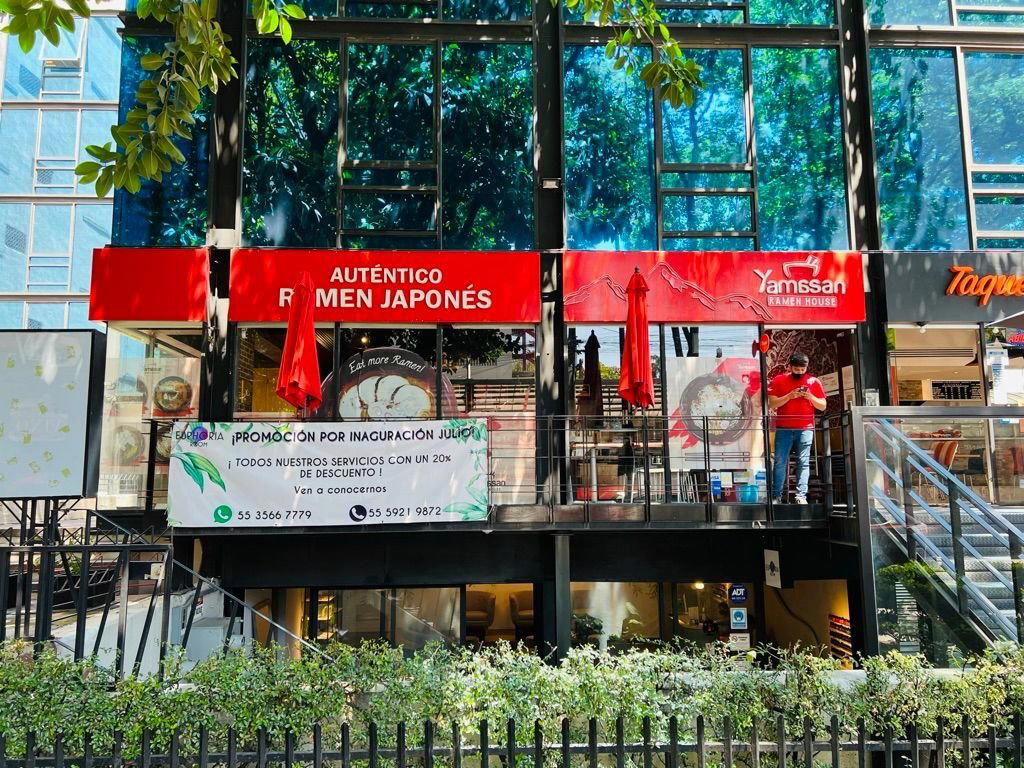
Ramen in the Colonia: Japanese Technique Meets Mexico City's Pantry
Yamasan Ramen House is a casual, walk-in-friendly ramen restaurant in Hipódromo Condesa, Mexico City, on Av. Tamaulipas 103. Av. Tamaulipas cuts through Hipódromo Condesa at a particular frequency: tree-lined, mid-century residential, punctuated by the kind of small-format restaurants that Mexico City residents actually eat at on weekday evenings rather than reservation-only occasions. Yamasan Ramen House occupies that register. The address places it inside one of the capital's most densely layered dining corridors, where the competition is not other ramen shops but the full cross-section of CDMX neighbourhood dining, from taquería counters to bistro hybrids pulling from Japanese, French, and Peruvian traditions simultaneously.
That context matters because ramen in Mexico City does not operate in a vacuum. The dish arrived here through multiple vectors: Japanese-Brazilian diaspora cooking that migrated north, a generation of Mexican chefs who staged in Tokyo and brought back technique, and a broader Latin American appetite for umami-forward broth formats that has accelerated since the early 2010s. What distinguishes the better ramen addresses in CDMX from generic noodle shops is the degree to which they engage with local supply, the chiles, the dried ingredients, the cattle breeds and pork traditions that Mexico's food culture has produced over centuries, and fold them into a Japanese structural framework without dissolving either tradition into the other.
The Intersection of Imported Method and Local Supply
What happens when Japanese broth discipline meets a Mexican ingredient tradition is the defining question for ramen in this city. Japan's ramen canon is already a hybrid form: Chinese noodle technique reinterpreted through regional Japanese stock-making, seasoning philosophy, and tare construction. That layered origin makes it more receptive to further adaptation than, say, a soba tradition with stricter historical anchors.
In Mexico City's better ramen kitchens, that adaptability shows in specific choices. Ancho and guajillo dried chiles carry a depth that functions like a secondary umami layer when integrated into tare, complementing rather than overwhelming the pork or chicken base. Epazote, when used with restraint, introduces an herbal register that has no direct Japanese equivalent but sits coherently inside the bowl. Heirloom corn, treated as a garnish or textural element, signals provenance without demanding that the dish become something other than ramen.
These are not novelty moves. They reflect the same logic operating at Mexico City's most discussed restaurants, Pujol, Quintonil, Em, Sud 777, where the creative pressure comes from asking what Mexican ingredients can do inside a foreign technique, rather than what foreign technique can do to Mexican ingredients. The difference in framing produces different results, and the ramen format is a useful testing ground precisely because the Japanese structural discipline is non-negotiable: broth clarity, noodle texture, tare calibration, topping balance. There is no hiding behind the format's looseness. Every component has a function, and the cook's choices are immediately legible.
The same interrogation plays out differently in other parts of Mexico. Animalón in Valle de Guadalupe works through a wood-fire and regional produce lens; KOLI Cocina de Origen in Monterrey applies northern cattle culture to a contemporary format; Levadura de Olla Restaurante in Oaxaca draws on Oaxacan fermentation tradition. In each case, the question is the same: what is the ingredient doing inside the technique, and does the technique serve the ingredient or obscure it? Yamasan Ramen House sits inside that national conversation from a neighbourhood that has the density and appetite to demand a serious answer.
Hipódromo Condesa and Its Dining Grammar
Condesa and its sub-neighbourhood Hipódromo Condesa function as one of CDMX's most instructive dining zones for understanding how the city's food culture evolves. The area is not a fine-dining cluster in the way that Polanco is, nor a heritage-food district in the way that Centro Histórico or Coyoacán operate. It is a working neighbourhood that has accumulated restaurants through organic density rather than curatorial design, which means the standards are set by what the local population actually returns to, not by what makes a strong press release.
Ramen fits that grammar well. The format is inherently democratic in Japan, a lunch counter discipline that prizes execution over ceremony, and it travels leading to cities that share some version of that value. Mexico City's taquería culture operates on similar logic: the product is the point, the environment is functional, and repeat custom is the real measure of quality. A ramen shop in Hipódromo Condesa is competing against that standard as much as against other ramen.
Rosetta on the Roma Norte side of the same dining corridor has demonstrated what happens when a foreign cuisine format, in that case, Italian, is reinterpreted through a rigorous local-ingredient lens over many years. The trajectory is a useful reference point: the work accumulates incrementally, the ingredient relationships deepen with time, and the result is a restaurant that reads as local despite its foreign structural DNA. The ramen format in CDMX is on a shorter timeline but moving in a comparable direction.
Ordering, Timing, and Practical Notes
Hipódromo Condesa restaurants at the neighbourhood end of the price spectrum tend to run without reservations, operating on a walk-in basis with peak demand concentrated at weekday lunches and weekend evenings. The Av. Tamaulipas address puts Yamasan Ramen House within the cluster of the colonia's most-trafficked dining blocks, which means early arrival or off-peak timing makes a difference during busy periods.
Ramen is a lunch-calibrated format in its Japanese context, a quick, complete meal rather than an extended dining event, and Mexico City ramen shops generally respect that tempo. If the kitchen is operating at its leading, the bowl should arrive hot and coherent within minutes, not assembled to order over a long interval. The broth condition on arrival is the clearest quality signal: it should be fully integrated, viscous without being heavy, and seasoned precisely enough that no table additions are needed.
For readers building a broader Mexico City itinerary, the restaurant sits in a different tier and format than the tasting-menu restaurants that dominate coverage of CDMX dining, Pujol, Quintonil, Em. It is not in competition with those addresses; it answers a different question about what the city is doing with imported culinary formats at the neighbourhood level. For comparison across Mexico's wider dining scene, Alcalde in Guadalajara, Huniik in Merida, Le Chique in Puerto Morelos, Pangea in San Pedro Garza Garcia, HA' in Playa del Carmen, Olivea Farm to Table in Ensenada, and Lunario in El Porvenir all work the local-ingredient, global-technique question from their own regional angles.
For international reference points on what rigorous technique applied to culturally specific ingredients looks like at the highest level, Le Bernardin in New York City and Atomix in New York City represent the French and Korean versions of that same conversation at a different scale.
Address: Av. Tamaulipas 103, Hipódromo Condesa, Cuauhtémoc, 06170 Ciudad de México, CDMX, Mexico.
Same-City Peers
Comparable venues nearby, for context on price, style, and recognition.
| Venue | Cuisine | Price | Notes |
|---|---|---|---|
| Yamasan Ramen HouseThis venue — the venue you are viewing | Authentic Japanese Ramen | $$ | Not listed |
| Mukyu | Authentic Japanese Ramen | $$ | Cuauhtemoc |
| Daikoku | Traditional Japanese with Teppanyaki | $$ | Extremadura Insurgentes |
| El Japonez Artz | Japanese Fusion Sushi | $$$ | Jardines en la Montaña |
| Wa Teppan | Japanese Teppanyaki & Sushi | $$ | Centro Comercial Santa Fe |
| Mammut Pizza Oxford | Neapolitan Rustic Pizza | $$ | Cuauhtemoc |
Continue exploring
More in Mexico City
Restaurants in Mexico City
Browse all →
Bars in Mexico City
Browse all →





At a Glance
- Cozy
- Trendy
- Casual Hangout
- Solo
- Open Kitchen
- Sake Program
Current opening hours
- Monday
- 1–10:30 PM
- Tuesday
- 1–10:30 PM
- Wednesday
- 1–10:30 PM
- Thursday
- 1–10:30 PM
- Friday
- 1–10:30 PM
- Saturday
- 1–10:30 PM
- Sunday
- 1–7:30 PM
Hours can change for holidays and private events. Last verified .
Cozy and bustling Japanese ramen shop with red walls, large mirrors, and a lively, noisy atmosphere.