

The sister venue to Berlin's Michelin-starred Rutz operation, Schmidt Z&KO trades the city-centre intensity of its siblings for a cosy, lived-in room in the student neighbourhood of Steglitz. The menu reflects the same quality-conscious sourcing lineage as Rutz Weinbar and Rutz Altes Zollhaus, delivered at a register that suits the neighbourhood rather than the expense-account crowd.
Pearl is the En Primeur Club membership app — saves, bookings, and concierge access live there. Same editors, same standards.
- Address
- Rheinstraße 45 - 46, 12161 Berlin, Germany
- Phone
- +49 30 200039570
- Website
- schmidt-z-ko.de
- Directions
- Get directions
 Saves & bookings on Pearl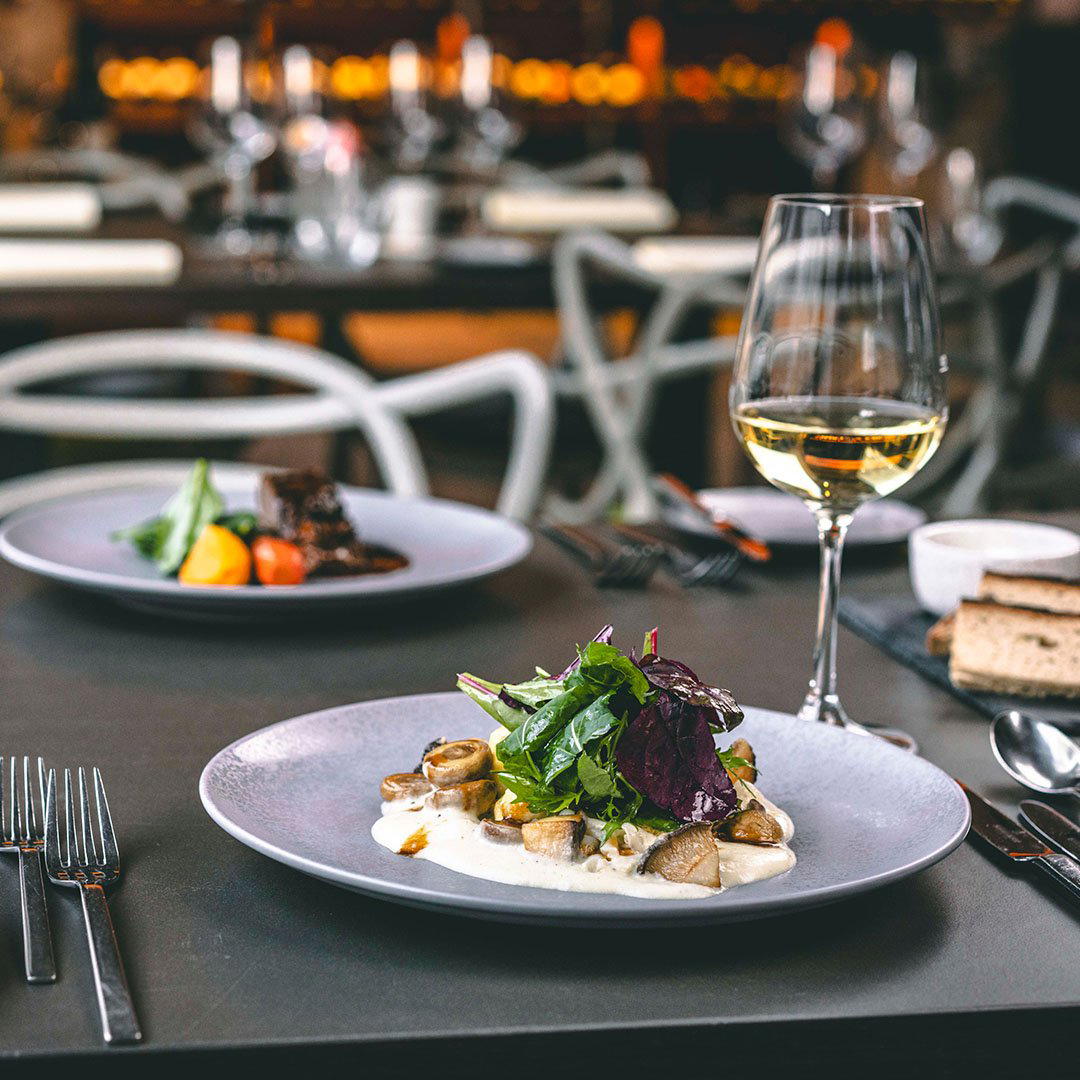
Steglitz and the Case for Neighbourhood Dining
Berlin's fine-dining conversation tends to fix itself on Mitte, Prenzlauer Berg, and the restaurant-dense corridors near Checkpoint Charlie. The southern district of Steglitz rarely enters that discussion, which is precisely why Schmidt Z&KO; rewards attention. On Rheinstraße, in a neighbourhood more associated with students and long-term Berliners than with restaurant tourism, a room exists that carries the credentials of one of the city's most respected dining groups, without the self-consciousness that often accompanies that lineage.
The broader German dining scene has spent the last decade splitting between two poles: the formal, tasting-menu-led operations that stack Michelin stars and court international press, and a quieter category of neighbourhood-anchored venues that apply serious technique to more relaxed formats. Schmidt Z&KO; occupies that second category with some authority, given its connection to the Rutz family of restaurants, a group that includes a two-Michelin-starred flagship and the adjoining Rutz Weinbar, both of which operate at the sharper, more formal end of Berlin's dining spectrum.
The Room: Cosy Without Apology
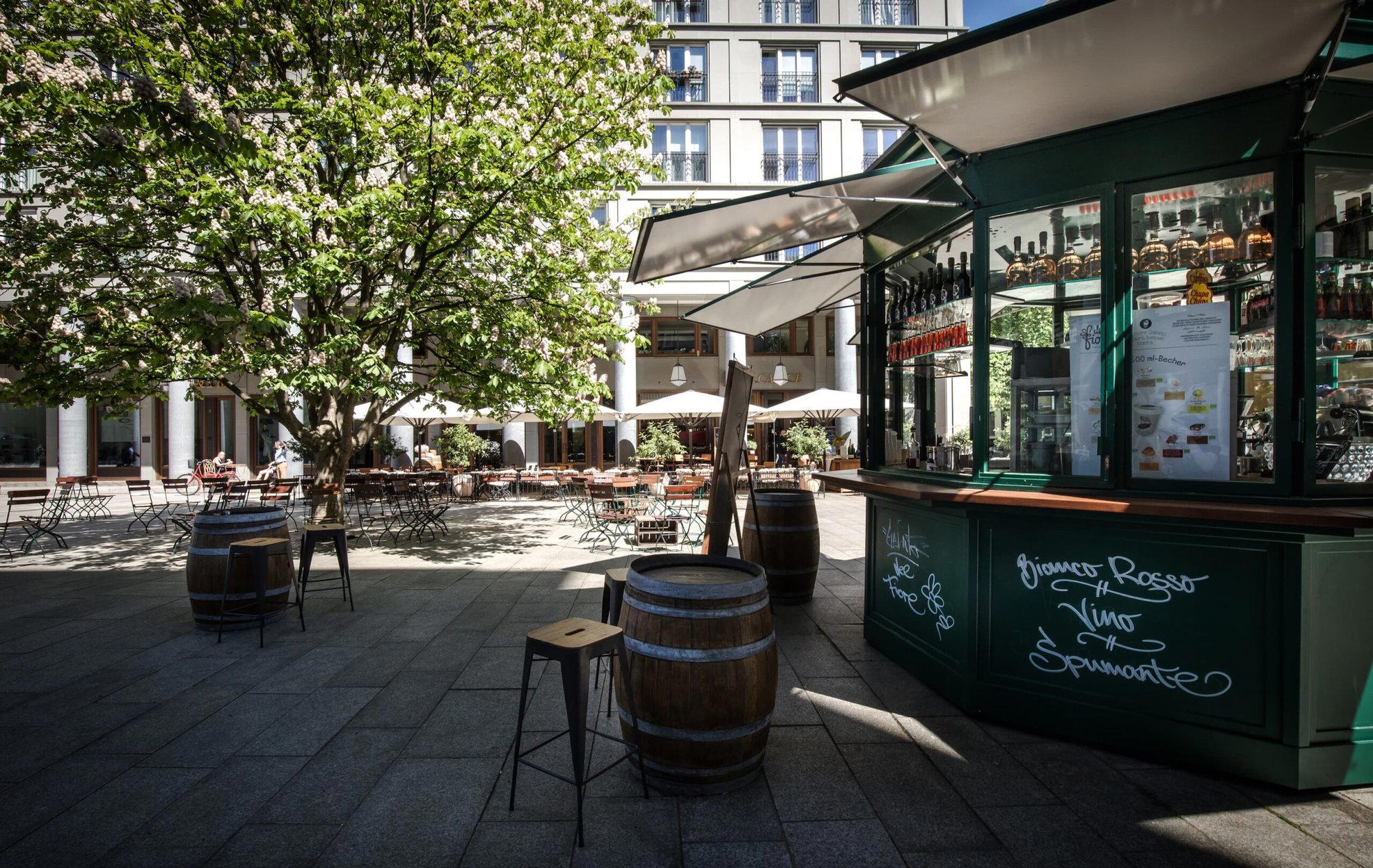
The atmosphere at Schmidt Z&KO; is described as deliberately residential. The ambience runs cosy and stylish in equal measure, a combination that reads differently in a student district than it would in a design-hotel corridor. In Steglitz, it feels earned rather than curated. The room does not announce itself. It functions as a place where the neighbourhood actually eats, and that functional warmth is harder to manufacture than most restaurateurs admit.
This kind of atmosphere is increasingly deliberate across European cities. As the highest-tier venues, think the €€€€ bracket occupied by Nobelhart & Schmutzig or FACIL, have grown more formal and considered in their physical presentation, the mid-register neighbourhood room has carved out a distinct identity of its own. Schmidt Z&KO; fits that pattern: a venue where the physical environment signals approachability while the kitchen's provenance signals something more serious.
Menu Architecture: What the Structure Reveals
Sister-venue relationships in the German dining world tend to follow a recognisable logic: the flagship carries the tasting menu and the wine programme that commands international attention, while the satellite operates a shorter, more flexible format that allows the kitchen to work at a different pace. That structure is visible across Germany's most coherent restaurant groups, the model that produces venues like Schwarzwaldstube in Baiersbronn or the extended family operations around Vendôme in Bergisch Gladbach tends to concentrate technique at the flagship and distribute hospitality across the satellite.
At Schmidt Z&KO; the menu reflects this logic. The connection to Rutz Weinbar, itself a more casual annex to the two-starred Rutz, means Schmidt Z&KO; sits one further step removed from the flagship's formal register. What that produces in practice is a menu that can absorb seasonal produce, respond to the neighbourhood's appetite, and operate without the pressure of maintaining a multi-course tasting structure. The result is a format that suits Steglitz: approachable in price and format, but informed by a kitchen culture that does not take shortcuts.
Restaurant Tim Raue, CODA Dessert Dining, operate in entirely different formats and price brackets. Schmidt Z&KO; is a serious neighbourhood room, informed by the Rutz group but operating on its own terms.
The Rutz Lineage as Context, Not Credential
Understanding Schmidt Z&KO; requires understanding the Rutz group's position in Berlin's dining culture. Rutz itself holds two Michelin stars and a reputation for wine programming that places it among Germany's more ambitious operations. Rutz Weinbar functions as the more accessible entry point to that world, a format that has become common among Michelin-level operations across Europe, where a formal flagship is paired with a bar-adjacent room offering shorter menus and more flexible booking. Schmidt Z&KO; extends that logic into a fully neighbourhood-embedded format.
The practical significance for diners is this: visiting Schmidt Z&KO; is not a substitute for Rutz, and it should not be approached as one. It is a distinct proposition, a room shaped by the group's sourcing sensibility and kitchen standards, but operating on its own terms in a neighbourhood that has different expectations from its restaurants. Visitors looking for something less formal, or who find themselves in the southern part of the city, will find Schmidt Z&KO; a more natural fit.
Getting There and Planning Your Visit
Steglitz sits in Berlin's southwest, well outside the tourist-heavy zones of Mitte and Friedrichshain-Kreuzberg. Rheinstraße is accessible by U-Bahn via the Bundesplatz station on the U9 line, or from Steglitz itself. The neighbourhood functions as a genuine residential district, which means the restaurant draws a predominantly local crowd, a useful calibration for expectations around atmosphere and noise level. Booking ahead is advisable, particularly on weekends, given the venue's connection to a well-regarded group. With no published phone or website available at time of writing, booking logistics are best confirmed on arrival or via the Rutz group's contact channels.
For visitors whose Berlin itinerary extends to other categories, Those building a wider German dining trip can cross-reference against Aqua in Wolfsburg, JAN in Munich, or ES:SENZ in Grassau for a sense of how Germany's more ambitious dining operations are distributed outside Berlin. International comparisons that illuminate the sister-venue model, where a serious group deploys neighbourhood formats alongside flagship operations, can be found at venues like Le Bernardin in New York City and Restaurant Haerlin in Hamburg.
Reputation Context
Comparable venues nearby, for context on price, style, and recognition.
| Venue | Cuisine | Price | Notes |
|---|---|---|---|
| Schmidt Z&KOThis venue — the venue you are viewing | Modern German with International Influences | $$ | Not listed |
| Lokal | Modern German | $$ | Mitte |
| Stock & Stein | German Stone Grill Steakhouse | $$ | Friedrichshain |
| Neue Zukunft | German Beer Garden Pub | $$ | Friedrichshain |
| Café Liebig | Classic German Bistro | $$ | Grünau |
| Schnitzelei Wilmersdorf | Modern German Schnitzel | $$ | Wilmersdorf |
Recognition history
Dated appearances from independent guides and award organizations, with the underlying list record or original source where available.
Falstaff Restaurant - 88 Falstaff Points
Falstaff
Star Wine List
Star Wine List
Continue exploring
More in Berlin
Restaurants in Berlin
Browse all →
Bars in Berlin
Browse all →
Hotels in Berlin
Browse all →



At a Glance
- Modern
- Quiet
- Cozy
- Date Night
- Business Dinner
- Casual Hangout
- Wine Cellar
- Extensive Wine List
Current opening hours
- Monday
- Closed
- Tuesday
- 12–6 PM
- Wednesday
- 12–6 PM
- Thursday
- 12–11 PM
- Friday
- 12–11 PM
- Saturday
- 12–11 PM
- Sunday
- Closed
Hours can change for holidays and private events. Last verified .
Spacious, modern urban setting with beautiful decor, relaxed and sophisticated atmosphere.