Savelli
Our verdict
On Smith Street in Carroll Gardens, Savelli occupies a stretch of Brooklyn that has long supported serious neighborhood dining alongside Italian-American tradition. The address places it within walking distance of Cobble Hill and Boerum Hill, where the lunch-versus-dinner divide tends to define how a room is used and priced. Visitors should calibrate expectations around service style, daypart, and the borough's particular relationship with Italian cooking.

Pearl is the En Primeur Club membership app, where members save venues, book tables and use the concierge.

The menu
What to order
- Polpette della Nonna
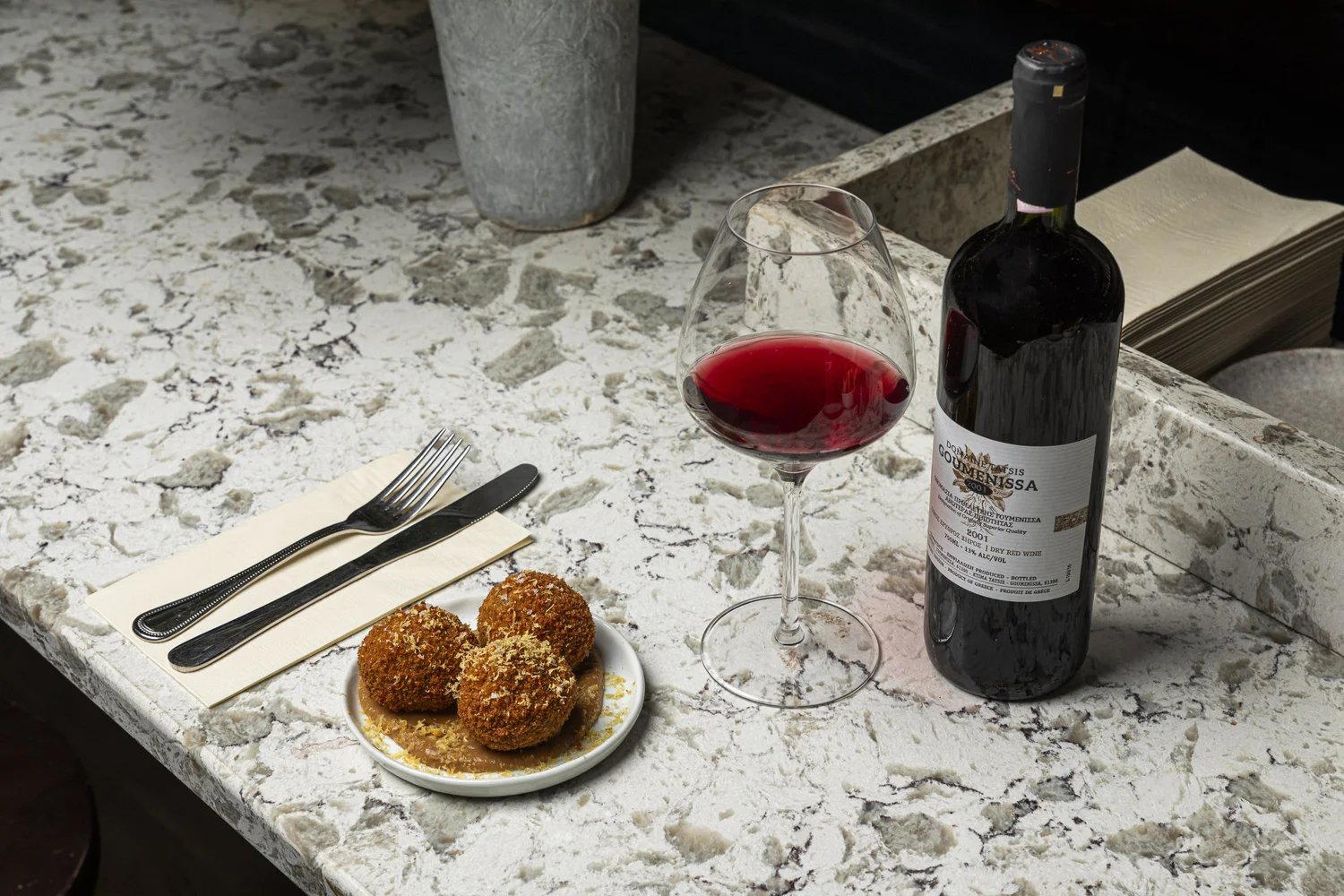
- Arancini
- Handmade Pasta
Smith Street and the Brooklyn Italian Tradition
Carroll Gardens has maintained one of the more coherent Italian-American dining identities in New York City for decades. The neighborhood's roots in Sicilian and Neapolitan immigration shaped a street-level food culture that outlasted the waves of gentrification that reshaped adjacent Boerum Hill and Cobble Hill. Smith Street, where Savelli sits at number 195, became a restaurant corridor in the late 1990s and has since settled into something more durable: a mixed strip of long-running neighborhood spots and newer openings that rely on local repeat business rather than destination traffic from Manhattan.
That context matters when placing Savelli on any kind of dining map. Brooklyn's Italian restaurants operate in a different register from the prix-fixe formality of midtown and the Upper West Side. They answer to a local clientele with specific expectations around portion size, value, and informality. The comparison set for a Smith Street address is not Le Bernardin or Per Se but rather the tightly held neighborhood Italian rooms that New Yorkers return to out of habit and affection rather than occasion.
The Lunch and Dinner Divide on Smith Street
In Brooklyn's neighborhood dining culture, the gap between lunch and dinner service is often wider than it appears on the menu. Daytime tends to draw a working-crowd and local-resident mix: quicker tables, lighter plates, and a room that operates at lower ambient energy. Evening service shifts toward longer meals, larger parties, and a more deliberate pace. For Italian restaurants in particular, this daypart divide shapes how a kitchen approaches the same dishes at different hours.
Lunch at a Carroll Gardens Italian spot often functions as a practical meal rather than an event. Pasta portions might run smaller, wine orders lighter, and the dining room quieter than its evening counterpart. Dinner reclaims the fuller register: antipasti spread across the table, bottles rather than glasses, and tables that turn less aggressively than they would at a comparable Manhattan address. The value proposition frequently shifts between the two services as well, with lunch pricing offering access to the same kitchen at a lower spend threshold.
For visitors from outside the borough, dinner tends to reward more: the room is fuller, the pace more generous, and the experience closer to what Carroll Gardens dining is actually built around. That said, a weekday lunch at a Smith Street address like Savelli allows a different kind of access, one without the reservation pressure that evening slots generate in a neighborhood where regulars hold strong informal claims on tables.
Where Savelli Sits in the New York Italian Hierarchy
New York's Italian restaurant tier runs from white-tablecloth expense-account rooms in midtown to cash-only red-sauce institutions in Bensonhurst and Howard Beach. Carroll Gardens occupies middle ground: the cooking tends to be more considered than outer-borough traditional, but the format resists the architectural seriousness of higher-end Italian addresses in Manhattan. This is a register that values execution and consistency over innovation, and where a neighborhood audience will notice when something changes.
At the national level, the conversation around American fine dining has been shaped by destinations like Alinea in Chicago, The French Laundry in Napa, and Blue Hill at Stone Barns in Tarrytown. Closer to home, the progressive end of New York dining runs through rooms like Atomix and Jungsik New York. Savelli exists in a category that operates independently of those benchmarks, answering instead to the expectations of a specific neighborhood and a cuisine type with its own deeply established standards.
For travelers building a broader itinerary, pairing a Brooklyn neighborhood meal with a Manhattan experience gives useful calibration. Nationally, restaurants like Emeril's in New Orleans, Lazy Bear in San Francisco, Providence in Los Angeles, Addison in San Diego, and Bacchanalia in Atlanta each anchor the higher end of their local scenes in ways that help frame what neighborhood dining looks like by contrast. Single Thread Farm in Healdsburg and The Inn at Little Washington represent the destination-driven end of American hospitality, a different category entirely from Smith Street's daily-rhythm Italian rooms.
Internationally, the Italian format finds its highest expression in places like 8 1/2 Otto e Mezzo Bombana in Hong Kong and Alain Ducasse at Louis XV in Monte Carlo, rooms where Italian-adjacent cuisine operates at the level of sustained critical recognition. Carroll Gardens is not that, and does not try to be. Its claim is different: durability, neighborhood specificity, and the particular comfort of a room that knows its audience.
Arriving at 195 Smith Street
Carroll Gardens is accessible by subway from Manhattan via the F and G lines, with the Carroll Street station a short walk from Smith Street. The neighborhood is a genuine residential area rather than a tourist district, which affects the texture of a meal there: the crowd tends to be local, the noise level calibrated to conversation, and the street outside quiet enough that the transition from restaurant to sidewalk is not jarring.
Smith Street itself runs through a mix of older Italian-American businesses and newer openings that have arrived since the street's restaurant boom two decades ago. The address at 195 places Savelli within the denser section of that corridor. Parking is possible but competitive, and the subway remains the more predictable option for visitors arriving from Manhattan or other boroughs. For a broader view of where Savelli fits within New York's restaurant geography, our full New York City restaurants guide maps the city's dining across neighborhoods and price tiers.
Know Before You Go
- Address: 195 Smith St, Brooklyn, NY 11201
- Neighborhood: Carroll Gardens, Brooklyn
- Transit: F/G train to Carroll Street station
- Cuisine: Italian-American, Carroll Gardens tradition
- Daypart note: Lunch tends toward a faster pace and lighter volume; dinner service runs longer and suits larger groups
- Phone / Website: directly before visiting
- Reservations: Booking method not confirmed; walk-in availability may vary by day and season
Frequently asked questions
Does Savelli work for a family meal?
Carroll Gardens has long been a family-oriented neighborhood, and Smith Street restaurants in that corridor tend to reflect that. Savelli at 195 Smith Street fits the model of a neighborhood Italian where multi-generational tables are the norm rather than the exception. Check directly with the restaurant on group accommodations before booking a larger party.
What's the overall feel of Savelli?
Savelli occupies a stretch of Smith Street that anchors Carroll Gardens' Italian-American dining identity, a corridor where the feel skews local and unaffected rather than destination-driven. The atmosphere reads as a working neighborhood trattoria rather than a room designed for out-of-borough traffic. That distinction separates it from Manhattan Italian rooms and from the more self-conscious Brooklyn dining scene further north.
Is Savelli a good option for visitors staying in Manhattan who want authentic Brooklyn Italian?
Savelli sits at 195 Smith Street in Carroll Gardens, reachable from Manhattan via the F and G trains to Carroll Street station. The neighborhood has sustained one of New York City's more coherent Italian-American dining identities for decades, rooted in a community with deep southern Italian heritage. That context makes the trip substantively different from Italian restaurants closer to Midtown, where the audience and pricing tend to shift accordingly.
What's the must-try dish at Savelli?
Carroll Gardens Italian restaurants in this tradition typically anchor their menus around house-made pasta and long-simmered sauces drawn from southern Italian roots. Asking the kitchen directly what's running that day is the reliable approach.
Credentials Lens
Comparable venues nearby, for context on price, style, and recognition.
| Venue | Cuisine | Price | Notes |
|---|---|---|---|
| SavelliThis venue (the venue you are viewing) | Authentic Italian Trattoria | $30–50 | Not listed |
| Piccola Cucina Casa | Regional Italian | $30–50 | Downtown Brooklyn-DUMBO-Boerum Hill |
| Lucali | Brick-Oven Neapolitan Pizza | $30–50 | Carroll Gardens-Cobble Hill-Gowanus-Red Hook |
| 'inoteca | Italian Wine Bar & Trattoria | Not listed | Lower East Side |
| Max Restaurant | Authentic Italian | Not listed | Tribeca-Civic Center |
| Fiat Cafe | Authentic Italian Cafe | $20–30 | SoHo-Little Italy-Hudson Square |