
Santa Hanten places Chinese dining inside Roppongi’s private-room culture rather than Tokyo’s counter-seat obsession. The 2026 Tabelog 100 selection, 50-seat scale, semi-private layout, and seasonal Shanghai crab window from October to March make it a useful address for readers comparing business dinners, family meals, and higher-spend Chinese cooking in Minato.
Pearl is the En Primeur Club membership app — saves, bookings, and concierge access live there. Same editors, same standards.
- Address
- 5 Chome-16-4 Roppongi, Minato City, Tokyo 106-0032, Japan
- Phone
- +81 3-5797-8608
- Website
- tabelog.com
 Saves & bookings on Pearl
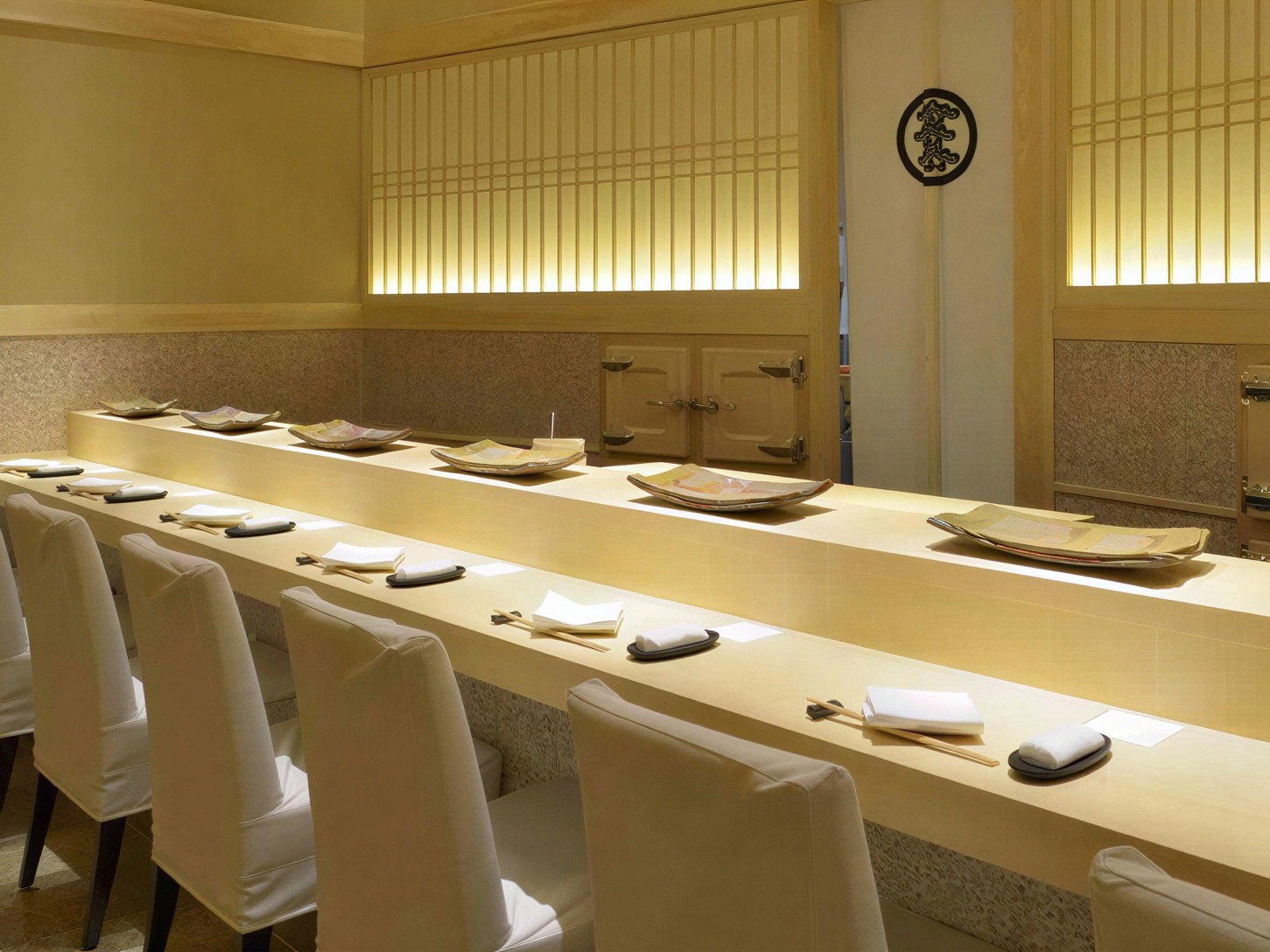
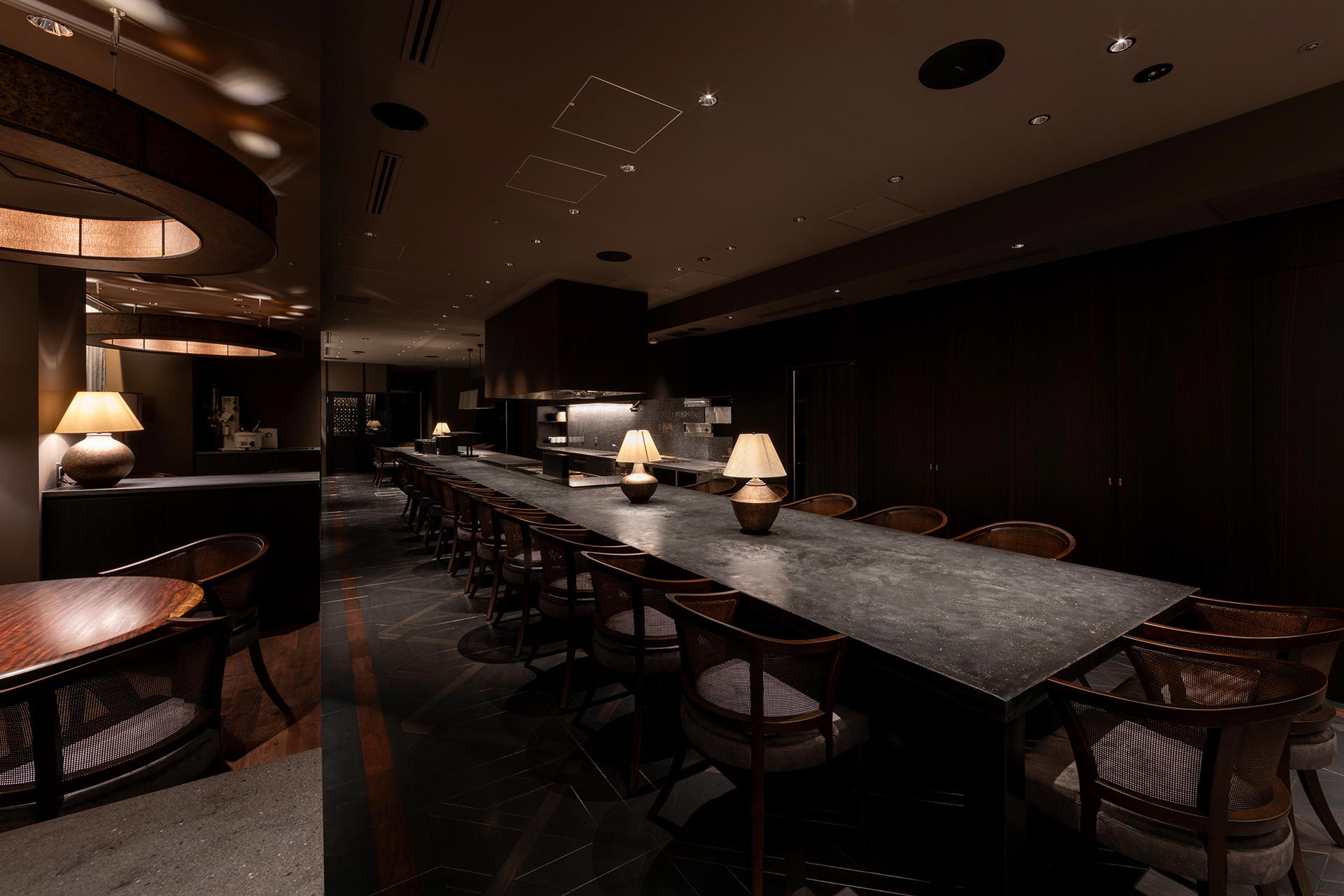
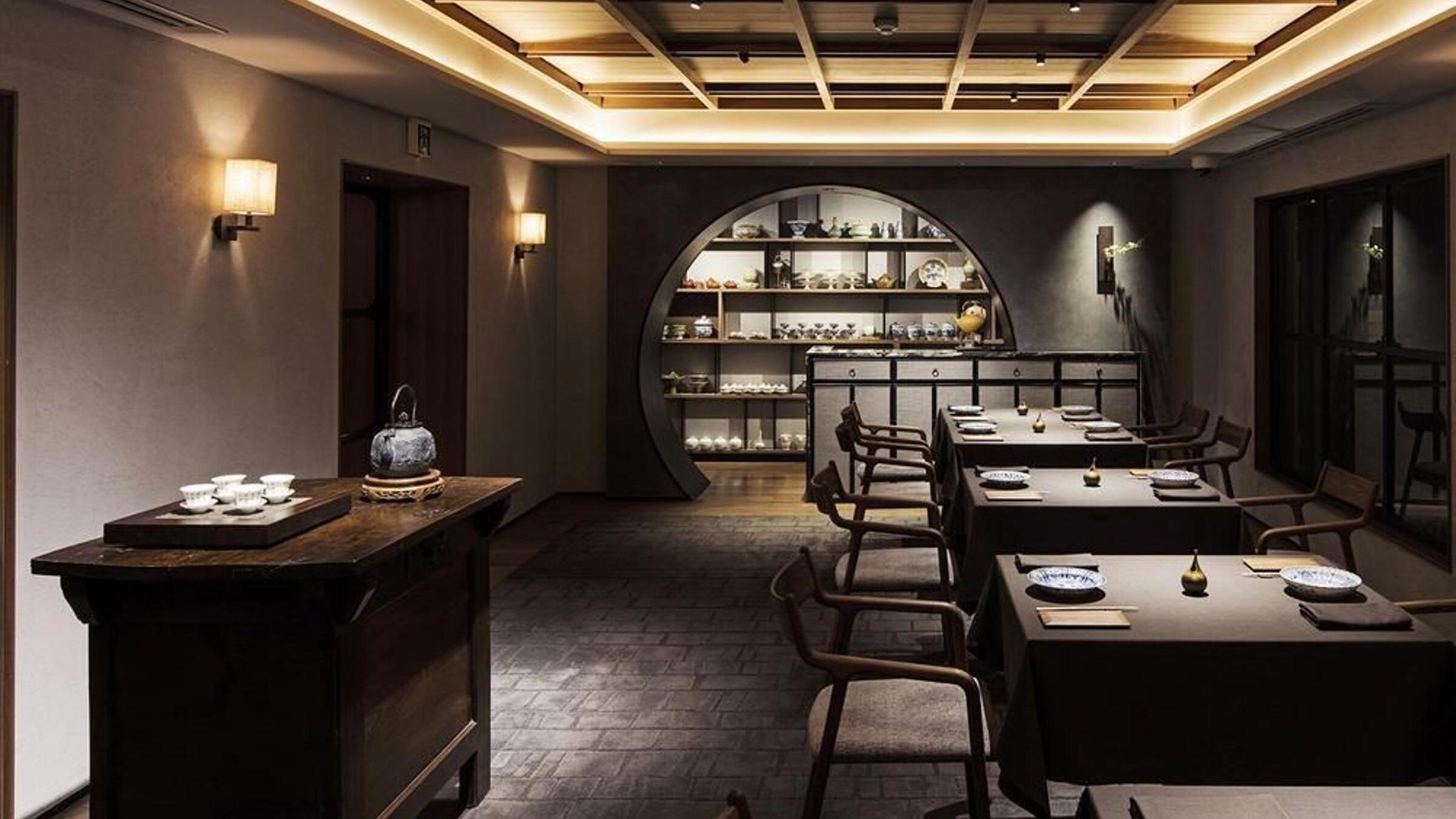
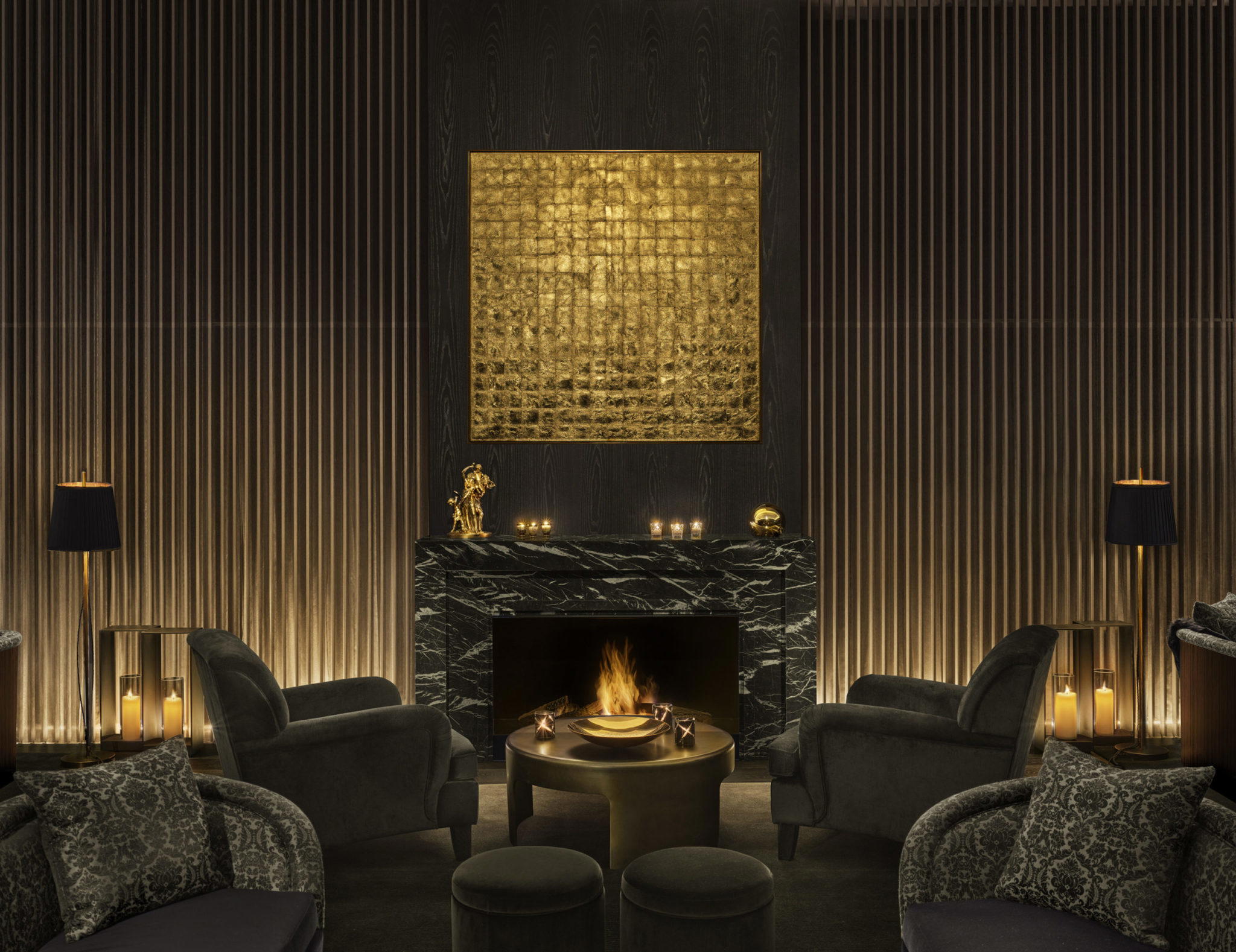
Roppongi restaurant entrances often force a choice before the menu does: street-level flash, basement discretion, hotel polish, or a room that lets a table run its own evening. Santa Hanten belongs to the last category. Its proposition is not a chef’s counter or theatrical open kitchen, but separation: semi-private seating across the room, private rooms for six, and a 50-seat footprint closer to Tokyo’s business-dinner Chinese tradition than to smaller tasting-menu temples.
That distinction matters. Tokyo Chinese restaurants span neighborhood gyoza shops, high-end Cantonese and Shanghainese rooms, hotel dining rooms, and modern tasting counters borrowing tempo from kappo and sushi. Roppongi adds offices, embassies, late dining, galleries, and hotel bars to the same after-dark map. Here, semi-private seating is not just comfort; it defines the meal’s social architecture.
Semi-private rooms shape the meal more than spectacle
The format points to conversation-led, group-friendly Tokyo dining, for occasions where privacy has value. All-seat semi-private dining changes pacing: dishes can land for a table rather than a counter sequence, and the room can absorb business talk, family logistics, and celebrations without forcing every party into one performance. For travelers used to Tokyo’s small counters and strict choreography, this is another language of hospitality.
The 50-seat count matters too. It gives more operational breadth than an eight-seat specialist counter, without becoming a banquet factory. Maximum seated parties are listed at 30, private use is available, and celebrations and surprises are noted among service features. The result is a practical niche for visitors needing a polished Chinese meal in Minato without turning dinner into a formal hotel production.
Roppongi’s private-dining demand is no accident. Its international audience often needs rooms that work across languages, ages, and dietary negotiation. Santa Hanten lists Chinese-speaking multilingual staff, welcomes children and strollers, and limits heated-tobacco smoking to a designated area. These details describe a dining room built for real mixed parties rather than a narrow omakase audience; in Tokyo, that can separate an elegant plan from a difficult one.
Chinese cooking in a Roppongi price tier
The cooking is listed as Chinese, with highlights including Peking duck, braised shark fin, and Shanghai crab during the October-to-March season. In Tokyo’s Chinese dining hierarchy, these signal a banquet-derived repertoire where luxury ingredients, shared dishes, and seasonal add-ons matter. The restaurant also lists an omakase course, notable as Tokyo diners increasingly expect even non-Japanese cuisines to offer controlled-course formats alongside flexible ordering.
The price structure reinforces that split personality. Dinner is listed at JPY 20,000 to JPY 29,999, while lunch is JPY 2,000 to JPY 2,999. That wide day-to-night gap is common in Tokyo but revealing here: lunch offers an accessible read on the kitchen and room, while dinner moves into a higher-spend Chinese bracket where crab, duck, fin, private rooms, and service charges change the calculation. A 10 percent service charge applies, so dinner pricing should be read as the base expectation, not the full table cost.
Recognition gives the address a stronger editorial anchor than room format alone. Santa Hanten was selected for Tabelog 100 Chinese cuisine Tokyo 2026, with a Tabelog score of 3.66. Tabelog’s Hyakumeiten lists are not Michelin equivalents, but in Japan they carry weight because they reflect category-specific local dining attention. For Chinese restaurants in Tokyo, that places the restaurant inside a competitive citywide field, not merely Roppongi convenience.
Comparison clarifies the decision. In Roppongi, Wolfgang's Steakhouse Roppongi Tokyo covers the expense-account steak brief, Mētis Roppongi a French register, and WAGYU BURGER HIROKIYA a lower-spend burger lane. Chidori overlaps more closely on dinner spend, listed at JPY 20,000 to JPY 29,999, but the category logic differs. Santa Hanten rests on Chinese banquet grammar filtered through a semi-private Roppongi room: useful when the table needs shared dishes, privacy, and a broader age range; less compelling for diners seeking a tiny counter or chef-personality narrative.
How to place it in a Tokyo dining itinerary
The address is in Minato’s Roppongi 5-chome, with Roppongi Station the nearest station and a five-minute walk from Exit 3. Hours run daily from late morning through evening service, with a year-end and New Year holiday closure noted. Parking is unavailable, normal for central Tokyo, so subway arrival is cleaner. Reservations are available. Payment is broad for Japan: major credit cards, transit IC cards, Rakuten Edy, iD, and QUICPay are accepted; QR payments are not.
The strongest use case is a lunch-to-dinner contrast. Lunch gives a lower-cost view of the room’s utility, especially for travelers based in Roppongi, Azabu, or Akasaka. Dinner makes more sense when the room matters as much as the food: a business table, multigenerational party, or seasonal Shanghai crab plan from October through March. The structure rewards planning because semi-private seating and private rooms matter most when conversation, timing, and table composition are part of the brief.
For broader Tokyo planning, pair this address with category-specific research rather than a single neighborhood crawl. EP Club’s full Tokyo restaurants guide is the natural base, while travelers building a wider stay can cross-check Tokyo hotels, Tokyo bars, Tokyo wineries, and Tokyo experiences. Nearby and citywide restaurant contrasts include. 鮪と炭火焼き うお炭 秋葉原店, 12/10 Shinjuku ten, 124. KAGURAZAKA (Yakitori), 2D Cafe, and 3 Chome no Curry Ya San.
Readers extending the map beyond central Tokyo can compare how category, price, and format shift across Japan and abroad: -Grilled beef Sukiyaki- KAMAKURA TANUKIAN 鎌倉 たぬき庵 in Kamakura,.cafe in Osaka,.know in Kumamoto, (Shoku) Vietnam in Kawasaki, [Curry Senmon Ten] Maruyama Kyoju. in Sapporo, [ki:] in Kyoto, Jōdo Saké Bar in Los Angeles, and Onigiri Time in Pasadena. The point is not to treat Santa Hanten as a universal Tokyo answer, but to use it precisely: Chinese cooking, private-room utility, Roppongi access, and a 2026 Tabelog 100 signal in one package.
Same-City Peers
Comparable venues side-by-side for orientation.
| Venue | Cuisine | Price | Notes |
|---|---|---|---|
| Santa HantenThis venue — the venue you are viewing | Chinese Fine Dining | $$$ | |
| Chinese Toukaryou Toukari | Cantonese fine dining in a luxury Tokyo hotel | $$$ | Minato |
| NOGI | Chinese | $$$ | Minato |
| Chinese Shindai | Innovative Chinese Chef’s Counter | $$$ | Shibuya |
| Chinese Hanten Ichigaya ten | Seasonal Shanghai Chinese (Chuugokuhanten Ichigaya) | $$$ | Chiyoda |
| CHEF'S | Traditional Shanghai Chinese with a “subtractive” philosophy | $$$ | Shinjuku |







At a Glance
- Elegant
- Sophisticated
- Classic
- Intimate
- Business Dinner
- Group Dining
- Family
- Celebration
- Special Occasion
- Private Dining
- Standalone
- Sake Program
- Beer Program
Polished and comfortable, with a semi-private-room setup that makes the dining room feel intimate yet suitable for groups and business meals.