On Carrer de Bailèn in Eixample, Sandwich Club Barcelona occupies a quiet position in one of the city's most food-literate neighbourhoods. The format is built around the sandwich as a serious culinary object, placing it in a Barcelona dining scene where casual formats increasingly command the same attention as tasting menus. A focused, affordable counter to the city's fine-dining circuit.
Pearl is the En Primeur Club membership app — saves, bookings, and concierge access live there. Same editors, same standards.
- Address
- Carrer de Bailèn, 108, Eixample, 08009 Barcelona, Spain
- Phone
- +34618685271
- Website
- sandwich.club
- Directions
- Get directions
 Saves & bookings on Pearl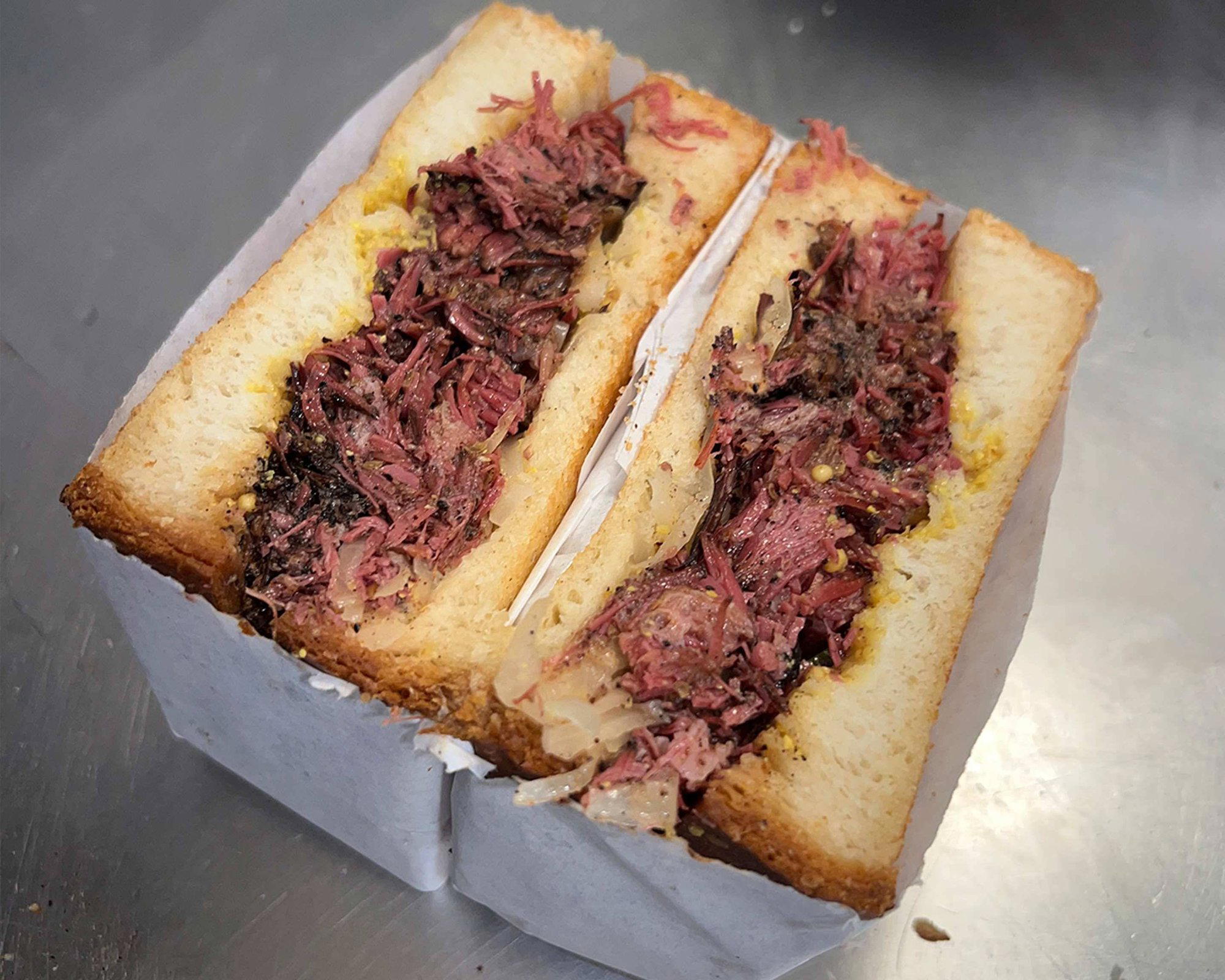
A Sandwich Counter in the City That Reinvented Cooking
Barcelona has spent the better part of three decades at the centre of a global conversation about what restaurants can be. The city that produced Disfrutar, Enigma, and Cocina Hermanos Torres is not, in other words, a city short on technical ambition. What makes Sandwich Club Barcelona worth reading about is precisely the contrast: it sits on Carrer de Bailèn, in the grid-patterned Eixample district, and it is doing something much simpler. The question the venue implicitly asks is whether a sandwich, treated with the same ingredient seriousness that defines Barcelona's broader food culture, can hold its own in that company. In the right hands, the answer in cities like this is consistently yes.
Eixample is a useful address for this kind of proposition. The neighbourhood is neither the tourist corridor of the Gothic Quarter nor the self-consciously fashionable lanes of El Born. It is where Barcelona's professional class eats on weekday lunchtimes, where neighbourhood bars have served pa amb tomàquet for generations, and where a format-forward spot like this can find a regular clientele that is sceptical of theatre but attentive to quality. Carrer de Bailèn, in particular, runs north through the district with a calm, residential character that makes a focused sandwich counter feel appropriate rather than incongruous.
What the Format Says About the Scene
Across European cities, the premium casual segment has matured considerably. London, Paris, Copenhagen, and New York have all produced sandwich or bread-led operations that price and position themselves above fast-casual without crossing into full-service dining territory. Barcelona has been slower to develop this tier, partly because the city's existing casual food culture, pintxos bars, bocadillo counters, tapas formats, already occupies the middle ground with confidence. That makes the deliberate elevation of the sandwich format here a more considered move than it would be in a city without that infrastructure.
Spain's broader dining circuit provides useful context for where something like Sandwich Club Barcelona sits in the hierarchy. The country's most discussed tables, El Celler de Can Roca in Girona, Mugaritz in Errenteria, Martin Berasategui in Lasarte-Oria, Arzak in San Sebastián, operate at a price point and commitment level that most people encounter once or twice per trip, not daily. What fills the space between those experiences and a neighbourhood bar is precisely where the more interesting casual dining conversation happens. In that gap, a sandwich counter that sources seriously and executes consistently is not a lesser category. It is a different one.
The same dynamic plays out in individual cities elsewhere in Spain. Aponiente in El Puerto de Santa María, Quique Dacosta in Dénia, and Azurmendi in Larrabetzu each anchor their respective regions as destination restaurants, but they coexist with everyday food formats that are worth understanding on their own terms. Barcelona is no different, and Sandwich Club occupies that everyday register with apparent intention.
Atmosphere and the Physical Address
The EA-GN-08 editorial angle that applies here, reading a space through what you see, hear, and feel, is complicated by the sparse record on Sandwich Club Barcelona. What the address tells you is structural: Carrer de Bailèn 108 places the venue at the northern end of Eixample, a section of the neighbourhood that operates at a lower volume than the Passeig de Gràcia axis a few blocks west. This is not a venue positioned for foot traffic off a major boulevard. The sensory register of that location tends toward the unpretentious: street noise from the Eixample grid, the scale of the Modernisme-era buildings providing a particular quality of light at different hours, the rhythm of a residential commercial street rather than a hospitality destination strip.
In that context, a counter-style sandwich operation would read as a neighbourhood institution rather than a destination venue. The format signals something about the sensory experience before you even step inside: this is a place to eat without ceremony, where the food is the entire point and the environment exists to serve it rather than to comment on it. That positioning is increasingly deliberate in cities where the formal dining experience is well-covered by places like ABaC and Lasarte.
Barcelona's Casual Tier in International Context
It is worth noting where Barcelona's casual dining sits relative to cities like New York, where operations such as Le Bernardin and Atomix anchor the fine-dining end of a spectrum that includes extremely developed casual and fast-casual tiers. New York has had decades to build that middle ground. Barcelona's version is newer and thinner, which means a venue that takes the sandwich seriously occupies a less crowded niche. Spain's food culture has traditionally resolved the question of casual quality through tapas and bar formats rather than through the sandwich specifically, so a dedicated sandwich counter here is working against a different set of conventions than it would in a northern European or American context.
That context matters for the reader deciding how to allocate time. Barcelona already has the fine-dining circuit covered, DiverXO in Madrid draws the comparison, and closer to home Ricard Camarena in València shows how Spain's regional cities have built credible high-end circuits of their own. Atrio in Cáceres extends that further. Against all of that, a sandwich counter in Eixample is making a different kind of argument: that a single, well-made thing, bought and eaten without a reservation or a dress code, is a legitimate way to experience a city's food culture.
Planning Your Visit
Cuisine-First Comparison
Comparable venues nearby, for context on price, style, and recognition.
| Venue | Cuisine | Price | Notes |
|---|---|---|---|
| Sandwich Club BarcelonaThis venue — the venue you are viewing | American Street Food with Spanish & Catalan Influences | $ | Not listed |
| The Benedict Bcn | American Brunch with Spanish Twists | $$ | Barri Gotic |
| Red Garter Barcelona | American Steakhouse & Tex-Mex | $$ | Barri Gotic |
| Sandwich Club Poblenou | American Street Food Sandwiches | $$ | el Poblenou |
| Foc i Oli | Gourmet Burgers and Sandwiches | $$ | l'Antiga Esquerra de l'Eixample |
| El Desván Barcelona | American Burgers & BBQ with Rock Bar Vibe | $$ | la Nova Esquerra de l'Eixample |
Continue exploring
More in Barcelona
Restaurants in Barcelona
Browse all →
Bars in Barcelona
Browse all →
Hotels in Barcelona
Browse all →
At a Glance
- Trendy
- Modern
- Cozy
- Lively
- Casual Hangout
- Brunch
- After Work
- Standalone
- Open Kitchen
- Beer Program
- Local Sourcing
Current opening hours
- Monday
- 10 AM–11 PM
- Tuesday
- 10 AM–11 PM
- Wednesday
- 10 AM–11 PM
- Thursday
- 10 AM–12 AM
- Friday
- 10 AM–12 AM
- Saturday
- 10 AM–12 AM
- Sunday
- 10 AM–11 PM
Hours can change for holidays and private events. Last verified .