Our verdict
Foc i Oli occupies a quiet stretch of Carrer de París in the Eixample, positioning itself within Barcelona's mid-to-upper casual dining tier rather than the city's Michelin-weighted creative circuit. The name itself, fire and oil, the twin pillars of Catalan cooking, signals a kitchen oriented around traditional technique. Booking intelligence and neighbourhood context matter here more than formal credentials.

Pearl is the En Primeur Club membership app, where members save venues, book tables and use the concierge.

Carrer de París and the Eixample's Quieter Dining Register
Barcelona's Eixample is a grid of contradictions. The same octagonal blocks that house some of Spain's most decorated restaurants Lasarte, Enigma, also contain neighbourhood restaurants operating almost entirely outside the international critical apparatus. Carrer de París, running diagonally through the upper Eixample, sits closer to that second register. The street draws a local dining public rather than a tourist circuit, and restaurants along it tend to be judged by consistency and value within their immediate community rather than by their position in any formal ranking system.
Foc i Oli lands on this street with a name that functions as a culinary manifesto compressed into three syllables: foc (fire) and oli (oil), the two elements that underpin Catalan cooking from the simplest pa amb tomàquet to the most labour-intensive escudella. The name signals orientation before a single dish arrives. This is a kitchen interested in the foundations of the regional tradition, not in departing from them.
Where the Name Places the Kitchen
Catalan cuisine has two parallel public identities that rarely overlap. One is the globally recognised avant-garde tradition, represented by venues like Disfrutar and Cocina Hermanos Torres, where tasting menus work as conceptual arguments about food itself. The other is the dense, quieter tradition of the cuina de mercat, market cooking, product-led, seasonal, often unglamorous in presentation but technically demanding in its reliance on ingredient quality and timing. Foc i Oli's name positions it within the second tradition, where fire and oil are not rhetorical devices but the actual instruments of the kitchen.
Across Spain's broader dining spectrum, this kind of intentional positioning is increasingly deliberate. At the three-Michelin-star end, places like El Celler de Can Roca in Girona or Quique Dacosta in Dénia use Catalan and Valencian ingredient culture as a launching point for transformation. Further along the coast, Ricard Camarena in València threads a middle line between product purity and technique. Foc i Oli operates at a different scale and price register entirely, but the underlying logic, let fire and oil do the work, connects it to a regional kitchen philosophy that runs across all those tiers.
Planning a Visit: What the Logistics Actually Look Like
The editorial angle on Foc i Oli that matters most practically is not what's on the plate but how you get to the plate. Barcelona's dining scene divides cleanly between venues that require weeks or months of advance planning and those that can absorb a same-week or same-day decision. The creative tasting-menu circuit, ABaC, Disfrutar, Lasarte, belongs firmly in the first category, with lead times that routinely extend to six to eight weeks for prime sittings. Foc i Oli, based on its neighbourhood position and local-facing profile, operates outside that pressure system.
The practical recommendation is to call ahead for dinner, particularly Thursday through Saturday when the Eixample's residential dining public is at full volume. Lunch on weekdays is generally the most accessible window across this category of Barcelona restaurant, and it is also where the menú del día format, a set lunch of starter, main, dessert, and wine, tends to offer the sharpest value in the city.
This contrasts sharply with the planning architecture required at Spain's most logistically demanding restaurants. Mugaritz in Errenteria and Azurmendi in Larrabetzu both require advance booking well into multiple months, and both close seasonally. DiverXO in Madrid operates a prepaid ticket system that places it closer to theatre booking than restaurant reservations. At the other end of the Spanish fine-dining spectrum, Aponiente in El Puerto de Santa María and Martin Berasategui in Lasarte-Oria both require significant forward planning. Foc i Oli sits outside all of that, which is precisely its logistical value for travellers whose Barcelona itinerary doesn't permit a six-week runway.
Peer Comparison: Planning and Format
| Venue | Format | Approx. Booking Lead Time | Price Tier |
|---|---|---|---|
| Foc i Oli | Neighbourhood restaurant, à la carte | Same week / walk-in likely | Not confirmed |
| Disfrutar | Tasting menu only | 6–10 weeks | €€€€ |
| Lasarte | Tasting menu / à la carte | 4–6 weeks | €€€€ |
| Cocina Hermanos Torres | Tasting menu | 4–8 weeks | €€€€ |
| ABaC | Tasting menu | 3–6 weeks | €€€€ |
The Eixample as a Dining District
Understanding Foc i Oli requires a basic map of how the Eixample actually functions as a dining neighbourhood. The district covers a large area, and its restaurant character shifts considerably depending on which quadrant you're in. The area immediately around Passeig de Gràcia concentrates tourist-facing trattorias and hotel dining. Moving west and north toward the upper Eixample, the Esquerra de l'Eixample and the block around Carrer de París, the clientele becomes more residential and the restaurant offer more locally calibrated.
This is the context in which Foc i Oli operates. It is not competing with Disfrutar or with the hotels along the Diagonal. It is competing with other neighbourhood restaurants serving the professional and residential population of this part of the city, where the measure of success is repeat custom rather than placement on international rankings. For visitors, that local calibration is worth reading as a signal: the restaurant is optimised for a Catalan diner's expectations, not for a tourist's.
For a broader picture of Barcelona's full dining range, from neighbourhood restaurants through to the city's most ambitious tasting-menu programmes, our full Barcelona restaurants guide maps the scene by tier, neighbourhood, and format. Internationally, the technical ambition found at Barcelona's leading tables has close analogues at places like Le Bernardin in New York City and Lazy Bear in San Francisco, where product-driven precision and format discipline define the top tier. Closer to home, Arzak in San Sebastián and Atrio in Cáceres represent the regional Spanish tradition at its most formally recognised end. Foc i Oli occupies a different point on that map entirely, which is neither a criticism nor a limitation, it simply defines what kind of visit makes sense here.
Frequently asked questions
What should I eat at Foc i Oli?
What the name and neighbourhood positioning suggest is a kitchen anchored in Catalan cooking fundamentals: product-led, technique-grounded, and likely shaped by what the market offers seasonally. For comparison, Barcelona's broader Catalan restaurant tradition at this tier tends toward grilled fish, slow-cooked legumes, and aioli-based preparations, the kind of cooking that depends on olive oil and live fire rather than on elaborate plating. The cuisine and chef details available are limited; contacting the restaurant directly will give the clearest current picture of the menu format.
Is Foc i Oli reservation-only?
In Barcelona's neighbourhood restaurant category, particularly in the upper Eixample, venues at this tier typically accept reservations by phone and may accommodate walk-ins during off-peak hours. The absence of a documented online booking system suggests this is not a venue operating on the same reservation infrastructure as the city's creative tasting-menu restaurants, where prepaid systems or month-long lead times are standard. Calling ahead for dinner on busy nights is the safest approach regardless of city or price tier.
What do critics highlight about Foc i Oli?
No formal critical record, Michelin, 50 Best, or named publication reviews, is available in current sources for Foc i Oli. This places it outside the tier of Barcelona restaurants that carry documented external validation, such as Disfrutar or Enigma. That absence is not in itself a negative indicator for a neighbourhood restaurant: much of Barcelona's most consistent everyday dining operates without formal award coverage, assessed instead by local repeat custom and word-of-mouth within specific residential communities.
Is Foc i Oli good for vegetarians?
In the broader context of Catalan cooking, traditional preparations rely heavily on seafood, cured meats, and offal, though the region's vegetable traditions, particularly escalivada, samfaina, and broad bean dishes, can support vegetarian eating when a kitchen is willing to adapt. The safest approach is to contact the restaurant directly by phone before booking, particularly if dietary restrictions are a firm requirement rather than a preference. Barcelona's restaurant scene more broadly has moved toward greater dietary flexibility across all tiers over the past decade.
Is Foc i Oli worth the price?
What the neighbourhood context suggests is a restaurant positioned below the €€€€ tier occupied by Barcelona's formal creative restaurants, Lasarte, Cocina Hermanos Torres, and calibrated instead to the expectations of a local Eixample clientele. At that tier in Barcelona, a well-executed menú del día typically runs between €14 and €22; evening à la carte dining in a comparable neighbourhood setting generally falls in the €35–€60 per person range before wine. These are category benchmarks, not confirmed figures.
How does Foc i Oli fit into the broader Catalan dining tradition?
The name alone, fire and oil, places the kitchen within a culinary lineage that predates any modern Spanish restaurant movement. Catalan cooking at its most fundamental is built on two techniques: direct heat (the grill, the open flame, the brasa) and cold-pressed olive oil used as both cooking medium and sauce. Restaurants that anchor their identity in this tradition sit in a different competitive set from Barcelona's creative tasting-menu circuit, drawing instead on the same foundations as the region's historic restaurants de cuina catalana. For travellers moving between Barcelona and Spain's wider dining network, from El Celler de Can Roca in Girona to Quique Dacosta in Dénia, Foc i Oli represents an opportunity to eat within the tradition those starred kitchens are, in different ways, transforming.
Reputation First
| Venue | Cuisine | Price | Awards | Notes |
|---|---|---|---|---|
| Foc i OliThis venue (the venue you are viewing) | Gourmet Burgers and Sandwiches | $20–30 | Not listed | Not listed |
| Cocina Hermanos Torres | Modern Spanish Fine Dining | $300–500 | 3 Michelin Stars · World's 50 Best #69 | Creative |
| Disfrutar | Avant-Garde Catalan Fine Dining | $300–500 | 3 Michelin Stars · World's 50 Best #1 | Progressive, Creative |
| Lasarte | Modern Basque-Mediterranean Fine Dining | $300–500 | 3 Michelin Stars · La Liste Top Restaurants | Progressive Spanish, Creative |
| Cinc Sentits | Modern Catalan Fine Dining | $150–200 | 2 Michelin Stars · La Liste Top Restaurants | Modern Spanish, Creative |
| Enoteca Paco Pérez | Modern Mediterranean Seafood | $200–300 | 2 Michelin Stars · La Liste Top Restaurants | Modern Spanish, Modern Cuisine |
Continue exploring
More in Barcelona
Restaurants in Barcelona
All restaurants in Barcelona →
Bars in Barcelona
All bars in Barcelona →


Details
- Lively
- Cozy
- Energetic
- Casual Hangout
- Group Dining
- Open Kitchen
- Terrace
- Local Sourcing
- A La Carte
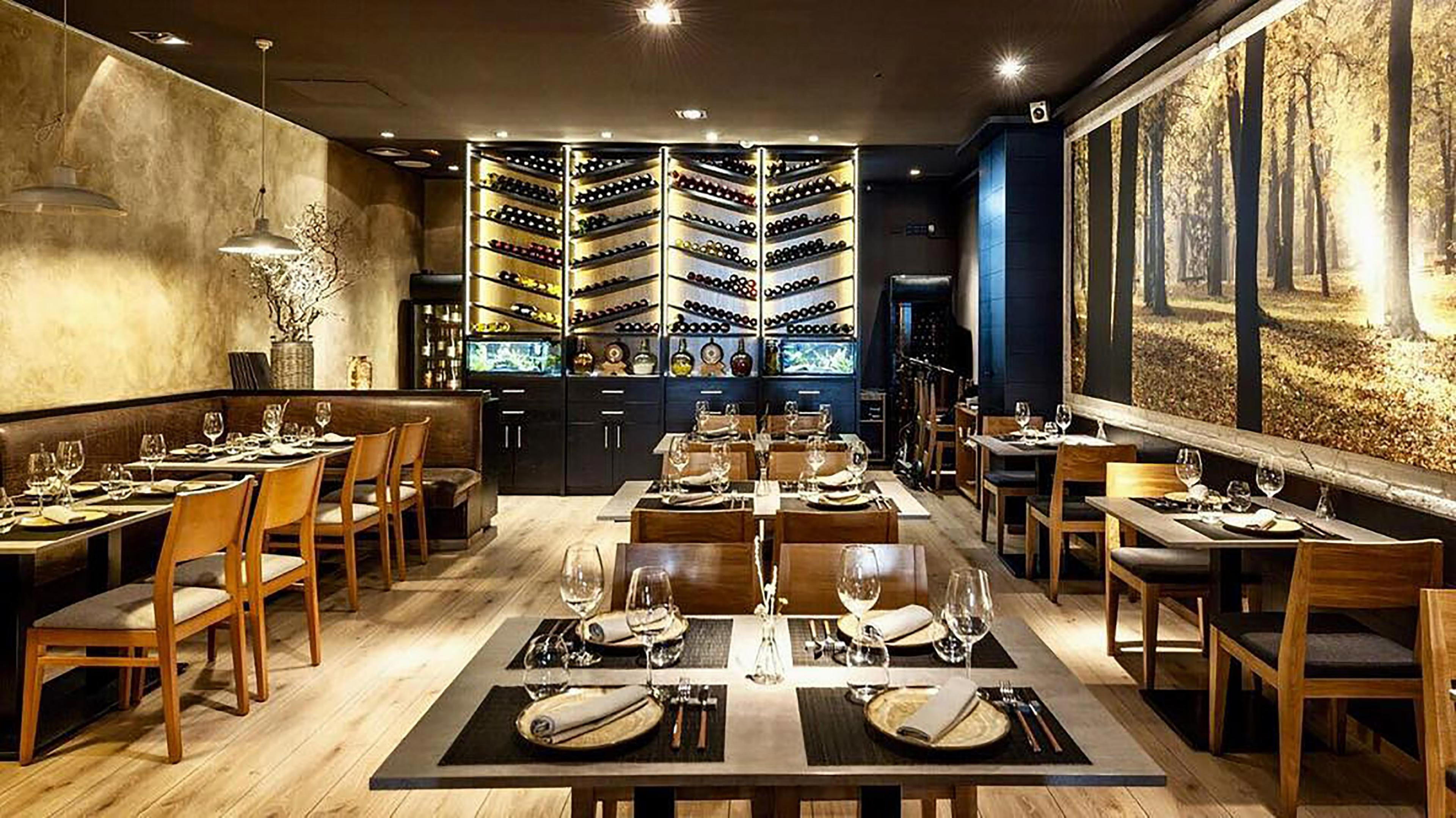
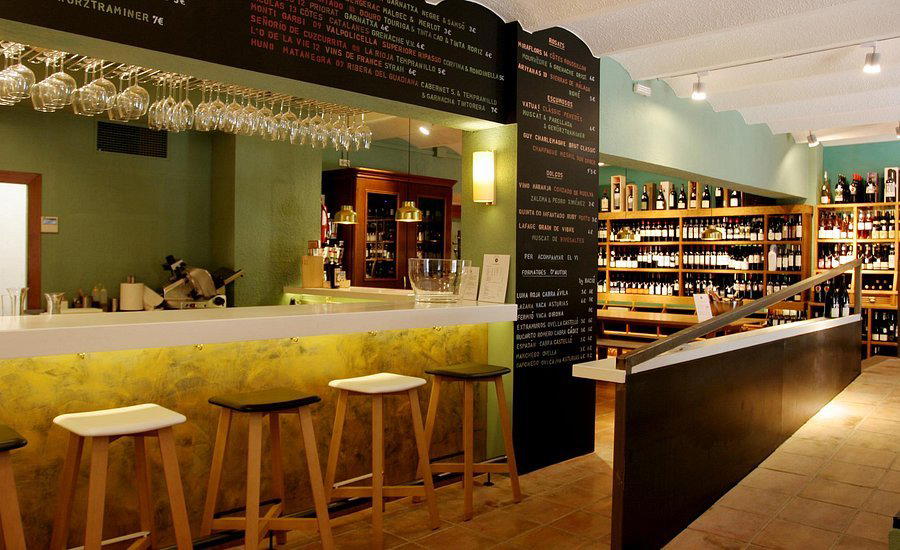
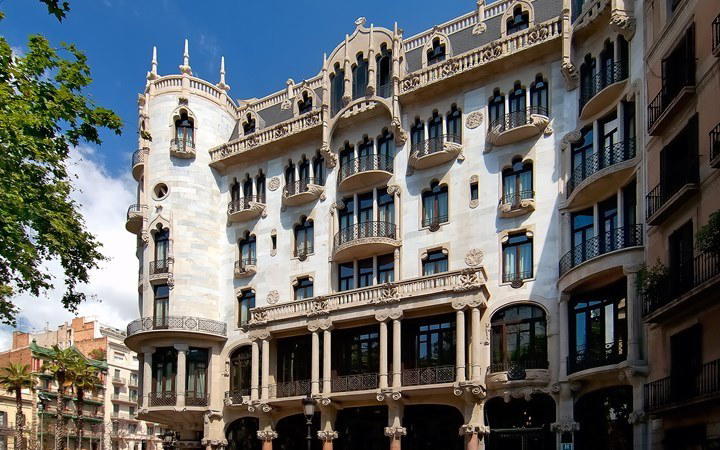
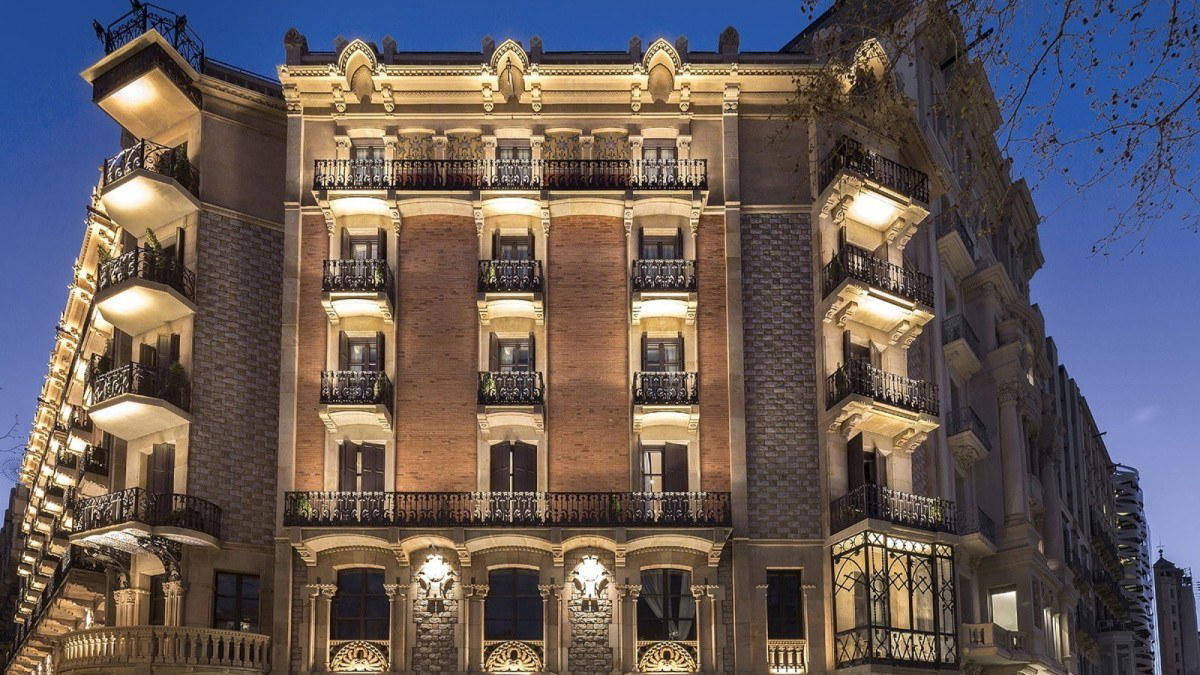
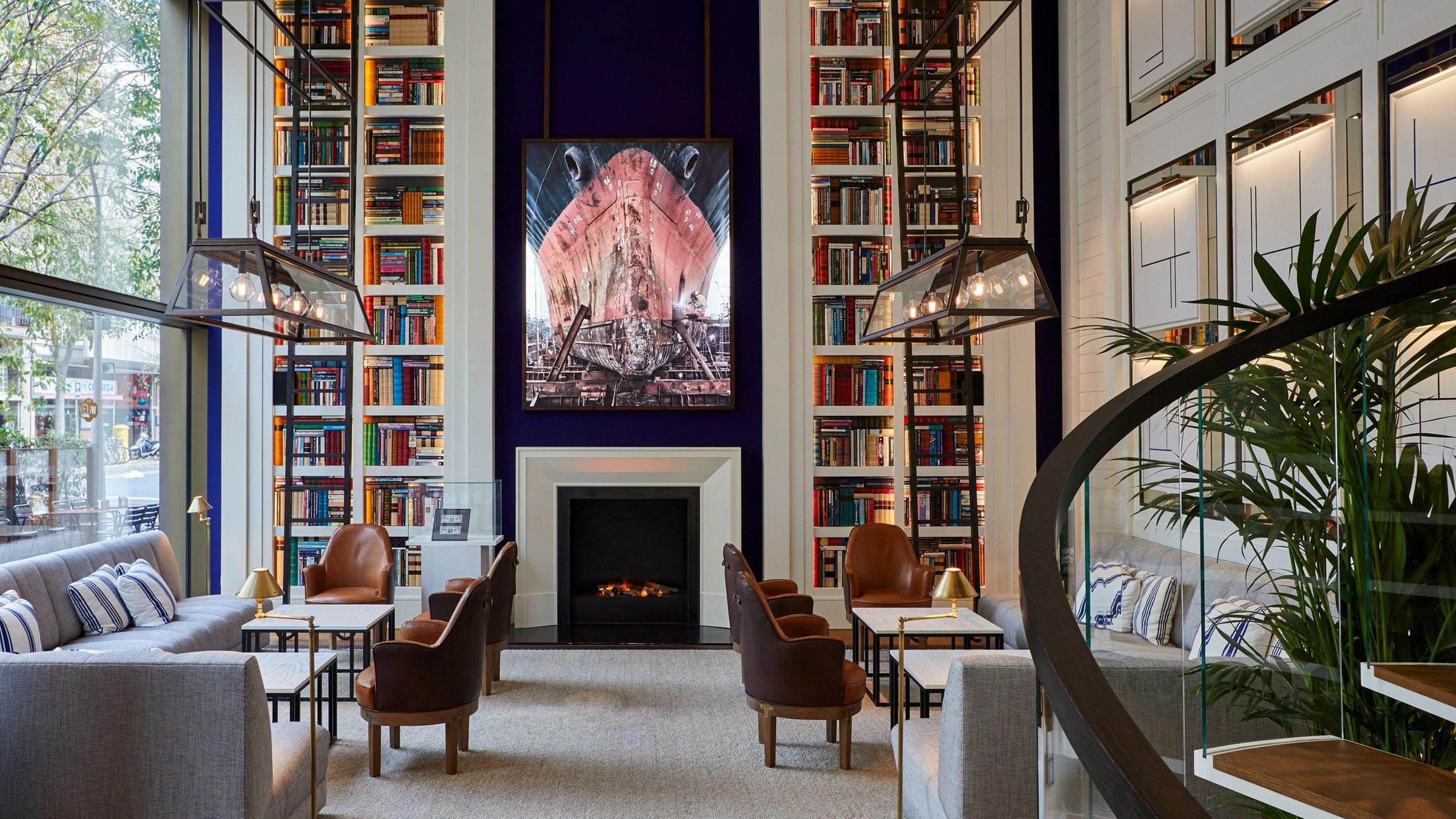
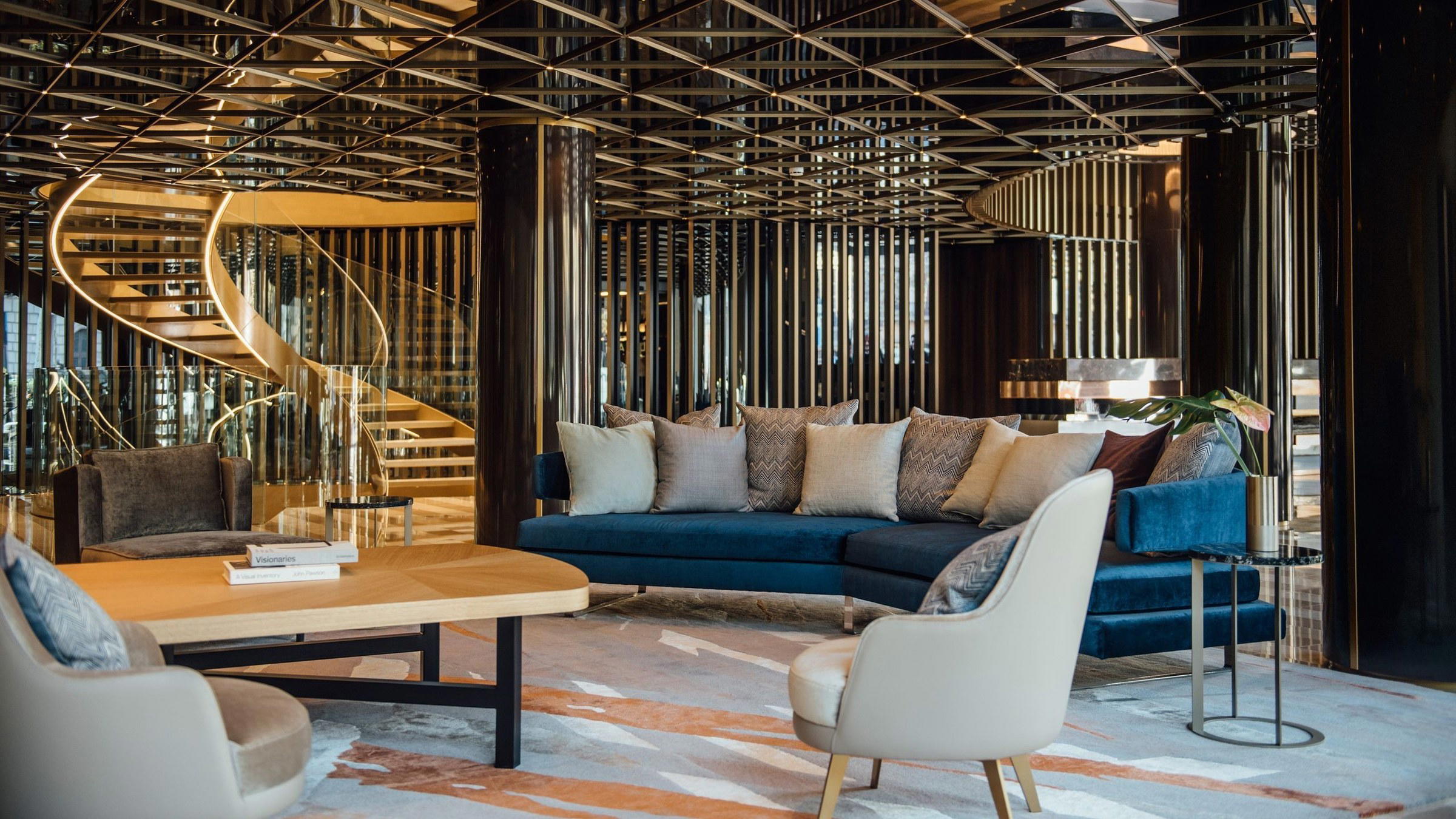
Energetic and inviting atmosphere with great music, airy dining room, and a welcoming vibe that makes guests feel at home.