
Samouraï on Avenue Louise brings Japanese counter cooking to Brussels's premium dining corridor, earning back-to-back Michelin Plate recognition in 2024 and 2025. For Japanese cuisine with a live-preparation emphasis, it is among the more consistent addresses in the Belgian capital.
Pearl is the En Primeur Club membership app — saves, bookings, and concierge access live there. Same editors, same standards.
- Address
- Av. Louise 104, 1050 Ixelles, Belgium
- Phone
- +32 2 217 56 39
- Website
- samourai-bruxelles.com
- Directions
- Get directions
 Saves & bookings on Pearl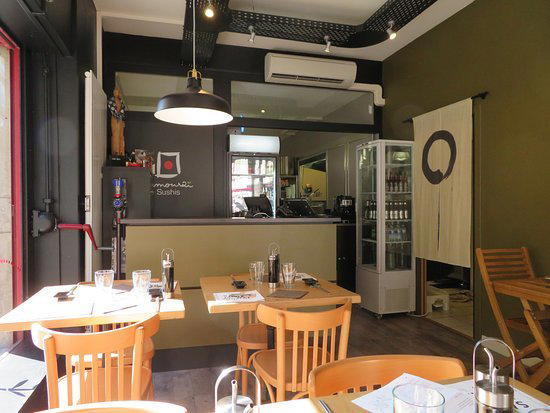
Counter Culture on Avenue Louise
Avenue Louise runs south from the city centre like a deliberate statement: broad, tree-lined, lined with the kind of addresses that assume a certain level of expenditure. The restaurants along its length and immediate tributaries tend toward French classicism or contemporary Belgian, the tradition that produced houses like Comme chez Soi and La Villa Lorraine by Yves Mattagne. Into that context, Samouraï operates as a deliberate counterpoint: a Japanese kitchen at Avenue Louise 104 in Ixelles, holding Michelin Plate recognition for both 2024 and 2025, positioning itself as one of the more credentialed Japanese addresses in a city where that category is far thinner than its French or Belgian-leaning equivalents.
The Michelin Plate designation matters here not as a ceiling but as a floor. It signals a kitchen that meets the guide's standard for quality cooking without yet reaching the star tier occupied by the city's most formally ambitious rooms. For Japanese cuisine in Brussels, a city whose Michelin attention has historically concentrated on French-influenced fine dining, back-to-back Plate recognition across two consecutive years represents meaningful consistency in a category where recognition is harder won.
The Performance of Live Cooking
Among the formats that Japanese cuisine has exported globally, teppanyaki carries the theatrical charge. Where omakase asks for patient observation of a chef's knife work, and ramen operates as a study in broth and time, teppanyaki is explicitly performative: the flat iron surface as stage, the chef's movement and timing visible from every seat at the counter. The model places the diner inside the cooking rather than at a remove from it, heat, sound, and sequence all part of what arrives on the plate.
Brussels has a thinner Japanese dining infrastructure than Paris or Amsterdam, which means venues that do engage seriously with live-preparation formats occupy a distinct position in the city's restaurant map. The counter-side cooking tradition at its most disciplined is less about spectacle for its own sake and more about compression: the distance between raw ingredient and finished dish collapses to a matter of feet and minutes. That compression is the editorial promise of the format, and it is what separates a considered teppanyaki kitchen from one that deploys the visual language without the underlying discipline.
Samouraï's standing on Avenue Louise, at the €€€ price point, places it in a polished middle ground between casual dining and the city's most formal rooms. For comparison, the neighbourhood's French and Belgian fine dining addresses, including those at the €€€€ level, tend to work through more conventional front-of-house separation between kitchen and table. The Japanese counter format shifts the emphasis to the grill itself.
Where It Sits in the Brussels Dining Picture
Brussels's premium restaurant scene has been shaped predominantly by French technique and Belgian produce, a combination that has produced some of Belgium's most-discussed kitchens, many of them outside the capital itself. For those tracking the broader Belgian fine dining picture, addresses like Hof van Cleve in Kruishoutem, Boury in Roeselare, and Zilte in Antwerp represent the starred end of that tradition, alongside coastal kitchens like Willem Hiele in Oudenburg and Bartholomeus in Heist.
Within Brussels proper, the competition for Michelin attention at the city's upper tier, rooms like Bozar Restaurant and the creative end of the local scene represented by addresses like Eliane and Barge, remains firmly rooted in European culinary frameworks. Japanese cuisine in that context is a different offer entirely, and Samouraï's.
For readers who track Japanese dining internationally, the reference points sit elsewhere. The disciplined counter formats at places like Myojaku in Tokyo or the kaiseki-adjacent precision of Azabu Kadowaki represent the upper end of what the cuisine can produce in its home city. Brussels, operating at a different scale and with a different import infrastructure, is not playing in that same register, but the Michelin Plate at Samouraï indicates a kitchen working seriously within its actual conditions rather than approximating something it cannot fully deliver.
The Avenue Louise Address and What It Implies
Real estate on Avenue Louise carries its own logic. The corridor from the city centre out through Ixelles has long attracted addresses that want proximity to Brussels's wealthiest residential zones and its embassy quarter without the tourist density of the Grand Place or the Sablon. A Japanese restaurant holding that address at the €€€ tier is pricing against the neighbourhood's expectations rather than against cheaper Japanese options elsewhere in the city, a deliberate positioning that implies a certain confidence in the kitchen's ability to hold that ground.
For visitors building a Brussels itinerary around serious dining, the avenue's concentration of options at this tier means Samouraï sits in a comparison set that includes French-influenced addresses with longer local histories. That it has maintained Michelin Plate recognition in two consecutive annual editions, while operating in a cuisine category that the guide's Brussels inspectors have historically given less attention to than its European equivalents, is a credentialing signal worth noting.
For those whose Japan travel extends beyond Brussels comparisons, d'Eugénie à Emilie in Baudour offers a separate Belgian region's approach to serious cooking outside the capital.
Planning a Visit
Samouraï sits at Avenue Louise 104 in the Ixelles commune, within easy reach of the avenue's tram connections and the wider public transport network linking it to Brussels's central neighbourhoods. At the €€€ price tier, it occupies a spend level consistent with a formal dinner rather than a casual meal, comparable in outlay to the city's mid-to-upper European dining rooms without reaching the leading bracket of starred Belgian cuisine. Given the Michelin Plate recognition and a review volume of over 850 on Google, booking ahead is advisable, particularly for weekends. It is recommended to book in advance.
Reputation First
Comparable venues nearby, for context on price, style, and recognition.
| Venue | Cuisine | Price | Awards | Notes |
|---|---|---|---|---|
| SamouraïThis venue — the venue you are viewing | Authentic Japanese | $$$ | Michelin Plate | Not listed |
| Gus | Franco-Belgian Brasserie with Beer Gastronomy | $$$ | Michelin Plate | Madou |
| Aster | Innovative | $$$ | Michelin Plate | Not listed |
| Brasserie de la Patinoire | Classic Belgian Brasserie | $$$ | Michelin Plate | Bois de la Cambre |
| La Belle Maraîchère | Traditional Franco-Belgian Seafood | $$$ | Michelin Plate | Pl. de Brouckere |
| Umamido Bourse | Authentic Japanese Ramen & Sushi | $$ | Not listed | Pl. de Brouckere |
Recognition history
Dated appearances from independent guides and award organizations, with the underlying list record or original source where available.
Michelin Plate
Michelin
Michelin Plate
Michelin
Michelin Plate
Michelin
At a Glance
- Romantic
- Elegant
- Sophisticated
- Date Night
- Business Dinner
- Special Occasion
- Open Kitchen
Current opening hours
- Monday
- 12–2 p.m., 7–9:30 p.m.
- Tuesday
- 12–2 p.m., 7–9:30 p.m.
- Wednesday
- 12–2 p.m., 7–9:30 p.m.
- Thursday
- 12–2 p.m., 7–9:30 p.m.
- Friday
- 12–2 p.m., 7–9:30 p.m.
- Saturday
- 12–2 p.m., 7–9:30 p.m.
- Sunday
- Closed
Hours can change for holidays and private events. Last verified .
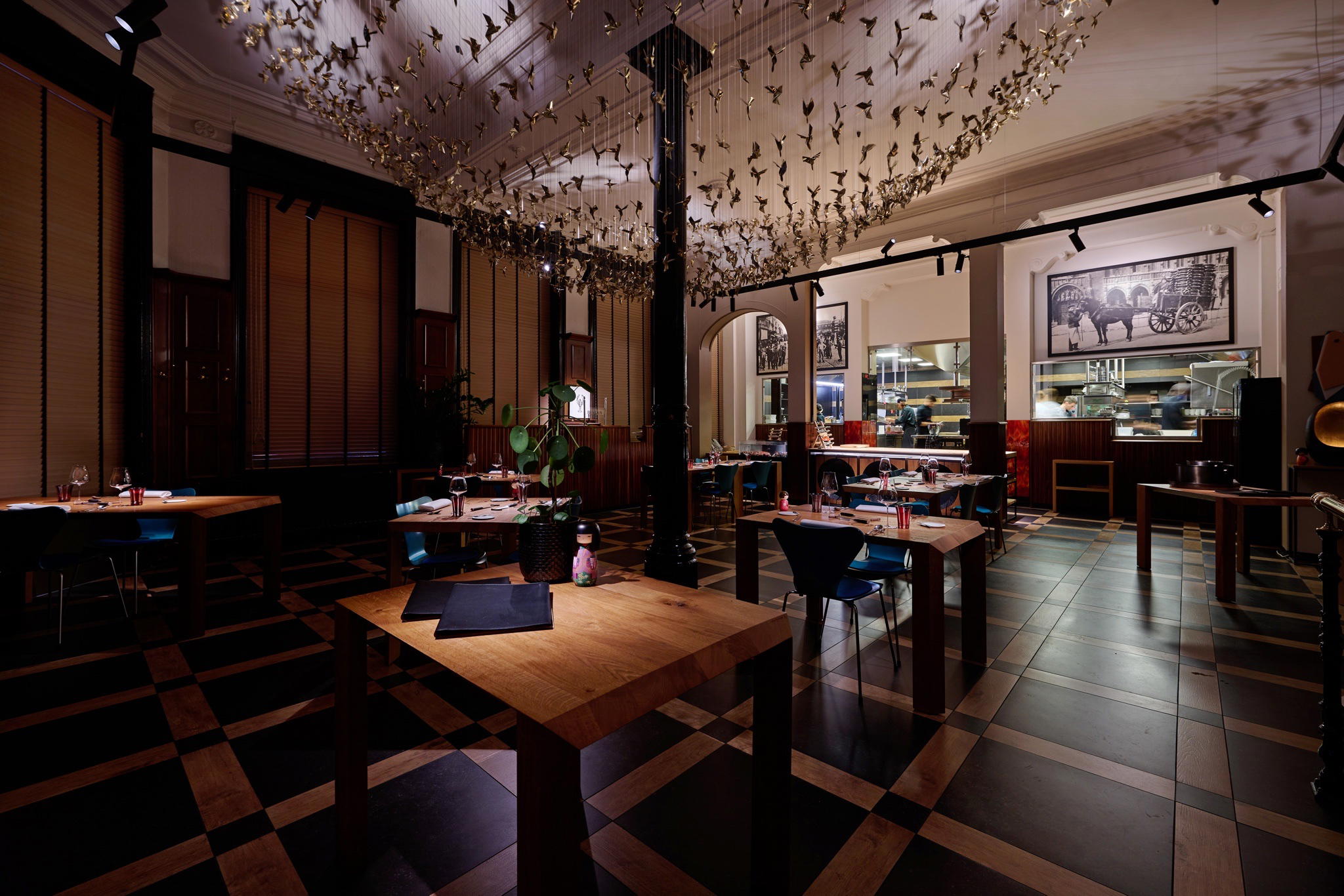
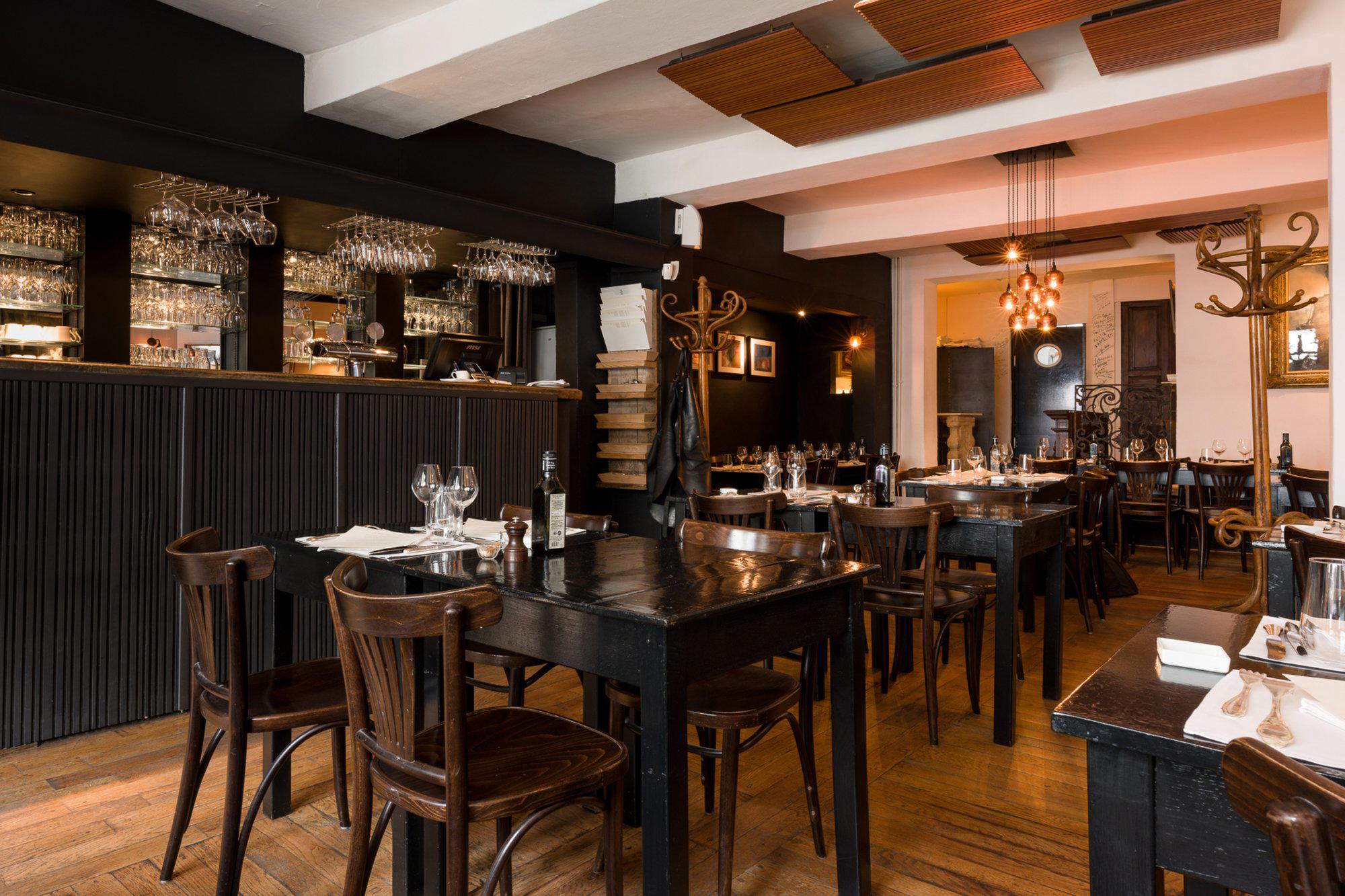
Uncluttered interior with three dining areas adorned in Asian art, a large bonsai, and pastel terracotta color scheme.