A Side Street in the Old Town, and What It Signals Halbärthgasse is the kind of address that takes a second look at a map. The lane sits inside Graz's medieval core, a few minutes from the Hauptplatz but insulated from its foot traffic, where...
Pearl is the En Primeur Club membership app — saves, bookings, and concierge access live there. Same editors, same standards.
- Address
- Halbärthgasse 14, 8010 Graz, Austria
- Phone
- +436767606969
- Website
- sakanagraz.at
- Directions
- Get directions
 Saves & bookings on Pearl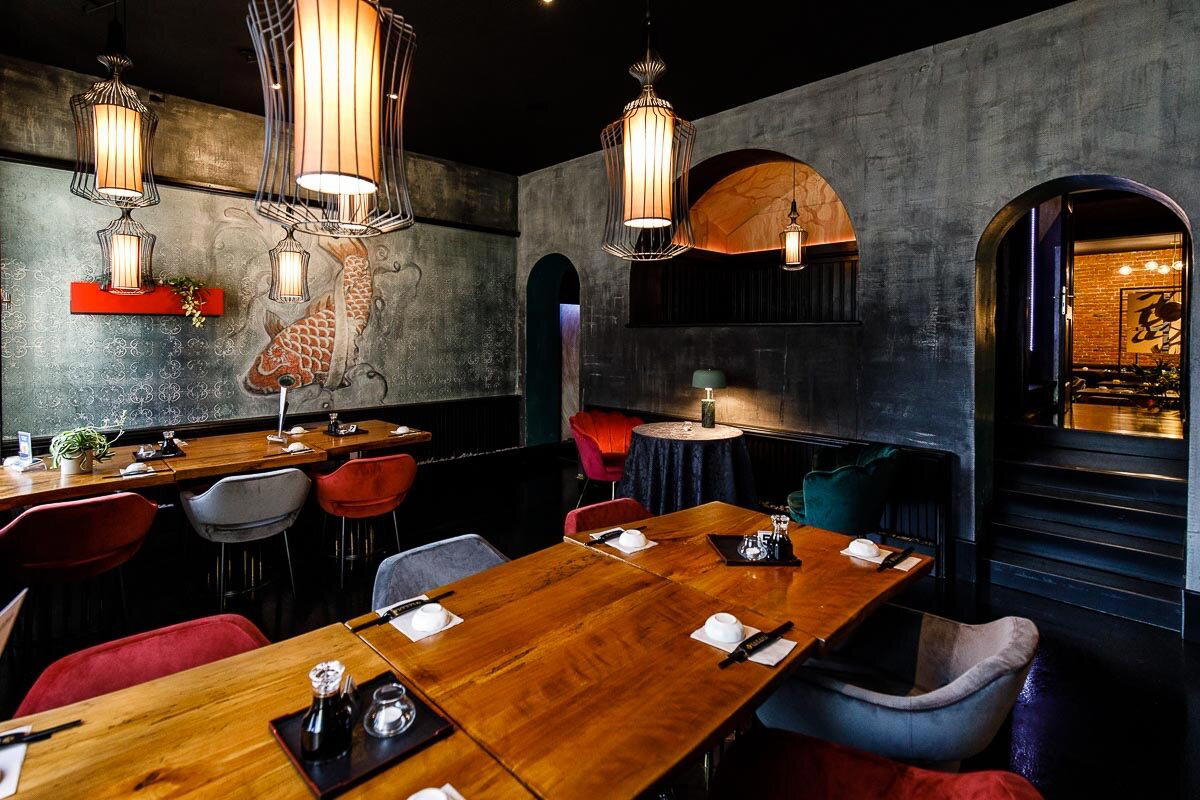
A Side Street in the Old Town, and What It Signals
Halbärthgasse is the kind of address that takes a second look at a map. The lane sits inside Graz's medieval core, a few minutes from the Hauptplatz but insulated from its foot traffic, where the street scale compresses and shopfronts give way to residential doorways and quieter restaurants. In Austrian cities, this geography tends to sort dining into two categories: tourist-facing operations that rely on passing volume, and neighbourhood places that depend on return visits from locals who know where to walk. SAKANA occupies an address in Graz, Austria that points firmly toward the second category.
Graz has developed a restaurant culture that sits slightly outside the national conversation. Vienna captures the critical attention, with counters like Steirereck im Stadtpark setting the benchmark for Austrian fine dining, while Salzburg draws destination visitors to places such as Ikarus. Graz operates differently: the city's dining identity is rooted in Styrian produce and a local population that eats out frequently and with considered preferences. That context shapes what works on a lane like Halbärthgasse.
The Name as an Editorial Clue
SAKANA is the Japanese word for fish. In a city whose dining scene skews toward Styrian meat traditions and regional seasonal cooking, a name that announces a fish-forward or Japanese-influenced direction carries weight as a positioning signal. Across Austria, the handful of restaurants that have built credible programs around Japanese technique or seafood-centred menus tend to occupy a small, specific niche, sitting apart from the broader Wirtshaus tradition that defines much of the country's midrange dining. Internationally, the contrast is instructive: counters like Atomix in New York City demonstrate how much depth a cuisine-specific focus can generate when executed with discipline, while Le Bernardin in New York City remains the reference point for what rigorous seafood cooking looks like at the highest level. SAKANA operates in a different register of scale and ambition, but the name places it in a conversation that those references help frame.
Within Graz specifically, the restaurant's positioning differs from the creative tasting-menu format of Artis, the international scope of Arravané, and the brasserie register of Adelphia. It also reads differently from the castle-adjacent settings of Aiola im Schloss and aiola upstairs, both of which carry the visual theatre of the Schlossberg. SAKANA's address offers none of that theatre. What the Halbärthgasse location offers instead is the kind of anonymity that lets a restaurant's food carry the full argument.
How This Address Functions Day to Day
Old-town lanes in Austrian cities rarely function well as casual walk-in destinations after dark. The foot traffic patterns favour daytime and early evening, and dinner service on a quieter street depends on reservations rather than impulse visits. That dynamic tends to attract a guest profile that has done some research, which in turn shapes the atmosphere at the table level. Dining rooms on streets like Halbärthgasse tend toward the composed and deliberate rather than the spontaneous and noisy, not because of formal house rules, but because the address self-selects for a certain kind of diner.
For visitors to Graz, the practical implication is that SAKANA rewards advance planning. The restaurant is recommended for reservations and serves Modern Japanese Sushi at about $30 per person. The city's older quarter is compact and walkable from most central accommodation, and the lane itself is accessible on foot from the Hauptplatz in under ten minutes. For those building a broader picture of Graz's restaurant options, the full Graz restaurants guide maps the city's dining character across price points and cuisine types.
The Styrian Context and What It Demands
Styria has spent the past two decades building a food-region identity that reaches beyond Austria's borders. The region's pumpkin seed oil, its beef, its wines from the southern slopes, and the broader farm-to-table culture that restaurants like those across the Austrian alpine corridor have helped establish, from Obauer in Werfen to Landhaus Bacher in Mautern an der Donau, have created a dining public with strong opinions about sourcing and seasonality. A restaurant that positions itself around fish and potentially Japanese reference points in this context is making a deliberate choice to operate against grain rather than with it.
That choice tends to produce one of two outcomes in regional cities: a concept that feels forced and tourist-adjacent, or one that fills a genuine gap for a local population that already eats its regional cuisine at home and wants something the city's Wirtshaus culture cannot provide. The address on Halbärthgasse suggests the latter reading, given that a location with low footfall traffic is not where you open a concept aimed at visitors. Comparable niche positioning can be seen across the Austrian alpine restaurant circuit, where places like Kräuterreich by Vitus Winkler in Sankt Veit im Pongau, Griggeler Stuba in Lech, and Gourmetrestaurant Tannenhof in Sankt Anton am Arlberg have each found their footing by serving a specific audience rather than a general one. Döllerer in Golling an der Salzach and Ois in Neufelden represent the same logic at the other end of Austria's geography: niche commitment in a regional setting, executed with enough precision to build a destination audience. Restaurant 141 by Joachim Jaud in Mieming follows a similar pattern.
Planning Your Visit
Halbärthgasse 14 is a direct walk from Graz's central tram stops and from the Jakominiplatz interchange. The address sits in the 8010 postal district, which covers the historic core. Given the lane's low visibility from main thoroughfares, first-time visitors are better served by navigating directly to the address rather than expecting signage to guide them from a distance.
Category Peers
Comparable venues nearby, for context on price, style, and recognition.
| Venue | Cuisine | Price | Notes |
|---|---|---|---|
| SAKANAThis venue — the venue you are viewing | Modern Japanese Sushi | $$$ | Not listed |
| Ramen Makotoya | Authentic Japanese Ramen | $$ | Innere Stadt |
| YAMAMOTO SUSHIBAR | Authentic Japanese Sushi | $$$ | Innere Stadt |
| Yamamoto | Authentic Japanese Sushi & Ramen | $$ | Innere Stadt |
| Kaoo Riverside | Modern Asian All-You-Can-Eat À La Carte | $$ | Innere Stadt |
| Subarashii Pfauengarten | Modern Japanese-Asian Sushi & Bowls | $$ | Innere Stadt |
Continue exploring
More in Graz
Restaurants in Graz
Browse all →
Bars in Graz
Browse all →
Hotels in Graz
Browse all →

At a Glance
- Cozy
- Modern
- Intimate
- Date Night
- Casual Hangout
- Open Kitchen
- Sake Program
- Local Sourcing
Current opening hours
- Monday
- 5–9:30 PM
- Tuesday
- 12–3 PM, 5–10 PM
- Wednesday
- 12–3 PM, 5–10 PM
- Thursday
- 12–3 PM, 5–10 PM
- Friday
- 12–3 PM, 5–10 PM
- Saturday
- 12–3 PM, 5–10 PM
- Sunday
- 12–3 PM, 5–10 PM
Hours can change for holidays and private events. Last verified .
Cozy atmosphere with red, blue, and black accents, featuring an open sushi bar for an intimate dining experience.