sagamiya

Tabelog 100 #33
Our verdict
sagamiya sits in Hakone-Yumoto’s sweet-shop circuit, where station-side omiyage culture overlaps with Western-style cakes and Japanese confections. Its Tabelog 100 Sweets EAST 2023 selection and take-out format make it a useful read on how Hakone turns local travel rituals into portable food, rather than a long sit-down dessert stop.

Pearl is the En Primeur Club membership app, where members save venues, book tables and use the concierge.
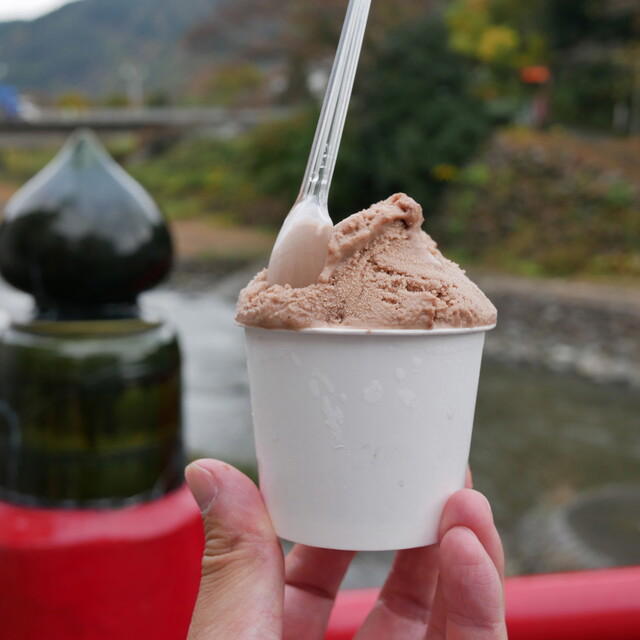
The menu
What to order
- Nuts Vessel (ナッツヴェセル)
- Yama no Brownie (山のブラウニー)
- Casonade Fruit Cake
- Hakone Marron Pie
- Hakone Rusk
Ashigarashimo-Gun’s food rhythm often starts before the ryokan dinner. Around the area, first impressions are paper bags, gift boxes, counter displays, and travelers deciding quickly before a train or shuttle. Sweets are part of the region’s travel economy: edible souvenirs, tea companions, and low-commitment snacks between hot-spring check-in and the ride home. sagamiya belongs to that compact, practical world, where a shop is measured by how cleanly it translates place into something portable.
The context is Ashigarashimo-Gun’s geography. This is not Tokyo pâtisserie culture transplanted wholesale into a resort town, nor Kyoto wagashi formalism with a temple-district pace. The area works faster. Visitors move through the region in short windows, and sweet shops answer with formats suited to trains, family groups, and day-trip itineraries. Western-style sweets, cake, and Japanese traditional sweets sit side by side, showing how resort towns in Japan have absorbed European pastry forms without abandoning omiyage logic.
Ashigarashimo-Gun sweets work because they travel well
Ingredient sourcing is the quiet test here. In a hot-spring region, sweets need enough local or regional identity to feel anchored, but enough shelf and travel discipline to survive a bag, a platform, and a family table later in the day. Ashigarashimo-Gun’s sweet-shop scene often rewards compactness over spectacle: the product must read clearly at the counter, carry cleanly, and make sense as a gift. That differs from a plated dessert room, where drama can depend on temperature, timing, and service.
sagamiya’s recognition in Tabelog 100 Sweets EAST 2023 places it in a curated eastern Japan sweets field, not just a neighborhood convenience bracket. That matters because the category is crowded and regional: bakeries, cake shops, wagashi counters, and hybrid specialists compete for traveler attention. A Tabelog score of 3.67 reinforces a public-review footprint beyond casual foot traffic, while the venue remains firmly in the sweets category. The point is not rarity for its own sake, but consistency in a market where purchases are often made quickly and judged later.
The surrounding Ashigarashimo-Gun circuit helps read the town. Other local dining rooms point to the area’s older tea-house and road culture, while unnamed bakeries and sweets counters show how serious baked goods fit the wider western Kanagawa food map. For a direct sweets comparison, Cha no Chimoto and Chimoto Ekimae doori ten offer useful nearby reference points for gift buying and sweet-shop browsing. That defines sagamiya’s role: accessible, practical, and oriented to sweets rather than a full café ritual.
Western cake, wagashi logic, and the omiyage economy
Japan’s better resort-town confectioners often refuse a strict split between Western and Japanese forms. Cake can behave like omiyage if portioned and packaged correctly; wagashi can compete beside Western sweets if it feels easy for mixed-age groups. That overlap suits Ashigarashimo-Gun, where customers include families, couples, friends, and travelers buying for people not present. A narrow, chef-led dessert concept would be the wrong fit for this travel environment; a broader sweets counter makes more cultural sense.
Price tier shapes expectations. Ashigarashimo-Gun has restaurants and cafés that ask visitors to slow down, but the sweet-shop lane is built for speed, clarity, and repeatable value. The value framing at sagamiya is modest, with listed spending of - JPY 999 - JPY 999 and a dinner budget shown as - JPY 999. Read it as a sweets stop, not a lingering salon or a special-occasion dining room.
The sourcing angle is not only farms or named producers. In Japanese confectionery, it is often how ingredient identity is made stable enough for travel: nut pastes, bean-based sweets, butter-rich cakes, tea-pairing items, and seasonal packaging serve the culture of giving. Choose specific items at the counter rather than pre-script from reputation. Treat the shop as part of an Ashigarashimo-Gun tasting sequence: compare textures, sweetness levels, and packaging logic across several stops instead of turning one purchase into the whole story.
Readers building a wider itinerary can use Our full Ashigarashimo-Gun restaurants guide for the local dining map, then layer in Our full Ashigarashimo-Gun hotels guide for ryokan and resort context. The region’s drinking and specialty-travel side is thinner but still worth scanning through Our full Ashigarashimo-Gun bars guide, Our full Ashigarashimo-Gun wineries guide, and Our full Ashigarashimo-Gun experiences guide. Ashigarashimo-Gun rewards this mapping because meals, baths, rail transfers, and souvenir buying are tightly linked.
How to place it in a wider Japan food itinerary
For travelers moving beyond Ashigarashimo-Gun, compare by format rather than cuisine alone. A specialty sweets stop in a travel town has little in common with destination dining in larger cities, but it teaches how Japanese food culture handles movement. The same itinerary could include seated meals, urban counters, or café stops elsewhere in Japan. Those different occasions show how the country’s food culture shifts between full meals, casual retail, and neighborhood specialization.
The Ashigarashimo-Gun decision is simple: use sagamiya when the day calls for a low-friction sweet stop with credible category recognition, especially if the itinerary already includes a ryokan meal or longer lunch elsewhere. Do not over-plan it as a tasting-menu event. Its value is sharper: a compact example of how Ashigarashimo-Gun packages sweetness for travelers, with enough recognition to justify choosing it over an anonymous sweets purchase.
For readers expanding the map, other Ashigarashimo-Gun dining adds useful local reference points, while out-of-region listings underline the broader point: Japanese food itineraries work better when each stop has a defined job. In Ashigarashimo-Gun, this one’s job is sweets for the road.
Frequently asked questions
Would sagamiya be comfortable with kids?
sagamiya is a sweets venue in Ashigarashimo-Gun, with categories listed as Western-style sweets, cake, and Japanese traditional sweets. The Tabelog 100 Sweets EAST 2023 selection also signals a shop worth planning around.
Is sagamiya better for a quiet night or a lively one?
Neither framing is quite right. sagamiya is best understood as a sweets stop in Ashigarashimo-Gun, not as a late-evening bar or a full-service special-occasion dining room.
Is sagamiya expensive?
Pricing at sagamiya is listed as - JPY 999 - JPY 999 View spending breakdown.
What is sagamiya known for?
sagamiya is known as an Ashigarashimo-Gun sweets venue listed for Western-style sweets, cake, and Japanese traditional sweets, with Tabelog 100 Sweets EAST 2023 recognition.
Snapshot
Comparable venues by cuisine and price in the same metro.
| Venue | Cuisine | Price | Awards | Notes |
|---|---|---|---|---|
| sagamiyaThis venue (the venue you are viewing) | Hakone nut-focused sweets shop | $1–10 | Tabelog 100 #33 | Not listed |
| Salon de the ROSAGE | Lakeside dessert & tea café | $20–30 | Tabelog 100 #7 | Lake Ashi / Motohakone |
| Amazake Chaya | Traditional Hakone teahouse – amazake and mochi | $10–20 | Tabelog 100 #40 | Hakone |
| Takeyabu Hakone ten | Traditional Soba & Japanese Cuisine | $20–30 | Tabelog 100 #34 | Motohakone |
| Watanabe Bakery | Historic Japanese bakery & cafe | $10–20 | Tabelog 100 #3 | Miyanoshita |
| PICOT | Hotel bakery & sweets shop | $10–20 | Tabelog 100 #77 | Miyanoshita |
Recognition history
Dated appearances from independent guides and award organizations, with the underlying list record or original source where available.
Tabelog 100 #33 · No. 33
Tabelog · Tabelog 100 - Sweets - EAST - 2023
Continue exploring
More in Ashigarashimo-Gun
Restaurants in Ashigarashimo-Gun
All restaurants in Ashigarashimo-Gun →
Bars in Ashigarashimo-Gun
Browse all →
Hotels in Ashigarashimo-Gun
All hotels in Ashigarashimo-Gun →
Wineries in Ashigarashimo-Gun
Browse all →
Details
- Cozy
- Classic
- Solo
- Family
- Casual Hangout
- Standalone
- Street Scene
- A La Carte
A small, low-key Hakone Yumoto sweets shop with a classic souvenir-store feel, showcasing neatly arranged baked goods and confections and emphasizing take-home gifts rather than sit-down dining.