Our verdict
Rongcheng occupies a Ballsbridge address on Upper Baggot Street, placing it within Dublin's most established dining corridor. Where the surrounding neighbourhood leans toward Irish-French formality, this address signals a different register — one worth tracking for those following how Asian dining traditions are taking root in the Irish capital.

Pearl is the En Primeur Club membership app — saves, bookings, and concierge access live there. Same editors, same standards.
- Address
- 33 Baggot Street Upper, Ballsbridge, Dublin, D04 N1W9, Ireland
- Phone
- +35315590713
- Hours
- Daily 12–10 PM
- Website
- rongcheng.ie
- Directions
- Get directions
- Booking
- Book on OpenTable
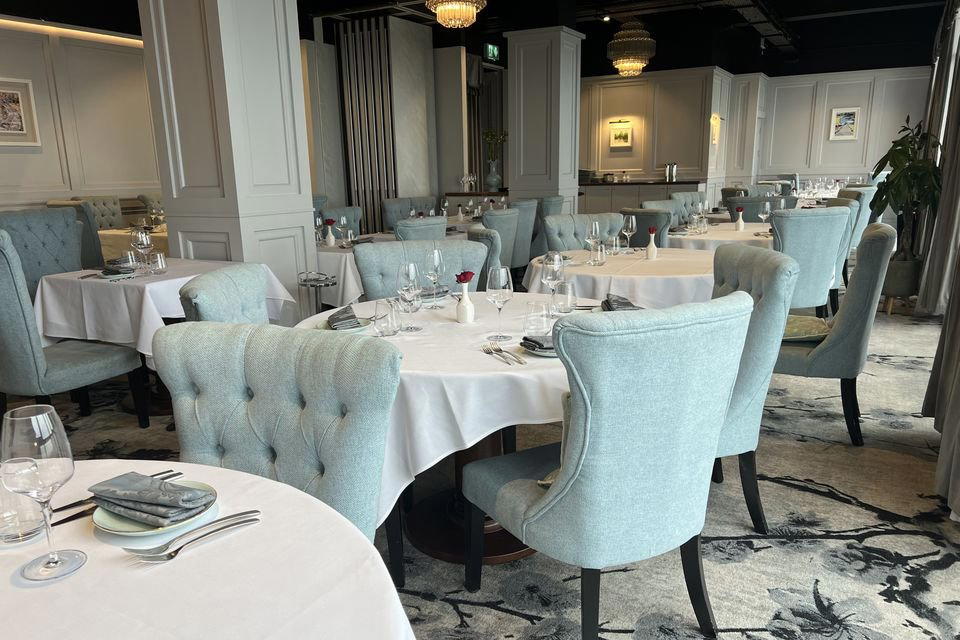
Upper Baggot Street and the Shifting Register of Dublin Dining
Ballsbridge has long functioned as one of Dublin's most settled dining precincts. The stretch of Upper Baggot Street and its immediate surrounds houses restaurants that operate at a measured, deliberate pace — places where the room, the service rhythm, and the menu format signal that the meal itself is the occasion. Patrick Guilbaud, the longest-standing two-star Michelin address in Ireland, established the tone for formal dining in this part of the city decades ago, and the neighbourhood has retained that character. Against that backdrop, any new address on this corridor enters a specific competitive conversation.
Rongcheng, at 33 Baggot Street Upper, positions itself within that conversation. The name and address alone place it in an interesting bracket: Dublin's premium dining scene has historically been dominated by Irish-French traditions and modern Irish tasting formats, with Chapter One by Mickael Viljanen and Glovers Alley anchoring the contemporary end. Asian dining at this address signals either an ambition to operate at a comparable level of formality or a distinct proposition that sits outside the usual peer comparisons. Either way, it is worth understanding on its own terms.
The Ritual of the Meal: Pacing, Format, and What to Expect
In Chinese dining traditions, the structure of the meal carries as much meaning as the food itself. Dishes arrive in a sequence built around balance — texture against texture, temperature against temperature, lighter preparations giving way to richer ones, rather than the linear progression of a Western tasting menu. This is a different kind of pacing, and it rewards a different kind of attention. At restaurants operating in this tradition, the impulse to order individually and eat quickly works against the format. The meal is designed to be shared, and the table is the unit of experience rather than the individual plate.
This distinction matters in Dublin, where the dominant fine dining format, multi-course tasting menus eaten in sequence, has shaped diner expectations for the better part of two decades. Restaurants like Bastible and D'Olier Street operate within that tasting format, and Dublin diners have become fluent in its rhythms. Chinese table dining operates by a different grammar: abundance on the table simultaneously, the expectation that dishes are reached across, tasted in combination, and paced by conversation rather than by the kitchen's send times.
If Rongcheng follows that tradition, the experience asks something of the diner. Come with a group large enough to cover the table properly. Resist the instinct to treat each dish as a standalone course. Let the meal run at its own speed. Those habits, familiar to anyone who has eaten seriously in Hong Kong, Chengdu, or Shanghai, produce a different experience than approaching the meal with tasting-menu expectations.
Where Rongcheng Sits in a Growing Pattern
Dublin's Asian dining scene has developed unevenly. At the accessible end, the city has a reasonable spread of Chinese restaurants concentrated in the city centre and along Parnell Street. At the premium end, the picture has been thinner. The Michelin-starred addresses that have attracted attention in recent years, Liath in Blackrock, Aniar in Galway, Terre in Castlemartyr, have largely worked within modern Irish or modern European traditions. The gap at the premium Asian end has remained largely unfilled.
This mirrors a pattern visible in other mid-sized European cities. Cities like Dublin, with strong restaurant cultures built around a particular national or Franco-European tradition, tend to develop their premium Asian tier later, and sometimes more quietly, than their high-volume casual tier. When premium Asian addresses do arrive in such cities, they often find an audience that is both curious and underprepared, diners who have not encountered this level of the cuisine before and who may need more context than the menu provides. How a restaurant handles that gap, through service approach, menu design, or simply the availability of staff who can explain the format, becomes part of what distinguishes it.
For comparison across different contexts: the Korean dining tradition handled this challenge at Atomix in New York City by building a format that actively teaches diners about the progression and ingredients; the seafood precision of Le Bernardin achieves its effect partly through decades of setting diner expectations. Format literacy, in other words, is something restaurants can build deliberately.
The Ballsbridge Context and Getting There
Upper Baggot Street is within walking distance of the Grand Canal and the DART line, and the address at D04 N1W9 sits at the edge of Ballsbridge proper, close enough to the city centre to be accessible but far enough to carry the neighbourhood's quieter character. The area is well served by Dublin Bus routes running along the Baggot Street corridor, and taxi and rideshare access is direct from anywhere in the city centre. For those arriving from outside Dublin, the address is roughly 30 minutes from Dublin Airport by taxi in normal traffic.
The broader dining geography of this part of the city rewards planning. If Rongcheng is the destination for one meal, the surrounding area offers other options for context: the neighbourhood supports a range of formal and informal restaurants, and the canal walk between Baggot Street and Leeson Street is one of the more pleasant approaches to the area on foot in good weather.
For readers building a wider Irish itinerary, the EP Club's coverage extends beyond Dublin: dede in Baltimore, Bastion in Kinsale, Campagne in Kilkenny, Chestnut in Ballydehob, Homestead Cottage in Doolin, House in Ardmore, and Lady Helen in Thomastown each represent distinct regional dining traditions across the island. The full Dublin restaurants guide covers the city's broader range.
What do critics highlight about Rongcheng?
No published critical reviews or award citations for Rongcheng are currently available in EP Club's records. The address on Upper Baggot Street places it within a corridor that has attracted serious critical attention for other restaurants, and Dublin's food press tends to cover new openings in this part of the city with some attention. Checking recent coverage in Irish food media, the Irish Times restaurant section and publications like Food and Wine Magazine Ireland, is the most reliable route to current critical opinion.
What if I have allergies at Rongcheng?
No specific allergy or dietary accommodation policy is documented for Rongcheng. In the absence of a confirmed website or phone number in current listings, the practical approach is to raise dietary requirements at the time of making a reservation and to confirm again on arrival. Chinese dining formats, which often involve shared dishes and sauces prepared in advance, can present challenges for severe allergies; communicating requirements clearly and early is the more cautious approach at any restaurant operating in this tradition in Dublin.
How does Rongcheng compare to other Asian restaurants at this address level in Dublin?
Dublin has historically had limited representation of Chinese dining at the premium end of the market, with the city's Michelin-recognised and critically regarded addresses concentrated in the modern Irish and Irish-French traditions. Rongcheng's Ballsbridge location places it in the city's most formally oriented dining corridor, suggesting an ambition to operate at a comparable register to its neighbours. For readers tracking how Asian dining traditions are developing across Irish cities and towns, the full Dublin restaurants guide provides the broader context.
The Short List
Comparable venues nearby, for context on price, style, and recognition.
| Venue | Cuisine | Price | Notes |
|---|---|---|---|
| RongchengThis venue — the venue you are viewing | Authentic Sichuan Chinese | $30–50 | Not listed |
| Ka Shing | Chinese Dim Sum | $20–30 | Royal Exchange A, Chinese Dim Sum |
| Hang Dai Chinese | Contemporary Chinese Fusion with Music Venue | $30–50 | Saint Kevin'S, Contemporary Chinese Fusion with Music Venue |
| Hakkahan | Sichuan Chinese | $20–30 | Arran Quay B, Sichuan Chinese |
| Di Luca | Authentic Italian Pasta | $20–30 | Royal Exchange B, Authentic Italian Pasta |
| The Port House | Traditional Spanish Tapas & Pintxos | $30–50 | Royal Exchange A, Traditional Spanish Tapas & Pintxos |
Continue exploring
More in Dublin
Restaurants in Dublin
Browse all →
Bars in Dublin
Browse all →
Hotels in Dublin
Browse all →
Wineries in Dublin
Browse all →
Details
- Elegant
- Scenic
- Date Night
- Waterfront
- Waterfront
- A La Carte
Current opening hours
- Monday
- 12–10 PM
- Tuesday
- 12–10 PM
- Wednesday
- 12–10 PM
- Thursday
- 12–10 PM
- Friday
- 12–10 PM
- Saturday
- 12–10 PM
- Sunday
- 12–10 PM
Hours can change for holidays and private events. Last verified .
Pleasant, quiet ambience in a luxuriously decorated dining room with beautiful ocean views.