Our verdict
On Camden Street Lower, Hang Dai Chinese occupies a corner of Dublin's casual dining scene where the city's appetite for shareable, Chinese-influenced cooking meets a setting with genuine atmosphere. In a city where formal tasting menus dominate the critical conversation, Hang Dai pitches itself at a different register — loud, social, and built around the table rather than the kitchen narrative.

Pearl is the En Primeur Club membership app — saves, bookings, and concierge access live there. Same editors, same standards.
- Address
- 20 Camden Street Lower, Saint Kevin's, Dublin, D02 T275, Ireland
- Phone
- +353 1 545 8888
- Hours
- Mon–Fri 5–10 PMSat 2–10 PMSun 4–9:30 PM
- Website
- hangdaichinese.com
- Directions
- Get directions
- Booking
- Book on SevenRooms
The menu
What to order
- Woodfired Roast Skeaghanore Duck
- Beijing Duck Pancakes
- Szechuan Kung Po Chicken
- Squid Ink Noodles
Camden Street and the Case for Chinese Cooking in Dublin
Dublin's restaurant conversation is often dominated by the tasting-menu tier — the kind of formal, course-by-course progression you find at Chapter One by Mickael Viljanen or Patrick Guilbaud. But Camden Street Lower tells a different story about the city's appetite. This stretch of the Southside — running south from St Stephen's Green through a corridor of independent restaurants, late-night bars, and neighbourhood fixtures, has long functioned as the more informal counterweight to Dublin's fine-dining belt. Hang Dai Chinese sits at 20 Camden Street Lower, and its position on this street is not incidental. The neighbourhood rewards restaurants that understand the social, gather-around-the-table format, and Chinese cooking, at its finest, is structurally built for exactly that.
Chinese restaurants in Ireland have historically operated at two speeds: the large, multi-function banquet hall serving Cantonese-influenced dishes to diaspora communities, and the quick-service takeaway. The space between those two formats, the kind of convivial, design-conscious Chinese dining room that has become standard in London, Sydney, or New York, has been slower to develop in Dublin. That gap is precisely what Hang Dai addresses, and it places the restaurant in a category with few direct local peers.
What to Expect Before You Arrive
The editorial angle here matters: Hang Dai is the kind of place where your experience is shaped before you walk through the door. Its reputation on Camden Street has made it a consistent draw, and tables during peak service fill quickly. For anyone accustomed to the booking logistics of a Michelin-tracked room like Glovers Alley or Bastible, the process at Hang Dai is less ceremonial, but the demand is real. Arriving without a reservation on a Friday or Saturday evening carries genuine risk. Planning ahead is the practical default, not a precaution.
Camden Street is accessible by multiple Dublin Bus routes from the city centre, and the walk from St Stephen's Green takes under fifteen minutes. There is no dedicated parking attached to the address, which is consistent with most of this part of the Southside. The surrounding area is well-served by bike lanes, and Hang Dai draws the kind of neighbourhood crowd that tends to arrive on foot or by public transport rather than by car. This is relevant context for planning: Camden Street at weekend dinner service is busy at street level, and the energy of the area is part of the visit.
The Format and Why It Works
In cities where Chinese cooking has moved into the premium casual tier, think the format that has made restaurants like Lazy Bear in San Francisco influential in reshaping how Americans think about communal dining, the key structural shift is away from individual plating toward the shared table. Hang Dai operates in that spirit. The format rewards groups, encourages ordering across categories, and resists the solitary, composed-plate experience that dominates the tasting-menu tier. This is Chinese dining as a social architecture, which is closer to how the cuisine functions in its reference cultures than the adapted, westernised formats that long characterised Chinese restaurants in Ireland.
For solo diners or couples, this framing matters. Hang Dai is not a venue optimised for a quiet dinner for two in the way that a counter-style restaurant might be. It is loud, communal, and structured around shared plates. That is a feature rather than a limitation, but it shapes what kind of evening you are booking.
Where Hang Dai Sits in Dublin's Wider Scene
Dublin's dining scene has expanded considerably in range and ambition over the past decade. The city now hosts Michelin-starred rooms, a growing slate of neighbourhood bistros with serious cooking, and an increasingly confident cohort of chefs drawing on non-European culinary traditions. Liath in Blackrock and dede in Baltimore represent the kind of chef-driven ambition that has reshaped how Ireland is perceived internationally. Hang Dai occupies a different coordinate on that map, less concerned with critical positioning, more focused on delivering a specific, repeatable experience that the city was short of.
The comparison set here is not Aniar in Galway or Campagne in Kilkenny, both of which operate within the European fine-dining grammar. It is the broader category of restaurants in Dublin that have successfully introduced non-Irish culinary formats to a city that was historically narrower in its reference points. On that basis, Hang Dai has earned its status on Camden Street, not through awards architecture, but through sustained relevance in a neighbourhood that tests restaurants hard.
For those building a broader Irish dining itinerary, the contrast is instructive. A meal at The Oak Room in Adare or Terre in Castlemartyr represents one version of what Ireland does well, place-rooted, formally structured, ingredient-led. Hang Dai represents something else: a city confident enough to make room for cooking that doesn't anchor itself to Irish produce or European technique. Both things can be true of a maturing food city at the same time.
Our full Dublin restaurants guide maps the full range, from neighbourhood fixtures to formal dining rooms, and is the practical starting point for building a multi-night itinerary in the city. Additional reference points worth noting for contrast include Bastion in Kinsale, Chestnut in Ballydehob, Homestead Cottage in Doolin, and The Morrison Room in Maynooth, each occupying a distinct tier and register within the Irish scene. For high-end seafood as a point of international calibration, Le Bernardin in New York City and D'Olier Street in Dublin itself both illustrate how seriously the tasting-menu format takes sourcing as a narrative anchor, a different philosophy from Hang Dai's, and a useful counterpoint.
Planning Your Visit
20 Camden Street Lower is the address, and it is direct to reach from anywhere in the city centre. Booking ahead is the consistent recommendation, particularly Thursday through Saturday. The surrounding Camden Street area has a wide range of bars and late-night options, which makes Hang Dai a natural anchor point for an evening that extends beyond dinner. The restaurant's format and neighbourhood position make it a practical early-evening choice before the street's later-night activity picks up, though it functions equally well as the main event.
Frequently asked questions
How do I find Hang Dai Chinese?
Hang Dai Chinese is located at 20 Camden Street Lower, Saint Kevin's, Dublin, D02 T275, Ireland, Dublin.
How does Hang Dai Chinese fit into Dublin's Camden Street dining scene?
Camden Street has become one of Dublin's more competitive dining corridors, with a concentration of independently run restaurants competing on food quality rather than footfall. Hang Dai occupies a distinct position by bringing Chinese cooking into that conversation at a register the street hadn't previously hosted. For diners working through Dublin's neighbourhood restaurant circuit, the address at 20 Camden Street Lower sits within easy reach of the city centre.
What dish is Hang Dai Chinese famous for?
Based on the editorial framing, Hang Dai's reputation is built on the overall approach to Chinese cooking within Dublin's premium casual tier rather than a single headline plate. Booking in advance is the safest way to explore the current menu on arrival at 20 Camden Street Lower.
Should I book Hang Dai Chinese in advance?
Yes. Hang Dai's reputation on Camden Street has made walk-in availability unreliable, particularly on weekend evenings. Booking ahead is the consistent recommendation across editorial coverage of the venue. Arriving without a reservation, especially at peak hours, carries a real risk of being turned away.
What is Hang Dai Chinese known for?
Hang Dai is known for repositioning Chinese cooking within Dublin's dining conversation, placing it alongside the city's premium casual tier rather than treating it as a budget-default category. Located at 20 Camden Street Lower in Dublin, it draws a crowd that follows the food rather than a specific occasion. Its consistency has made it one of the more discussed Chinese restaurants in the city.
Quick Comparison
Comparable venues nearby, for context on price, style, and recognition.
| Venue | Cuisine | Price | Notes |
|---|---|---|---|
| Hang Dai ChineseThis venue — the venue you are viewing | Contemporary Chinese Fusion with Music Venue | $30–50 | Not listed |
| Mama Yo | Modern Chinese | $30–50 | Royal Exchange A |
| La Strada by Manifesto | Authentic Italian Wood-Fired Pizzeria | $20–30 | Royal Exchange A |
| Dada | Authentic Moroccan Moorish Cuisine | $30–50 | Royal Exchange B |
| Kathmandu Kitchen | Nepalese and Indian | $20–30 | Royal Exchange A |
| Hakkahan | Sichuan Chinese | $20–30 | Arran Quay B |
Continue exploring
More in Dublin
Restaurants in Dublin
Browse all →
Bars in Dublin
Browse all →
Hotels in Dublin
Browse all →
Wineries in Dublin
Browse all →
Details
- Lively
- Modern
- Trendy
- Whimsical
- Group Dining
- Casual Hangout
- After Work
- Celebration
- Live Music
- Open Kitchen
- Design Destination
- Craft Cocktails
- Beer Program
- Local Sourcing
- Zero Waste
- Family Style
- A La Carte
- Craft Cocktails
- Beer
- Wine
- Vegetarian Friendly
- Vegan Options
- Gluten Free Options
Current opening hours
- Monday
- 5–10 PM
- Tuesday
- 5–10 PM
- Wednesday
- 5–10 PM
- Thursday
- 5–10 PM
- Friday
- 5–10 PM
- Saturday
- 2–10 PM
- Sunday
- 4–9:30 PM
Hours can change for holidays and private events. Last verified .
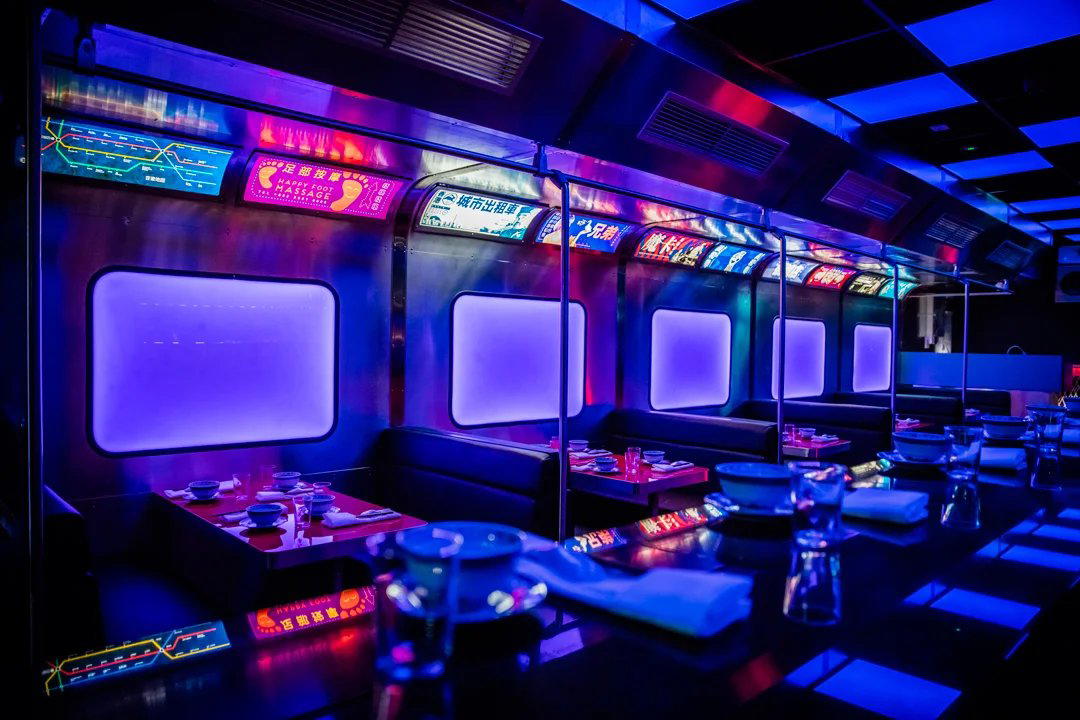
Futuristic retro aesthetic inspired by Blade Runner and John Carpenter films with a custom-built sound system, acoustically treated room, and energetic music venue atmosphere; comfortable leather booths and bar seating with loud tunes throughout service.