

1 Michelin Star · Star Wine List
Our verdict
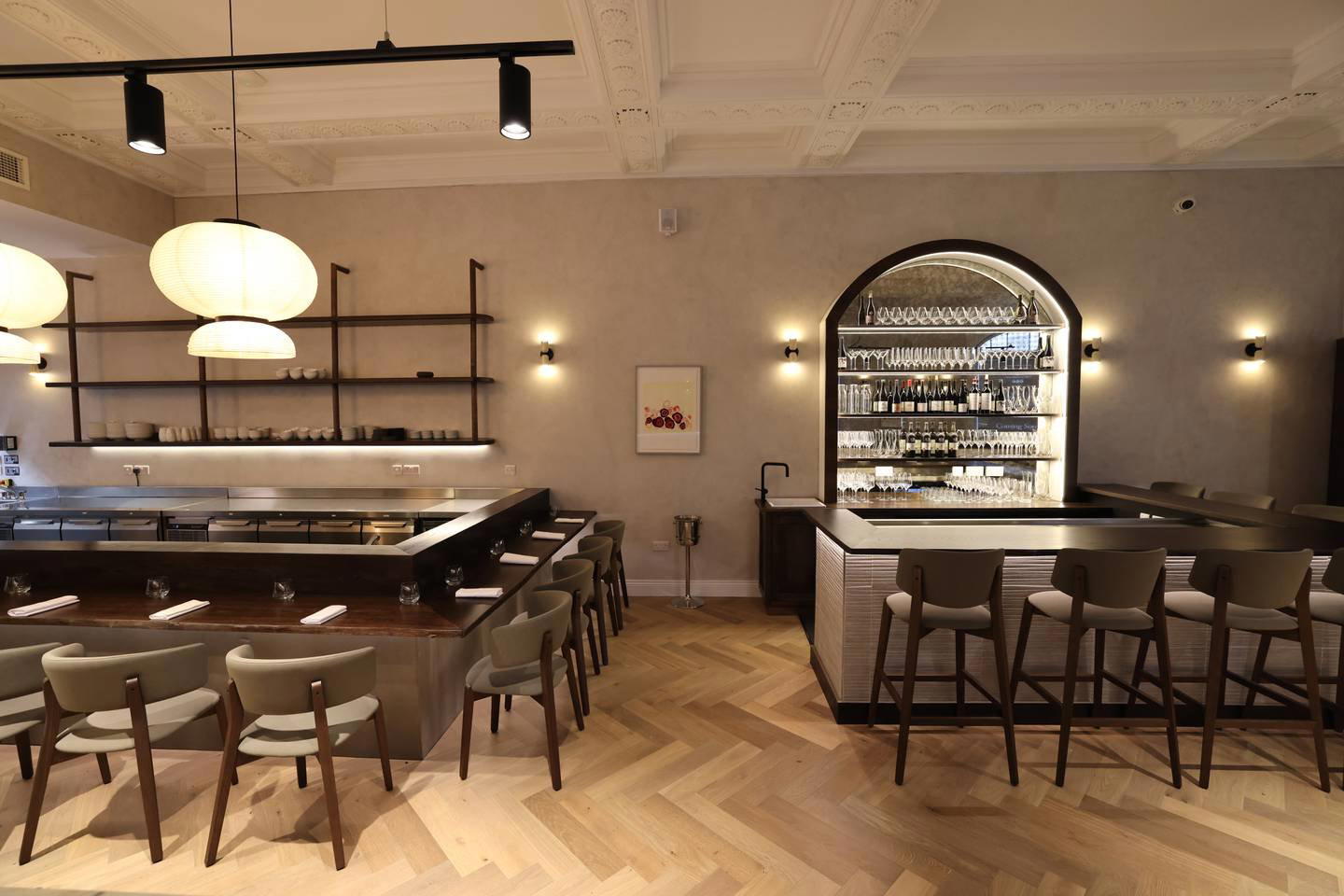
Among Dublin's Michelin-starred restaurants, D'Olier Street operates at the intersection of architectural heritage and technically driven modern cuisine. A surprise menu format, counter seating overlooking the kitchen, and a wine program recognized five times by Star Wine List, including the number-one ranking in 2023 and 2024, place it firmly in the city's upper tier of contemporary dining.

Pearl is the En Primeur Club membership app, where members save venues, book tables and use the concierge.
The menu
What to order
- 13-course surprise tasting menu
- Seeded pretzel with smoked Gubbeen butter
- Foie gras custard
- Hamachi crudo
- Mango riz au lait
A Restored Landmark in the Middle of Dublin's Dining Conversation
D'Olier Street sits at an address that carries weight before you even step inside. The building's high ceilings and original plasterwork, the kind of architectural detail that takes generations to accumulate, frame a contemporary dining room whose ambition sits in deliberate contrast with its surroundings. That tension between inherited structure and forward-looking cooking is not incidental. It is, in many ways, the operating logic of where Dublin's fine dining scene has arrived in the 2020s: a city increasingly confident enough to let old fabric hold new ideas.
Dublin's Michelin-starred tier has grown more varied over the past decade. It now runs from the French-classical formality of Chapter One by Mickael Viljanen and the two-starred institutional weight of Patrick Guilbaud, through to more ingredient-led modern formats at Glovers Alley and Variety Jones. D'Olier Street operates at the technically ambitious end of that spectrum, alongside one-starred peers like Bastible, while occupying a distinct niche defined by its surprise menu format and its unusual wine program depth. For readers exploring the full range of the city's serious restaurants, our full Dublin restaurants guide maps the current field.
What the Awards Actually Signal
The critical reception around D'Olier Street is unusually concentrated for a restaurant of its age. A Michelin star arrived in the 2024 guide, the primary industry signal for cooking that merits a detour, but the wine recognition is arguably the more distinctive part of the record. Star Wine List ranked D'Olier Street first in Ireland in both 2023 and 2024, and awarded it the White Star designation, a distinction given to restaurants with programs that go substantially beyond what the kitchen requires. In a city where wine seriousness has historically lagged behind the cooking ambition, that ranking reflects something meaningful about how this particular room has chosen to compete.
Across Ireland's broader fine dining circuit, wine program depth of this kind is concentrated in relatively few addresses. Liath in Blackrock, Aniar in Galway, and dede in Baltimore each operate at the serious end of their respective markets, but the combination of Michelin recognition and consecutive national wine rankings in a single Dublin address makes D'Olier Street's critical positioning fairly specific. It is not simply a Michelin-starred restaurant with a decent list; it is a restaurant where the wine program is treated as a co-equal part of the proposition.
The Surprise Menu Format and What It Demands
Surprise menus, where the diner arrives without advance knowledge of the dishes, function as a deliberate rebalancing of the dining contract. The kitchen takes on full creative responsibility, and the guest surrenders the low-level negotiation that printed menus encourage. This format has become more common in the upper tiers of European fine dining over the past fifteen years, appearing in rooms like Frantzén in Stockholm and its international outpost FZN by Björn Frantzén in Dubai, where the kitchen's seasonal and sourcing decisions are treated as part of the experience rather than a constraint on it.
At D'Olier Street, the surprise format is executed by an Australian-born chef whose training spans multiple culinary traditions. Michelin's own description of the cooking references global techniques and a high level of craft in each dish, with a halibut preparation involving spiced bouillabaisse, courgette and tarragon cited as representative. That combination, Mediterranean technique, northern European ingredient sensibility, executed with precision, reflects a broader pattern in how internationally trained chefs are shaping modern cuisine in mid-sized European capitals. The cooking is not rooted in Irish terroir in the way that, say, allta or Aniar in Galway foregrounds provenance, but it is powered by high-quality sourcing and disciplined technique.
Counter seats are available for diners who want direct sightlines into the kitchen. In the context of a surprise menu, this is not merely a theatrical option, it provides the frame that a printed menu would otherwise supply. Watching how dishes are assembled replaces reading what they contain. The format rewards diners who treat the counter as the intended vantage point rather than a second-leading alternative to table seating.
Wine Pairings and the Case for Letting the Room Lead
In practical terms, this makes the wine pairing option at D'Olier Street a more defensible choice than at many starred restaurants where the list is serviceable but not a point of differentiation.
For the broader context of how wine programs are being built across the Irish fine dining scene, the comparison with Terre in Castlemartyr, Bastion in Kinsale, and Campagne in Kilkenny is useful. Each of those addresses has built serious wine credentials outside Dublin, but the capital's concentration of population and international visitors means the stakes, and the available spending, are different. D'Olier Street's rankings suggest it has used that context to build a program that competes nationally rather than just locally.
Planning a Visit
D'Olier Street operates a limited weekly schedule that shapes how to approach a booking. The restaurant is closed on Mondays, Tuesdays, and Sundays. Wednesday and Thursday service runs from 5 PM to 11:30 PM, dinner only. Friday and Saturday extend to include lunch from 12 PM to 4 PM, with dinner again from 5 PM to 11:30 PM. This means five service windows across the week, with the Friday and Saturday lunch sittings representing the only daytime access points. For visitors with flexible travel dates, Friday lunch offers a useful combination of natural light in a high-ceilinged room and a less time-pressured pace than weekend dinner.
The price range sits at the upper end of Dublin's restaurant market, in the same bracket as Bastible and Glovers Alley and below only Patrick Guilbaud at the two-starred tier. At this price point, the wine pairing carries more relative weight in the total spend than at a mid-market restaurant, which makes the quality of the list a more consequential factor in the value calculation. Reservations should be made well in advance given the limited weekly capacity implied by the operating hours. The address is on D'Olier Street in central Dublin, placing it within easy reach of the city's main transport corridors and within walking distance of several of the hotels covered in our full Dublin hotels guide.
Readers building a broader Dublin trip around food and drink should cross-reference our full Dublin bars guide for pre- or post-dinner options, and our full Dublin experiences guide for context on what else the city's cultural calendar offers alongside its restaurant scene. For those extending beyond Dublin into the broader Irish dining circuit, the cluster of one-starred addresses at Amy Austin within the city, combined with the regional destinations noted above, represents a coherent multi-day itinerary for anyone serious about the current state of Irish cooking. There is also a growing natural wine scene worth exploring via our full Dublin wineries guide.
What Do Regulars Order at D'Olier Street?
The surprise menu format at D'Olier Street means there is no fixed dish to request, the kitchen determines the sequence entirely. What regulars consistently report, based on public reviews and Michelin's own citation, is that the wine pairing is treated as the default rather than an optional add-on. With a program ranked first in Ireland in 2023 and 2024 by Star Wine List, the pairing is not a supplementary product but a core part of how the meal is designed to be experienced. Counter seats are the other preference among returning visitors, providing direct visibility into the kitchen and a level of engagement with the cooking process that standard table seating does not replicate. Given the surprise format, this sightline functions as the primary way to follow the logic of what the kitchen is doing in real time.
A Lean Comparison
A quick peer reference to anchor this venue in its category.
| Venue | Cuisine | Price | Awards | Notes |
|---|---|---|---|---|
| D'Olier StreetThis venue (the venue you are viewing) | Modern Michelin-Starred Fine Dining | Not listed | 1 Michelin Star · Star Wine List | Not listed |
| Patrick Guilbaud | Modern French Fine Dining | $150–200 | 2 Michelin Stars · La Liste Top Restaurants | Irish - French, Modern French |
| Bastible | Modern Irish | $100–150 | 1 Michelin Star · The Sunday Times Ireland’s 100 Best Restaurants | Modern Cuisine |
| Host | Modern Italian | $50–100 | Michelin Plate | Nordic, Modern Cuisine |
| mae | Modern Irish Fine Dining | $50–100 | Michelin Plate · The Sunday Times Ireland’s 100 Best Restaurants | Southern, Modern Cuisine |
| Matsukawa | Authentic Edomae Omakase | $100–150 | Michelin Plate · La Liste Top Restaurants | Kaiseki, Japanese |
Recognition history
Dated appearances from independent guides and award organizations, with the underlying list record or original source where available.
Michelin 1 Star
Michelin
Star Wine List
Star Wine List
Full recognition history (6 entries)
Michelin 1 Star
Michelin
Michelin 1 Star
Michelin
Star Wine List
Star Wine List
Star Wine List
Star Wine List
Continue exploring
More in Dublin
Restaurants in Dublin
All restaurants in Dublin →
Bars in Dublin
All bars in Dublin →
Details
- Modern
- Sophisticated
- Intimate
- Energetic
- Special Occasion
- Date Night
- Business Dinner
- Group Dining
- Chefs Counter
- Open Kitchen
- Design Destination
- Standalone
- Zero Proof
- Sommelier Led
- Local Sourcing
- Street Scene
- Tasting Menu
- Wine
- Vegetarian Friendly
- Gluten Free Options
- Allergy Accommodating
Current opening hours
- Monday
- Closed
- Tuesday
- Closed
- Wednesday
- 5–11:30 PM
- Thursday
- 5–11:30 PM
- Friday
- 12–4 PM, 5–11:30 PM
- Saturday
- 12–4 PM, 5–11:30 PM
- Sunday
- Closed
Hours can change for holidays and private events. Hours as of .
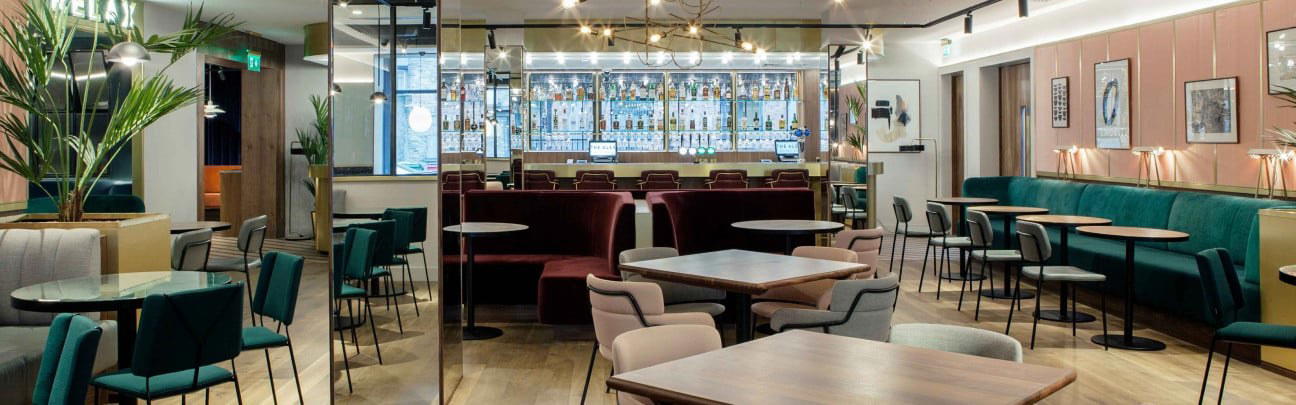
Modern, warm, and welcoming fine dining with a fun rather than fussy tone; the chef’s counter adds a lively view of the kitchen action.