2 Michelin Stars · La Liste Top Restaurants · Falstaff Restaurant - 97 Falstaff Points
Our verdict
Dublin's longest-standing two-Michelin-star restaurant has occupied its Georgian townhouse on Merrion Street since 1981, anchoring Ireland's fine dining conversation across four decades. The cooking is French at its core, shaped by premium Irish produce and a restrained modernity that the La Liste rankings, 93 points in 2026, consistently validate. Opinionated About Dining placed it 21st among Classical European restaurants in 2025.

Pearl is the En Primeur Club membership app, where members save venues, book tables and use the concierge.
The menu
What to order
- Lobster Ravioli
- Roast Challans Duck
- Assiette Gourmande au Chocolat
A Georgian Address That Set the Standard
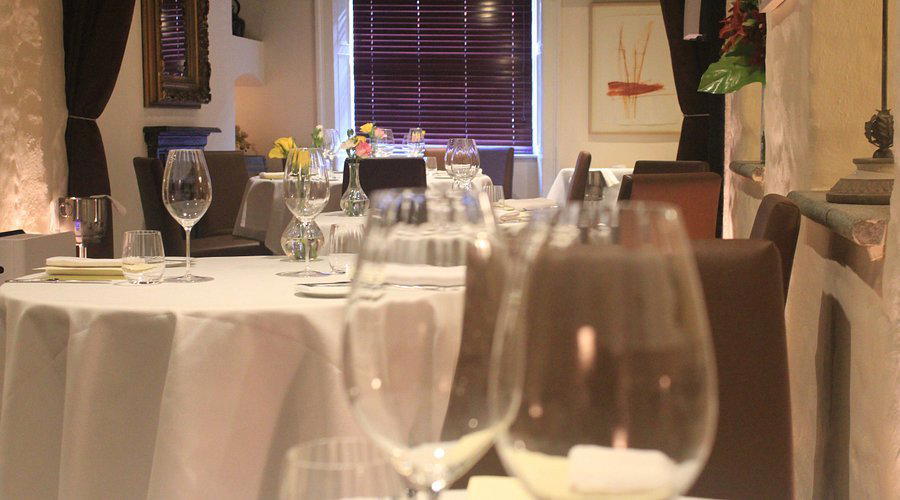
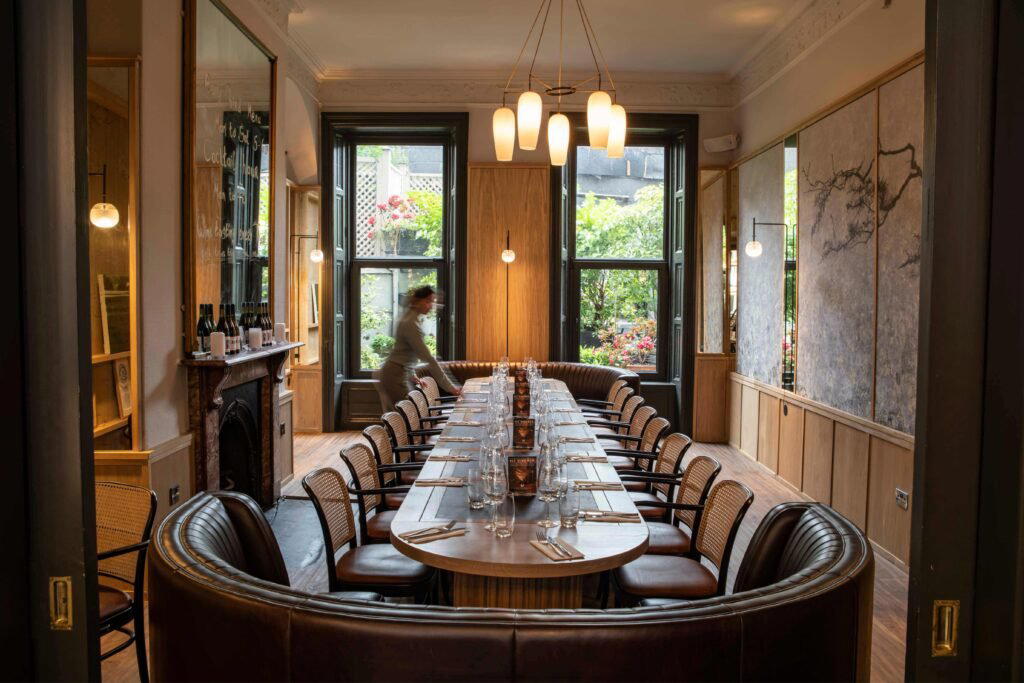
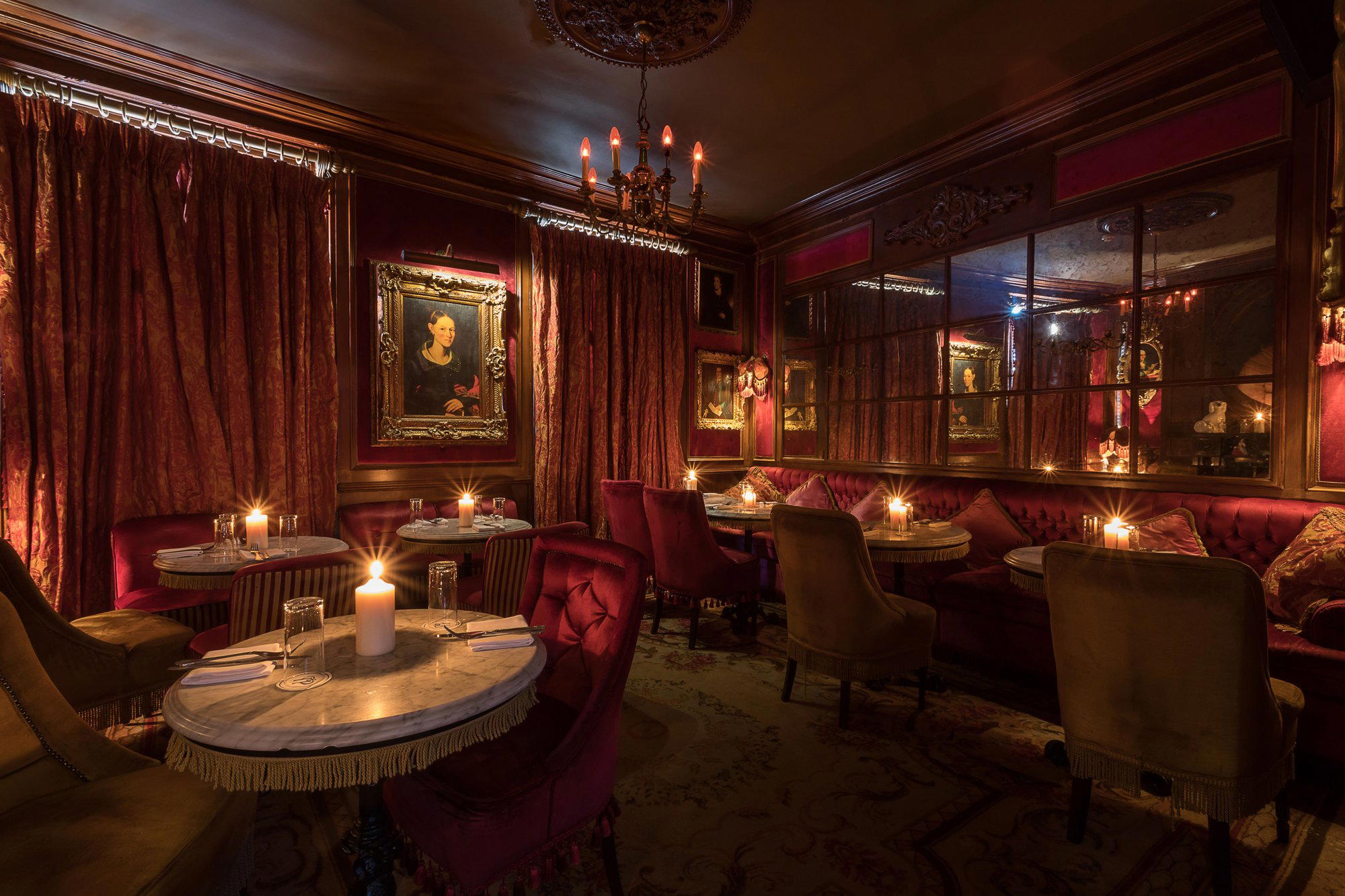
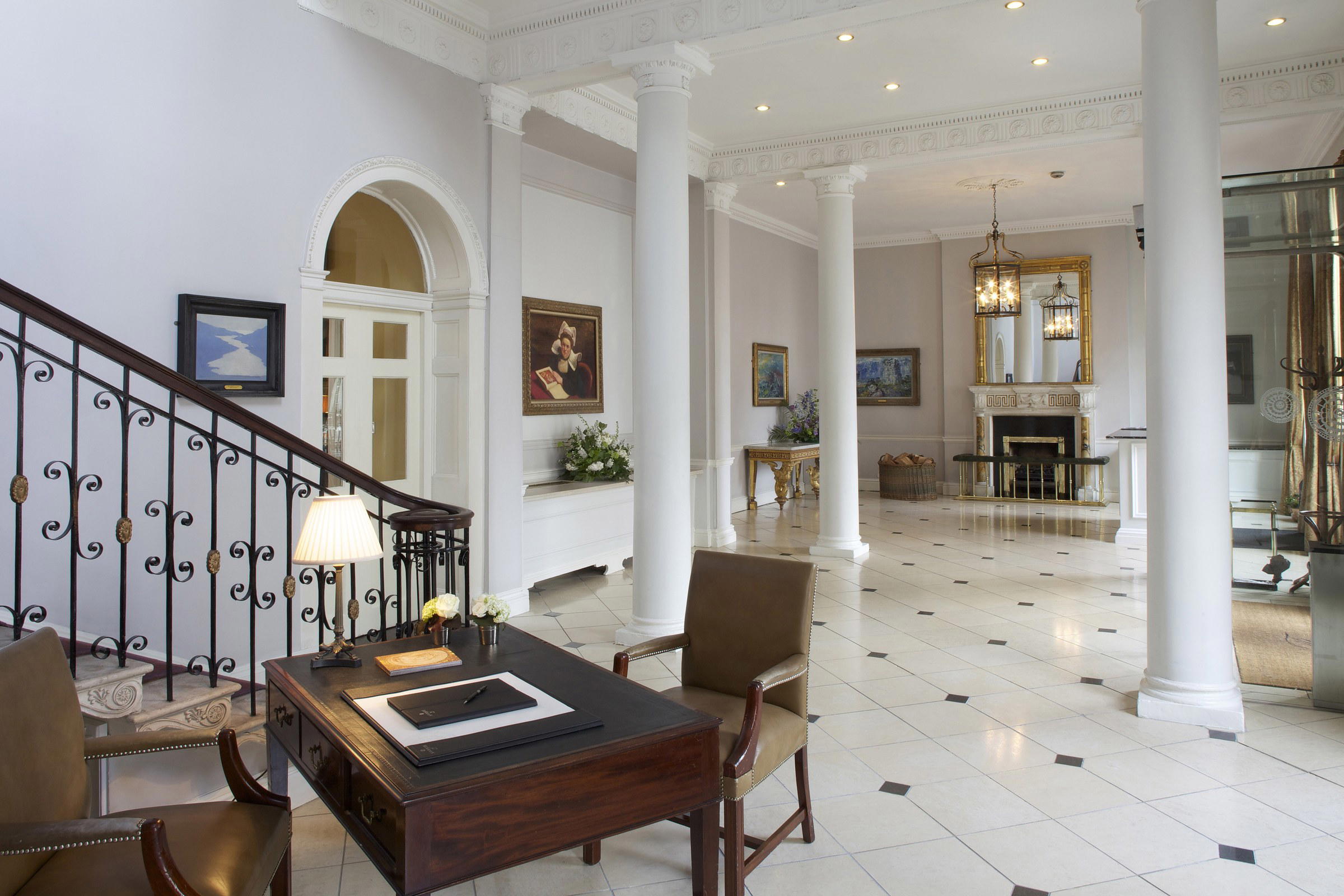
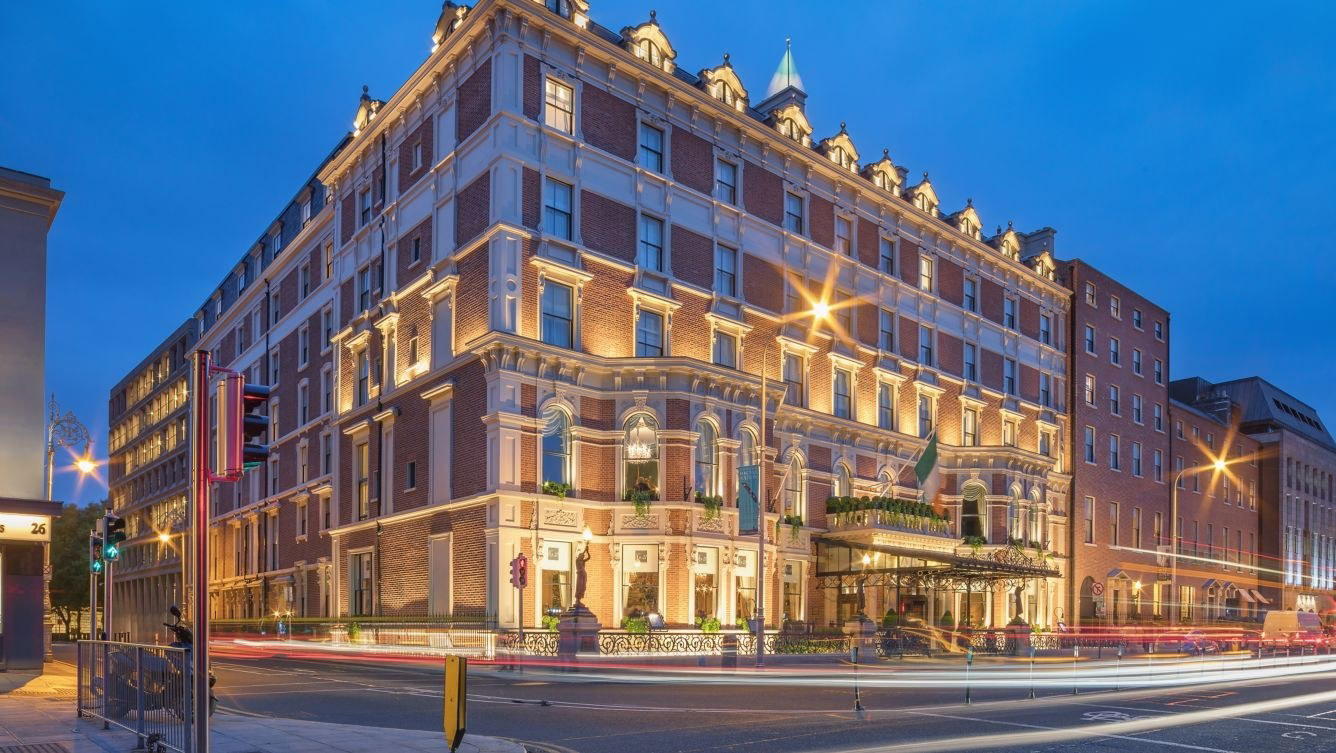
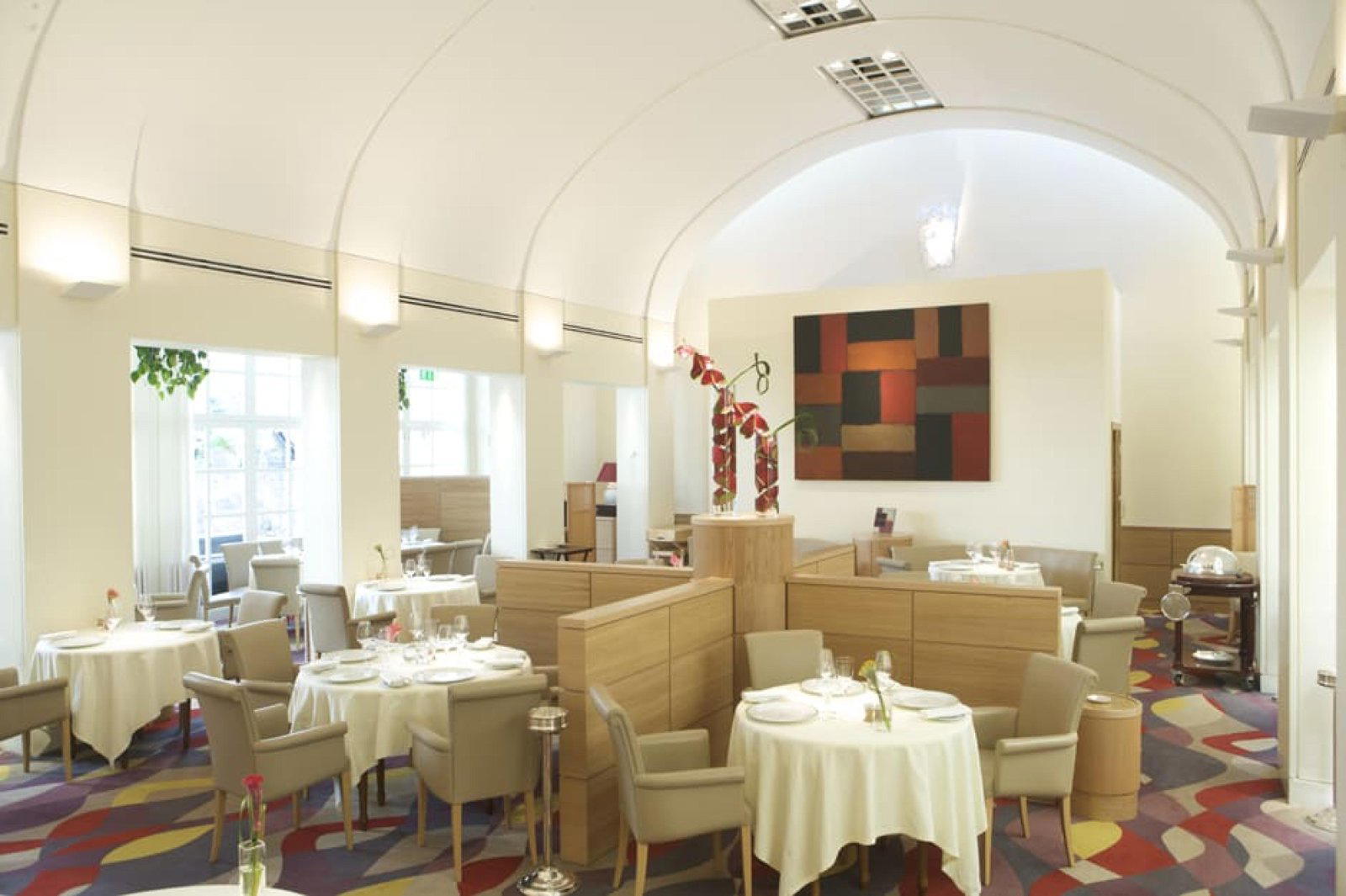
The physical approach matters at Patrick Guilbaud. The Merrion Street address puts the restaurant inside one of Dublin's most composed Georgian streetscapes, and the townhouse entrance carries the understatement that defines the best of that tradition: nothing announces itself aggressively, yet everything signals intent. Inside, a gilt barrel ceiling and hand-crafted marquetry establish a register that belongs firmly to the grand European dining room tradition rather than the stripped-back, bare-table aesthetic that has defined so much of Dublin's modern restaurant boom. This is a room built for occasion, and it has been receiving occasions since 1981.
That longevity is its own credential. In a city where restaurant cycles have shortened and the fine dining conversation has fragmented across a wider range of formats and neighbourhoods, Patrick Guilbaud has remained the benchmark against which other Irish formal restaurants are measured. Its two Michelin stars, held across at least the 2023, 2024, and 2025 guides, represent the highest sustained recognition in the country. The 2026 La Liste ranking of 93 points and Opinionated About Dining's placement at 21st among Classical European restaurants in 2025 (up from 23rd in both 2023 and 2024) confirm that the assessment is consistent across multiple independent evaluation frameworks, not a single guide's preference.
The Institution and the Tradition It Represents
The grand French dining room as a format has a specific set of obligations: sustained service standards, a kitchen discipline that does not chase trends, and the kind of wine program and floor operation that only comes with institutional depth. Patrick Guilbaud sits squarely inside that tradition. The cooking is described, across multiple award citations, as French at heart, but the modernity is restrained rather than demonstrative. This is not a kitchen performing its Frenchness through tableside theatrics or archival recreation; it operates with the quiet confidence of a house that has already made its case and continues to make it year after year.
For context, Dublin's wider fine dining scene has developed considerably in the decade since the post-2008 austerity period forced a reset. Chapter One by Mickael Viljanen and Glovers Alley have each earned Michelin recognition and expanded the city's ambitions. Bastible and Variety Jones operate at the same price tier with a more casual register, while D'Olier Street has added a different kind of modern cuisine ambition to the city's offer. None of that activity has displaced Patrick Guilbaud from the best of the formal hierarchy. It remains the reference point, the address where the institution logic of European grand dining has been most consistently maintained on Irish soil.
That institutional character extends beyond the kitchen. The service model at a two-star restaurant of this age and format operates with the kind of floor intelligence that comes from staff continuity rather than training manuals alone. The expectation is that a table at Patrick Guilbaud involves the full theatre of the formal French service tradition: structured pacing, a brigade with clear roles, and a dining room that never rushes a table without instruction to do so.
Irish Produce Inside a French Framework
The tension between French culinary architecture and Irish ingredient excellence has been one of the defining conversations in Irish fine dining for thirty years, and Patrick Guilbaud has been at its centre for most of that period. The kitchen's approach, as documented across its award citations, is to work with Irish ingredients that are described as luxurious, produce from a country with serious natural advantages in dairy, seafood, and grass-fed meat, within a French structural framework that imposes discipline on those raw materials.
The result sits in a specific peer category: not the Irish-identity-forward cooking that has emerged from places like Aniar in Galway or Liath in Blackrock, and not the traditional French classical cooking that treats local produce as an afterthought. Patrick Guilbaud operates in the middle register: the French grammar is intact, the Irish vocabulary is the substance. It is a synthesis that was genuinely novel in 1981 and has had enough time to become its own tradition.
Across Ireland, a number of kitchens are now working variations on this synthesis. Terre in Castlemartyr, Bastion in Kinsale, Campagne in Kilkenny, and dede in Baltimore each draw on the same fundamental premise, that French technique applied to Irish produce produces a distinctive cuisine, but at different price points, scales, and registers. Patrick Guilbaud is where that premise has been proven at the highest level over the longest period.
The classical finishes matter here. The baba flambé, prepared tableside with the guest's choice of rum, is specifically cited in La Liste's assessment as an example of the restaurant's commitment to classical technique as a form of hospitality rather than nostalgia. In an era when dessert formats have trended heavily toward the architectural and the avant-garde, a confident house flambé represents a deliberate position: the kitchen is not interested in novelty for its own sake.
How Patrick Guilbaud Sits Against International Peers
The Opinionated About Dining Classical in Europe ranking is worth examining as a calibration tool. For an Irish restaurant to achieve that position is a function of sustained consistency rather than a single strong year.
For international visitors using Patrick Guilbaud as a reference point, the comparable logic runs as follows: this is a two-star house with multi-decade credentials, classical French orientation, and specific Irish ingredient character. The relevant comparisons are not Dublin-local but European-wide. Visitors arriving from cities with deep fine dining scenes, such as those familiar with Le Bernardin in New York City or the tasting menu discipline of Atomix, will find a kitchen operating with comparable seriousness, at a price point that reflects the full formal experience.
Planning a Visit
Patrick Guilbaud operates Tuesday through Saturday, with lunch service running from 12:30 to 2pm Tuesday through Friday and 1 to 3pm on Saturday. Dinner runs from 7 to 9pm Tuesday through Friday and 7 to 10pm on Saturday. The restaurant is closed Sunday and Monday. The Saturday evening window is the longest service of the week and the natural choice for visitors who want the full formal dining room experience without the time pressure of a midweek lunch. At the €€€€ price range, this sits at the ceiling of Dublin dining costs, consistent with its two-Michelin-star positioning. Those planning a wider Dublin stay will find context in our full Dublin restaurants guide, our full Dublin hotels guide, our full Dublin bars guide, our full Dublin wineries guide, and our full Dublin experiences guide. The Merrion Street address places the restaurant in Dublin 2, within easy reach of the city's Georgian core and close to several of the better hotel properties in the area.
Frequently asked questions
Would Patrick Guilbaud be comfortable with kids?
Patrick Guilbaud operates within a formal Georgian townhouse setting and holds 2 Michelin stars, which sets the tone for who the room is designed around. The kitchen serves tasting-level French cuisine across a short Tuesday-to-Saturday window, and the dining room runs at a measured, unhurried pace. Younger children are unlikely to find the format engaging, and the atmosphere is calibrated for adults seeking sustained table focus. Older teenagers accustomed to formal dining would fare better.
Is Patrick Guilbaud formal or casual?
Patrick Guilbaud is among the most formal dining rooms in Ireland. The room features a gilt barrel ceiling and hand-crafted marquetry inside a Georgian townhouse on Merrion Street, and the service framework reflects four decades of 2-Michelin-star operation since 1981. La Liste placed it at 93 points in 2026, positioning it alongside classical European restaurants that maintain strict dress and conduct expectations. Treat it as you would a comparable address in Paris or London.
Does Patrick Guilbaud have a Michelin star or similar recognition?
Patrick Guilbaud has received recognition including: La Liste Top Restaurants (2026): 93pts; This iconic restaurant has been thriving since 1981, thanks to both the eponymous chef and the exceptional team he has around him. It sits hidden away within a Georgian townhouse and oozes sumptuousne….
What's the must-try dish at Patrick Guilbaud?
The baba flambé, finished tableside with a choice of rum, is the one dish that La Liste specifically calls out as a defining close to the meal, describing it as an inviting, classical way to finish. It sits within a menu where French technique frames premium Irish produce, with flavours described as bold yet well-balanced. Beyond that, specific dishes rotate with the kitchen's direction and are not publicly listed, so the counter-service staff are the right source for current highlights on the day.
Peers You’d Cross-Shop
| Venue | Cuisine | Price | Awards | Notes |
|---|---|---|---|---|
| Patrick GuilbaudThis venue (the venue you are viewing) | Modern French Fine Dining | $150–200 | 2 Michelin Stars · La Liste Top Restaurants | Not listed |
| Bastible | Modern Irish | $100–150 | 1 Michelin Star · The Sunday Times Ireland’s 100 Best Restaurants | Modern Cuisine |
| Host | Modern Italian | $50–100 | Michelin Plate | Nordic, Modern Cuisine |
| mae | Modern Irish Fine Dining | $50–100 | Michelin Plate · The Sunday Times Ireland’s 100 Best Restaurants | Southern, Modern Cuisine |
| Matsukawa | Authentic Edomae Omakase | $100–150 | Michelin Plate · La Liste Top Restaurants | Kaiseki, Japanese |
| One Pico | Modern French with Irish Produce | $50–100 | Michelin Plate · Star Wine List | New American, Modern French |
Recognition history
Dated appearances from independent guides and award organizations, with the underlying list record or original source where available.
Michelin 2 Stars
Michelin
La Liste Top Restaurants
La Liste
Falstaff Restaurant - 97 Falstaff Points
Falstaff
Opinionated About Dining Classical in Europe Ranked #23
Opinionated About Dining
Full recognition history (10 entries)
La Liste Top Restaurants
La Liste
Michelin 2 Stars
Michelin
Opinionated About Dining Classical in Europe Ranked #21
Opinionated About Dining
Michelin 2 Stars
Michelin
Opinionated About Dining Classical in Europe Ranked #23
Opinionated About Dining
Opinionated About Dining Classical in Europe Ranked #23
Opinionated About Dining