
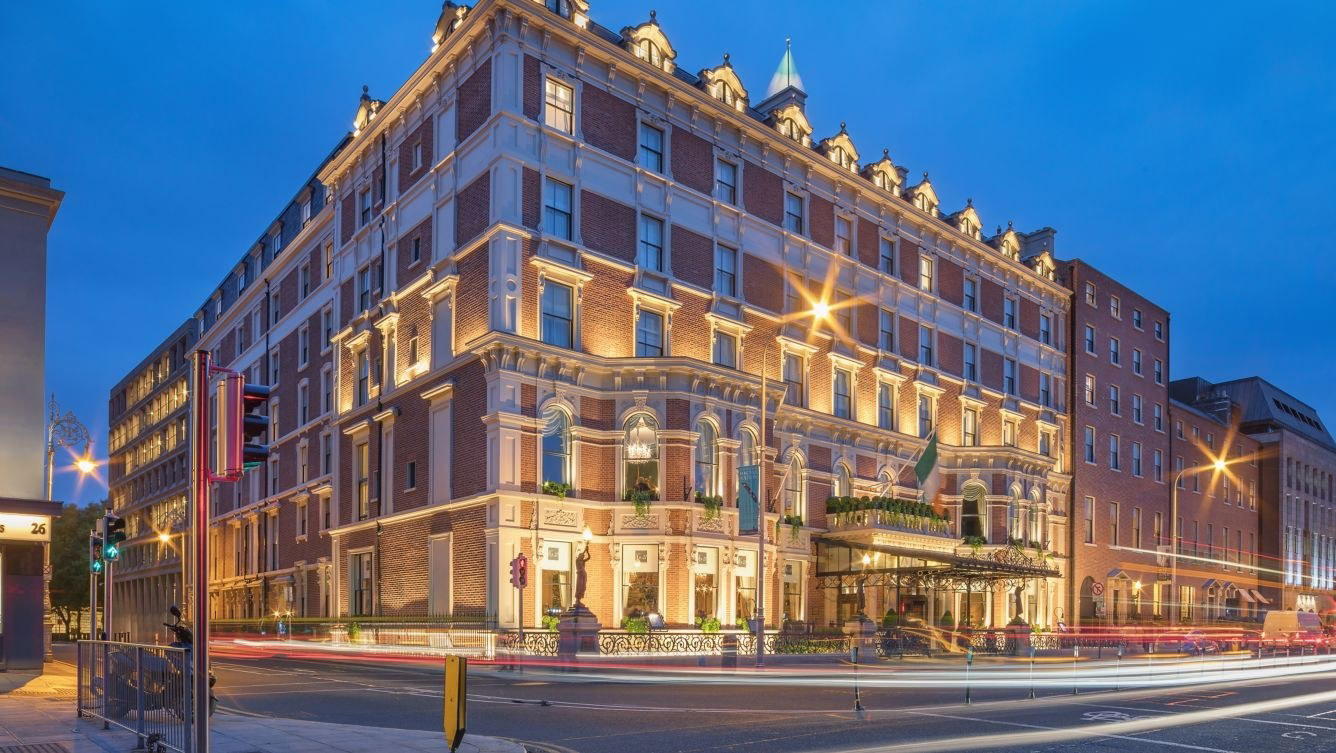
On the second floor of The Fitzwilliam Hotel, overlooking St Stephen's Green, Glovers Alley holds a Michelin star for cooking that pairs classical discipline with deliberate creative tension. Chef Andy McFadden's menu works through bold flavour combinations and precise technique, set against a room of 1930s-inflected softness. It occupies the upper tier of Dublin's fine-dining bracket at €€€€ pricing.
Pearl is the En Primeur Club membership app — saves, bookings, and concierge access live there. Same editors, same standards.
- Address
- 128 St Stephen's Green, Dublin 2, D02 HE18, Ireland
- Phone
- +353 1 244 0733
- Website
- gloversalley.ie
- Directions
- Get directions
 Saves & bookings on Pearl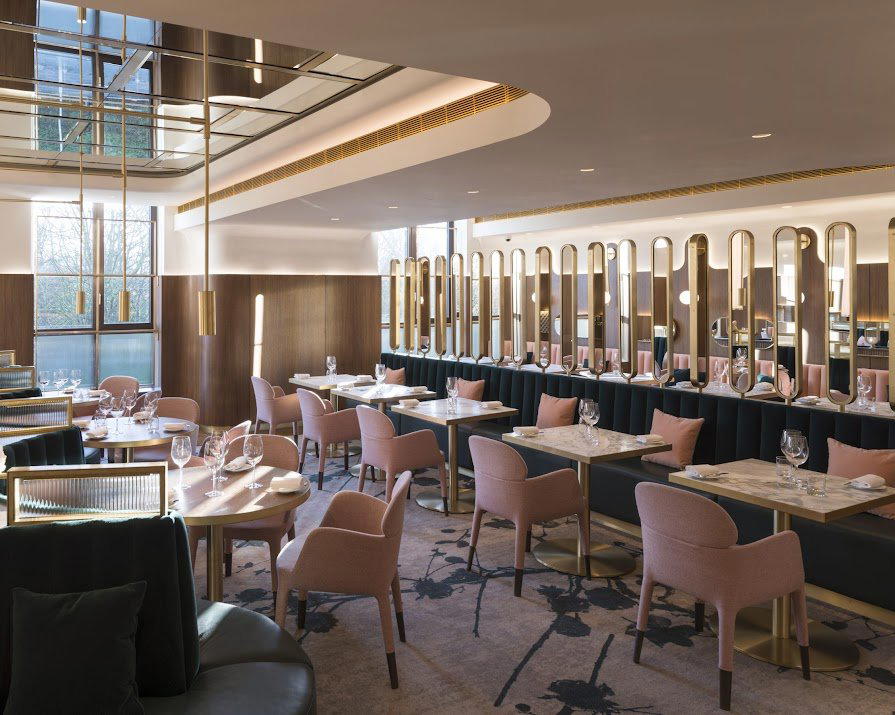
A Room Above the Green
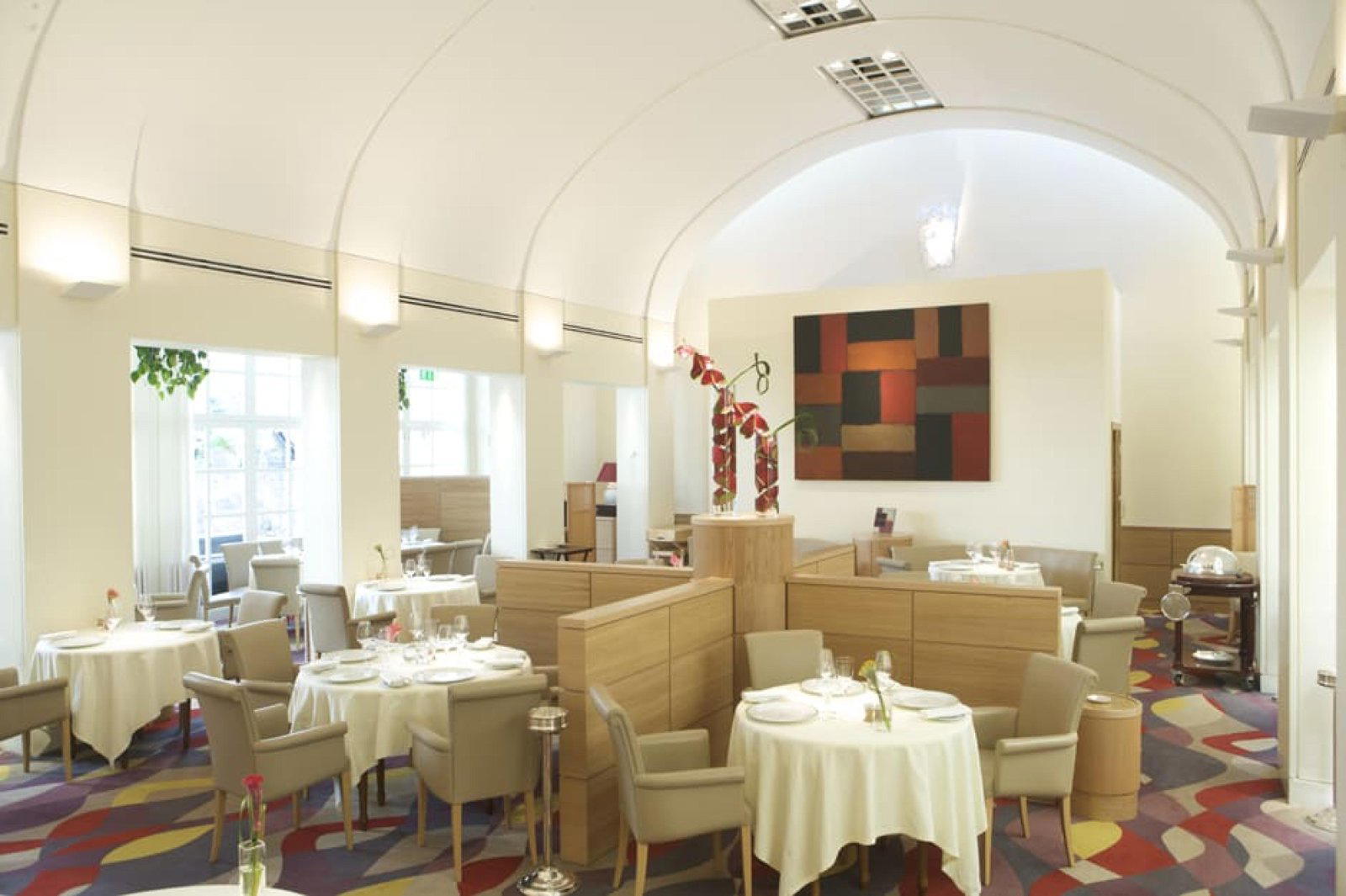
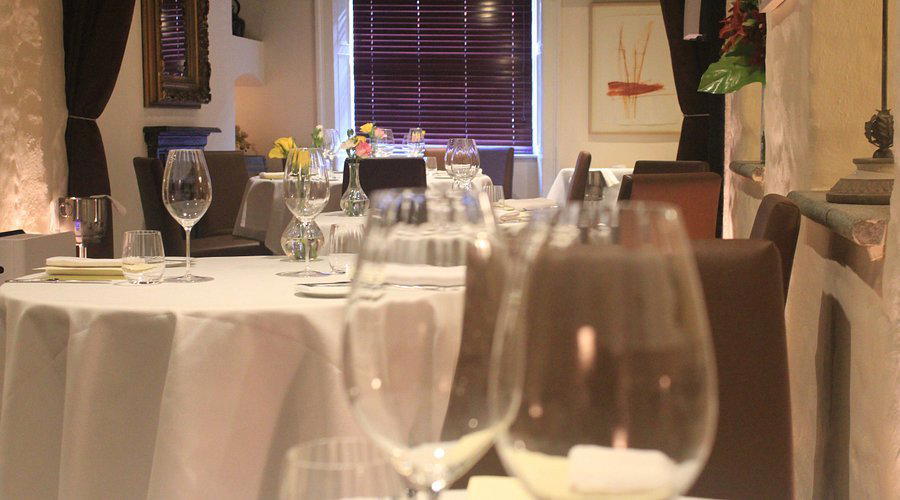
Glovers Alley is a one-Michelin-star restaurant in Dublin, serving modern French-Irish fine dining at 128 St Stephen's Green, D02 HE18. The room works in contrast to what arrives on the plate. Pink and green hues, soft floral arrangements, and 1930s-inflected detailing give the space a gentleness that the cooking immediately pushes back against. Andy McFadden's food is characterised by boldness in flavour and texture, deploying classical technique to amplify rather than smooth over. The tension between the composed room and the assertive cooking is not incidental, it defines the register of a meal here.
Dublin's fine-dining tier has contracted and clarified over the past decade. Glovers Alley, awarded one Michelin star in 2024, sits in the upper price band at €€€ and positions itself alongside the likes of Chapter One by Mickael Viljanen and Patrick Guilbaud, the latter holding two stars and anchoring the French-classical end of the spectrum. Glovers Alley occupies a slightly different territory: modern European with a willingness to step outside the expected, using classical foundations as a jumping-off point rather than an endpoint.
What McFadden's Kitchen Actually Does
Modern cuisine in a hotel dining room carries its own set of expectations and pressures. The format tends to attract guests who want reassurance alongside ambition, which can pull kitchens toward the polished centre. What distinguishes the Michelin assessors' interest in Glovers Alley is precisely that McFadden resists that pull. The cooking is described as putting subtle creative twists on the classics, a phrasing that undersells the confidence involved. A mini pastilla of squab pigeon is a direct reference to the North African pastilla tradition, bringing pastry technique and spice logic into a fine-dining European frame. An île flottante with forced rhubarb takes a dessert that is essentially a test of lightness and restraint and charges it with a sharp seasonal note. These are not decorative flourishes. They indicate a kitchen with a clear sense of where the dish has come from and a deliberate view of where it should go.
The emphasis on artful presentation alongside skilful preparation signals a kitchen that understands the visual grammar of this price tier without allowing plating to become the point. At €€€€, dishes must justify themselves through eating, not photography. The Michelin star recognition in 2024 suggests that assessors found the execution consistent enough to hold up across multiple visits, the standard applied at this level is repeatability as much as peak performance.
For comparison within Ireland's broader Michelin-starred tier, Liath in Blackrock and Aniar in Galway represent different approaches to creative modern cooking anchored in Irish produce. dede in Baltimore and Bastion in Kinsale push toward more regional expression, while Campagne in Kilkenny and Terre in Castlemartyr extend the starred map beyond the capital. Within Dublin itself, allta and Variety Jones represent contrasting tonal registers at lower price points, while Amy Austin and D'Olier Street fill mid-tier roles in the city's increasingly layered dining map. The restaurant's hotel-dining context places it in a specific sub-tier: a destination restaurant that also absorbs hotel guests, requiring the kitchen to perform across a wider range of occasions than a standalone room typically manages.
The Wine Program in Context
Hotel restaurants at this price tier in European cities have historically maintained wine lists that lean on depth over curation, large by-the-bottle selections anchored by recognisable appellations, assembled to satisfy a broad hotel clientele rather than to make an argument. The more interesting development across starred hotel dining rooms over the past few years has been a move toward genuine cellar curation: lists that reflect the kitchen's flavour profile, that include grower Champagnes alongside prestige cuvées, that treat natural and low-intervention wines as a category rather than a footnote.
For the restaurant, the cooking's flavour boldness and classical French structural logic create a fairly clear set of demands on the wine program. Dishes built on pigeon, game, and assertive seasoning want either structured Burgundy, northern Rhône, or old-world bottles with sufficient texture to hold against the kitchen. The île flottante and forced rhubarb register suggests the list needs whites and dessert options with enough acid to remain interesting against the sweet-tart dynamic of the food. The 1930s room aesthetic and the French culinary inheritance both point toward a cellar with Bordeaux and classic Burgundy at its spine.
At the €€€€ price point, the wine list is effectively part of the value proposition. Guests spending at this level in a Michelin-starred room in Dublin are generally not ordering by the glass and moving on. The list becomes part of the occasion's arithmetic, and how that program is curated, whether it reads as a buyer's cellar or a distribution catalogue, shapes the experience as materially as the plating. For those whose primary interest is cellar depth and sommelier dialogue, the comparison set in Dublin at this tier is limited: Patrick Guilbaud's list has decades of accumulation behind it; the newer starred rooms are still building. The restaurant's position within the Fitzwilliam Hotel's resources gives it structural advantages in cellar investment that standalone restaurants at the same price point rarely have.
For readers whose interest runs toward wine-forward destinations across Europe, it is worth noting the different register offered by Frantzén in Stockholm or FZN by Björn Frantzén in Dubai, both operating at the upper end of the modern tasting-menu tier where wine programs are integral to the menu architecture, not supplementary to it.
Reservations, Hours, and Practical Notes
The restaurant operates on a closed Monday and Sunday schedule, with lunch service running Wednesday through Saturday from 12:30 to 2:00 PM and dinner Tuesday through Saturday from 6:00 to 9:00 PM. The Tuesday dinner-only slot makes the beginning of the week the quietest access point, though at a one-star room on St Stephen's Green, midweek dinner slots at peak times benefit from advance planning. The lunch service on weekdays offers a different rhythm to the evening format and tends to attract a business and local clientele rather than the destination-dining crowd that fills Friday and Saturday evenings.
The address at 128 St Stephen's Green places the restaurant directly on Dublin's most recognisable central park, within walking distance of Grafton Street and well-served by public transport.6 across 377 ratings, a number that at this tier suggests consistent satisfaction rather than polarised reaction.
What Regulars Order
The dishes that appear most often in Michelin documentation for the restaurant point toward two reliable reference points: the squab pigeon pastilla, which represents the kitchen's willingness to work across culinary traditions rather than stay within a single European framework, and the île flottante with forced rhubarb, which shows the pastry side of the kitchen operating at a similarly considered level. At a restaurant where the cooking is described as putting creative twists on classics, these two dishes function as anchors, the pigeon demonstrating the savoury register and the île flottante showing how the dessert course handles the same ambition. Regulars returning to the restaurant are likely tracking what rotates around those signatures rather than expecting the menu to stay fixed. The use of seasonal forced rhubarb as a reference note confirms that the kitchen builds around availability and season, which at this price tier is a baseline expectation rather than a distinguishing claim, but it does mean the menu presents differently across the year.
What It’s Closest To
Comparable venues nearby, for context on price, style, and recognition.
| Venue | Cuisine | Price | Awards | Notes |
|---|---|---|---|---|
| Glovers AlleyThis venue — the venue you are viewing | Modern French-Irish Fine Dining | $$$ | Michelin 1 Star | Not listed |
| Dax | Classical French Fine Dining | $$$ | Michelin Plate | Mansion House B |
| D'Olier Street | Innovative | $$$$ | Michelin 1 Star | Mansion House A |
| Variety Jones | Modern Irish Fine Dining | $$$$ | Michelin 1 Star | Merchants Quay B |
| Pichet | Modern French Bistro | $$$ | Bib Gourmand | Royal Exchange A |
| Bastible | Modern Irish | $$$ | Michelin 1 Star | Wood Quay B |
Recognition history
Dated appearances from independent guides and award organizations, with the underlying list record or original source where available.
Michelin 1 Star
Michelin
Michelin 1 Star
Michelin
Michelin 1 Star
Michelin
Continue exploring
More in Dublin
Restaurants in Dublin
Browse all →
Bars in Dublin
Browse all →

Hotels in Dublin
Browse all →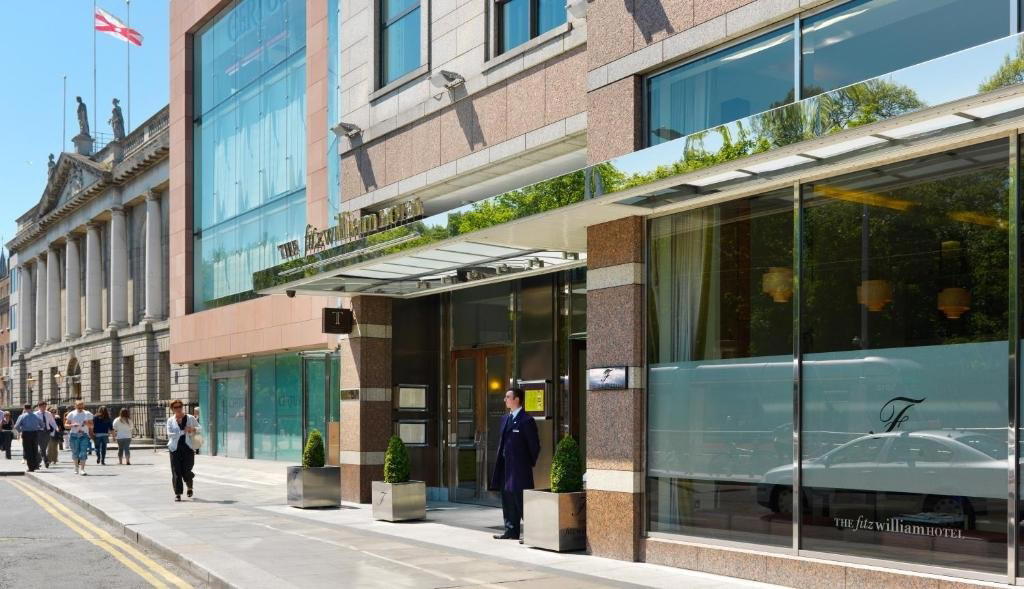
Wineries in Dublin
Browse all →

At a Glance
- Elegant
- Romantic
- Sophisticated
- Classic
- Date Night
- Special Occasion
- Celebration
- Business Dinner
- Hotel Restaurant
- Historic Building
- Design Destination
- Panoramic View
- Extensive Wine List
- Sommelier Led
- Farm To Table
- Local Sourcing
- Garden
Current opening hours
- Monday
- Closed
- Tuesday
- 6–9 PM
- Wednesday
- 12:30–2 PM, 6–9 PM
- Thursday
- 12:30–2 PM, 6–9 PM
- Friday
- 12:30–2 PM, 6–9 PM
- Saturday
- 12:30–2 PM, 6–9 PM
- Sunday
- Closed
Hours can change for holidays and private events. Last verified .
Chic and elegant dining room with soft pink and green hues, brass fixtures, mirrors, and subtle 1930s Art Deco aesthetic creating a warm, sophisticated atmosphere with views of St Stephen's Green.