
Housed inside the RHA Gallery on Ely Place, Margadh operates as a daytime café before shifting into a wine bar with a tasting menu format each evening. The concept places Irish produce at the centre of both the food and drinks program, making it one of the more considered dual-format venues in Dublin 2. The name translates from Irish as 'market', a signal of intent rather than decoration.
Pearl is the En Primeur Club membership app — saves, bookings, and concierge access live there. Same editors, same standards.
- Address
- RHA Gallery, 15 Ely Pl, Dublin 2, D02 A213, Ireland
- Phone
- +353 1 547 5419
- Website
- margadh-rha.ie
- Directions
- Get directions
 Saves & bookings on Pearl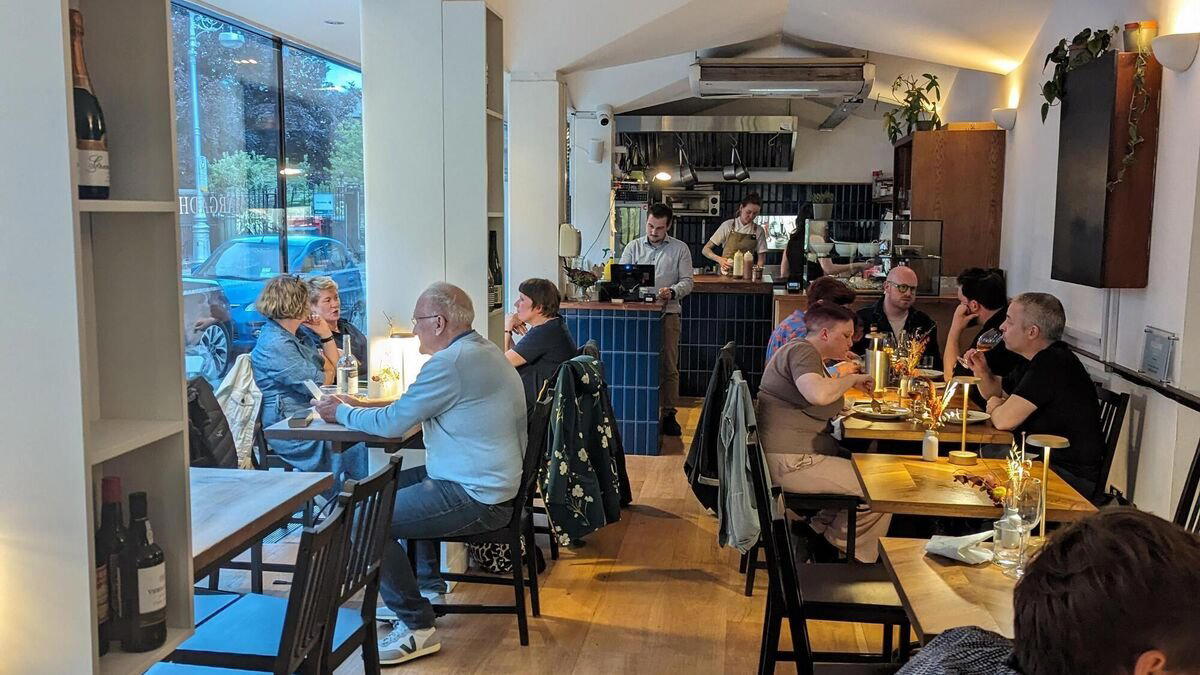
Gallery Space, Market Logic
Ely Place has long carried a particular weight in Dublin's hospitality geography. A short walk from St Stephen's Green but removed from the noise of Grafton Street, the street has historically attracted venues that operate at a slower, more deliberate register. The RHA Gallery, which anchors the southern end of the street, adds another layer: this is a building accustomed to considered looking, to objects placed in context, to people who arrive with some intention. Margadh, which occupies space within the gallery, inherits that environment and works with it rather than against it.
The Irish word for market, margadh, sets up the governing logic before you even sit down. Markets in the Irish tradition are not curated experiences; they are practical, seasonal, and grounded in what producers have brought in that week. That framing matters here, because the food and drinks program follows the same principle: Irish produce is not a decorative gesture but the structural foundation of what arrives at the table or glass.
Café to Wine Bar: The Dual-Format Model
Dublin has a growing number of venues that shift format across the day, but the café-to-wine-bar transition Margadh operates is more demanding than a simple menu change. It requires two coherent identities sharing the same physical space, the same staff, and often the same kitchen infrastructure. When it works, the result is a venue that earns loyalty across different time slots rather than competing for the same narrow dinner-hour window.
The evening pivot at Margadh centres on a tasting menu format built around the wine bar offering. This is a less common configuration in Dublin than in London or Copenhagen, where the wine-bar tasting menu has become a recognisable category. The format typically means a shorter menu of tightly edited dishes designed to move in sequence alongside a curated pour, rather than an à la carte selection meant to be assembled by the diner. It asks more of the kitchen in terms of pacing and coordination, and it asks more of the person behind the bar in terms of knowing how each dish interacts with what's in the glass.
For Dublin's bar scene, which has split decisively between high-volume late-night venues and smaller, more technically focused programs, Margadh sits in the latter group. Comparable venues operating at this register include A Fianco, Bar Pez, and the natural wine focus at Bar 1661, each of which has developed a defined point of view rather than a broad catch-all offering. Bison Bar and BBQ represents the other end of that spectrum, where volume and energy define the experience. Margadh's gallery setting places it firmly in the first camp.
The Irish Produce Argument
The emphasis on Irish produce in a wine bar context is worth taking seriously as a critical position, not just a sourcing preference. Ireland has a strong agricultural base and a developed artisan food culture, but it has historically been underrepresented in wine-focused venues, which tend to default to European charcuterie and cheese boards as the path of least resistance. A program that centres Irish producers in that same role is making a case that the produce can hold its own alongside serious wine, which is a more demanding claim than it first appears.
Across Ireland, a handful of venues have been building this argument in different regional contexts. Arthur Mayne's Pharmacy in Cork has done it within a heritage building format; Lough Eske Castle in Donegal grounds a different kind of Irish produce story in its hotel setting; and in the bar format specifically, venues like Pig's Lane in Killarney and Prim's Bookshop in Kinsale are writing their own regional chapters. Baba'de in Baltimore adds a West Cork dimension to the same broader project. Margadh's version is Dublin-facing but draws from the same national conversation about what Irish hospitality actually tastes like when it commits to its own larder.
The Person Behind the Bar
A wine bar tasting menu lives or dies on the quality of the pairing decisions, which means the bar role here carries more curatorial weight than it would in a conventional restaurant. The person managing the wine list is effectively co-authoring the menu, because the sequence of pours determines as much about the guest's experience as the sequence of dishes. That kind of responsibility has driven a shift in how the bar role is understood at venues operating in this format: the bartender or sommelier becomes an editor, not just an executor.
The emphasis on Irish produce extends the challenge further. Building a wine list that works with distinctly Irish flavours, particularly the salinity, the grassiness, the mineral quality of west-coast seafood and upland dairy, requires a different vocabulary than the standard European pairing framework. It is a program that rewards genuine curiosity about how wine from cooler European regions, orange wines, and natural producers interact with ingredients that most classic pairing guides do not address. For venues doing this well internationally, 64 Wine in Glasthule offers a useful reference point for how a serious Irish wine culture can develop with both depth and approachability. Farther afield, Bar Leather Apron in Honolulu shows how a technically grounded bar program can anchor a similar dual-identity venue format in a very different cultural context.
Planning Your Visit
Margadh sits inside the RHA Gallery at 15 Ely Place, Dublin 2, placing it within easy reach of the city centre on foot. The daytime café period makes it accessible without forward planning; the evening tasting menu format is likely to require a reservation, particularly later in the week. The gallery setting means arrival in the early evening, when the building transitions from its daytime function, carries its own particular atmosphere: the light in gallery spaces at dusk tends to be something most restaurants cannot replicate. For anyone building a broader Dublin evening, Ely Place connects naturally to the Georgian streets between St Stephen's Green and Merrion Square, making Margadh a logical starting or finishing point rather than a detour. For a fuller picture of where this venue sits within Dublin's wider drinking and dining scene, see our full Dublin restaurants guide.
How Margadh Dublin compares with similar nearby venues.
| Venue | Awards |
|---|---|
| Margadh | Star Wine List (2026) |
Recognition history
Dated appearances from independent guides and award organizations, with the underlying list record or original source where available.
Star Wine List
Star Wine List
Continue exploring
More in Dublin
Bars in Dublin
Browse all →
Restaurants in Dublin
Browse all →
Hotels in Dublin
Browse all →
Wineries in Dublin
Browse all →
At a Glance
- Romantic
- Quiet
- Elegant
- Sophisticated
- Intimate
- Date Night
- After Work
- Special Occasion
- Casual Hangout
- Historic Building
- Design Destination
- Garden
- Seated Bar
- Lounge Seating
- Outdoor Terrace
- Natural Wine
- Conventional Wine
- Low Abv
- Street Scene
Current opening hours
- Monday
- Closed
- Tuesday
- 10 AM–5 PM
- Wednesday
- 10 AM–5 PM
- Thursday
- 10 AM–9 PM
- Friday
- 10 AM–9:30 PM
- Saturday
- 11 AM–9:30 PM
- Sunday
- 12–5 PM
Hours can change for holidays and private events. Last verified .
Minimalist, light-filled space with floor-to-ceiling windows overlooking Georgian architecture; low-key jazz and indie music soundtrack creates a relaxed, refined atmosphere.
Know Before You Go
- Getting there
- RHA Gallery, 15 Ely Pl, Dublin 2, D02 A213, Ireland